



Majolica Planter
Majolica planter pieces bring rich botanical display and vibrant nineteenth-century colour into a room.
Majolica Planter
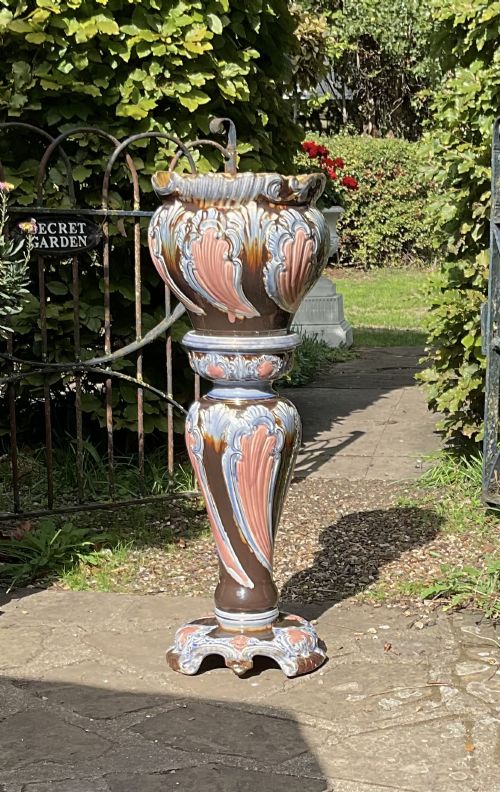
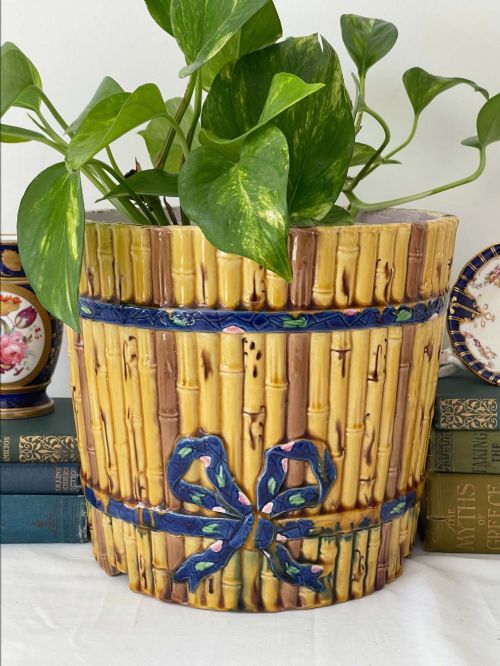
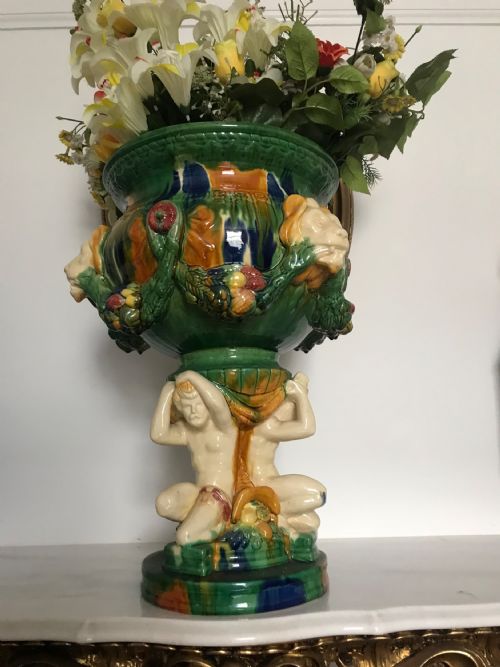
A majolica planter is a decorative vessel designed to hold potted plants or serve as an impressive centrepiece table bowl. When you search for a majolica planter, you encounter substantial earthenware forms spanning the Victorian era through the early twentieth century.
The pieces on this page appear as standalone jardinières or grand combinations paired with matching pedestals and figural stands. Naturalistic designs depicting bamboo, ferns, and animal motifs dominate the selection alongside formal Italian Renaissance Revival and Art Nouveau styles.
Materials and technique
Potters shaped these vessels from earthenware and terracotta before applying heavy lead glazes that created the characteristic glossy, saturated surface finish. This technique allowed makers to achieve vivid greens, blues, browns, and ochres that ran deep into the moulded contours of the body.
Many works incorporate intricate hand-painted details or metallic lustre glazes over the fired ceramic base. Artisans constructed larger examples in separate sections, joining the main jardiniere bowl to a matching column, pedestal, or figural base.
Majolica Planter Retail Price Guide 2026
Typical asking prices for majolica planter among the pieces listed under this phrase on Sellingantiques today, from the lower quarter to the upper quarter. They describe what is for sale here now, not the wider market.
Listings feature earthenware and terracotta materials decorated with lead and lustre glazes across Victorian, Art Nouveau, and Italian Renaissance Revival styles.
Assessing quality
Quality rests in the crispness of the original moulding and the depth of the coloured lead glazes across complex botanical or figural forms. Finer pieces retain sharp relief work in elements such as animal figures, foliage, and architectural revival details.
The presence of an integrated matching stand or pedestal elevates the architectural ambition of the piece. Recognition also follows distinguished makers whose factory marks confirm advanced ceramic artistry during the Victorian and Edwardian periods.
Minton·Royal Worcester·George Jones·Clement Massier·Julius Dressler·Burmantofts·Eichwald
The Majolica Planter Glossary
- Jardiniere
- A large ornamental pot or bowl for holding plants or flowers. These vessels often stand independently on tables or feature dedicated floor pedestals.
- Lead glaze
- A glossy ceramic coating containing lead oxide that produces vibrant, reflective surface colours. This finish defines the rich appearance of nineteenth-century glazed earthenware.
- Terracotta
- Fired unglazed or glazed clay forming a rigid porous body. Makers utilised this robust material for substantial urns and garden planters.
- Lustre glaze
- A metallic surface treatment creating an iridescent sheen over the ceramic body. This specialised finish catches light and shifts in tone across the vessel.
- Centrepiece bowl
- A low, wide decorative vessel placed in the middle of a dining table or sideboard. These pieces frequently share the same heavy glaze and naturalistic modelling as taller planters.
Majolica Planter: Frequently Asked Questions
What is a majolica planter?
A majolica planter is a glazed earthenware vessel created to display plants or flowers with bold sculptural ornamentation. These objects often feature rich coloured lead glazes and naturalistic designs.
Potters across Britain and continental Europe produced them in various forms, ranging from tabletop bowls to large floor-standing jardinières with matching pedestals.
How were majolica planters used?
Victorian and Edwardian households placed these large vessels in conservatories, drawing rooms, and entrance halls to house potted ferns and palms. They served as prominent interior decoration that brought botanical themes indoors.
Tabletop versions functioned as decorative centrepiece bowls for fruit or floral arrangements during formal dining occasions.
How do I date a majolica planter?
Dating relies on stylistic shifts from Victorian naturalism and Italian Renaissance Revival towards later Art Nouveau and early twentieth-century forms. Examining the ceramic body and glaze characteristics provides further clues.
Factory marks, registration numbers, and impressed date ciphers found on the unglazed base offer precise manufacture years for works by major potteries.
Can I plant directly inside them?
Most collectors prefer placing a separate nursery pot or liner inside the jardiniere rather than filling the antique vessel with wet soil. This practice protects the historic earthenware body and interior glaze from moisture damage.
Using a liner also makes watering and rearranging plants significantly easier without straining the ceramic structure.