
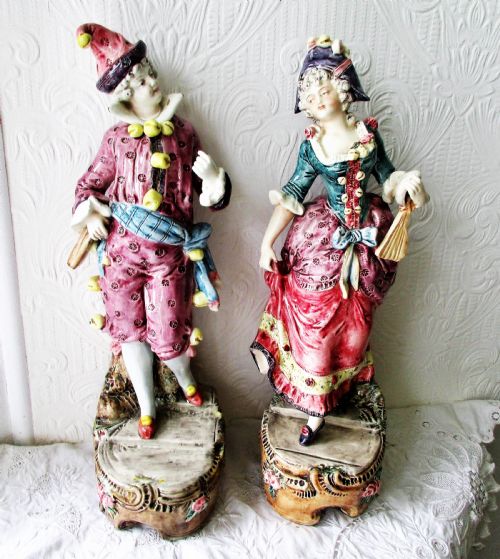
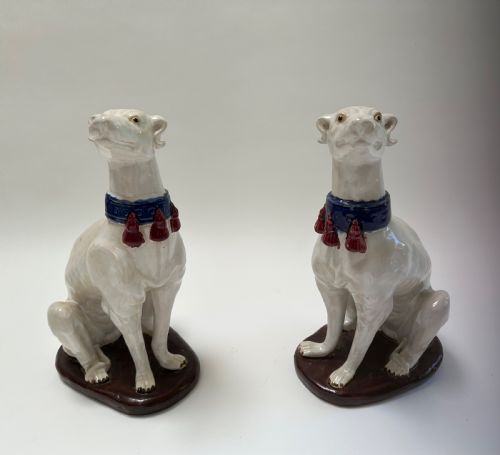


Majolica Figurine
These majolica figurine pieces bring vivid polychrome glaze and modelled character to a room, offering sculptural form combined with rich Victorian colour.
Majolica Figurine
When you search for a majolica figurine, you are looking at glazed earthenware shaped into sculptural forms, decorative busts, and ornamental animals. The selection spans the nineteenth century and into the early twentieth century, taking in Victorian and later interpretations.
You are most likely to meet Victorian examples alongside later French and Italian pieces on this page. The forms range from figurative subjects such as children, historical characters, and mythical figures to animals and novelty objects like teapots and paperweights.
The material identity shifts across these listings between earthenware, terracotta, and tin-glazed ceramic. Makers utilised rich enamel glazes to create vibrant surfaces on both modest ornaments and larger sculptural works.
How they were made
Makers shaped these pieces from earthenware and terracotta before applying heavy lead-based or tin-glazed enamel colours. The clay body was cast or modelled by hand, capturing fine details in the facial expressions and drapery before the initial firing.
After the biscuit firing, artists brushed or dipped the ceramic bodies into coloured glazes that fused during a second kiln run. This technique allowed the fluid pigments to pool in the recesses, creating the characteristic glossy shading seen on nineteenth-century pieces.
The listings span earthenware, terracotta, and tin-glazed ceramic materials across nineteenth-century and early twentieth-century periods.
What varies in quality
Artistic ambition also separates the ordinary from the exceptional, as seen in the transition from simple decorative ornaments to complex modelled groups with musical putti or detailed historical dress. The depth of the enamel palette and the nuance of the hand-finishing determine the visual impact of the work.
George Kemper·Royal Worcester
The Majolica Figurine Glossary
- Majolica
- A type of pottery decorated with opaque tin-glazes or colourful lead-based glazes over an earthenware body. This technique produces a bright, glossy finish that defines the appearance of nineteenth-century decorative wares.
- Earthenware
- Porous ceramic fired at a relatively low temperature, forming the standard base body for most Victorian figurines and decorative vessels. It requires a glaze layer to become completely watertight.
- Terracotta
- Unglazed or clear-glazed fired red clay used for sculptural modelling. It provides a warm, earthy texture beneath the surface decoration of figurative works.
- Putto
- A chubby male child figure, often winged, derived from classical art and frequently appearing in Italian Renaissance Revival sculpture. These figures add a theatrical element to decorative groups.
- Jardiniere
- A large ornamental pot or stand designed to hold indoor plants. These vessels often incorporate animal or figurative motifs matching the style of smaller table ornaments.
Majolica Figurine: Frequently Asked Questions
What is a majolica figurine?
A majolica figurine is a moulded earthenware or terracotta sculpture finished with colourful, glossy lead or tin glazes. These decorative pieces capture Victorian and revivalist tastes through bright pigments and expressive modelling.
They function primarily as ornamental table pieces, mantel ornaments, or functional items like teapots and paperweights. The glazed surface protects the porous clay beneath while providing vibrant decorative appeal.
How do I date a piece?
Dating relies on the stylistic markers of the period, such as Victorian aesthetic preferences or Italian Renaissance Revival influences. Material choices like terracotta or specific glaze compositions also point towards nineteenth-century production eras.
Maker attribution, when present, helps narrow the decade of manufacture. Comparing the modelling style with documented factory production periods offers further chronological context.
Where were they displayed?
In nineteenth-century interiors, these figures sat prominently on mantelpieces, side tables, and cabinets where their bright glazes caught the light. Larger pieces like jardinieres stood on dedicated stands within parlours and reception rooms.
They served as conversational ornaments reflecting the eclectic tastes of Victorian collectors. Their durability made them suitable for placement throughout domestic living spaces.
How do I care for my piece?
Care involves gentle dusting with a dry or slightly damp cloth to preserve the glossy enamel surface. Harsh cleaning agents should be avoided to prevent damage to the historic glaze layer.
Positioning the pieces away from direct, harsh sunlight helps protect the coloured enamels over time. Handling them with care prevents chipping the delicate earthenware edges.