



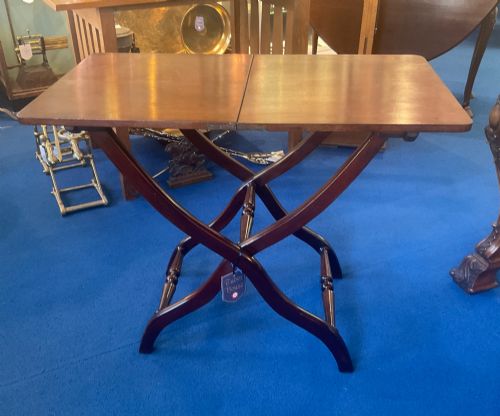
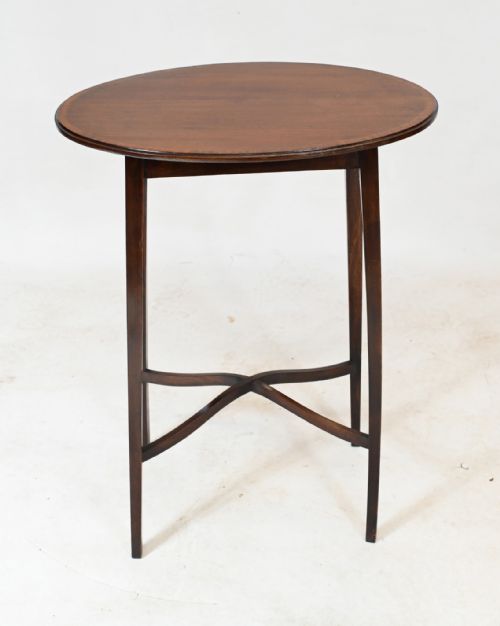
Mahogany X Frame Side Table
A mahogany x frame side table brings architectural line and folding utility to a room, offering a versatile surface that moves easily from space to space.
Mahogany X Frame Side Table
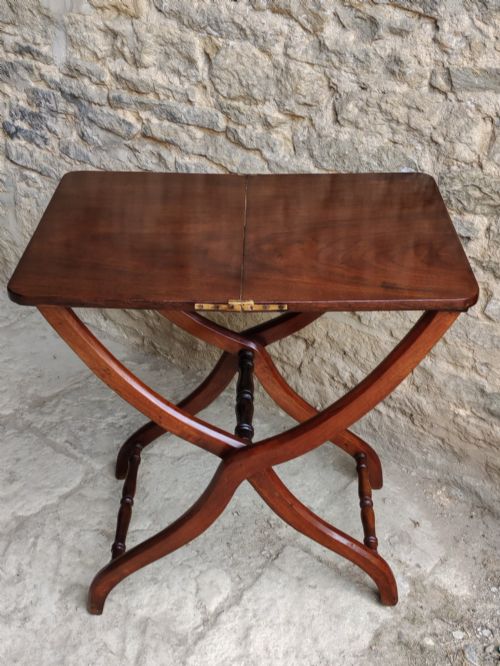
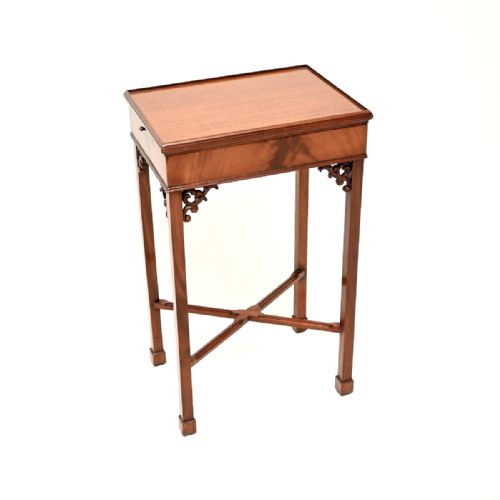
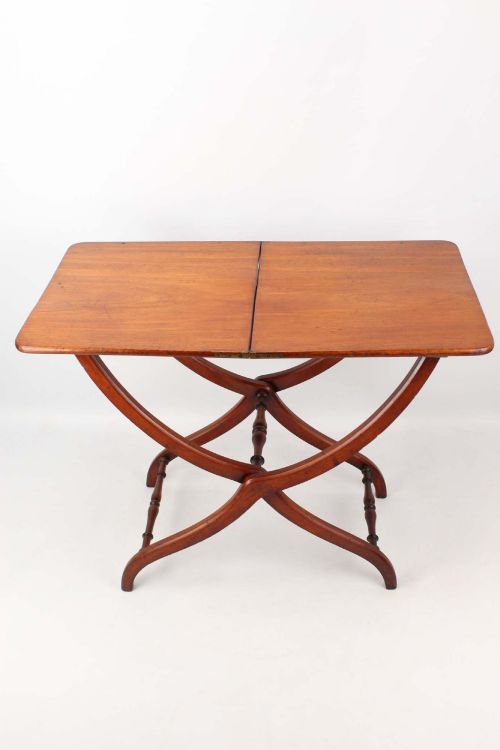
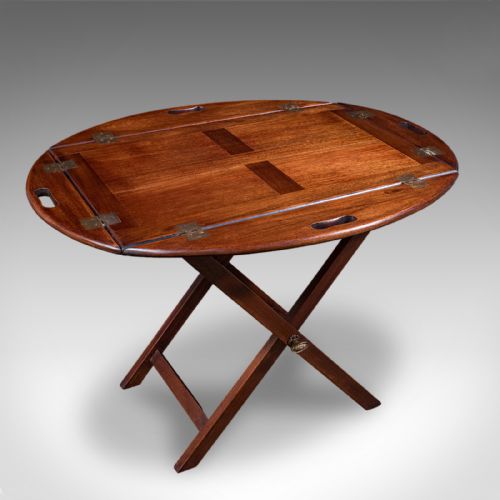
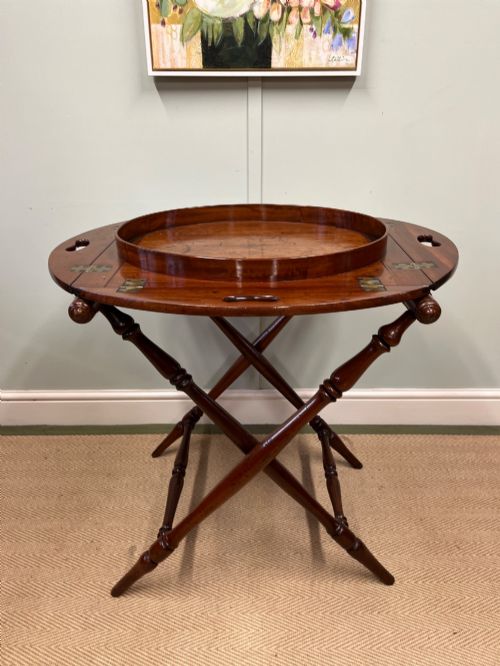
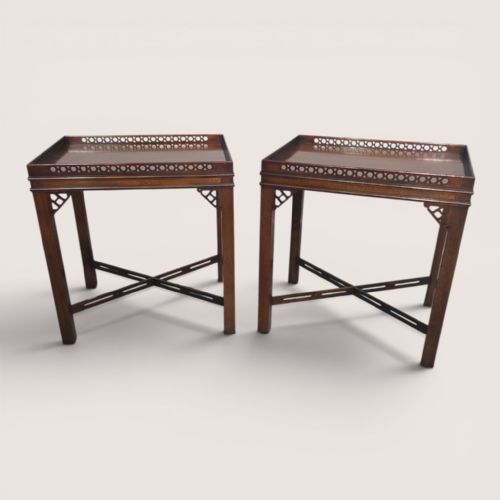
A mahogany x frame side table combines intersecting structural supports with a rich timber surface, appearing across Georgian, Victorian, and Edwardian periods. These pieces often take the form of folding coaching tables, butlers trays on stands, and occasional tables designed for flexible placement.
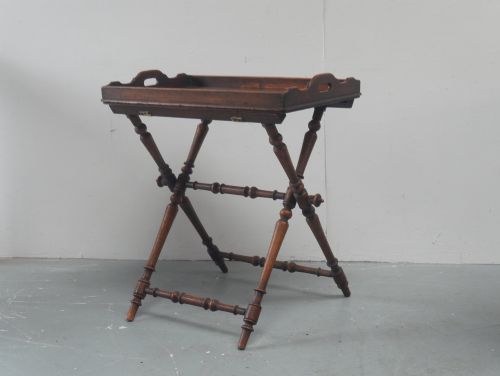
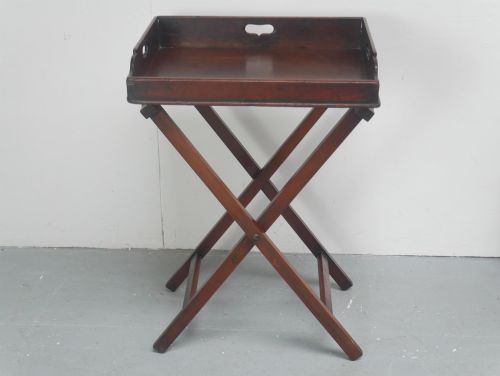
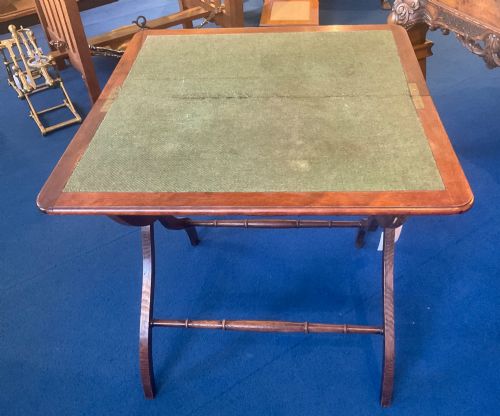
The most common versions on this page are folding butler tables and coaching tables from the nineteenth century, built to serve practical functions in domestic interiors. Buyers encounter both fixed occasional tables and folding stands featuring cross stretchers in solid mahogany.
Origins span from eighteenth-century workshops to early twentieth-century revival pieces, maintaining traditional joinery and timber construction. Their enduring appeal lies in the combination of portable utility and formal cabinet-making.
Indicators of craftsmanship
Quality rests in the weight of the timber and the tightness of the joinery where the x frame members intersect. Superior examples maintain rigid alignment when assembled, showing no excessive play in the folding mechanisms or hinges.
Carved details and secondary woods reveal the level of workshop attention, distinguishing standard utility pieces from fine drawing-room furniture. The condition of the mahogany surface, free from clumsy repairs, dictates the standing of an individual table.
Mahogany X Frame Side Table Retail Price Guide 2026
Typical asking prices for mahogany x frame side table among the pieces listed under this phrase on Sellingantiques today, from the lower quarter to the upper quarter. They describe what is for sale here now, not the wider market.
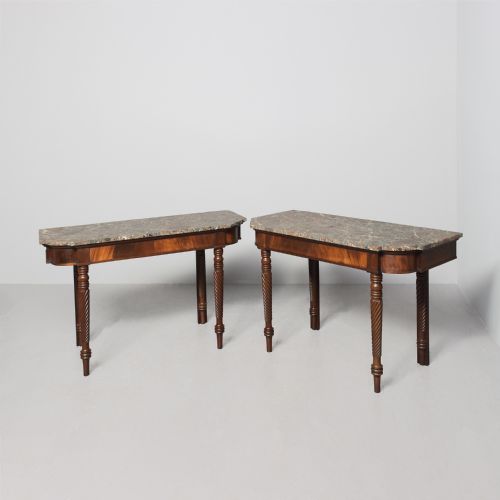
Listings feature mahogany across multiple periods including Georgian, Victorian, and Edwardian eras, alongside auxiliary materials like brass and marble.
John Taylor Edinburgh
The Mahogany X Frame Side Table Glossary
- X frame
- A structural base formed by two intersecting diagonal members that create a cross shape from the side elevation. This configuration provides strong load-bearing support while allowing many examples to fold flat.
- Coaching table
- A portable folding table originally designed for travel or campaign use, typically constructed with a removable tray top and an x frame base. Victorian and Edwardian iterations are frequently made of mahogany.
- Butler's tray
- A rectangular wooden tray with hinged or cutout sides designed for serving, which rests upon a separate folding stand. Eighteenth and nineteenth-century versions often display notable cabinet-making detail.
- Mahogany
- A durable tropical hardwood prized for its reddish-brown colour and fine grain, widely used in British furniture from the Georgian period onward. It takes a high polish and resists warping.
- Stretchers
- Horizontal wooden members connecting the legs of a table to increase structural rigidity. In x frame designs, these stretchers form the core crossing mechanism.
Mahogany X Frame Side Table: Frequently Asked Questions
What is an x frame table?
An x frame table uses intersecting diagonal supports to hold a surface, providing both structural stability and architectural interest. Many historical examples are designed to fold away when not in use.
These tables range from simple utility stands to finely carved centre tables found in nineteenth-century interiors.
How do I date a mahogany table?
Dating relies on observing construction methods, hardware types, and timber characteristics. Georgian pieces often display different joinery and simpler brass fittings compared to later Victorian iterations.
Secondary woods and wear patterns also help establish whether a piece originates from the eighteenth, nineteenth, or early twentieth century.
Were these tables meant for travel?
Many x frame designs, particularly coaching tables and butler trays, originated as portable furniture for military officers or domestic service. Their folding mechanisms allowed servants to clear rooms quickly.
Over time, these practical items transitioned into permanent fixtures within drawing rooms and hallways.
How do I care for antique mahogany?
Antique mahogany requires stable indoor humidity and protection from direct sunlight to prevent the timber from drying out. Regular dusting with a soft, dry cloth preserves the polished finish.
Avoid liquid cleaners or silicone polishes, which can build up on the wood surface over the years.