





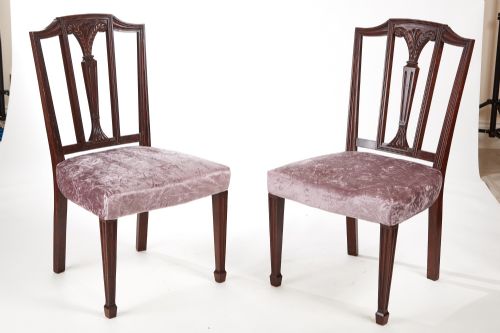


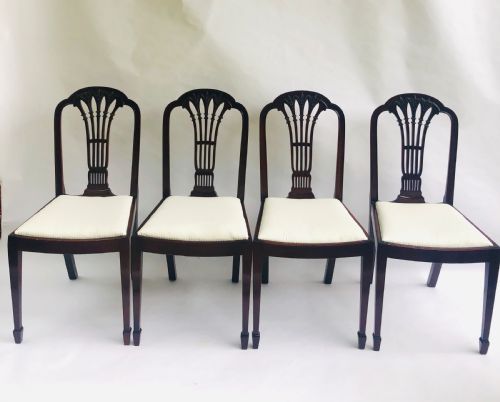
Mahogany Wheat Sheaf Chairs
Mahogany wheat sheaf chairs combine robust timber with delicate carved splats, offering timeless seating for traditional dining rooms.
Mahogany Wheat Sheaf Chairs
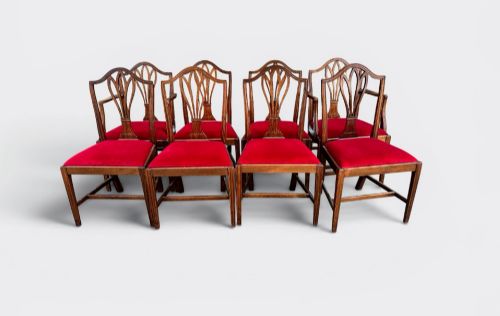
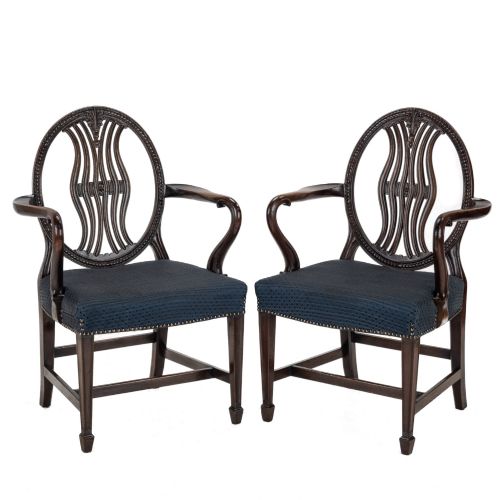
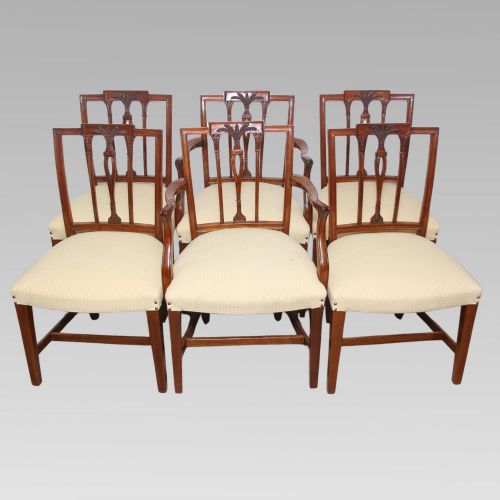
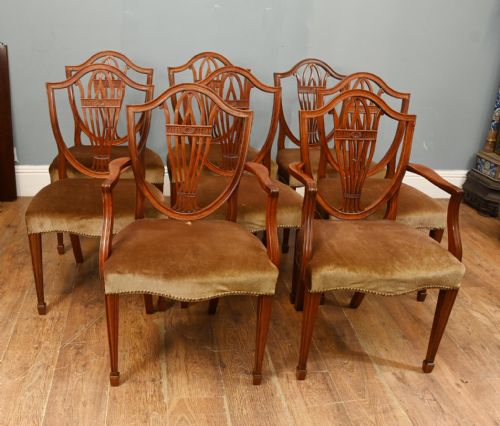
Mahogany wheat sheaf chairs are dining seats defined by their distinct carved splats resembling gathered stalks of wheat. Buyers examining this selection will encounter various formats including single side chairs, paired carvers, and larger dining sets.
The pieces span multiple eras, appearing in Georgian originals alongside later revivals from the nineteenth and early twentieth centuries. Most examples on this page follow Hepplewhite or Sheraton design traditions associated with shield-back forms.
Materials and construction methods
Cabinet makers utilised dense mahogany for the primary frame, taking advantage of the timber's strength to carve intricate wheat motifs into the back splats. Joinery relies on traditional techniques to support the weight and daily use expected of dining furniture.
Seats are upholstered in a variety of materials including fabric, velvet, and leather, frequently secured with metal tacks. Brass elements sometimes appear on the structure or castors depending on the specific period of manufacture.
Upholstery materials recorded across the selection include velvet, leather, and woven fabric, often finished with traditional metal tacks.
Assessing quality in construction and design
Quality rests upon the crispness of the hand-carved wheat motif and the depth of relief in the shield back. Finer examples display meticulous symmetry and smooth contours throughout the wooden splat.
The stability of the frame and the choice of dense, well-figured mahogany timber separate superior sets from simpler productions. Original upholstery schemes or sympathetic re-covering also influence the overall integrity of the piece.
The Mahogany Wheat Sheaf Chairs Glossary
- Shield back
- A chair back shaped like a traditional heraldic shield, popularised in the eighteenth century. This silhouette provides the structural enclosure for the carved wheat sheaf motif.
- Carver
- An armchair designed to match a set of dining side chairs, usually placed at the heads of the table. These incorporate supportive armrests flanking the shield back.
- Hepplewhite style
- A neoclassical furniture design idiom associated with slender proportions and delicate ornamentation. Pieces from later revival periods emulate these eighteenth-century aesthetics.
- Splat
- The vertical central strip of wood within a chair back connecting the top rail to the seat. On these chairs, the splat takes the form of bound wheat stalks.
Mahogany Wheat Sheaf Chairs: Frequently Asked Questions
Are these chairs comfortable for daily dining?
The upholstered pad provides a supportive base for meals, while the curved shield back offers natural lumbar support. Their ergonomic shape suits extended sitting around a dining table.
Seat heights and depths remain consistent with standard dining standards, though older carvers may have slightly lower armrests than modern equivalents.
How do I distinguish Georgian originals from later revivals?
Examination of the timber grain, tool marks, and construction joints reveals the age of the woodwork. Georgian pieces exhibit period-specific patina and hand-cut joinery.
Revival pieces from the Edwardian era or the nineteenth century often display standardised machine assistance while adhering closely to historic Hepplewhite proportions.
How should I care for the mahogany wood?
Regular dusting with a soft, dry cloth preserves the polished surface of the timber. Avoid placing the chairs in direct sunlight or near heat sources to prevent the wood from drying out.
Applying a traditional beeswax occasionally helps nourish the mahogany and maintains its natural sheen without building up excessive residue.
Can I mix carvers and side chairs?
Sets frequently combine matching side chairs with a pair of carvers to complete a formal dining arrangement. The shared wheat sheaf motif ties different chair types together visually.
Matching the wood tone and approximate period ensures a cohesive appearance around the dining table even if pieces were acquired as a mixed suite.