

Mahogany Wellington Drawers
Mahogany wellington drawers offer a slim, secure profile with a locking side flap, combining practical vertical storage with rich timber character.
Mahogany Wellington Drawers
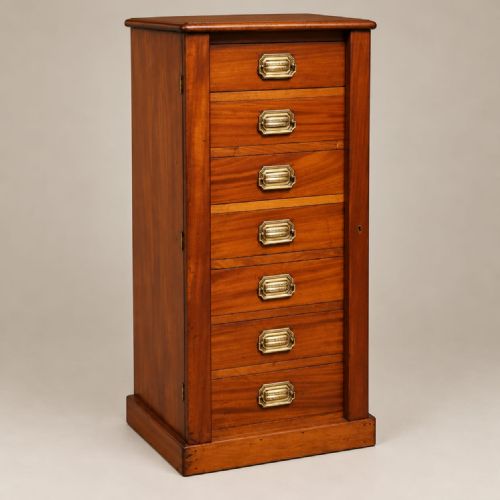
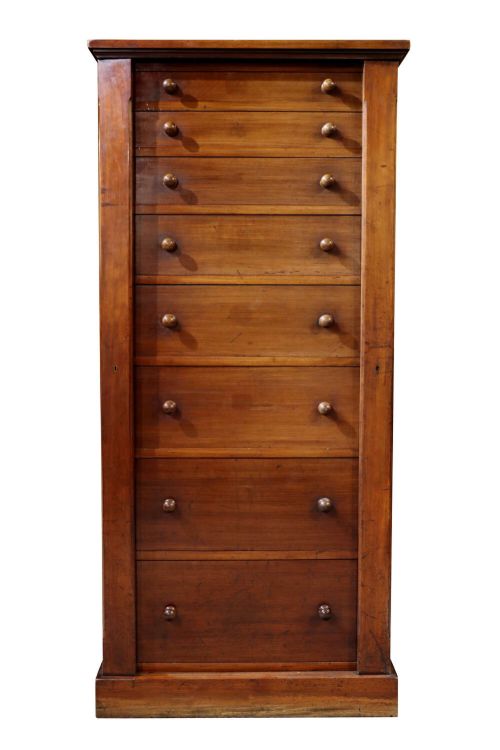
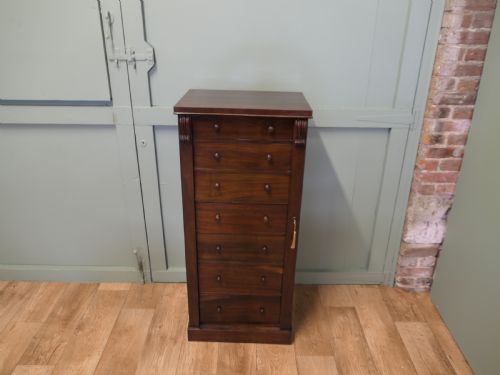
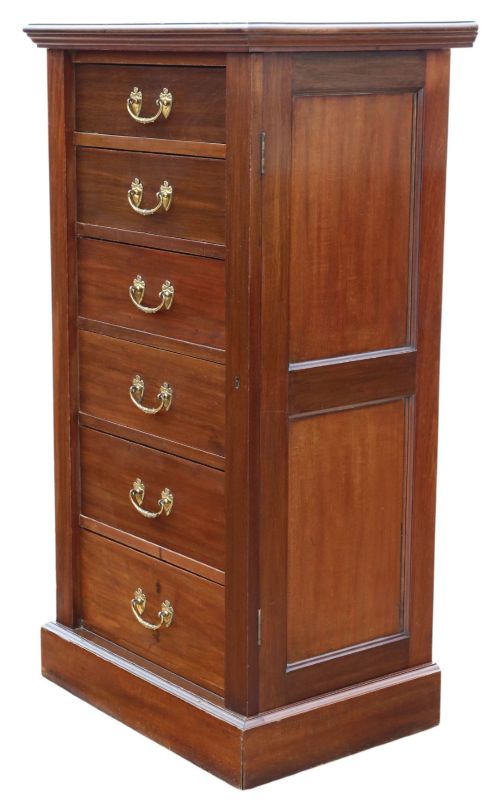
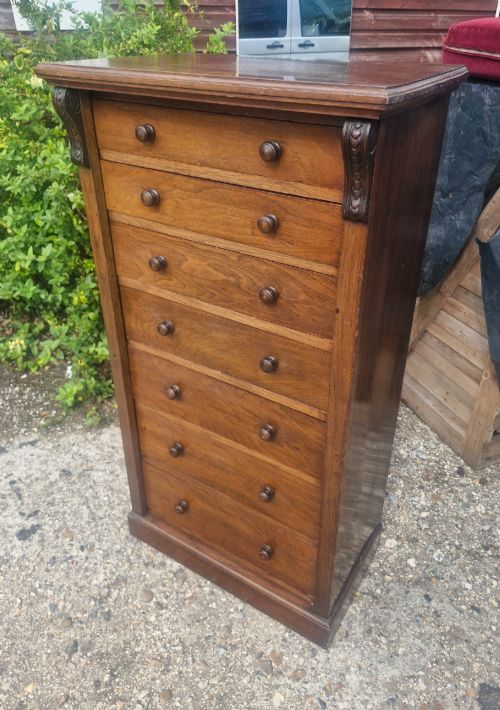
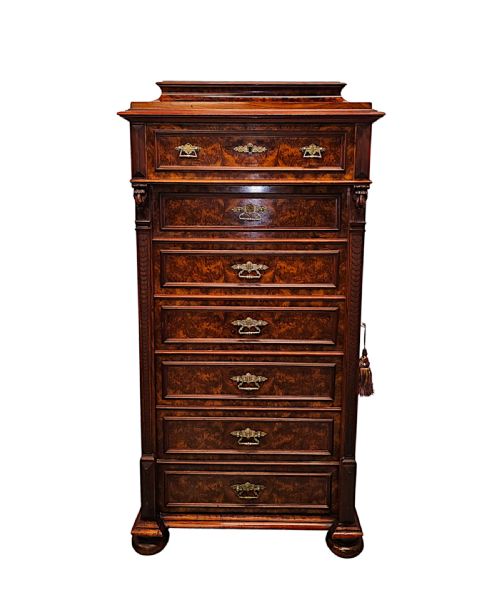
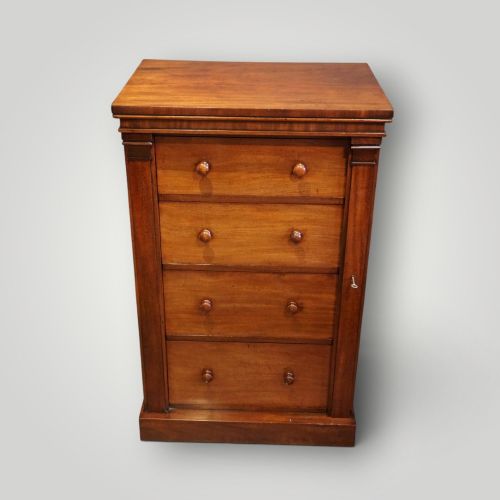
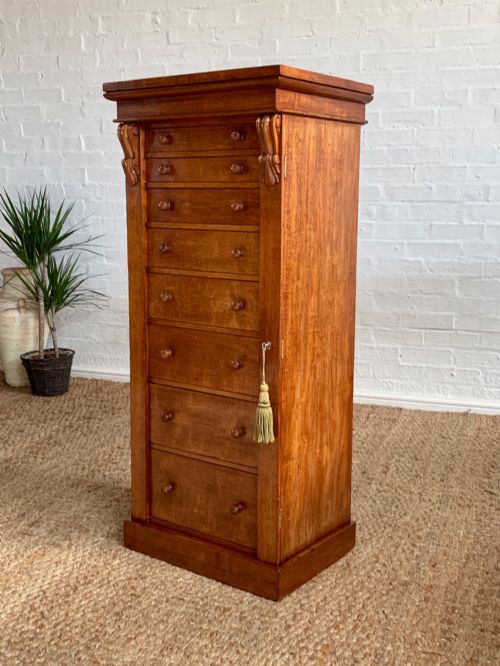
When you search for mahogany wellington drawers, you encounter tall, narrow chests designed to maximise storage while occupying a minimal footprint in a room. The form typically presents a single stack of numerous drawers secured by a hinged vertical locking flap down one side, which fastens with a key to protect the contents.
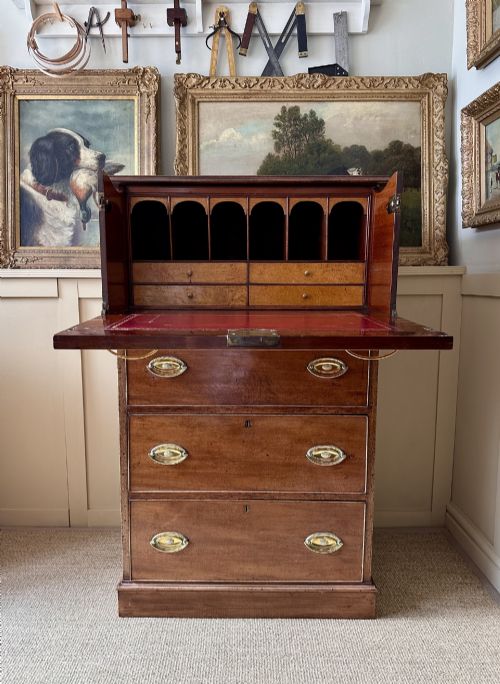
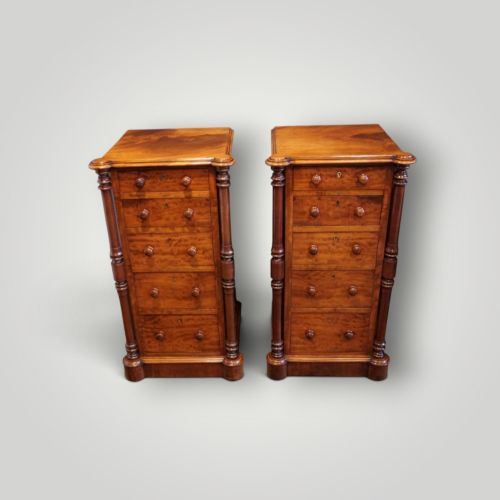
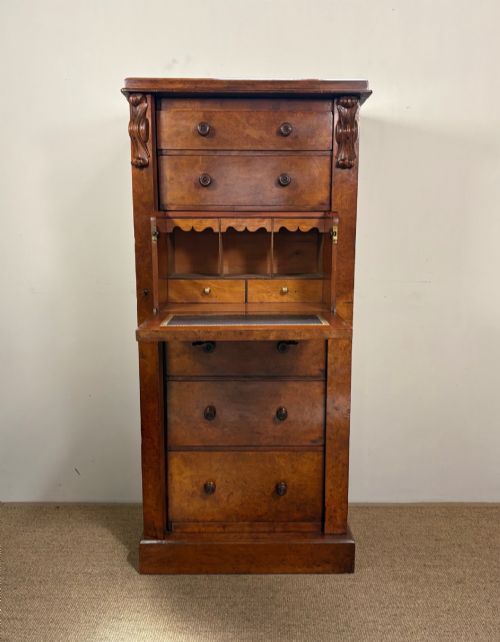
The pieces listed on this page span several decades of British furniture making, with Victorian examples appearing most frequently alongside Regency, William IV, and Edwardian variants. Alongside standard tall chests, you will find diminutive childs chests, miniature versions, bedside chests, secretaire forms fitted with a drop-front writing surface, and collector cabinets.
Originating in the nineteenth century, these cabinets serve diverse domestic roles, functioning as bedroom storage, bedside tables, filing cabinets, or compact repositories for papers and small collections. Their narrow proportions and secure locking mechanism made them enduringly popular through the late Victorian and Edwardian periods.
Materials and Construction
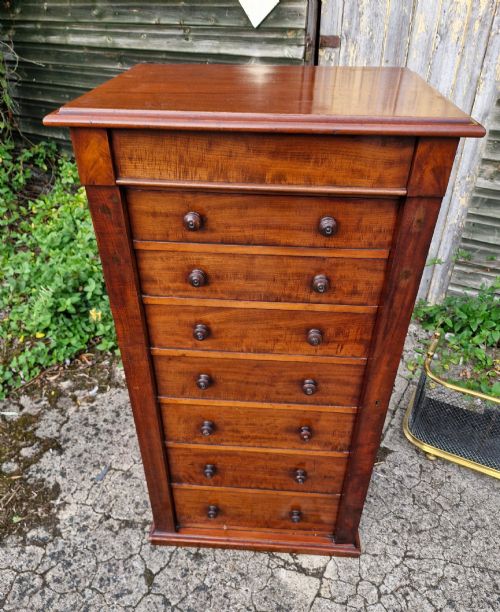
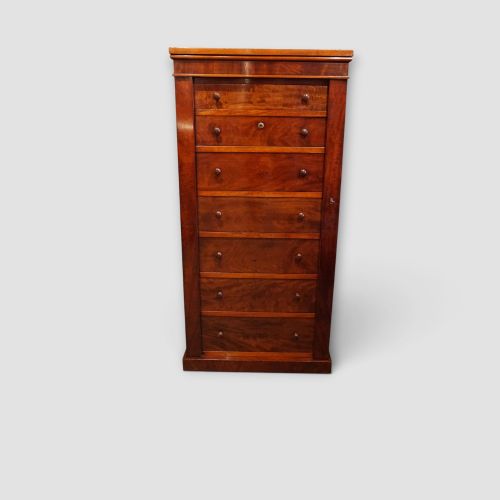
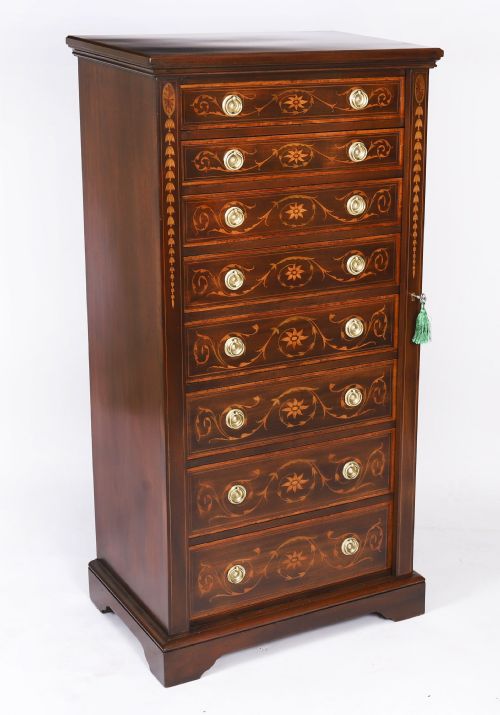
Cabinet makers constructed these pieces primarily from solid mahogany and mahogany veneers, frequently selecting figured timber such as flame mahogany or fiddleback mahogany to give the front facade depth and movement. Secondary timbers provide structural stability to the interior carcase and drawer linings, while contrasting woods like satinwood appear on inlaid models from the later periods.
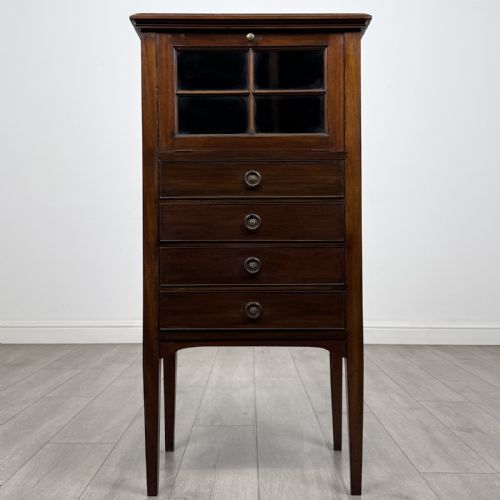
Functional metalwork forms an integral part of the construction, utilising brass for locks, hinges, and escutcheons alongside turned wooden knobs for the individual drawers. Selected pieces incorporate secondary details such as leather writing inserts within secretaire drawers, raised galleries on top surfaces, or glass panels on cabinet doors.
The defining mechanical element is the hinged locking stile, a vertical wooden flap attached with hinges to one side of the chest frame that covers the drawer edges when closed. When locked with a key, this flap blocks the drawers from opening, securing the entire column.
Mahogany Wellington Drawers Retail Price Guide 2026
Typical asking prices for mahogany wellington drawers among the pieces listed under this phrase on Sellingantiques today, from the lower quarter to the upper quarter. They describe what is for sale here now, not the wider market.
Listings feature mahogany wellington drawers spanning the Regency, William IV, Victorian, and Edwardian periods, utilising flame mahogany veneer, satinwood, and brass.
The Distinction in Quality
The visual appeal of the timber sets the baseline for quality, distinguishing plain mahogany carcases from those faced in heavily figured flame mahogany veneer or rich fiddleback grain. Master makers matched veneer grains symmetrically across the drawer fronts to create a continuous, harmonious pattern when the locking flap was open.
Construction precision dictates how well the piece survives over time, particularly the smooth operation of the locking flap and the tight tolerances required for narrow, deep drawers. Original fittings, such as turned wooden knobs and functioning brass locks with matching keys, elevate the standing of an individual chest.
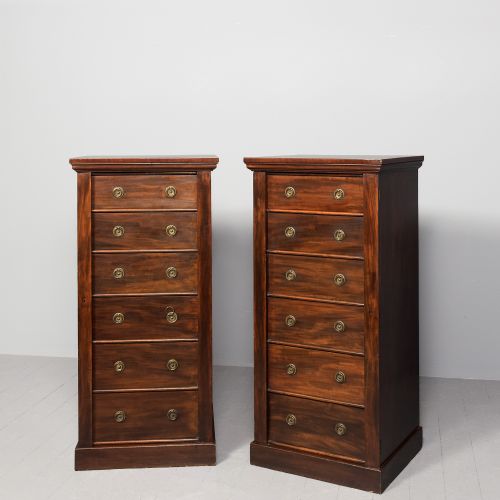
Proportion and scale also influence desirability, with diminutive childs chests, miniatures, and pairs of bedside chests representing specialised forms that demand greater cabinet-making skill than standard tall chamber chests.
Warings Liverpool·J Shoolbred
The Mahogany Wellington Drawers Glossary
- Wellington chest
- A tall, narrow chest of drawers featuring a hinged vertical locking flap on one side that secures all the drawers simultaneously when locked with a key.
- Secretaire
- A desk or chest incorporating a hinged drop-front flap that opens to reveal a writing surface, pigeonholes, and small compartments.
- Flame mahogany
- A veneer cut from timber where the grain creates a distinctive flickering, flame-like pattern across the surface of the wood.
- Locking flap
- The hinged wooden stile on the side of a wellington chest that swings open to permit drawer access and locks shut to secure them.
Mahogany Wellington Drawers: Frequently Asked Questions
What is a wellington chest?
A wellington chest is a tall, narrow set of drawers distinguished by a hinged vertical flap on one side that locks with a key to secure every drawer at once.
Originally developed in the nineteenth century, the design prioritised vertical storage and security for personal papers, linen, or valuables without taking up excessive floor space.
How do you open the drawers?
To access the drawers, you first unlock and swing the vertical wooden flap on the side of the chest back against the carcase.
Once this locking stile is open, each drawer slides out individually; closing and locking the flap secures all the drawers shut again.
Where were they used in the home?
These chests served primarily as compact bedroom furniture, providing deep vertical storage for clothing, linens, or personal items in rooms with limited floor space.
Shorter variants functioned as bedside chests or nightstands, while secretaire versions provided a private writing space in studies or drawing rooms.
How do you date a mahogany wellington chest?
Dating relies on observing structural characteristics, timber selection, and hardware styles across the Victorian, Regency, William IV, and Edwardian periods represented in the evidence.
Early nineteenth-century pieces often display cleaner architectural lines and rich flame veneers, while late Victorian and Edwardian examples may incorporate satinwood inlay or delicate galleries.