

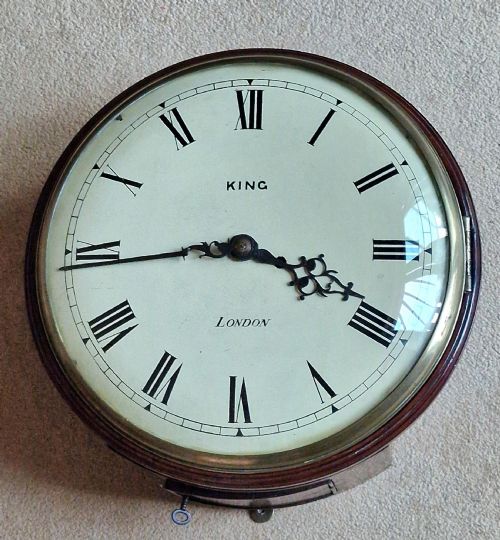
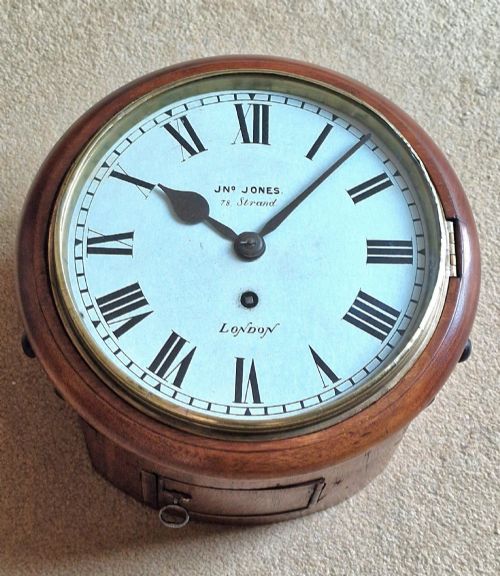
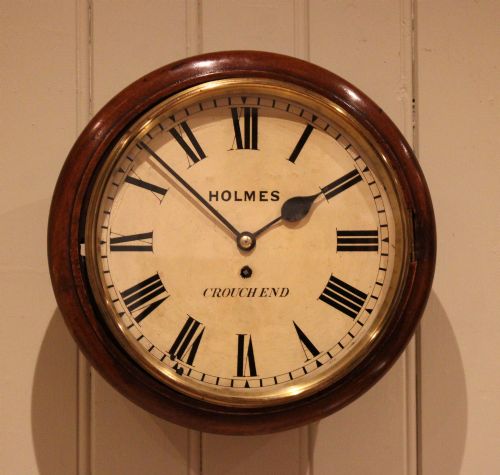
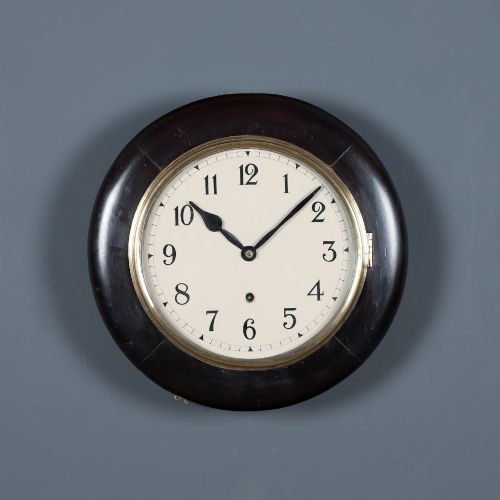

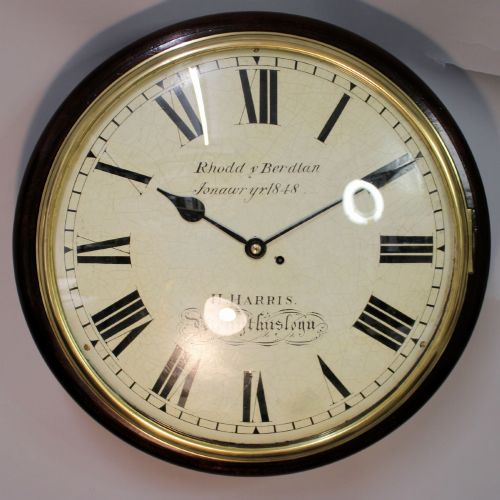
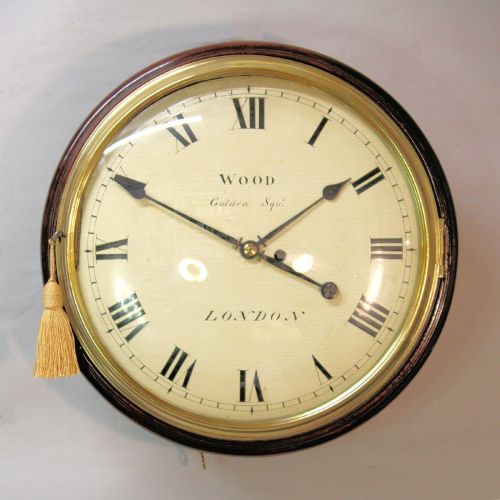
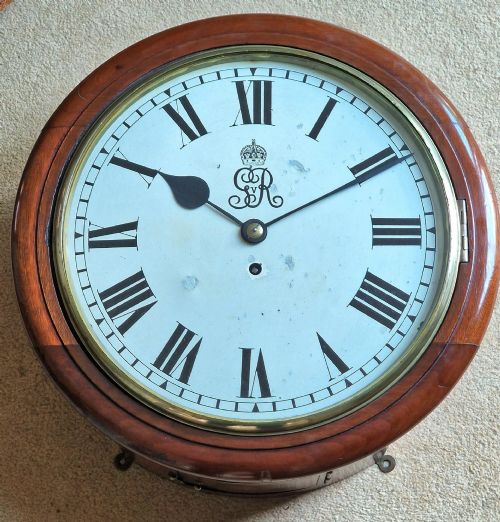
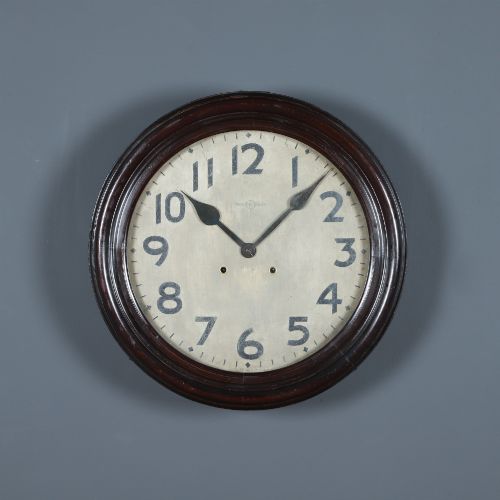
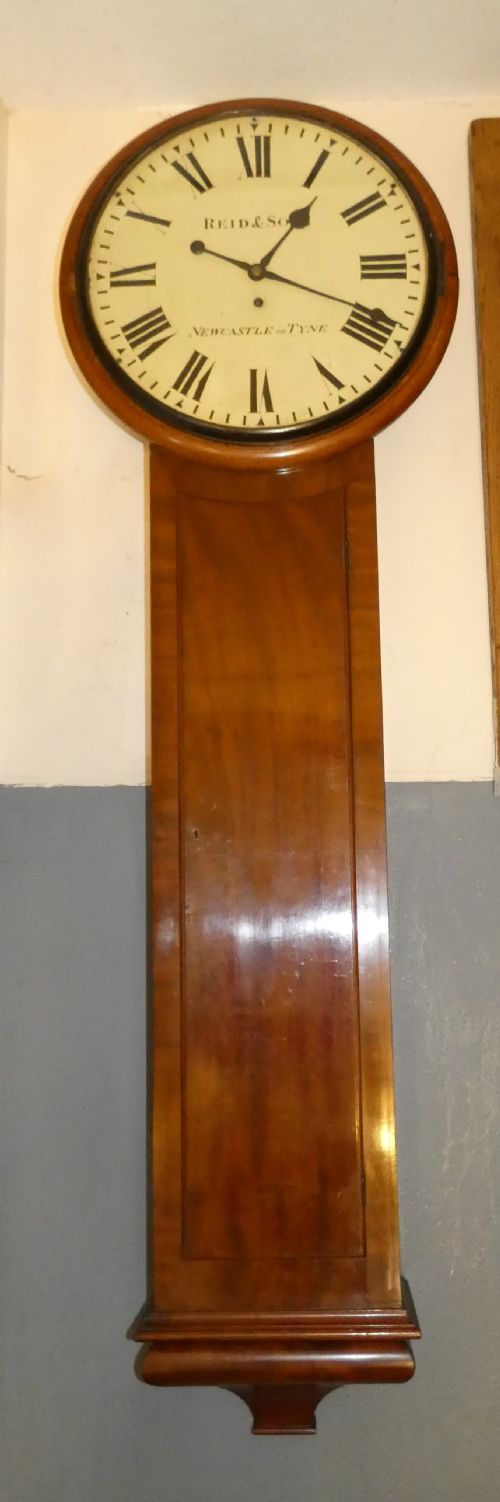


Mahogany Wall Timepiece
A mahogany wall timepiece is a dependable instrument built to keep steady time in public spaces and private halls.
Mahogany Wall Timepiece
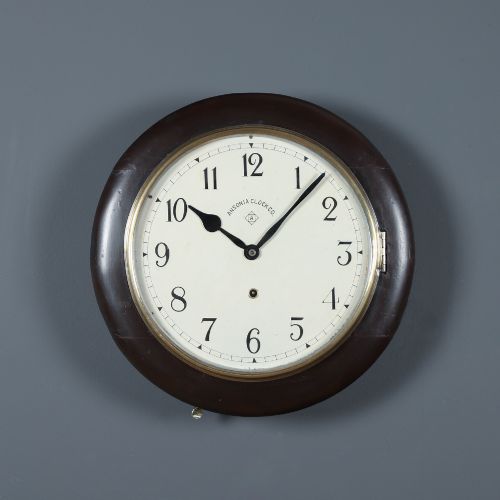
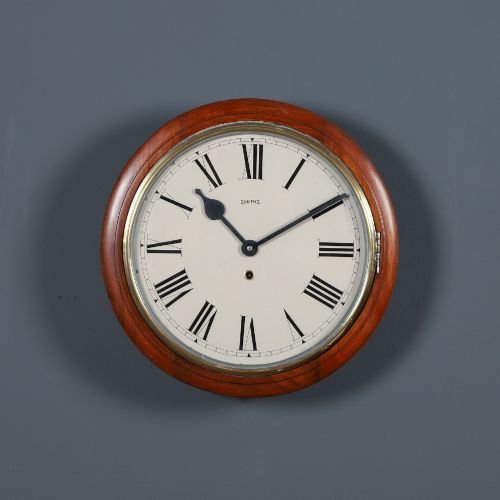
A mahogany wall timepiece is a round dial clock designed for clear reading in offices, stations, and homes.
The pieces appearing here span from the Georgian and Regency eras through the Victorian period and into the early twentieth century.
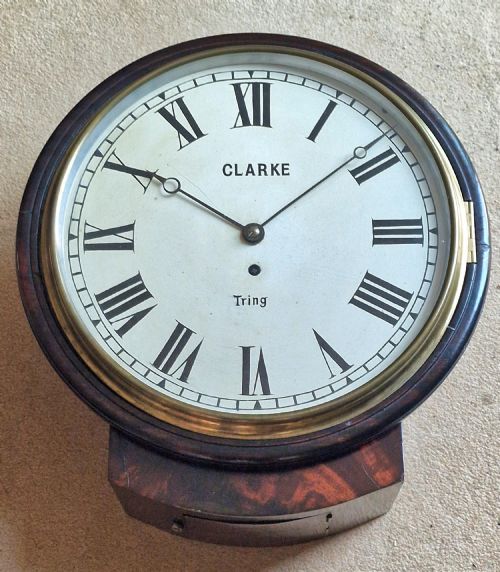
Most examples take the form of station or school dial clocks, alongside drop-dial and fusee variations housed in timber frames.
How they were made
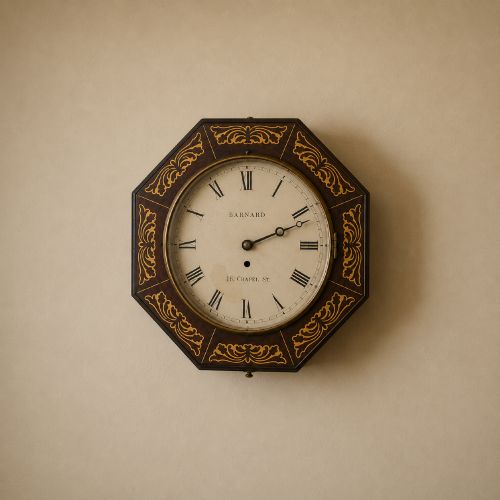
Cases utilise solid mahogany timbers, occasionally complemented by brass inlay or carved bezels surrounding the glass face.
Dials are constructed from painted metal, enamel, or wood, bearing clear numerals for distant viewing.
Internal movements rely on brass and iron components, often driven by fusee or pinwheel escapement mechanisms.
Mahogany Wall Timepiece Retail Price Guide 2026
Typical asking prices for mahogany wall timepiece among the pieces listed under this phrase on Sellingantiques today, from the lower quarter to the upper quarter. They describe what is for sale here now, not the wider market.
Several clocks carry the heavy weight of the British railway system, having once kept guards from missing their trains.
What varies in quality
The refinement of the movement distinguishes standard utility pieces from precision London regulators.
Cabinetwork quality shows in the crispness of the mahogany grain and the execution of brass detailing.
Dial legibility and the preservation of original painted or wooden faces dictate the overall integrity of the piece.
Richard Jones of Hereford·George Clarke Tring·Henry Harris of Monythuslwyn·John Walker·John Thwaites·Edward Hannam
The Mahogany Wall Timepiece Glossary
- Fusee
- A conical pulley used in clock movements to maintain an even pull as the mainspring unwinds. This mechanism ensures steady timekeeping throughout the duration of the wind.
- Dial clock
- A wall-mounted timepiece featuring a prominent circular face enclosed by a glass-fronted bezel. These were widely utilised in railway stations and public offices.
- Drop-dial
- A clock case that extends downward beneath the circular dial to accommodate a longer pendulum or trunk. This form is frequently associated with tavern and station clocks.
- Regulator
- A high-precision clock designed for exact time measurement and used as a standard for setting other timepieces. They often feature extended wooden cases and fine movements.
Mahogany Wall Timepiece: Frequently Asked Questions
How do fusee wall clocks work?
A fusee movement uses a conical drum to equalise the declining power of the mainspring as it unwinds. This keeps the force delivered to the escapement consistent.
Such systems were favoured in British timepieces built for railways and institutions where accuracy mattered.
Where were these clocks originally hung?
These timepieces hung in railway offices, military quarters, schools, and domestic hallways for daily scheduling. Their clear dials ensured visibility from across large rooms.
Many bear inscriptions or markings from specific railway companies and government departments.
How do I date a mahogany wall clock?
Dating relies on examining the timber frame, dial materials, and the style of the bezel and case. Georgian and Regency examples typically feature simpler lines and fusee movements.
Victorian and later pieces often incorporate drop-dial shapes and specific company lettering on the dial face.
How should I care for a mechanical wall timepiece?
Mount the clock securely to a solid wall stud using appropriate fixings to support the weight of the timber case. Ensure the case hangs level so the pendulum swings freely.
Wind the timepiece gently at regular intervals and arrange for periodic professional servicing of the brass movement.