



Mahogany Wall Display Cabinet
A mahogany wall display cabinet brings warmth and glass-fronted visibility to interior spaces, holding precious items safely off the floor.
Mahogany Wall Display Cabinet
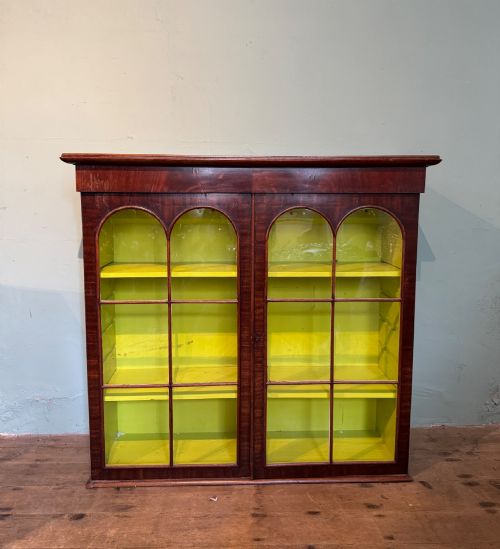
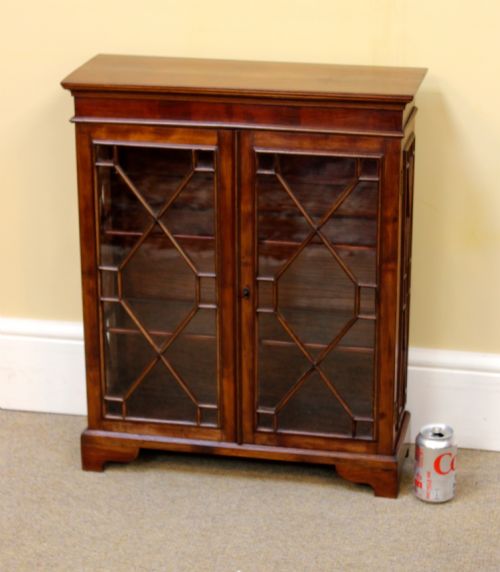
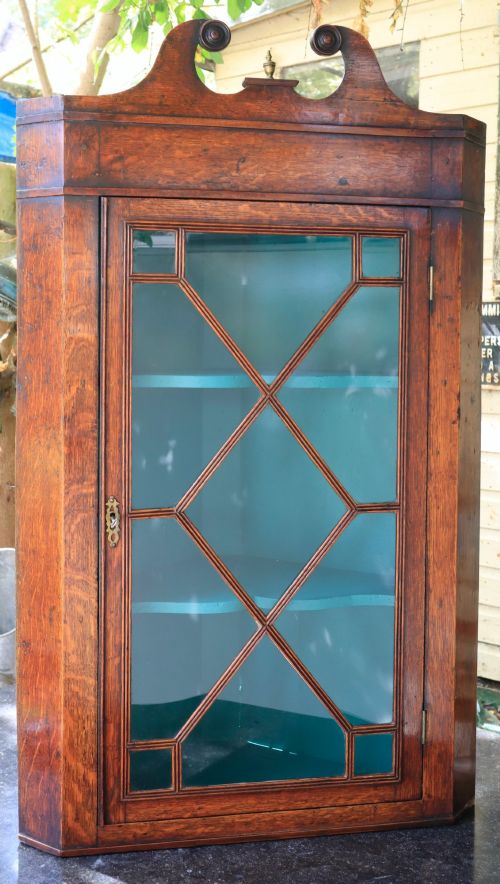
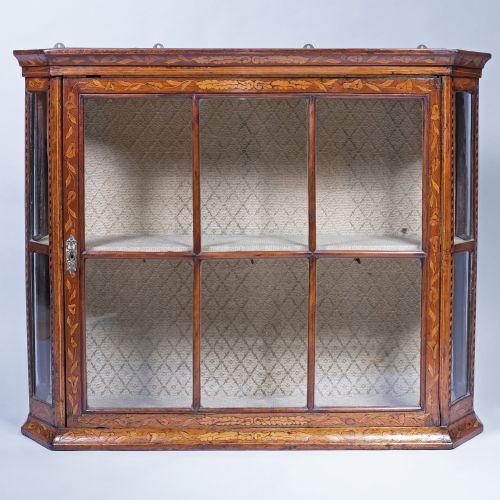
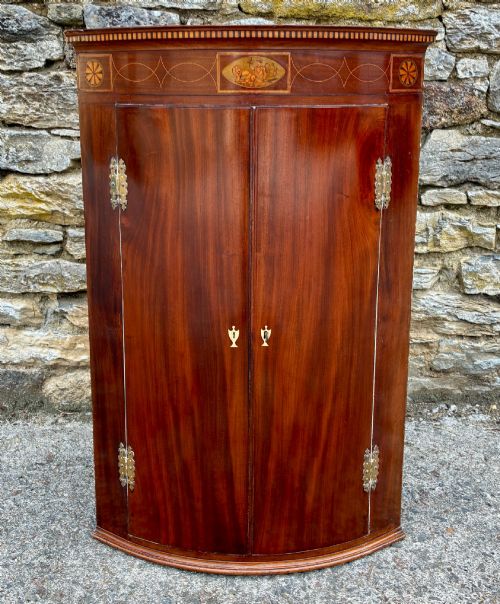
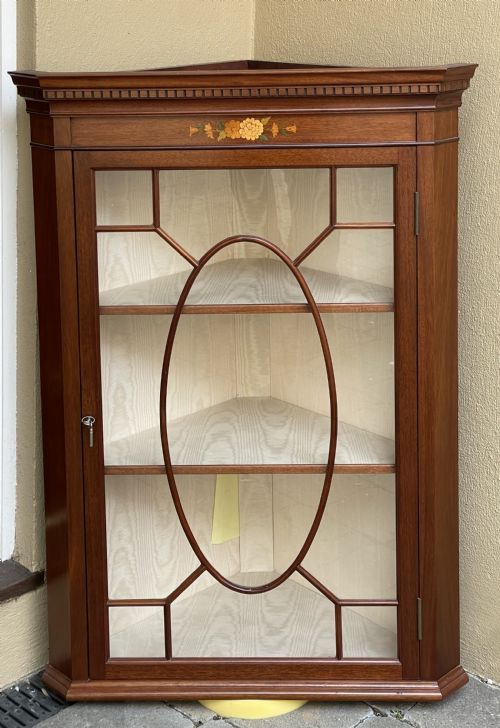
A mahogany wall display cabinet is a storage piece designed to hang on a wall or fit neatly into a corner, showing off small ceramics, glass, or collectables behind glazed doors. When you search for a mahogany wall display cabinet, you encounter forms ranging from flat-backed hanging wall cupboards to bow front corner units.
The pieces on this page span several key periods, predominantly featuring Georgian, Victorian, and Edwardian examples alongside 18th-century and 19th-century specimens. Corner cupboards and hanging wall shelves form the backbone of the selection, reflecting domestic storage needs across the decades.
How they were made
Cabinet makers utilised solid mahogany and oak, often enriching surfaces with contrasting satinwood or boxwood inlay and crossbanding. Glazed doors protect the interior, while fabric linings and mirrored backs serve to brighten the display space behind the glass.
Construction techniques include dove-tailed joints in drawers and secure hanging brackets meant to bear the weight of solid timber and glass. Details such as broken arch pediments and brass key escutcheons appear on select 18th-century and Georgian items.
One past archive piece arrived with hand sign-writing advertising Cadburys Chocolate inside its glazed frame.
What varies in quality
The sophistication of the timber figure and the crispness of the inlay differentiate standard utility cupboards from finer drawing-room pieces. Plum pudding mahogany and delicate stringing elevate the visual impact of George III and Edwardian cabinets.
Joinery execution and original glass panes or mirrored interiors dictate the integrity of each hanging cabinet. Pieces retaining their original working locks, keys, and subtle architectural mouldings command greater attention from collectors.
The Mahogany Wall Display Cabinet Glossary
- Bow front
- A convex curved cabinet front that projects outward, frequently seen on Georgian and Edwardian corner cupboards. This shape softens room angles and catches ambient light.
- Crossbanding
- A narrow strip of veneer laid around the border of a panel so the grain runs at right angles to the central piece. It creates a defined visual frame on cabinet doors.
- Pediment
- The decorative architectural structure crowning the top of a wall cabinet. Broken arch versions feature an open centre, sometimes housing a small finial.
- Escutcheon
- A protective metal plate surrounding a keyhole, usually fashioned from brass. It prevents the timber from wearing around the lock.
- Glazing
- The installation of glass panes within a door frame to allow visibility of the interior shelves. Georgian and Victorian examples use lead cames or wooden glazing bars to hold individual panes.
Mahogany Wall Display Cabinet: Frequently Asked Questions
How do I hang a heavy mahogany wall cabinet?
Secure the cabinet directly into wall studs using appropriate brackets and fixings rated for the combined weight of the timber and contents. Professional installation ensures the piece remains stable.
Verify that the backboards and hanging fixings integrated into the antique structure are sound before mounting.
What is the difference between a corner cabinet and a wall cabinet?
A corner cabinet has an angled back designed to fit snugly into the ninety-degree junction of two walls. Flat wall cabinets feature a straight back parallel to the mounting surface.
Both types are built for hanging, but they occupy different spatial footprints in a room.
How do I date a mahogany display cabinet?
Examine the timber species, construction methods, and hardware style. Georgian pieces often display hand-cut dovetails and solid mahogany boards, whereas later Edwardian items may utilise machine-sawn elements and delicate satinwood inlay.
Secondary woods like oak can also help pinpoint the regional origin and approximate period.
Can these cabinets support heavy items?
Most hanging wall cabinets and corner cupboards are intended for lighter collectables, ceramics, or glassware rather than heavy books. The internal shelving rests on fixed supports or simple timber ledges.
Distributing weight evenly protects both the antique shelves and the glazed door frames.