





Edwardian Glazed Corner Cupboard
An Edwardian glazed corner cupboard makes use of overlooked rooms by fitting neatly into angles while displaying glassware and books behind glass panels.
Edwardian Glazed Corner Cupboard
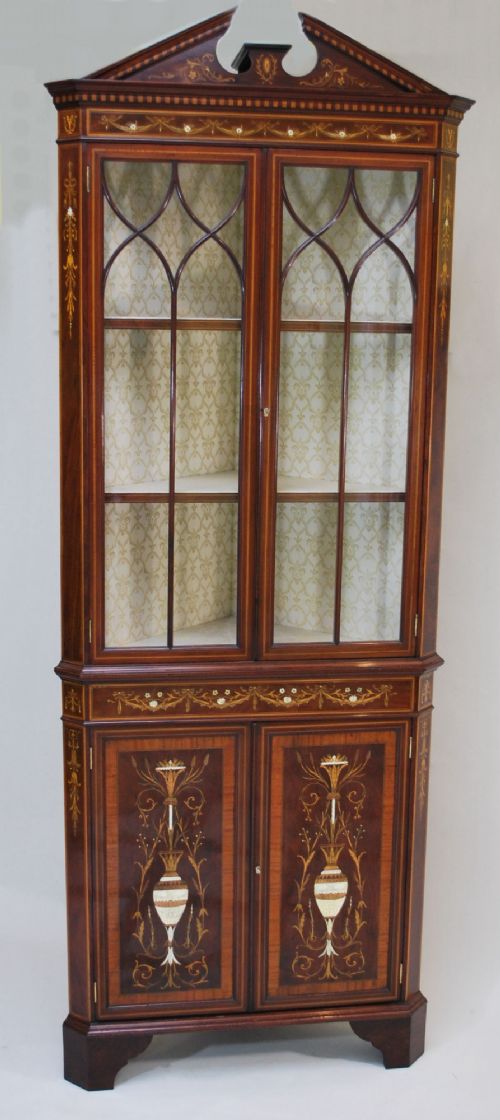
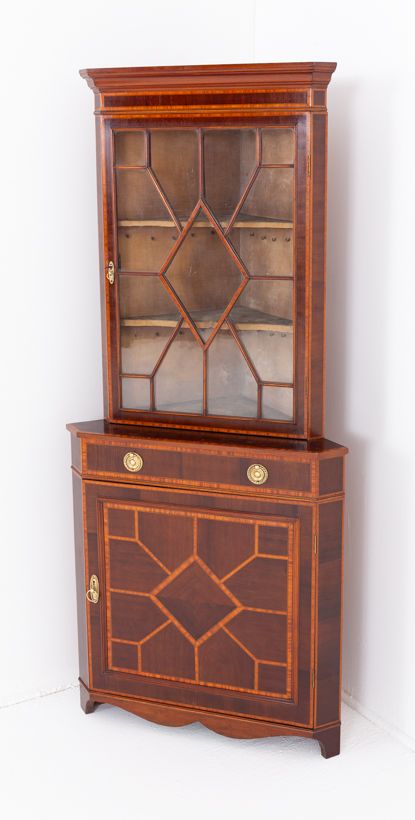
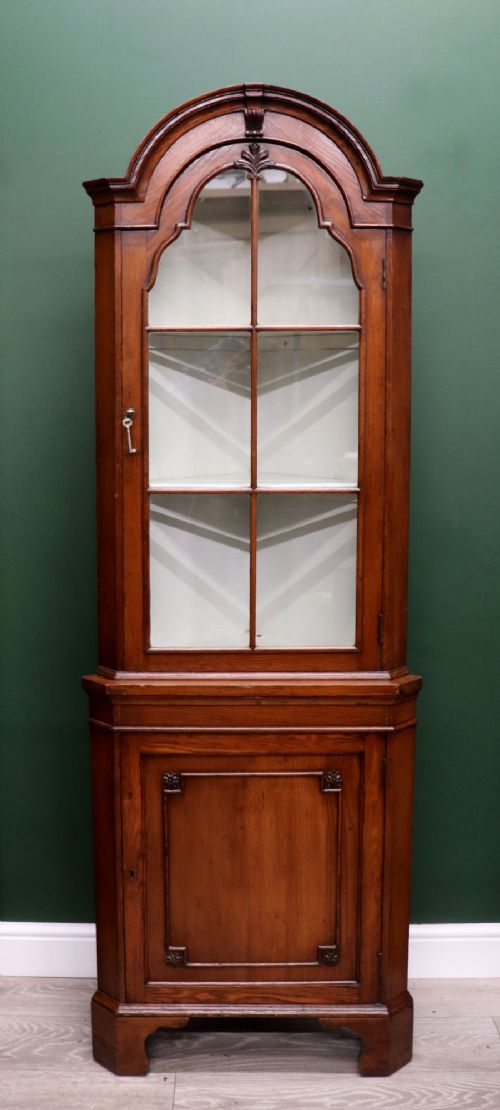
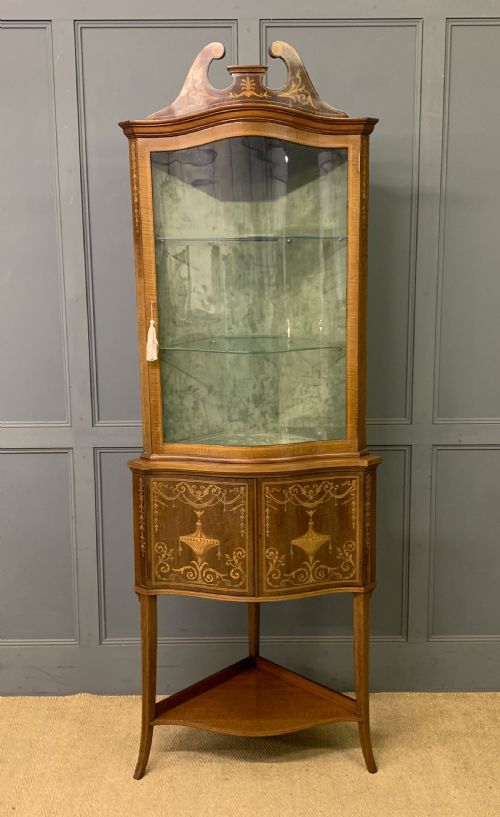
An edwardian glazed corner cupboard is a timber storage and display piece designed to slot into the right-angle junction of two walls. You will frequently find mahogany examples dating from the early twentieth century, alongside variations in oak, walnut and rosewood.
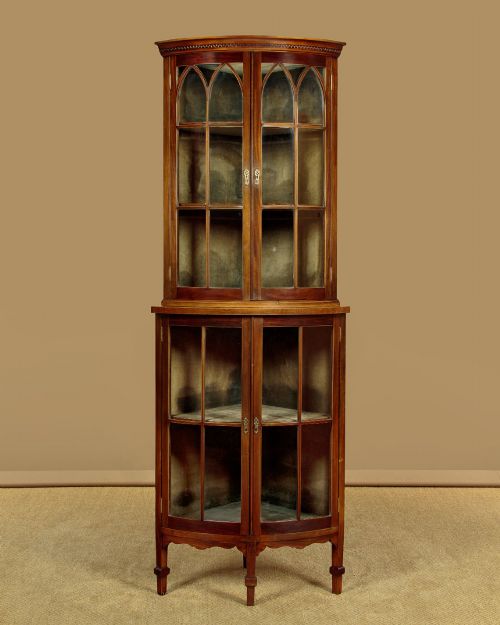
The format ranges from small wall-hanging cabinets to substantial floor-standing double-height units and two-part corner display cabinets. These pieces function as bookcases, corner cabinets and display cabinets within domestic interiors.
How They Were Made
Carpenters constructed these cabinets primarily in mahogany, complemented by satinwood inlay, brass hardware and mirrored glass backs. Glazing took the form of simple glass panes or intricate astragal glazing bars holding individual panes in place.
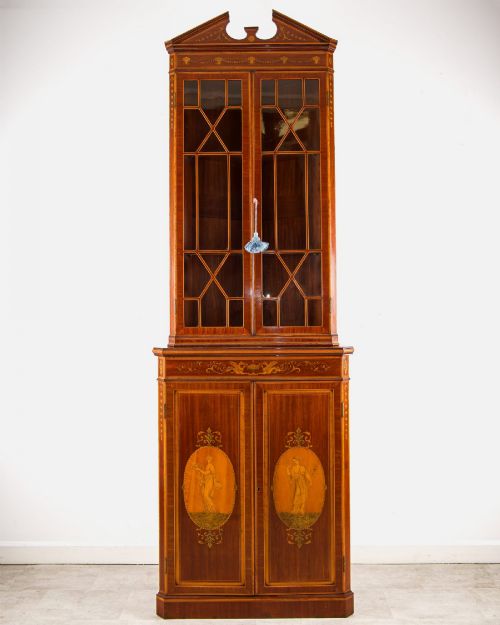
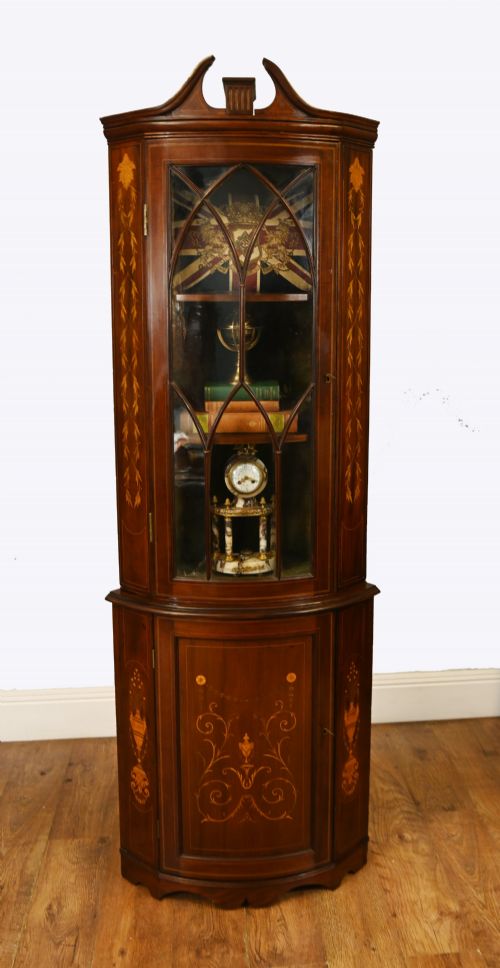
Marquetry and satinwood inlay ornamentation appear across many pieces, often following Sheraton Revival or Georgian Revival design idioms. Cabinets were built as single hanging units or split into two-part standing structures for easier transport.
Current listings feature mahogany as the dominant wood, accompanied by oak, walnut and rosewood across various periods.
What Varies in Quality
The refinement of the timber and the precision of the inlay separate standard production from superior work. Finely executed marquetry, serpentine shaped fronts and delicate astragal glazing denote higher workshop standards.
Substantial standing double-height furniture by notable makers displays greater architectural ambition than simple wall-hanging variants. The clarity of the glass and the integrity of the brass fittings further distinguish the range.
Goodhall, Lamb and Heighway·Edwards And Roberts
The Edwardian Glazed Corner Cupboard Glossary
- Astragal glazing
- Timber or metal bars holding multiple small panes of glass within a door frame. This technique creates a grid pattern typical of period display furniture.
- Marquetry
- Decorative veneer patterns assembled from different wood types to form pictorial or geometric designs. It appears frequently on Edwardian cabinet doors.
- Serpentine front
- A curved furniture front featuring a convex centre flanked by concave wings. This shape adds visual movement to standing corner cabinets.
- Sheraton Revival
- A late nineteenth and early twentieth century design style drawing on eighteenth century neoclassical motifs. Pieces in this style utilise satinwood inlay and symmetrical proportions.
- Two-part cabinet
- A storage unit built in upper and lower sections that separate for moving. These tall corner cupboards often feature glazed top doors over panelled lower cupboards.
Edwardian Glazed Corner Cupboard: Frequently Asked Questions
Where should I place a corner cupboard?
These cabinets suit dining rooms, hallways or sitting rooms where blank wall junctions benefit from functional furniture. Their angled backs allow them to utilise dead space efficiently without protruding far into the room.
Floor-standing versions anchor a corner, while wall-hanging models free up floor space underneath for small tables or chairs.
How do I distinguish wall-hanging from floor-standing models?
Wall-hanging cabinets feature secure mounting brackets or plates affixed to their rear framing for direct attachment to room walls. They tend to be compact and lightweight.
Floor-standing units rest on plinths or bracket feet and often comprise two stacked sections reaching substantial heights.
What is astragal glazing?
Astragal glazing refers to the network of slender wooden mouldings that divide a glass door into smaller individual panes. This method provided structural stability before large sheets of plate glass became common.
On these cabinets, the pattern often takes geometric or gothic-inspired shapes.
Are these pieces strictly Edwardian?
While the majority date from the Edwardian era and the early twentieth century, the selection includes late Victorian and revival pieces inspired by earlier Georgian designs. Makers frequently drew upon eighteenth-century Sheraton styles during the 1900s. Nomenclature often reflects both the period of manufacture and the stylistic revival it follows.