


Mahogany Vitrine Case
A mahogany vitrine case displays treasured objects behind clear glass, bringing elegance and visibility to domestic interiors.
Mahogany Vitrine Case
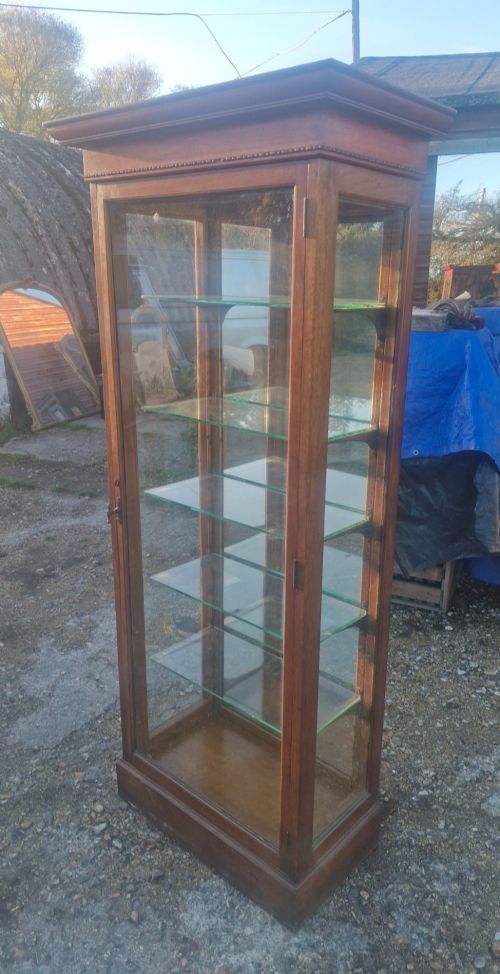
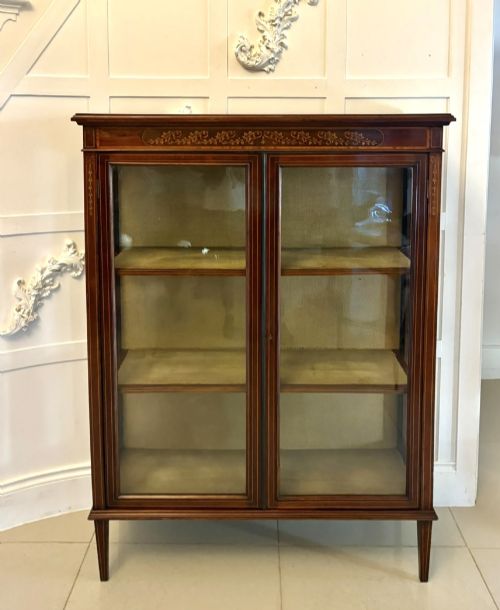
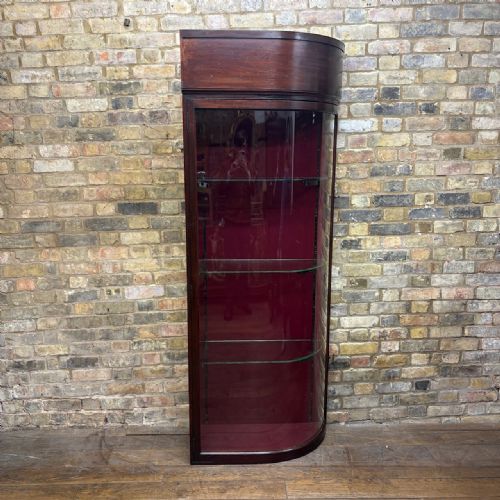
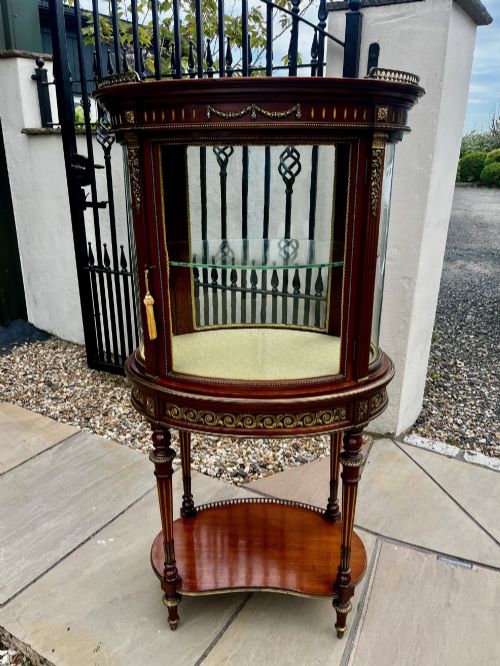
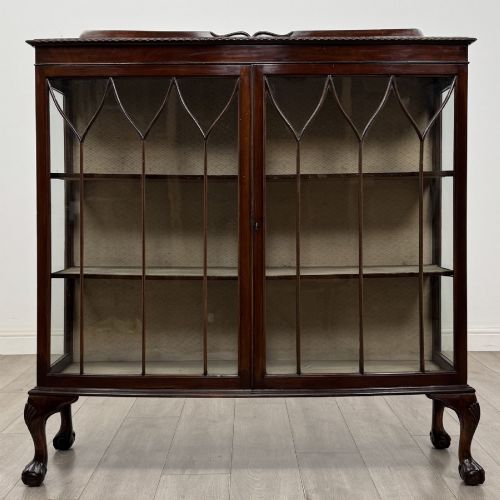
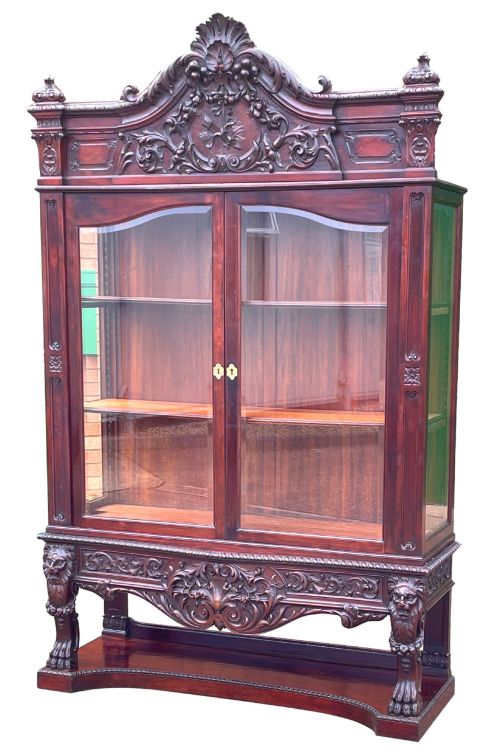
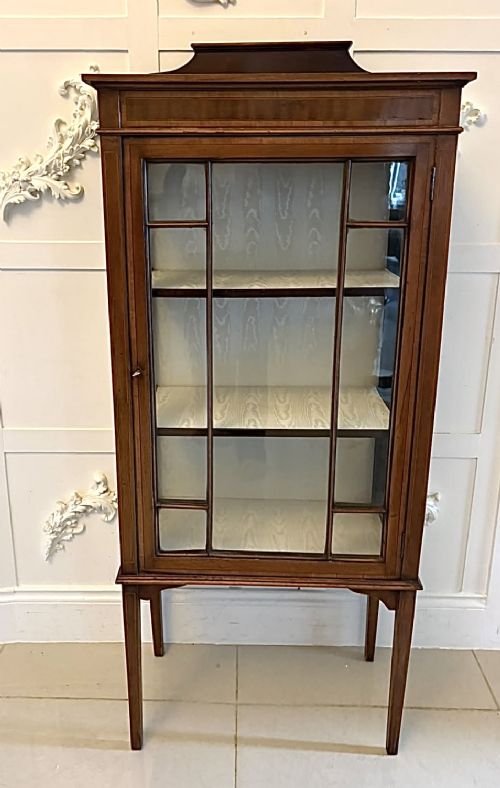
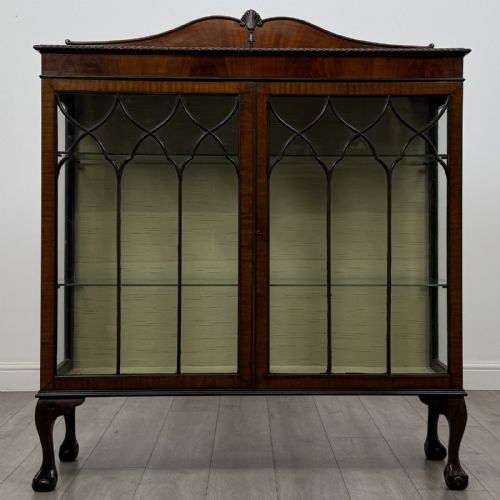
A mahogany vitrine case serves to exhibit ceramics, books, and small collectables while protecting them from dust. These cabinets appear in several forms, including corner cabinets, wall cabinets, and freestanding display cases.
Edwardian and Victorian examples dominate the selection, often carrying Sheraton Revival details or simple glazed doors. Buyers encounter both domestic display cabinets and shop display cases among the available pieces.
Originating across the nineteenth and early twentieth centuries, these cases utilise rich timber frames to create a clear view from multiple angles.
Materials and construction
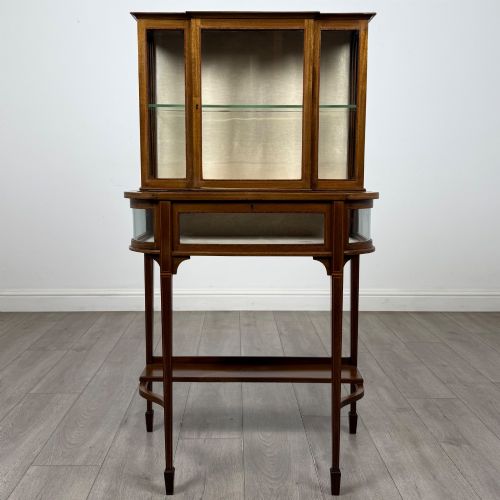
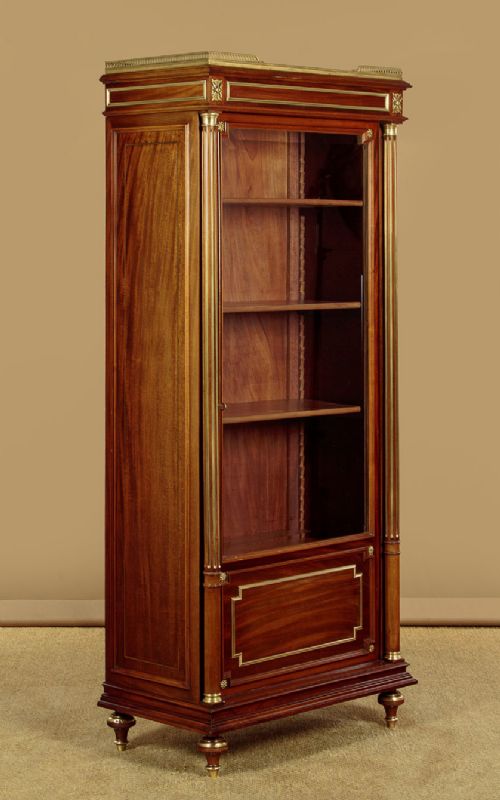
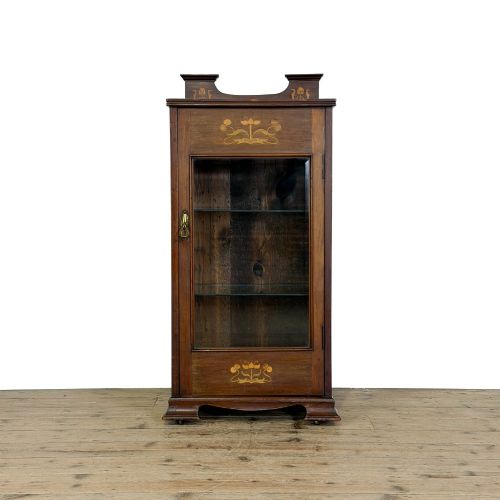
Makers built these cabinets using solid and veneered mahogany, frequently incorporating glass panels for the sides and doors. Satinwood inlay, brass mounts, and gilt bronze provide decorative contrast to the dark timber.
Interiors often line themselves with fabric, velvet, or mirror glass to enhance the appearance of displayed items. Structural support comes from brass fixtures, sturdy feet such as claw or spade designs, and occasionally adjustable glass shelves.
Cabinetmakers applied French polishing and delicate marquetry techniques, particularly during the Sheraton Revival and Edwardian periods, to elevate the visual finish.
Mahogany Vitrine Case Retail Price Guide 2026
Typical asking prices for mahogany vitrine case among the pieces listed under this phrase on Sellingantiques today, from the lower quarter to the upper quarter. They describe what is for sale here now, not the wider market.
Some shop display cabinets built over a century ago still retain their original adjustable glass shelving for showing off miniature treasures.
Craftsmanship and design
Quality rests in the precision of the timber work, the crispness of the satinwood inlay, and the integration of brass mounts. Superior pieces display harmonious proportions and careful matching of mahogany veneers across the doors and panels.
The refinement of period revival details, such as carved claw feet or intricate Vernis Martin decoration, distinguishes standard domestic cabinets from finer examples. Glazing quality and the smoothness of door operations further separate the tiers of production.
F. Sage & Co
The Mahogany Vitrine Case Glossary
- Sheraton Revival
- A late nineteenth and early twentieth-century design movement inspired by the neoclassical furniture of George Sheraton. It often incorporates satinwood inlay and tapered legs.
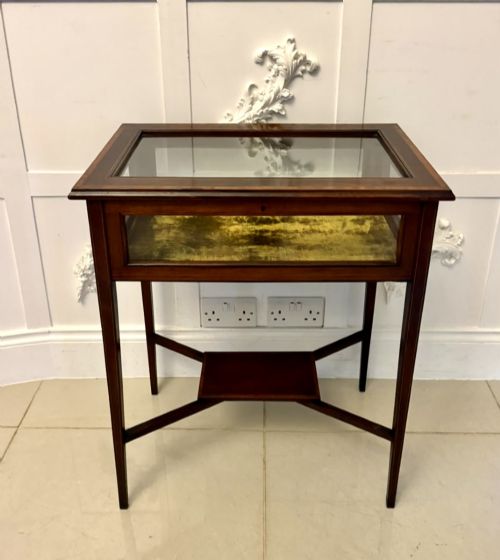
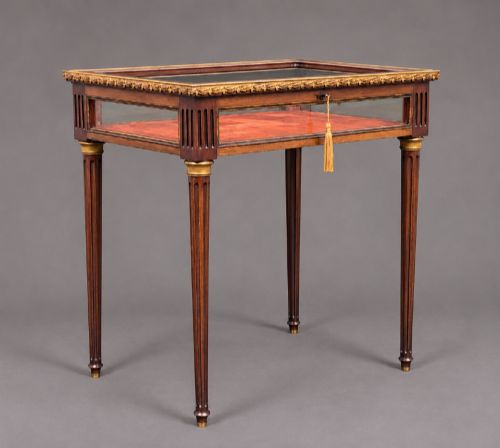
- Bijouterie table
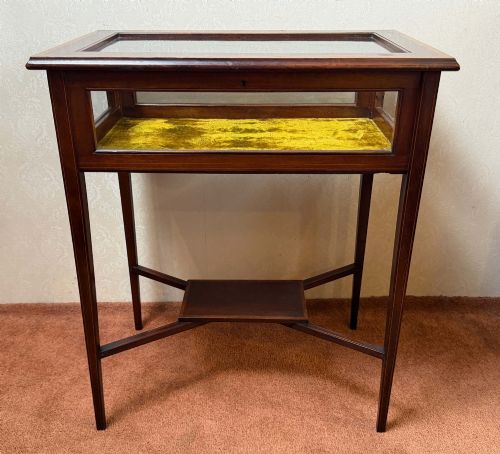
- A shallow glass-topped display table intended for jewellery, medals, and small trinkets. These pieces frequently sit on slender legs with brass mounts.
- Vernis Martin
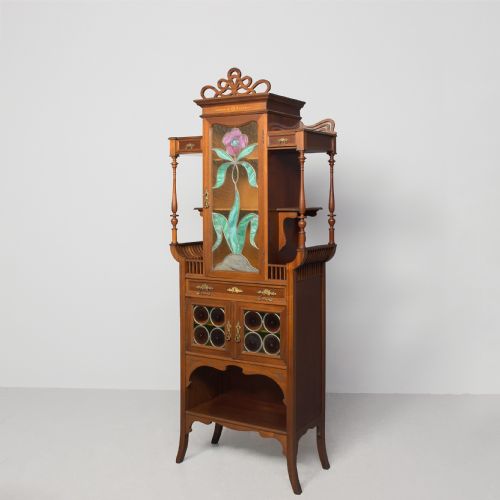
- A form of simulated Japanese lacquer developed in eighteenth-century France and replicated in later revival pieces. It uses layered varnish to create luminous painted scenes.
- Marquetry
- The art of applying decorative veneer pieces to a structure to form intricate patterns or pictures. It relies on contrasting timbers like satinwood and mahogany.
Mahogany Vitrine Case: Frequently Asked Questions
What is a mahogany vitrine case used for?
These cabinets house and exhibit porcelain, glassware, books, and small collectables. The glass panels allow owners to view their items while keeping dust away.
Historically, they occupied drawing rooms and parlours to showcase family possessions and travel souvenirs.
How do I tell an Edwardian vitrine from a Victorian one?
Edwardian pieces often embrace lighter Sheraton Revival aesthetics, featuring delicate satinwood inlay and tapered legs. Victorian examples lean towards heavier timber work, richer carvings, and darker polished finishes.
Examining the internal linings and brass hardware also helps narrow down the period.
Where should I place a display cabinet at home?
Position your cabinet away from direct sunlight to protect timber finishes and fabric linings from fading. Rooms with stable temperatures help preserve the integrity of the glass and wood joints.
Corner cabinets work well in smaller spaces, while freestanding pedestals suit larger open areas.
Are the shelves inside adjustable?
Many shop display cases and later cabinets include adjustable glass shelves to accommodate objects of varying heights. Older domestic cabinets often feature fixed wooden or glass shelving arrangements.
Checking the internal support brackets reveals whether the shelf height can change.