
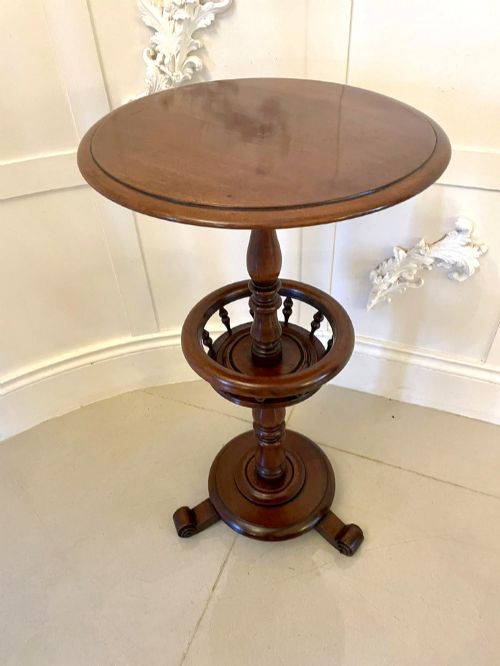
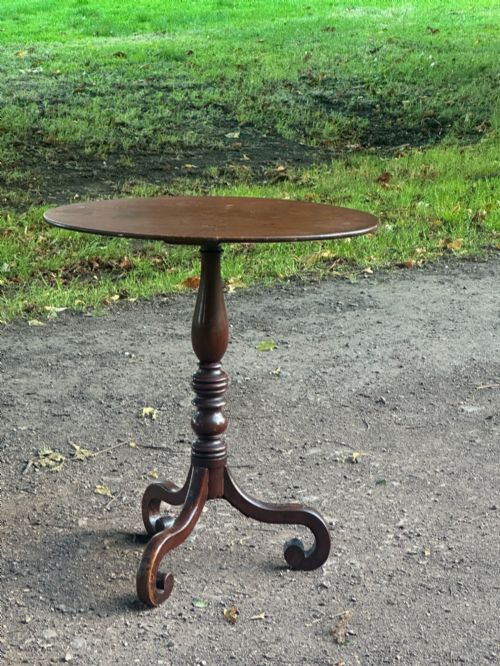
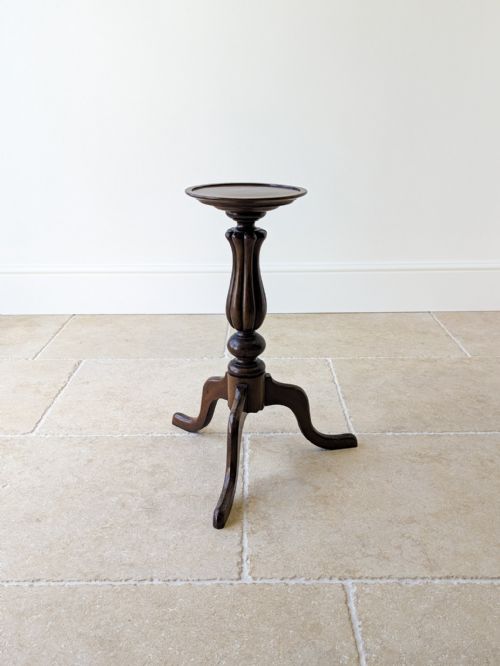
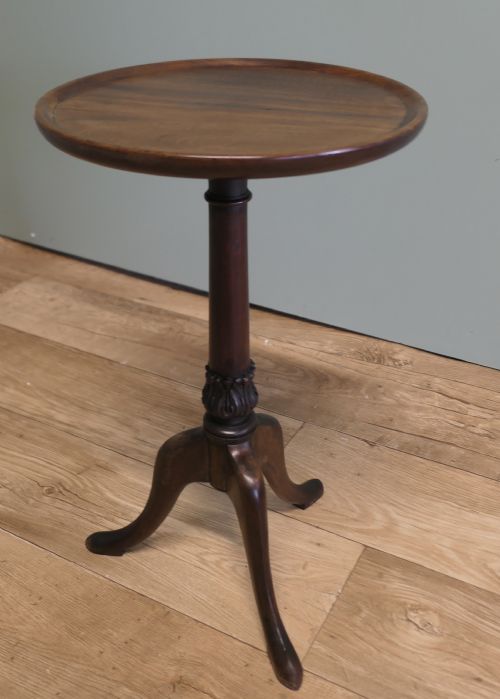
Mahogany Tripod Wine Stand
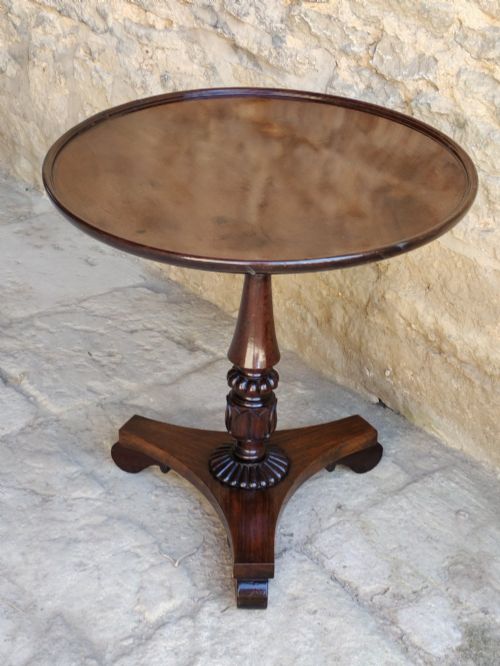
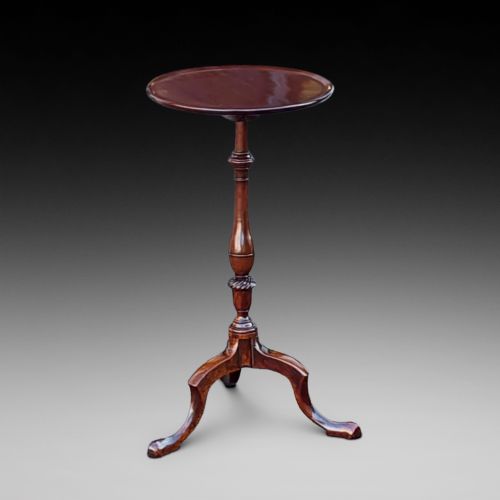
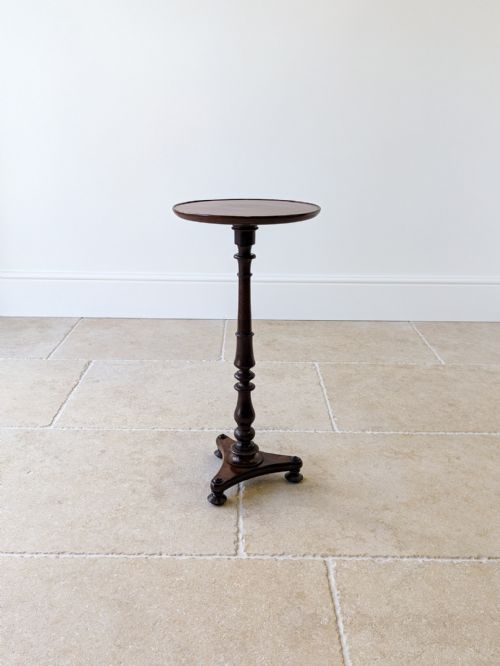
A mahogany tripod wine stand offers a slender, portable surface suited to holding a glass or a lamp beside a chair.
Mahogany Tripod Wine Stand
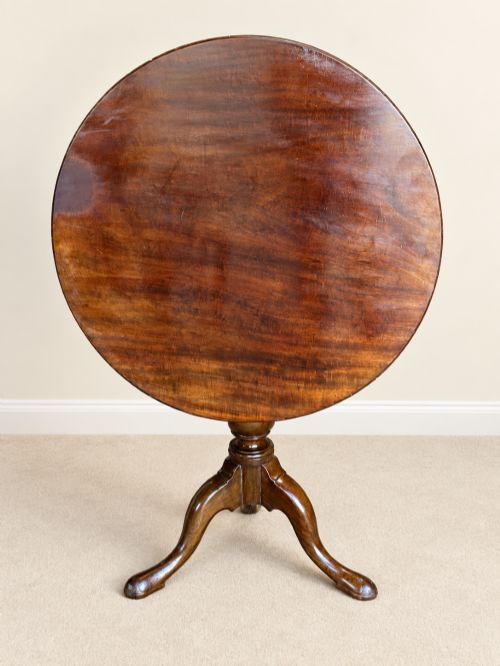
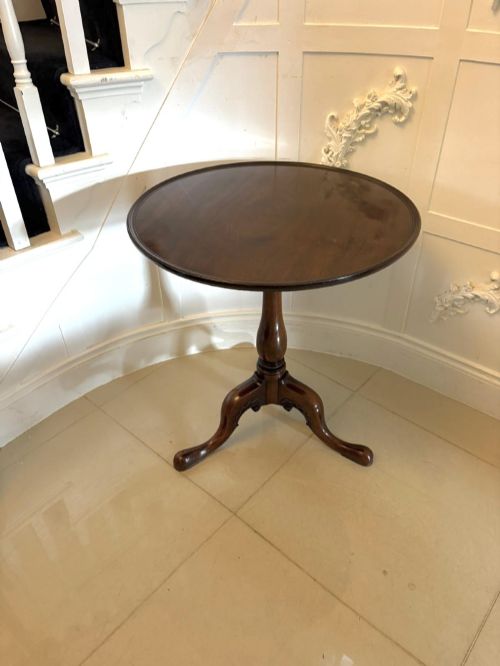
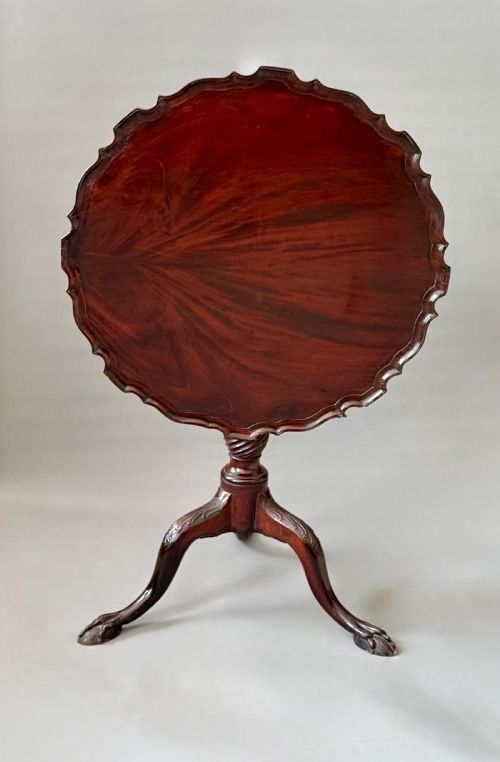
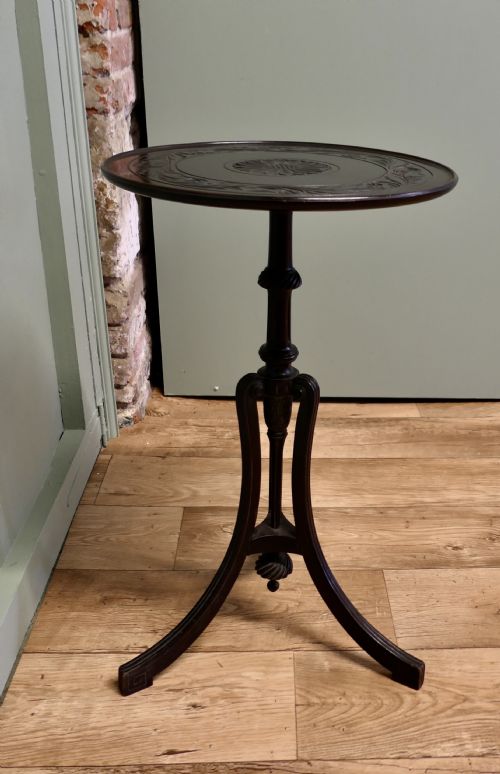
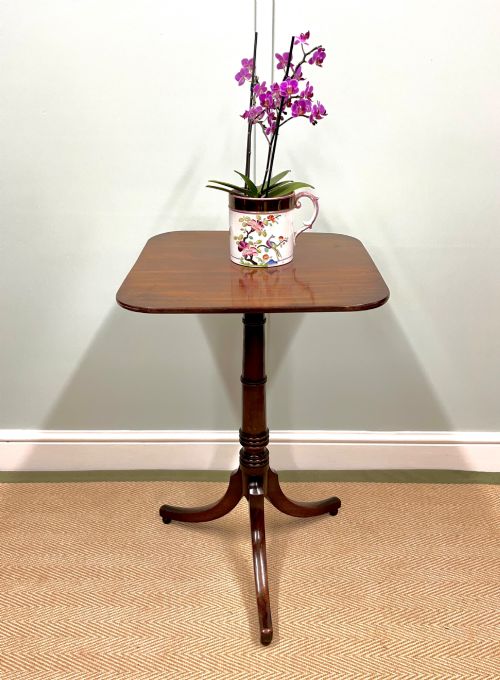
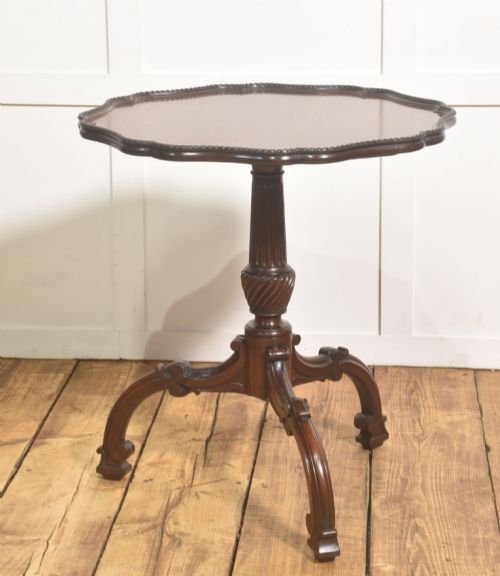
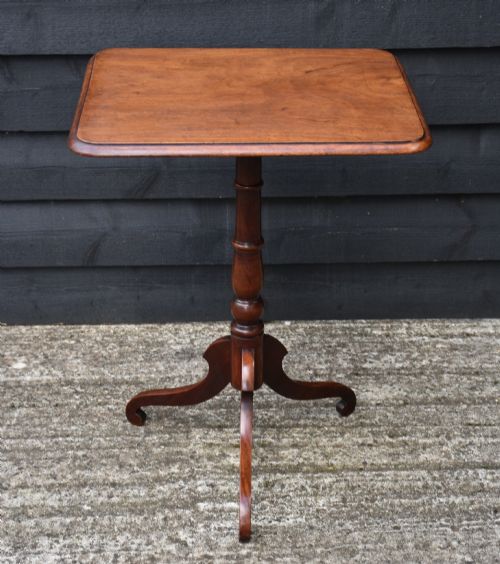
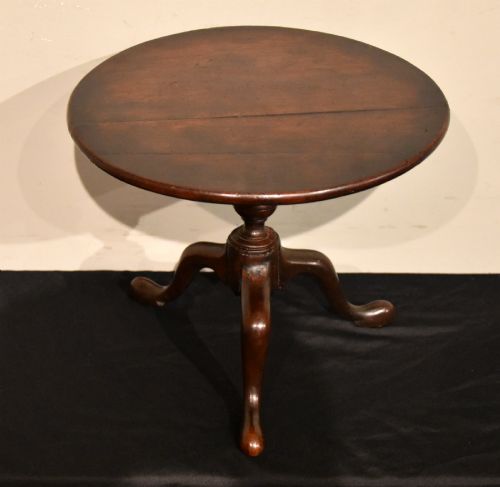
A mahogany tripod wine stand brings a compact, raised surface on three splayed legs to a room, serving primarily as a small table for drinks, candles or reading lamps. These tables appear across multiple periods, most notably in Georgian, Regency, and Victorian eras, alongside later revival pieces.
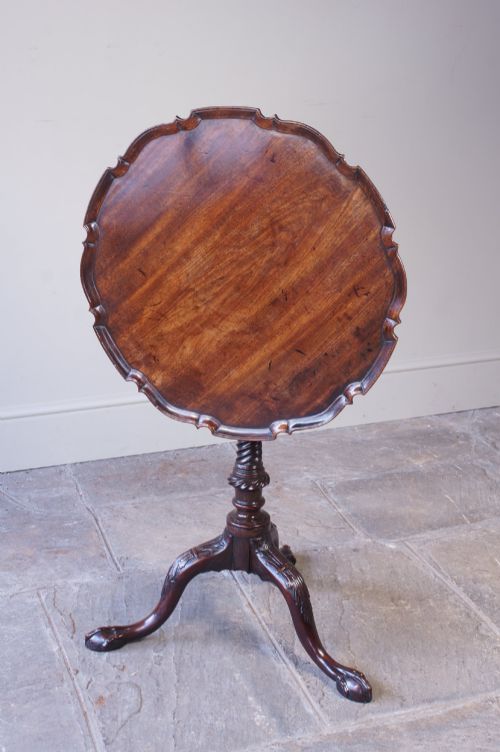
The most common formats on this page are occasional tables, wine tables, and side tables featuring circular or shaped tops supported by a central pillar and a three-legged base. Many examples include a tilt-top or snap-top mechanism, allowing the top to pivot upright when not in use.
Originating as practical items for the parlour or dining room, these stands vary from plain, utilitarian surfaces to elaborately carved pieces with pie-crust edges, tray tops, or burr wood and inlay details.
Distinctions in Quality
Quality rests in the crispness of the timber selection, the harmony of proportions between the top and the base, and the precision of the joinery at the leg joints. Richness of grain, particularly in figured mahogany or burr wood tops, marks out superior examples.
The sophistication of decorative elements, such as fine carving along the pillar or a well-executed pie-crust rim, distinguishes standard utility pieces from high-style workshop productions.
Some tables tilt up so smartly they spent more time facing the wallpaper than holding a glass.
Gillow
The Mahogany Tripod Wine Stand Glossary
- Tripod table
- A small standalone table supported by a central pillar resting on three legs. This configuration provides stability on uneven floors.
- Tilt-top table
- A table featuring a mechanism that allows the top to hinge into a vertical position. This saved floor space when the table was not in use.
- Pie-crust rim
- A decorative raised edge carved with undulating curves resembling pastry work. It prevented items from sliding off the surface.
- Birdcage
- A revolving wooden framework beneath the table top that permits the surface to both rotate and tilt. It represents a more complex piece of joinery.
- Torchere
- A tall, slender stand designed to hold a lamp or candle. These pieces share similar tripod bases with wine tables.
Mahogany Tripod Wine Stand: Frequently Asked Questions
What is a wine stand used for?
These small tables were originally designed to hold wine glasses or bottles near seating areas during social gatherings. Today they function equally well as lamp tables or occasional surfaces.
Their compact footprint allows them to fit easily into tight corners or beside armchairs without crowding a room.
Are these tables sturdy?
The three-legged design naturally accommodates uneven historical floorboards without rocking. The outward splay of the feet provides a stable base despite the slender silhouette.
While robust enough for daily use as lamp stands, their light construction means they should not be overloaded with heavy objects.
How do I date a mahogany stand?
Dating relies on observing the leg profiles, timber characteristics, and structural joinery methods. Earlier Georgian examples often show finer carving and dense, dark mahogany.
Victorian and later revival pieces tend to exhibit heavier turnery or machine-cut elements, while Edwardian variations introduce lighter inlay work.