
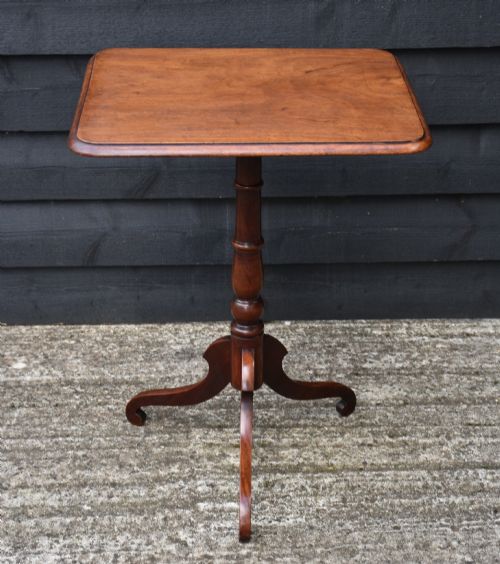
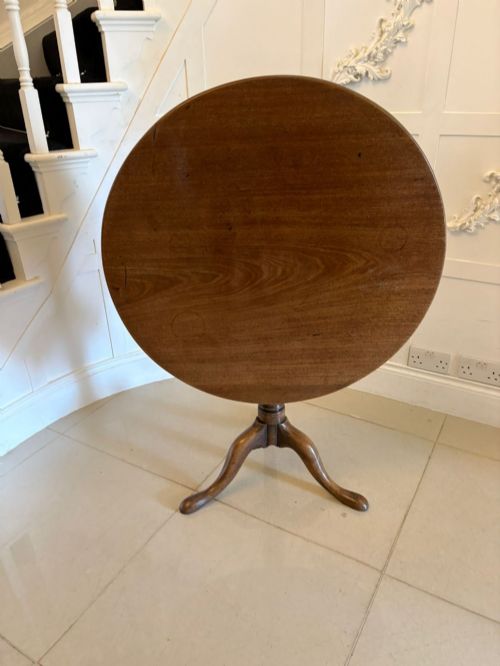
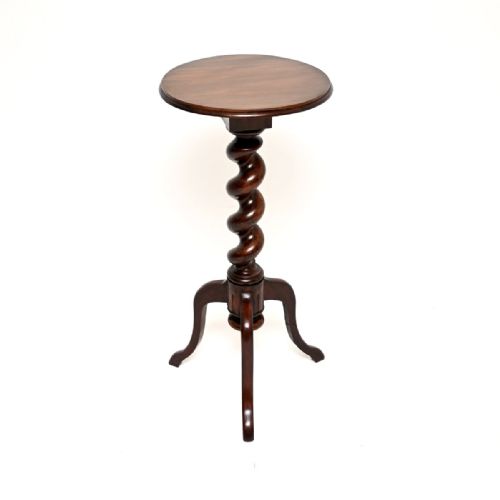
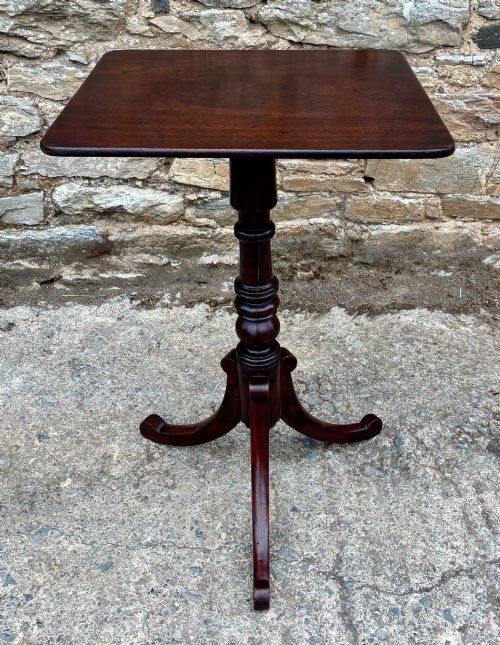


Mahogany Tripod Lamp Table
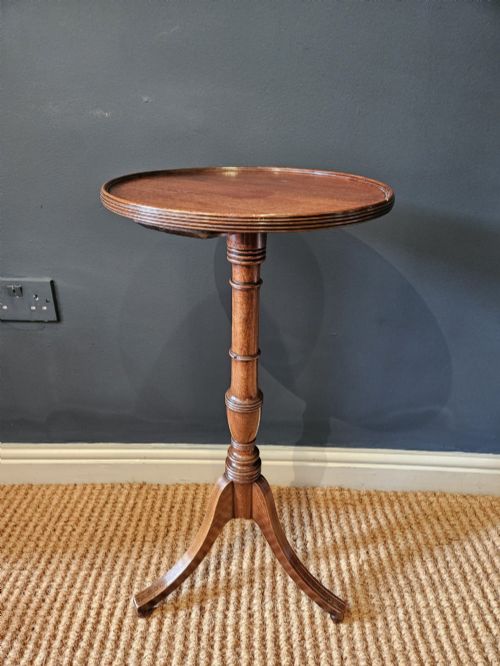
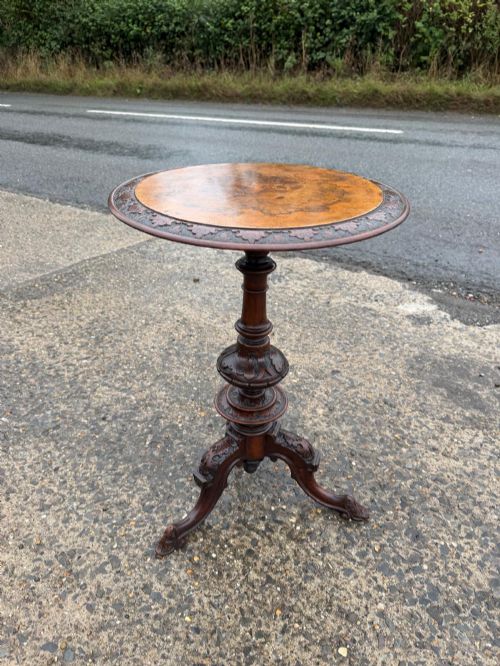
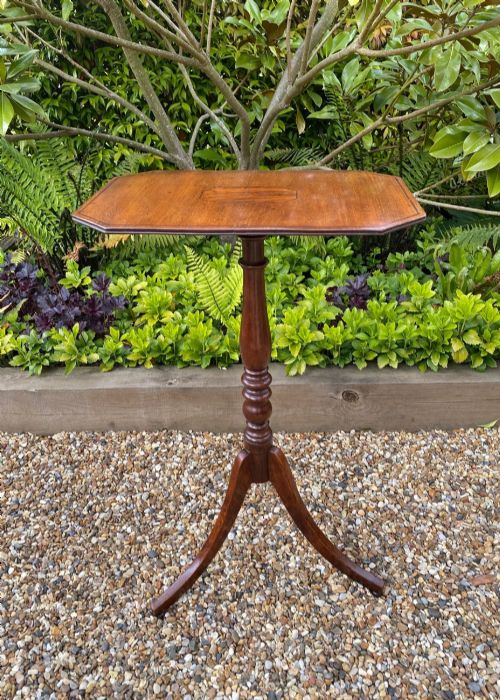
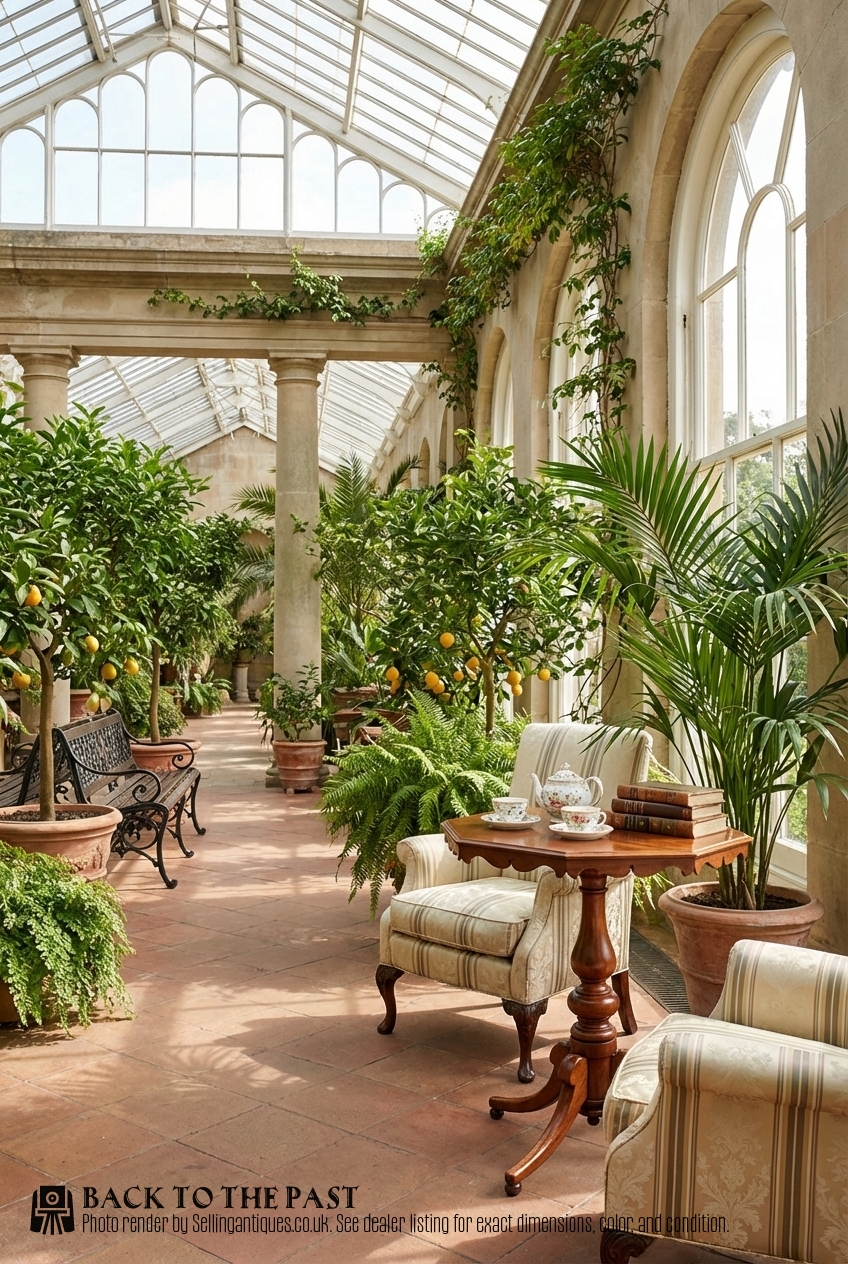
A mahogany tripod lamp table balances a heavy column on three slender legs, holding a single light beside a chair.
Mahogany Tripod Lamp Table
A mahogany tripod lamp table appears across the Georgian, Regency, and Victorian eras, often functioning as a wine table, occasional table, or candle stand. These compact pieces serve beside seating to hold lighting or small items without crowding a room.
The selection ranges from mid-18th century George III examples to Edwardian and later reproductions. Circular, oval, and octagonal tops frequently tilt on a birdcage or snap mechanism for easy storage when not in use.
Materials and Construction
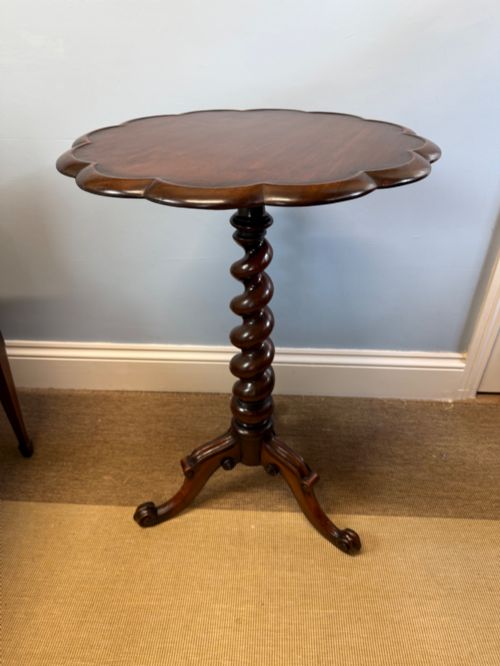
Makers utilised solid mahogany and Cuban mahogany, sometimes selecting flame, burr, or figured veneers to accent the circular tops. Secondary woods such as cherry appear beneath, while brass catches and hinges secure the tilting mechanisms.
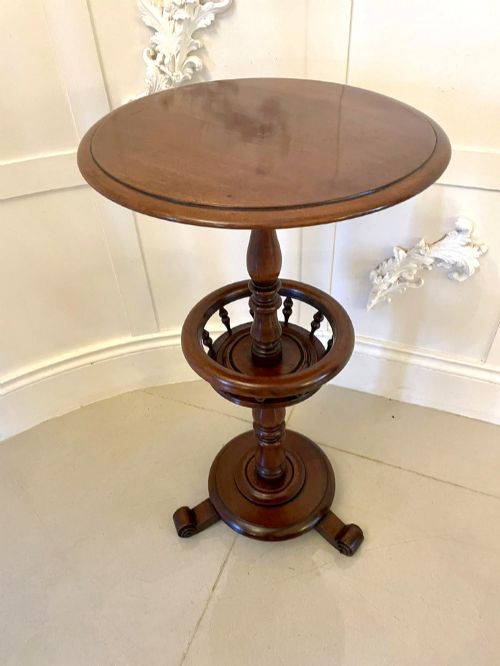
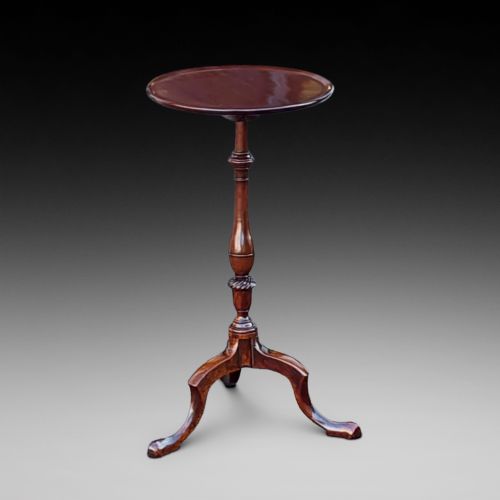
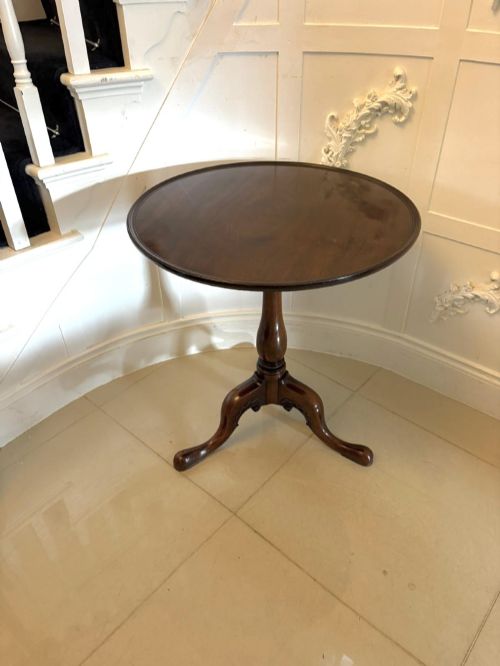
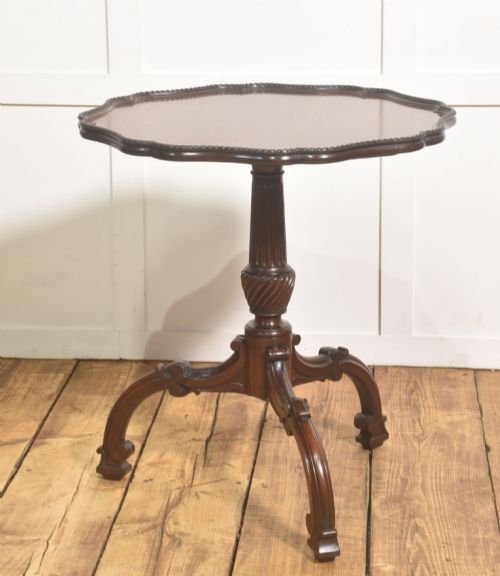
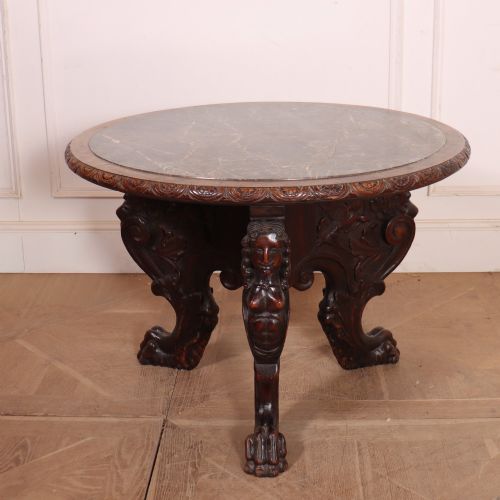
Turned pedestals rise from three splayed legs, which frequently terminate in pad, spade, or carved claw and ball feet. Certain variants incorporate bobbin turning, leather inserts, or marble tops.
Listings feature mahogany, rosewood, burr wood, and marble, spanning the Georgian, Regency, Victorian, and Edwardian periods.
Assessing Craftsmanship
Superior examples show tight, dense grain in the mahogany top and crisp, deep carving along the pillar and legs. The joint where the central column meets the tripod base requires precise joinery to ensure the table stands level without wobble.
The sophistication of the tilting mechanism separates standard utility tables from finer ones. Smooth action in the brass fittings and well-fitted catches indicate careful workshop production.
The Mahogany Tripod Lamp Table Glossary
- Tripod base
- A pedestal support resting on three legs. This design allows the table to stand firmly on uneven floors.
- Tilt top
- A tabletop hinged to the central column that pivots vertically. This mechanism permitted the table to be stored flat against a wall when the room was cleared.
- Snap top
- A table top secured by a spring catch that locks into a horizontal position. It releases to tilt the surface upward.
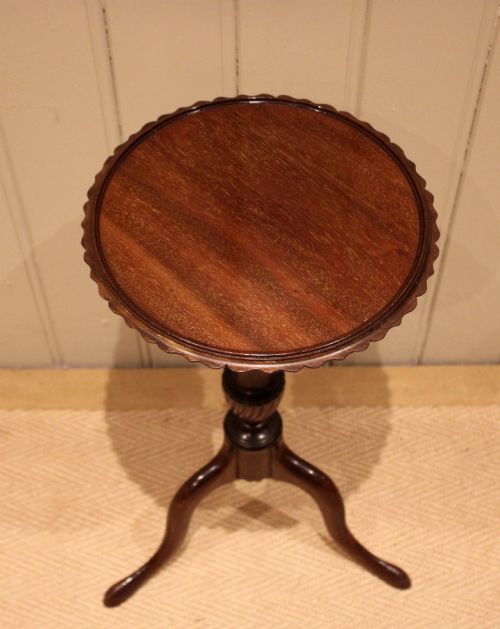
- Pie crust rim
- A raised, decoratively carved edge shaped around the perimeter of the tabletop. It prevents small items from rolling off.
- Birdcage
- A revolving wooden framework beneath the tabletop that allows the surface to both rotate and tilt. This assembly is found on finer examples.
Mahogany Tripod Lamp Table: Frequently Asked Questions
What is a mahogany tripod lamp table used for?
These tables provide a sturdy surface for a lamp, book, or glass beside a chair or sofa. Their small footprint makes them adaptable for corners and tight spaces.
Historically, many served as wine tables or candle stands during evening gatherings. Today, they function primarily as decorative accents that hold bedside or living room lighting.
How do I date an antique mahogany lamp table?
Dating relies on observing the leg profiles, turning styles, and timber characteristics. Georgian pieces often feature crisp carving and Cuban mahogany, while Victorian versions can display heavier proportions or bobbin turning.
Examining the underside reveals construction methods, such as hand-cut screws or newer metal brackets, which help distinguish 18th-century work from later revivals.
Are tilt-top tripod tables stable?
A well-fitted mechanism holds the tabletop firmly in place without excessive play. The three splayed legs distribute weight evenly when the column is properly secured.
Wear in the central catch can cause the top to wobble slightly during daily use. Checking the pivot block ensures the surface remains level and secure.
How do I care for a mahogany occasional table?
Regular dusting with a soft, dry cloth preserves the polished timber surface. Direct sunlight and sudden temperature changes should be avoided to prevent the mahogany veneer from warping or drying out.
Applying a traditional wax polish occasionally nourishes the grain without building up a heavy residue. Coasters protect the antique finish from moisture marks.