



Mahogany Tier Unit
A mahogany tier unit brings stacked utility into a room, offering open display shelves or enclosed compartments across periods from the Georgian era to the early twentieth century.
Mahogany Tier Unit
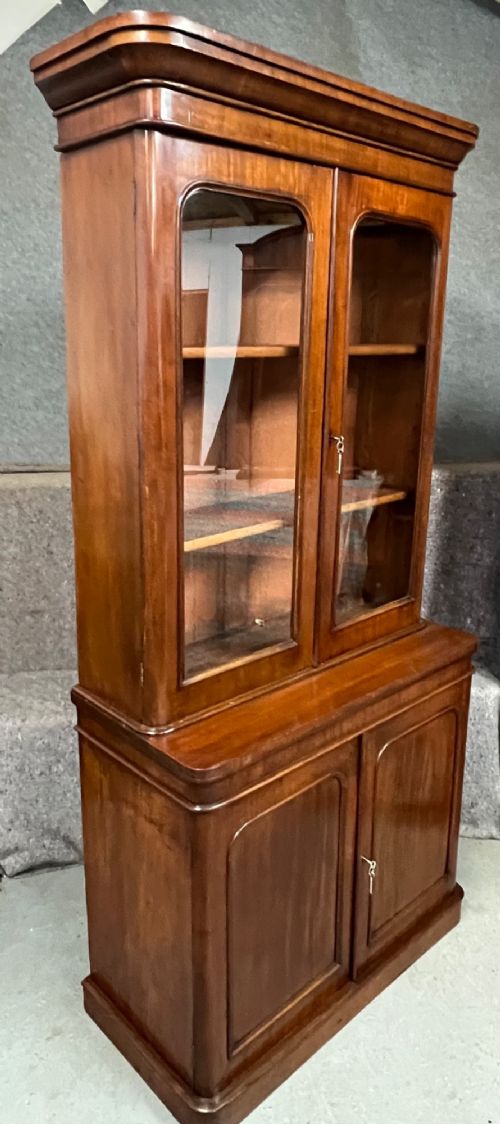
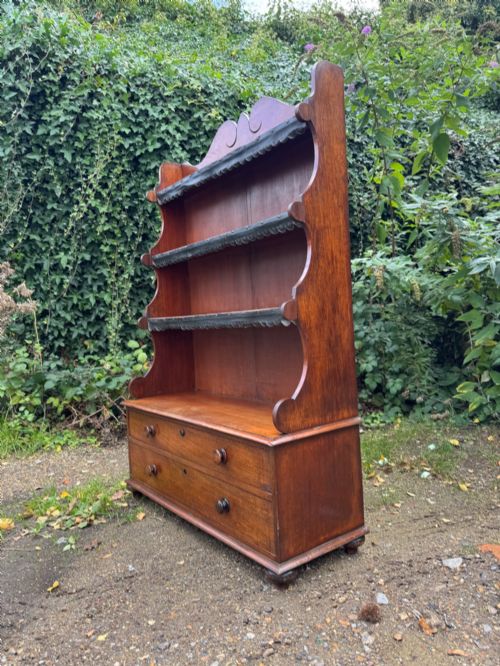
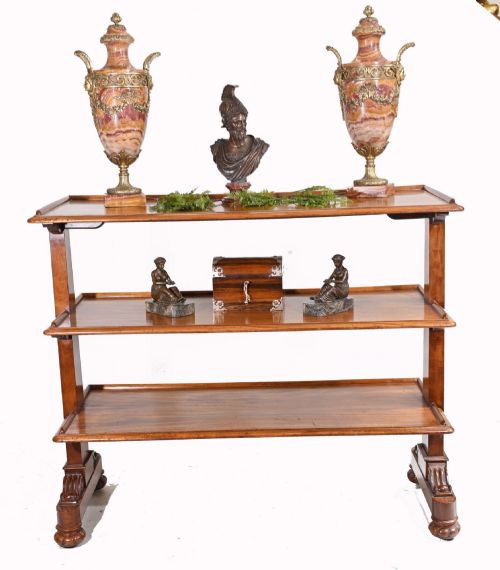
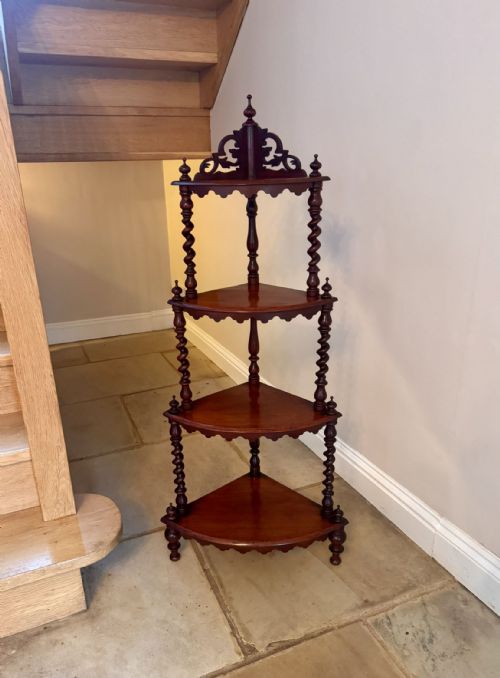
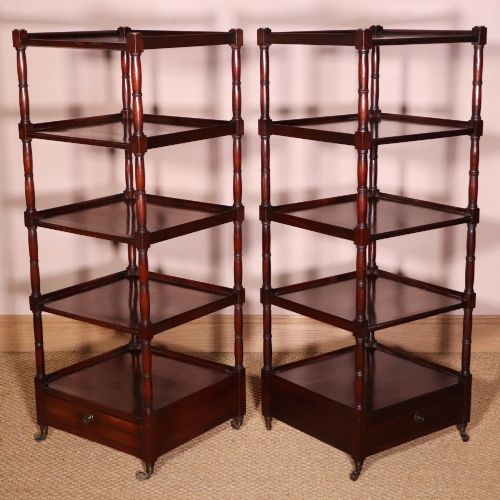
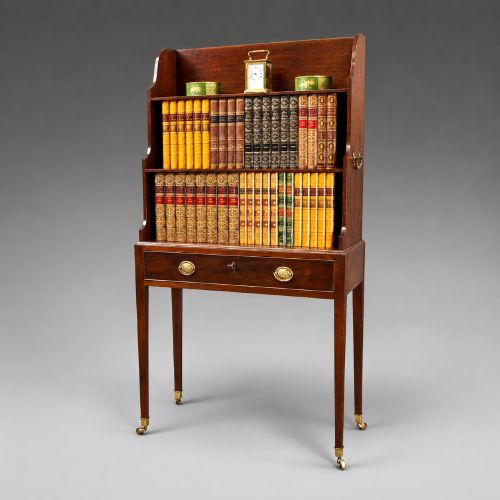
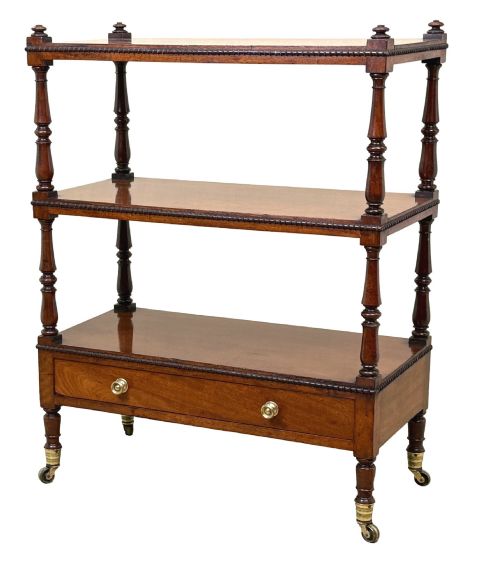
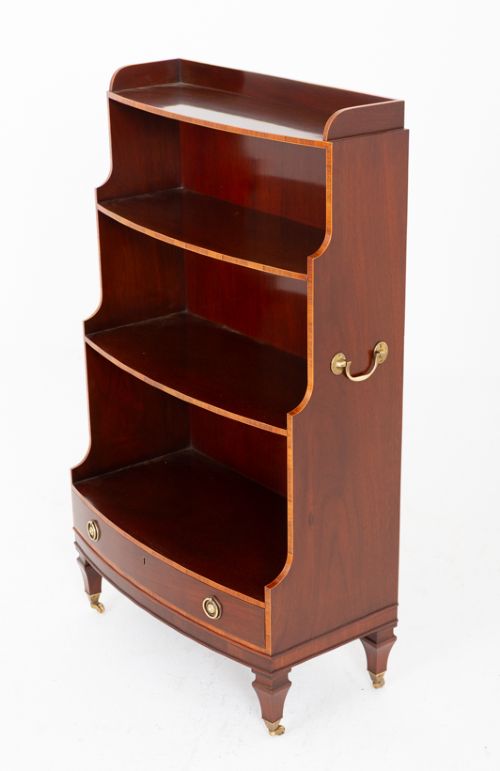
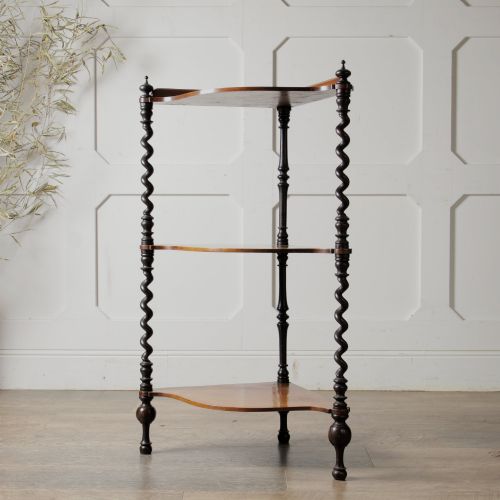
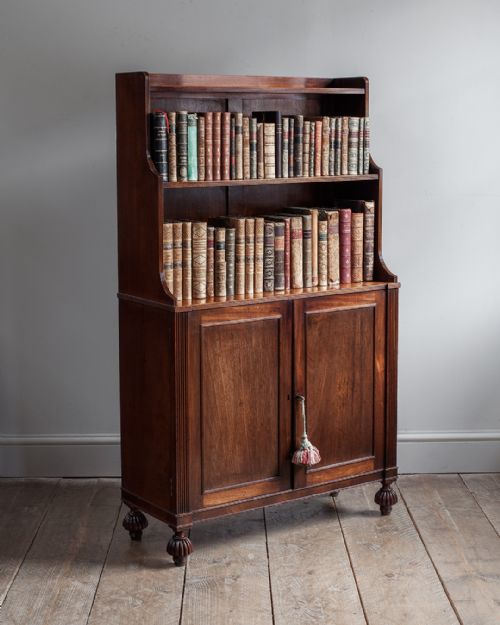
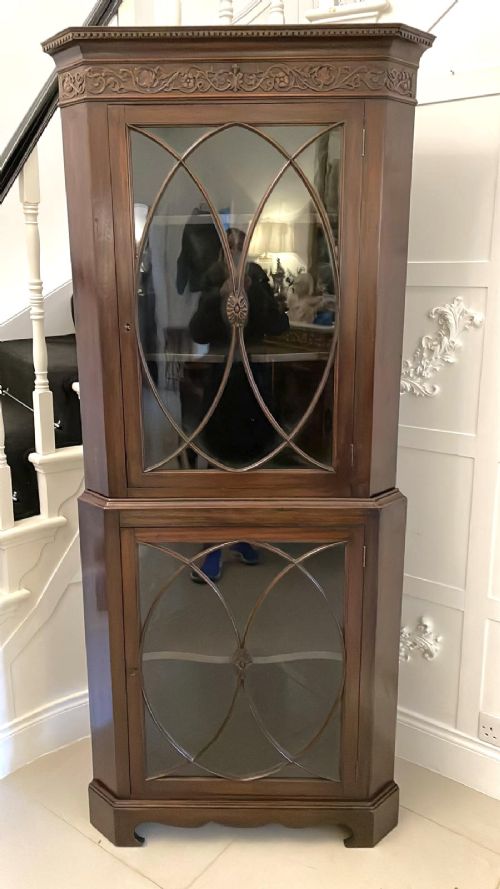
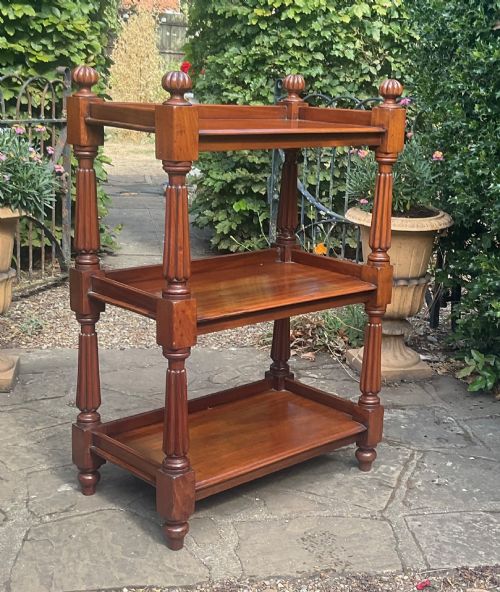
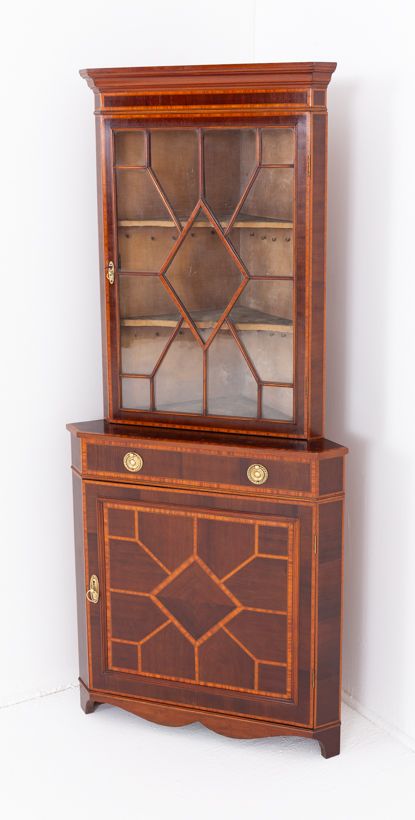
When you examine a mahogany tier unit on this page, you encounter pieces designed for storage and display, most frequently taking the form of whatnots, etageres, waterfall bookcases, and hanging shelves. These items range from compact corner cabinets and slim three-tier buffets to tall open bookcases resting on brass castors.
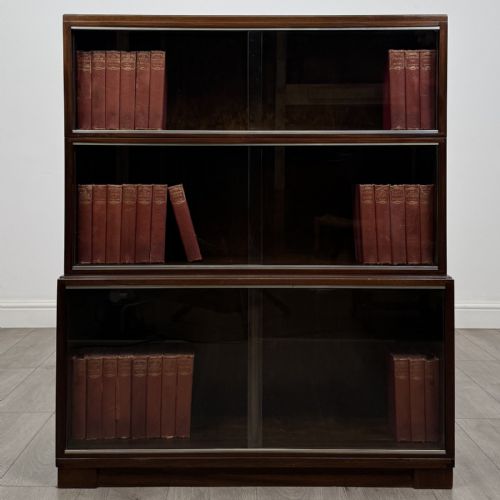
The pieces span multiple eras, with strong representation from the Regency, Georgian, and Victorian periods alongside later twentieth-century interpretations. You will find freestanding display shelves, stacking bookcases, and portable bookshelves built to serve domestic libraries and sitting rooms.
What varies in quality
The distinction between standard domestic furniture and finer examples lies in the selection of timber figures, such as highly figured flame mahogany veneer, and the crispness of carved details or inlaid borders. Superior pieces exhibit balanced proportions across multiple tiers and retain original hardware, including brass castors and handles.
Execution of the joinery and overall structural integrity separate utilitarian shelves from items of superior design, particularly in complex forms like multi-tiered etageres or serpentine corner cabinets.
Mahogany Tier Unit Retail Price Guide 2026
Typical asking prices for mahogany tier unit among the pieces listed under this phrase on Sellingantiques today, from the lower quarter to the upper quarter. They describe what is for sale here now, not the wider market.
Some nineteenth-century whatnots arrived with built-in cellarettes for discreet refreshment storage while you browsed your library.
The Mahogany Tier Unit Glossary
- Whatnot
- A piece of furniture consisting of several open shelves for displaying small objects, popular in the nineteenth century. It stands either freestanding or fitted for a corner.
- Etagere
- A set of open shelves for displaying ornaments or books. This French form shares much with the English whatnot.
- Waterfall bookcase
- A set of open shelves that progressively recede in depth from bottom to top, creating a stepped profile resembling a cascade.
- Astragal glazed
- A glass door or cabinet front divided into small panes by narrow wooden bars called astragals. This technique adds architectural detail to bookcases and cabinets.
- Flame mahogany veneer
- A sliced layer of mahogany showing a distinctive flickering, flame-like grain pattern. Cabinet makers applied this to prominent surfaces for visual impact.
Mahogany Tier Unit: Frequently Asked Questions
What is a whatnot?
A whatnot is a multi-tiered shelving unit designed for displaying ornaments, books, or small collectables. These pieces became prominent in interiors during the Georgian and Victorian eras.
They stand either freestanding on legs, often with castors, or built to fit snugly into room corners. The design prioritises vertical display space within a minimal footprint.
How do waterfall bookcases differ?
Waterfall bookcases feature graduated shelves that step back from bottom to top. This creates an angled profile that resembles a descending cascade.
This form allows easy access to books on every level while drawing the eye upward. They appear across Regency, Victorian, and later revival periods.
Were these units used for books?
Many tier units served multiple domestic functions beyond holding books, including the display of ceramics, silver, and decorative objects. Etageres and whatnots accommodated miscellaneous household items.
Specific variants like hanging shelves and portable bookshelves provided adaptable storage in parlours and studies. Their open structure made frequently referenced volumes accessible.
How do I care for mahogany?
Mahogany furniture requires stable indoor humidity levels away from direct heat sources and strong sunlight. Routine dusting with a soft, dry cloth preserves the polished surface.
Avoid chemical polishes that build up residue over time. Periodic waxing helps maintain the natural lustre of the timber.