


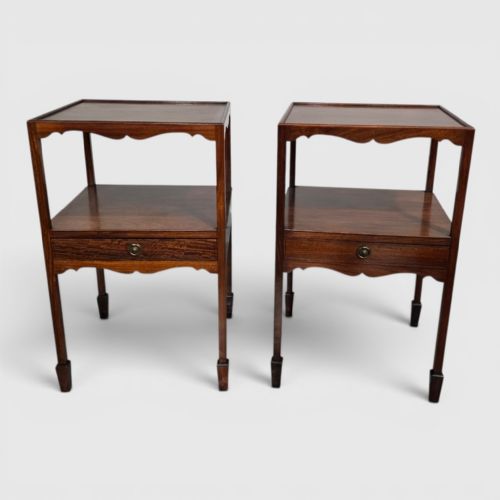

Mahogany Tier Lamp
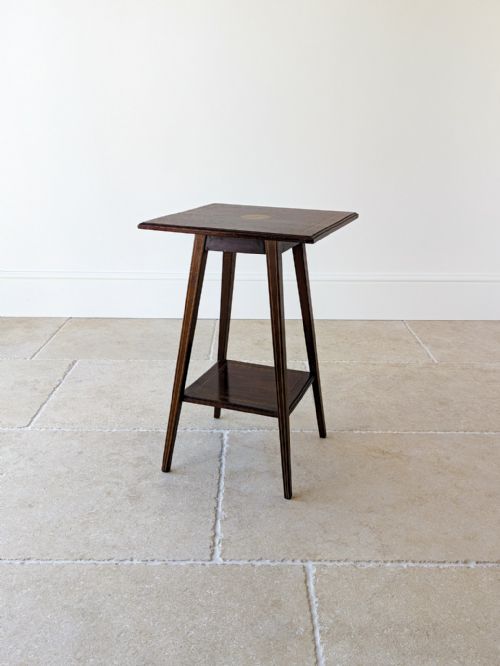
A mahogany tier lamp serves as a functional pedestal for illumination, offering multiple levels of timber surface created during the Victorian and Edwardian eras.
Mahogany Tier Lamp
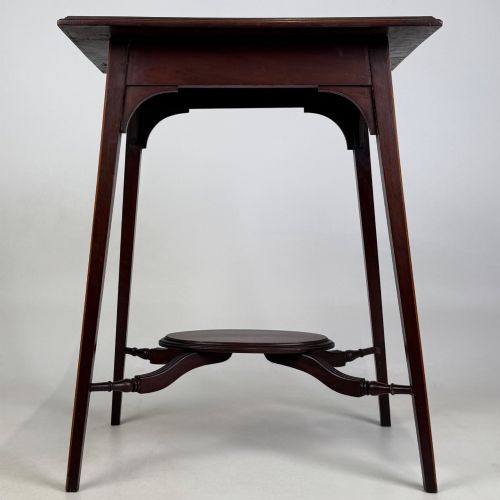
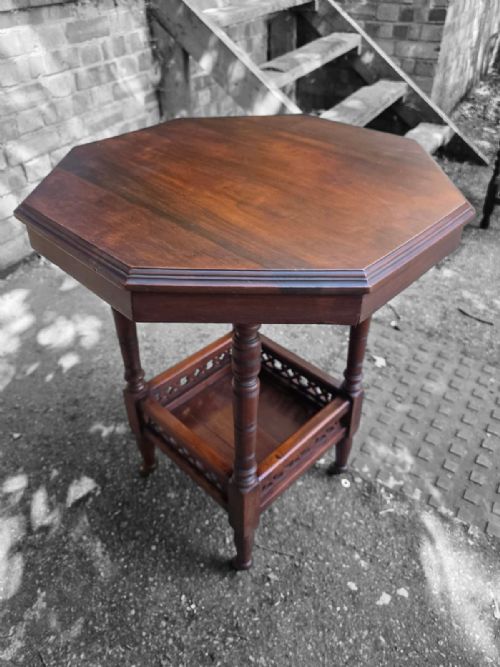
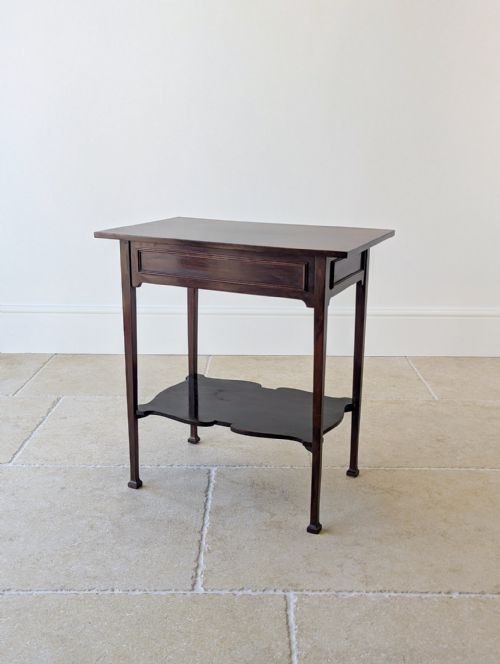
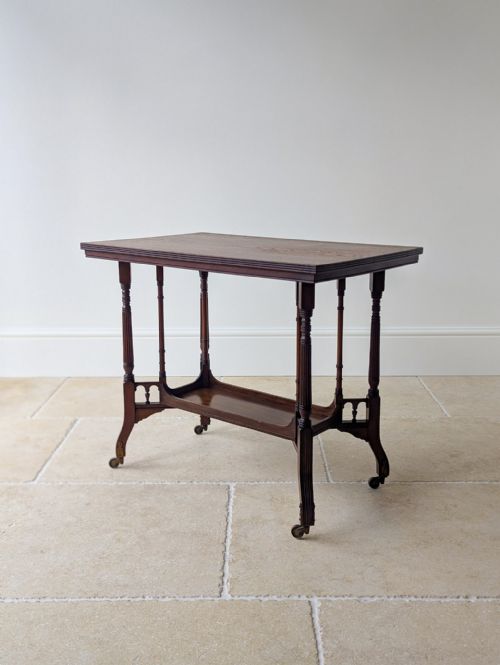
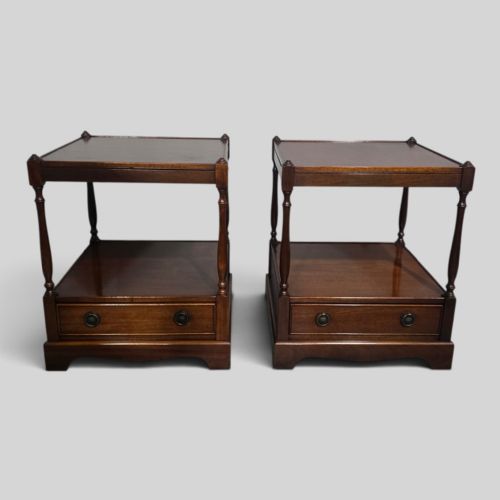
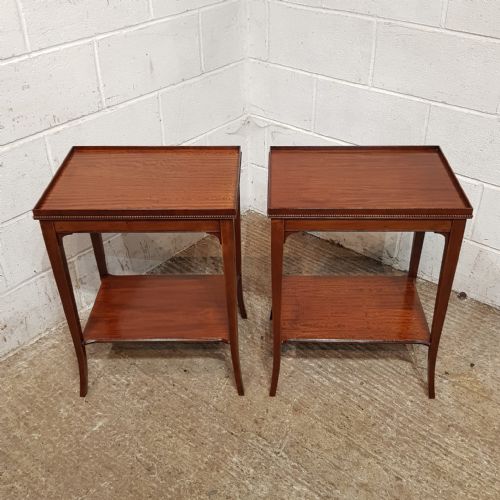
A mahogany tier lamp takes the form of a multi-level timber table designed to hold a light source or decorative object in domestic spaces. These pieces span the Georgian, Victorian, Edwardian, and Regency periods, appearing in forms such as occasional tables, side tables, bedside tables, and etageres.
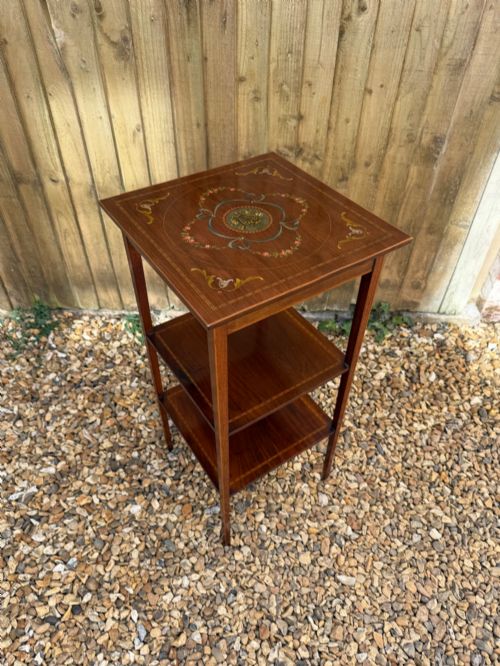
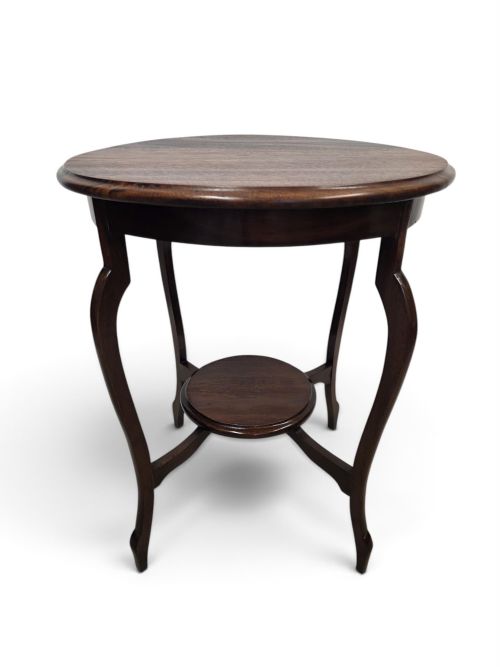
Buyers most frequently encounter Edwardian and Victorian iterations on this page, often constructed with two or three tiers connected by slender supports. The design accommodates lamps, plants, and books while occupying minimal floor space in a room.
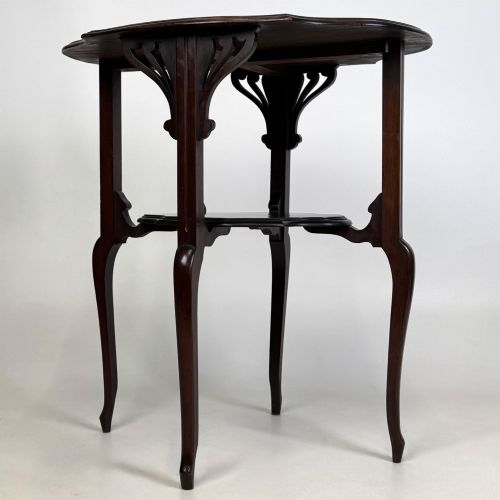
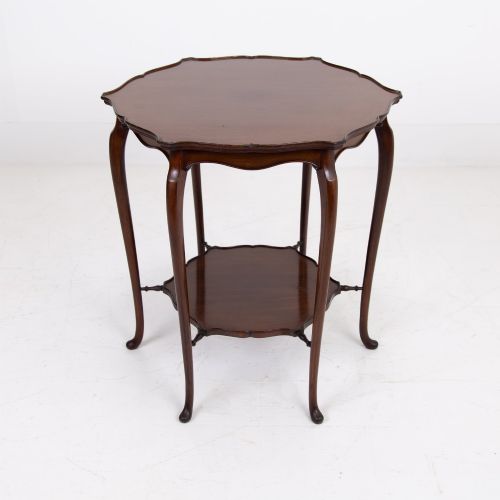
The evidence shows variations including round, oval, octagonal, and kidney-shaped tops, sometimes arranged in graduating tiers or fitted with drop leaves and tray edges. Regional makers and larger cabinet makers both produced these utilitarian display surfaces.
How they were made
Makers utilised solid mahogany and mahogany veneers applied to secondary woods, selected for stability and rich grain patterns. Timber selection determined the weight and longevity of each tier, while boxwood and satinwood stringing provided linear contrast.
Marquetry inlay and painted decoration frequently adorned the surfaces of Edwardian and late Victorian examples, reflecting prevailing revival styles such as Sheraton and Chinoiserie. Brass castors, mounts, and leather inserts appeared on select high-end tables.
Joinery techniques relied on traditional mortise and tenon joints to secure the legs and tiers, ensuring stable weight distribution across multiple levels without excessive bulk.
Listings feature mahogany, satinwood, and boxwood across Victorian and Edwardian side tables.
What varies in quality
The refinement of the timber figure and the precision of the inlay set superior examples apart from standard production pieces. Finely cut mahogany with deep natural chatoyancy indicates higher grade material selection by the cabinet maker.
Construction details such as hand-cut dovetails in drawers and well-fitted pillar joints dictate the structural integrity of a two-tier or three-tier table over centuries of use. The crispness of carved mouldings and delicate fretwork reveals the artisan's skill.
Attribution to documented firms such as Gregory & Co or W. Turner Lord & Co elevates the standing of a piece, demonstrating workshop provenance that standard trade pieces lack.
Gregory And Co·W Turner Lord And Co
The Mahogany Tier Lamp Glossary
- Etagere
- A set of open shelves or tiers used for displaying small objects or lamps. This French form gained popularity in English drawing rooms during the nineteenth century.
- Marquetry Inlay
- Decorative patterns formed by fitting contrasting veneer pieces into a prepared wooden surface. Craftsmen used satinwood and boxwood to achieve floral or geometric motifs.
- Tier
- A single level in a structure arranged one above another. Multi-tier tables maximise display capacity within a compact footprint.
- Aesthetic Movement
- A late nineteenth-century design style emphasising visual beauty over narrative content. Pieces from this movement often incorporate Anglo-Japanese influences and ebonised details.
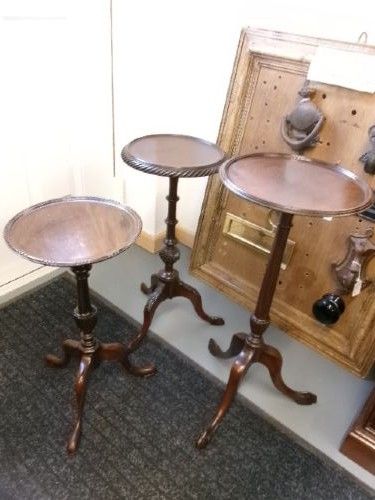
- Tripod Table
- A small table supported by a pillar resting on three legs. This construction prevents rocking on uneven floors.
Mahogany Tier Lamp: Frequently Asked Questions
What is a mahogany tier lamp?
A mahogany tier lamp is a multi-level wooden table designed to support a lamp while offering additional surfaces below for books or ornaments. These pieces date primarily from the nineteenth and early twentieth centuries.
They combine utility with decorative woodwork, utilising mahogany as the primary timber alongside brass hardware and inlaid details.
How do I date a tier table?
Dating relies on stylistic markers, construction methods, and timber characteristics. Edwardian pieces often feature delicate inlaid satinwood, whereas Victorian examples tend to show heavier proportions and darker finishes.
Examining the underside and drawer construction helps confirm the period of manufacture, distinguishing nineteenth-century work from later reproductions.
Where should I place an etagere?
An etagere suits corners, bedside positions, or beside seating where vertical display space is required. Their multiple tiers allow for lamps on top and smaller items below.
Keeping them away from direct heat sources protects the mahogany veneer and polish from drying out or cracking.
What styles are common?
Common styles include Edwardian, Victorian, Regency, and Sheraton Revival interpretations. Makers drew on eighteenth-century Georgian proportions while adapting forms for smaller modern homes.
Details like painted decoration, chinoiserie motifs, and fretwork distinguish specific stylistic revivals within the inventory.