



Mahogany Three Tier Server
Mahogany three tier server pieces are tiered dining room stands built to hold dishes and glasses, bringing practical elegance to formal meals.
Mahogany Three Tier Server
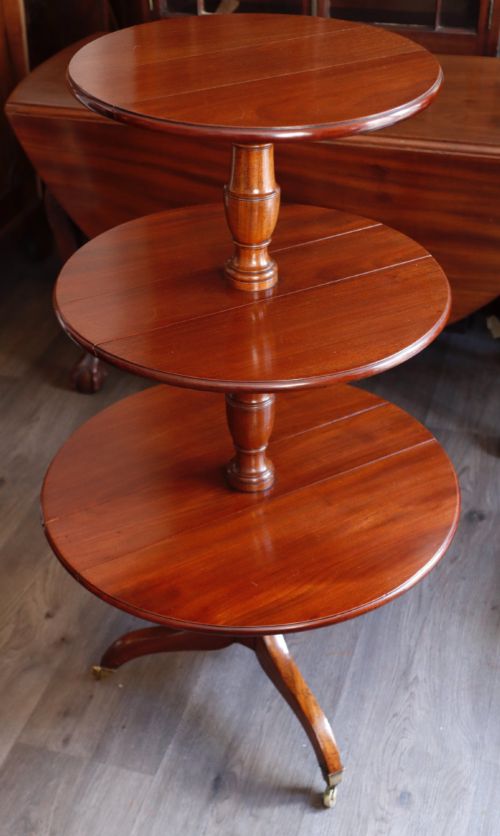
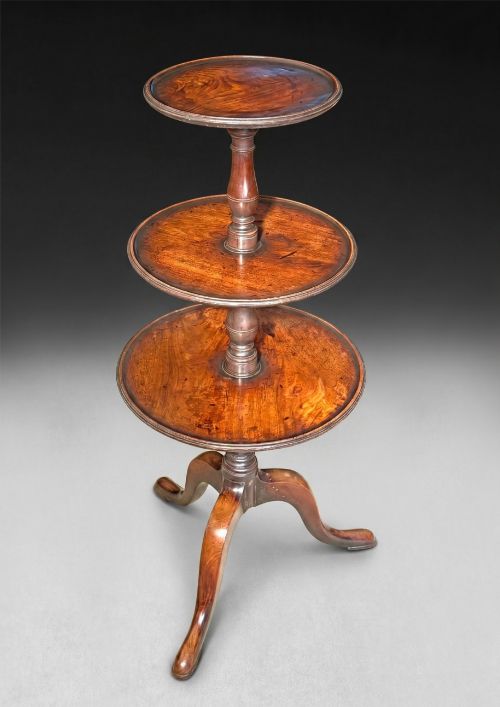
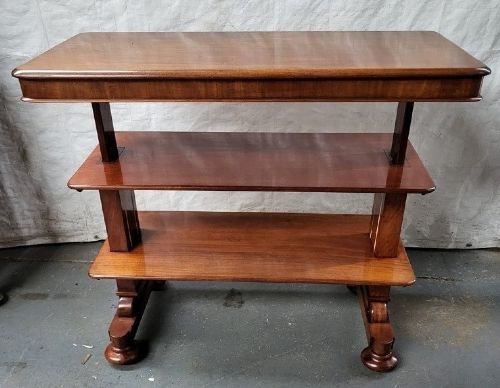
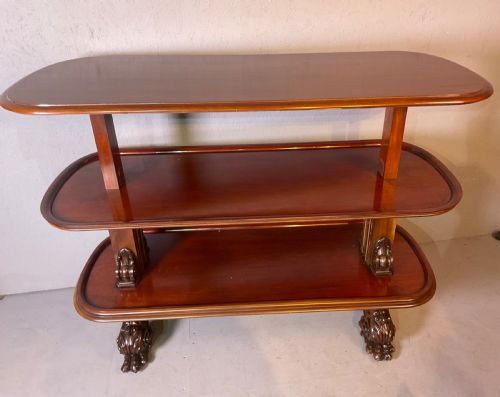
A mahogany three tier server provides graduated shelving across three distinct levels, functioning historically as a serving table or dumb waiter to assist with dining room hospitality. The pieces appearing here span the Georgian, Regency, William IV, George IV, and Victorian periods.
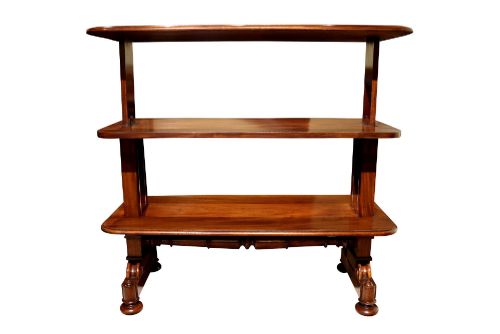
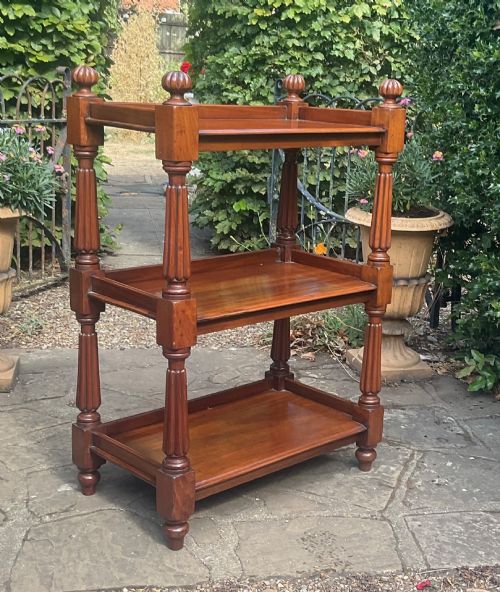
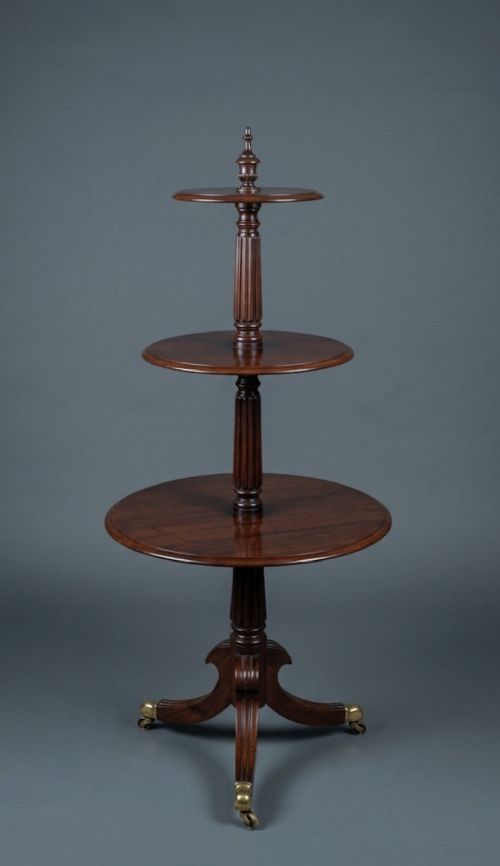
Most examples found on this page take the form of circular tiered dumb waiters on tripod bases, alongside rectangular drop-leaf formats, etageres, and metamorphic designs. These items originate primarily from the eighteenth and nineteenth centuries, reflecting shifts in dining habits across late Georgian and Victorian households.
How they were made
Makers utilised solid and figured mahogany timber, occasionally incorporating fiddleback varieties for enhanced grain pattern and visual depth on the tiers. Secondary woods provided structural stability to the upright supports and internal framing.
Metal components such as brass castors appeared on legs to assist with mobility, while ceramic and glass elements occasionally featured in related hardware or associated serving gear. Turning, joinery, and drop-leaf mechanisms allowed certain tiers to fold or adjust in height.
Listings span the eighteenth and nineteenth centuries, covering Georgian, Regency, William IV, and Victorian periods in mahogany.
What varies in quality
The refinement of the turning on the central column and the choice of mahogany figure set the standard for craftsmanship across these servers. Superior pieces display crisp mouldings, well-proportioned graduated tiers, and original brass castors that indicate higher workshop origin.
Mechanical complexity also distinguishes certain examples, particularly in metamorphic or rise-and-fall formats that require precise internal engineering to function smoothly. The integrity of the timber joints and the retention of original surfaces govern the overall standing of an individual piece.
Gillows·Maple & Co·James Shoolbred & Co
The Mahogany Three Tier Server Glossary
- Dumb waiter
- A tiered stand used in dining rooms to hold food and utensils without requiring servant attendance. These items typically feature revolving or fixed circular shelves.
- Etagere
- A piece of furniture consisting of a set of open shelves for displaying small objects or serving items. These structures provide multiple tiers supported by slender uprights.
- Metamorphic
- Describing furniture designed to transform into different shapes or functions through folding, rising, or dropping mechanisms. Such items offer adjustable utility within dining spaces.
- Fiddleback mahogany
- A figure of mahogany wood marked by undulating wavy grain resembling the back of a violin. This decorative timber grain increases the visual appeal of fine surfaces.
- Tripod base
- A three-legged support structure commonly found beneath circular tables and dumb waiters. This configuration ensures stability on uneven dining room floors.
Mahogany Three Tier Server: Frequently Asked Questions
What is a three tier server used for?
These pieces served dining rooms as auxiliary storage for plates, glasses, and dishes during meals. Their multiple tiers kept serving items accessible without cluttering the main dining table.
Today they function effectively as display stands, side tables, or drinks holders in sitting rooms and dining spaces.
How do I tell a Georgian server from a Victorian one?
Georgian examples often display restrained classical proportions, slender tripod legs, and fine timber turning dating from the late eighteenth century. They prioritise understated elegance and lighter framing.
Victorian pieces tend to be heavier in scale, sometimes incorporating castors, elaborate carving, or metamorphic rising mechanisms. These nineteenth-century variations reflect changing interior fashions and heavier industrial manufacturing techniques.
Are original castors common on these pieces?
Original brass castors appear on many nineteenth-century examples, particularly larger Victorian and William IV servers. They permitted the heavy mahogany furniture to glide across carpets and wooden floors.
Checking for original fixings helps determine whether the base structure remains unaltered since its manufacture.