
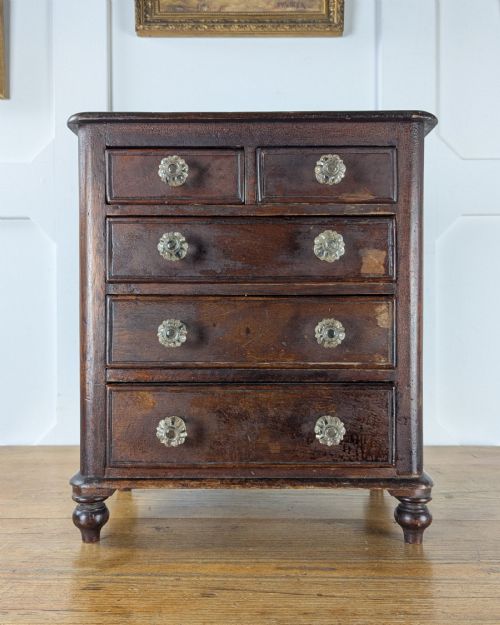
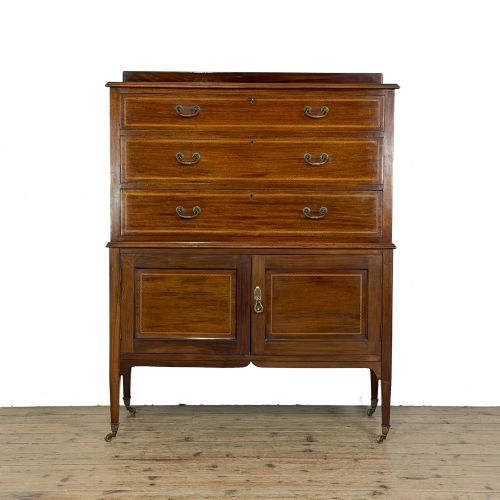
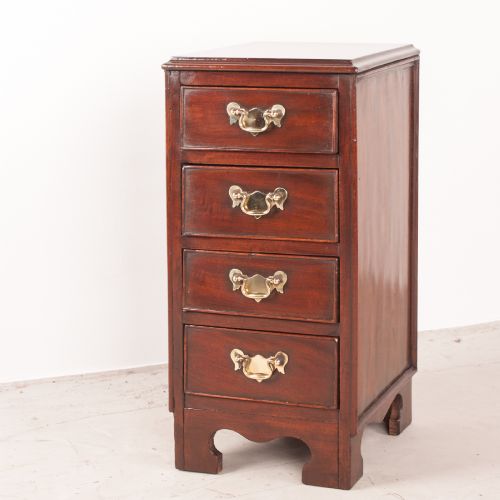
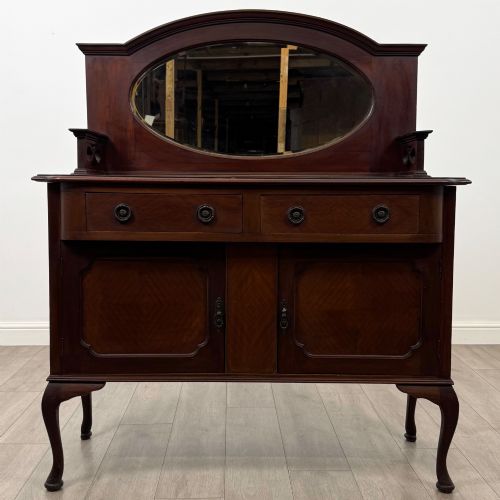
Mahogany Storage Unit
These mahogany storage unit pieces offer the rich timber tones and practical compartments that collectors seek for organising rooms with period character.
Mahogany Storage Unit
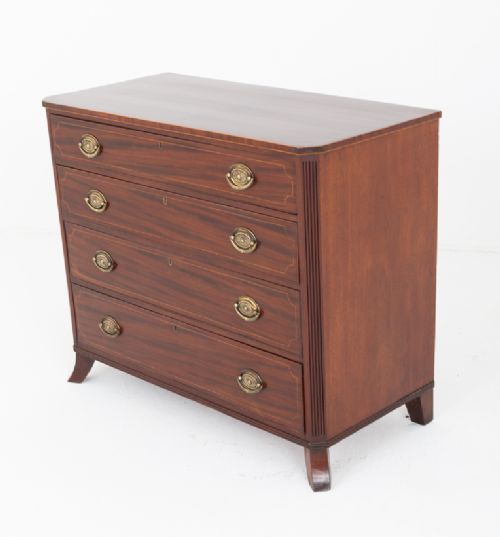
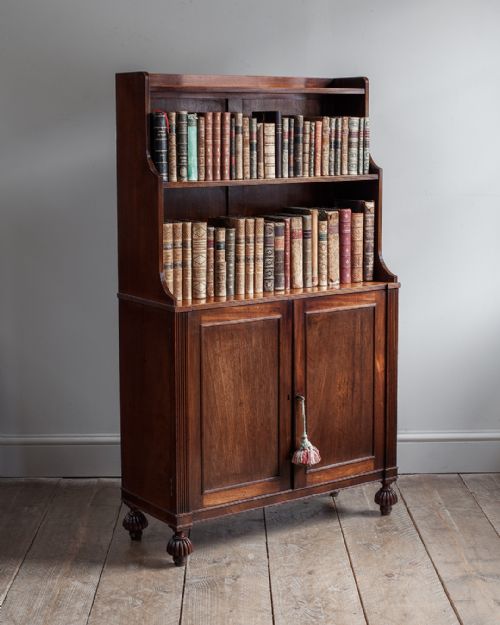
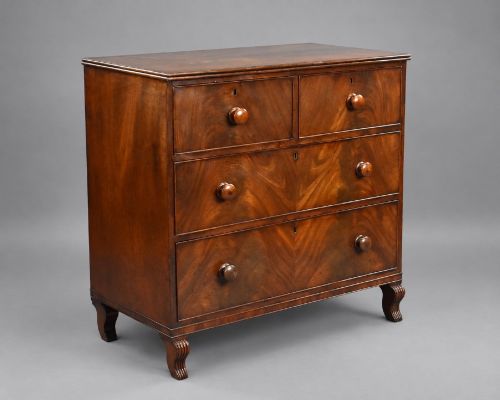
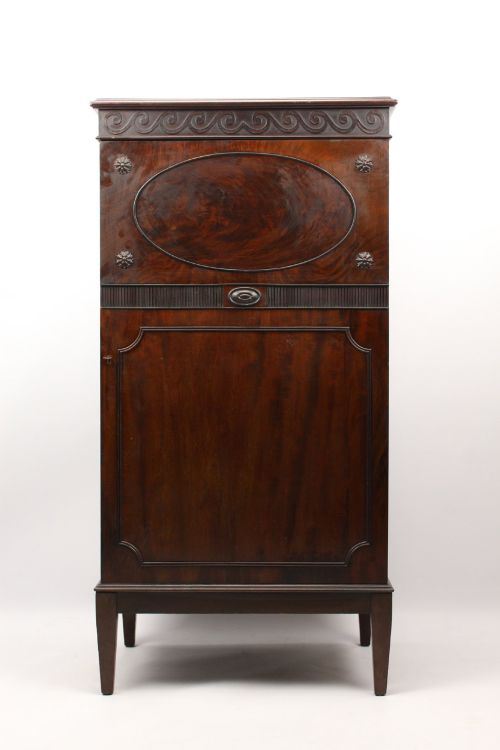
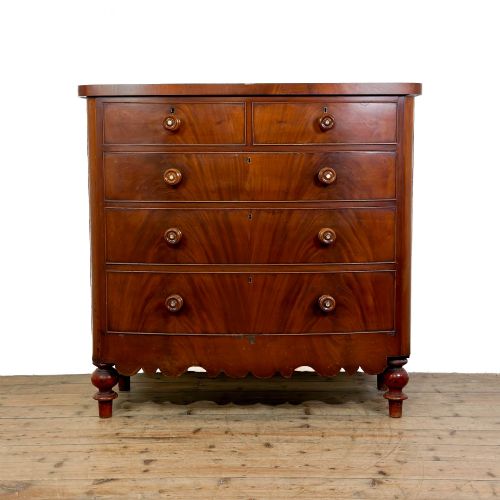
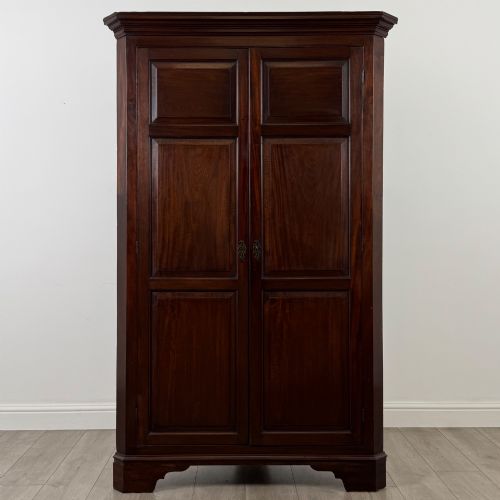
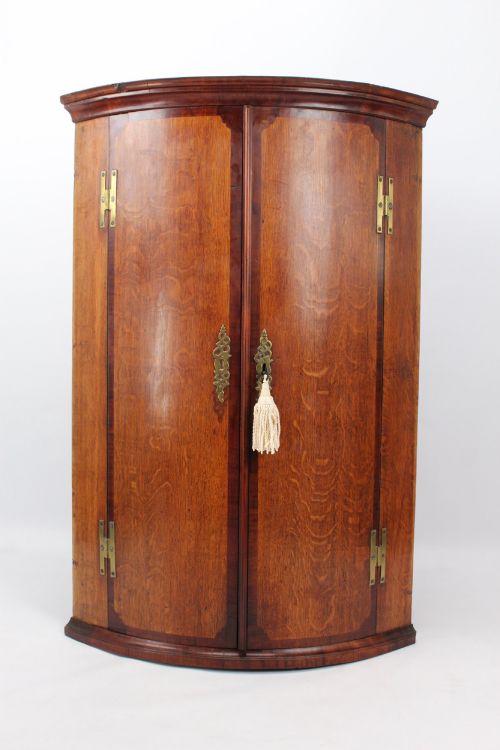
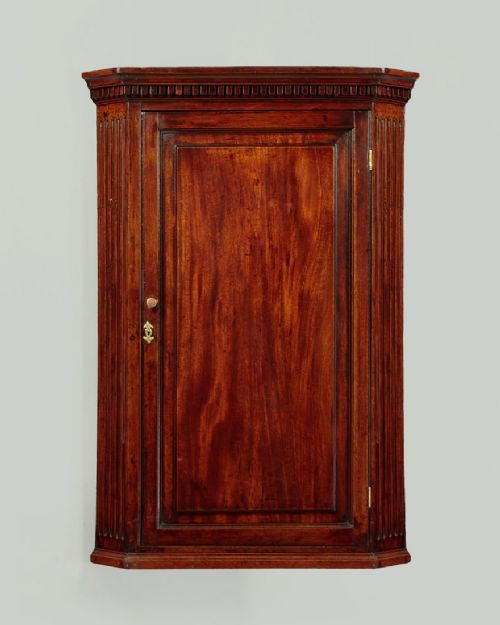
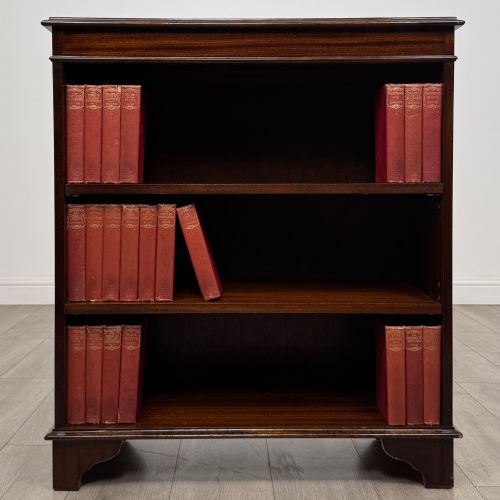
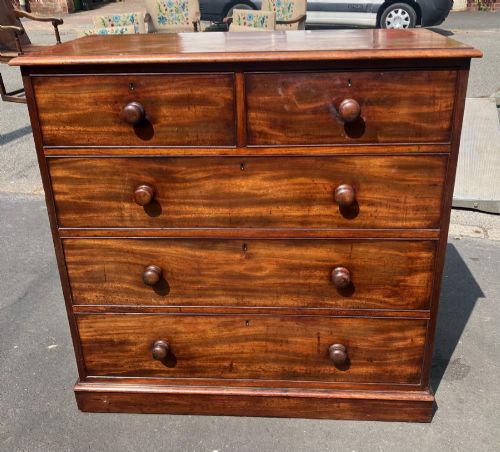
A mahogany storage unit typically takes the form of a chest of drawers, corner cabinet, bookcase, or multi-drawer filing cabinet spanning the Georgian, Victorian, and Edwardian periods.
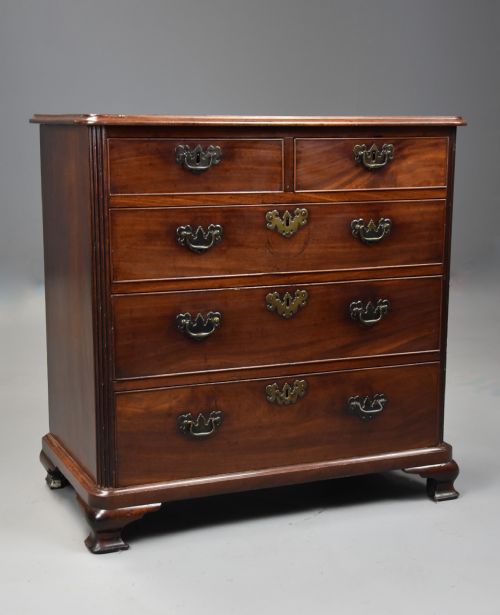
Buyers most frequently encounter tall or small chests of drawers alongside display cabinets and corner cupboards dating from the nineteenth and early twentieth centuries.
Originating from British workshops and regional cabinet makers, these pieces served domestic and commercial interiors from chemist shops to private bedrooms.
Materials and Construction
Makers utilised solid mahogany and flame mahogany veneer, often pairing the dense tropical hardwood with secondary timbers such as oak, pine, and satinwood for drawer linings and internals.
Surface detailing relied on brass pulls, glass panels, and delicate line inlay to accent the timber grain without obscuring its natural depth.
Tambour fronts, turned feet, and adjustable shelving demonstrate the mechanical ingenuity applied to storage furniture across the eighteenth, nineteenth, and early twentieth centuries.
Listings feature mahogany storage pieces spanning the Georgian, Victorian, and Edwardian eras, constructed from solid mahogany, flame veneer, oak, and pine.
Distinguishing Quality
The distinction between standard utility furniture and superior examples lies in the selection of timber figures, such as highly figured flame mahogany veneers, and the crispness of inlaid satinwood stringing.
Construction methods determine durability, visible in the precision of drawer dovetailing, the integration of original brass hardware or shell pulls, and the preservation of a deep surface patina.
Denby and Spinks
The Mahogany Storage Unit Glossary
- Flame mahogany
- A veneer cut from timber fork where branches join, producing a distinctive flickering flame pattern across drawer fronts.
- Corner cabinet
- A storage unit designed to fit squarely into a room corner, featuring solid or glazed doors to display or conceal contents.
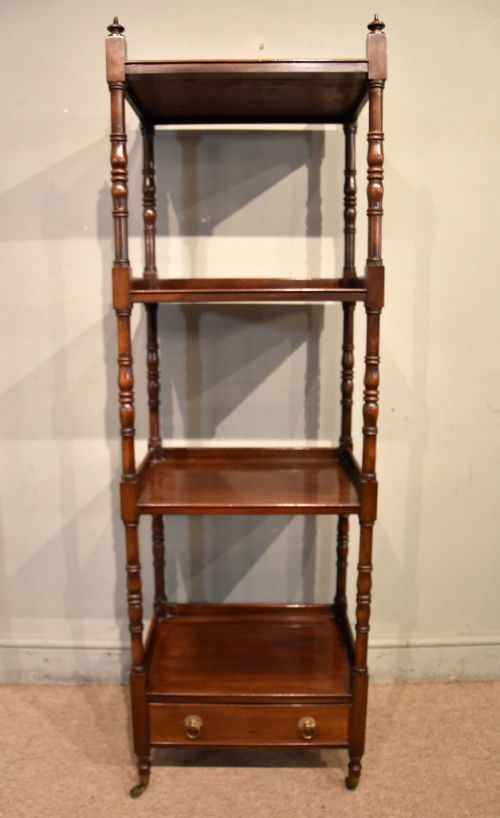
- Whatnot
- An open set of multi-tiered shelves supported by slender pillars, used for holding small ornaments and books.
- Tambour
- A flexible sliding shutter formed from narrow strips of wood glued to canvas, commonly used on file cabinets and desks.
Mahogany Storage Unit: Frequently Asked Questions
How do I date a mahogany chest?
Dating relies upon timber selection, hardware style, and construction traits such as hand-cut dovetails found on Georgian and Victorian pieces.
Later Edwardian and early twentieth-century examples often incorporate machine-cut elements alongside distinct labelling or lighter satinwood inlay.
Where should I place a corner cupboard?
Corner cupboards suit unused room angles, turning dead space into functional storage for glassware, books, or collections.
Ensure the door swing clears surrounding furniture and avoid placing timber units in direct sunlight to protect the polish.
What is an apprentice chest?
Apprentice chests are small-scale models created by woodworkers to prove their proficiency in cabinet making before joining a trade.
Despite their diminutive size, they utilise the exact joinery techniques and mahogany timbers seen on full-sized furniture.
How do I maintain mahogany furniture?
Maintain mahogany surfaces by dusting with a dry, soft cloth and occasionally applying a traditional beeswax polish to nourish the timber.
Keep pieces away from sudden temperature fluctuations and radiators to prevent veneer lifting or wood splitting.