
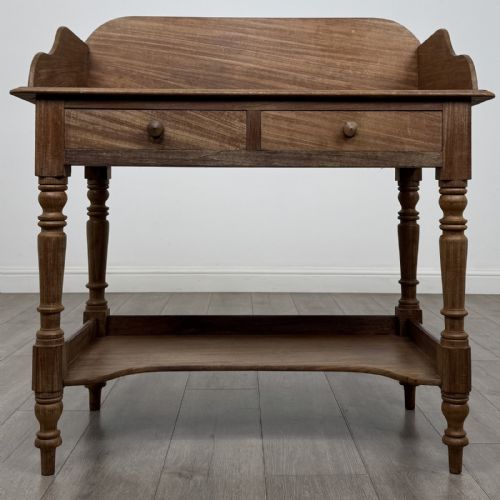
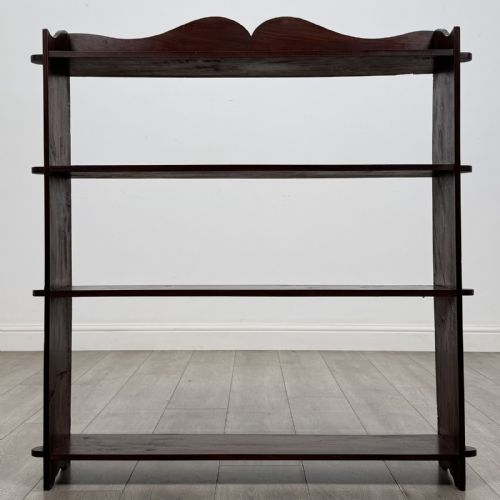
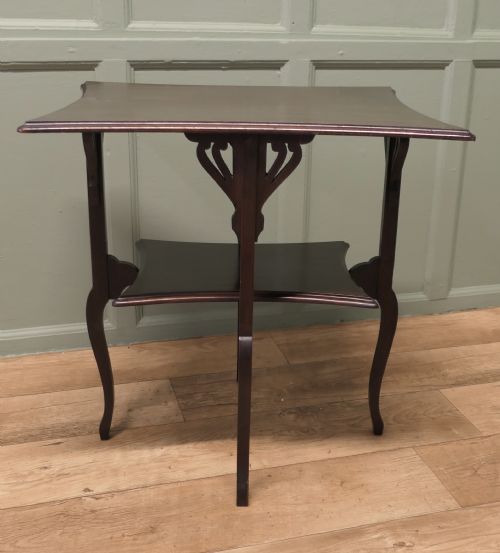
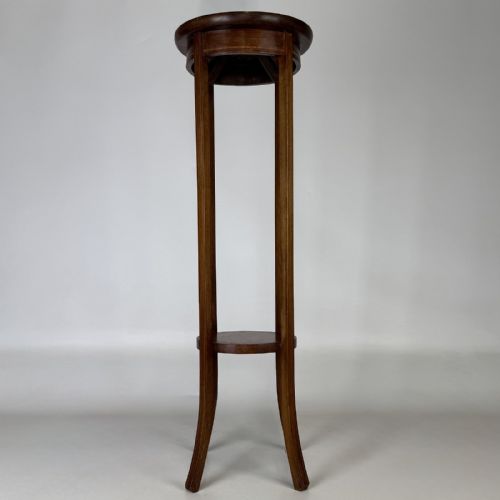
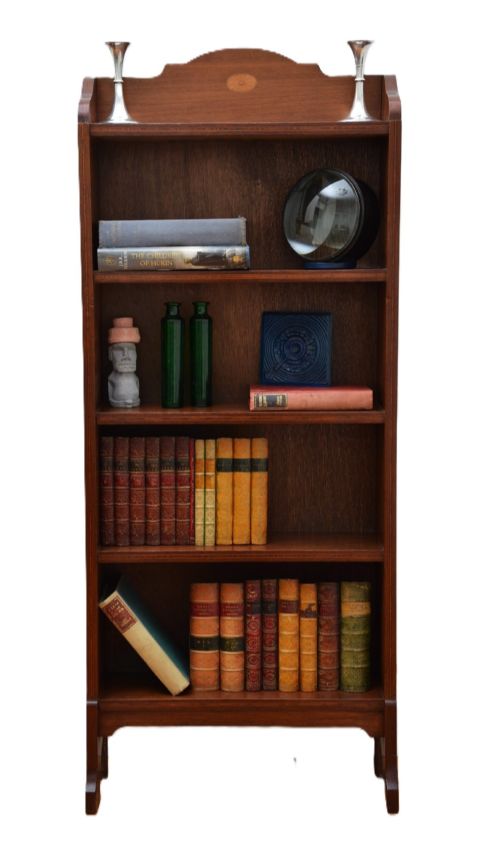
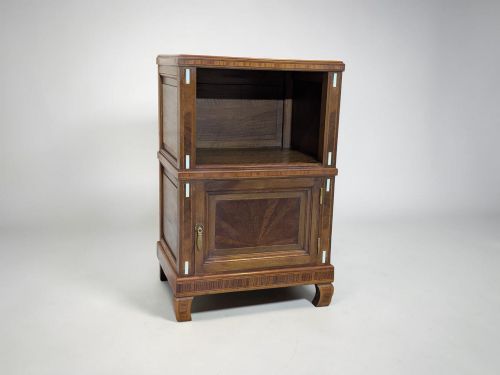
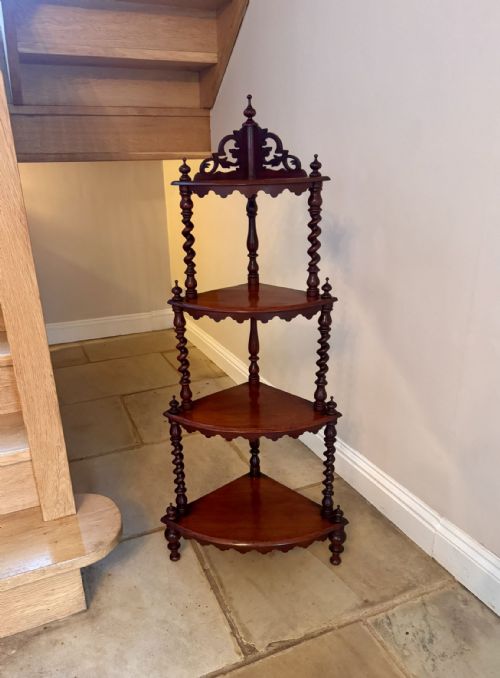
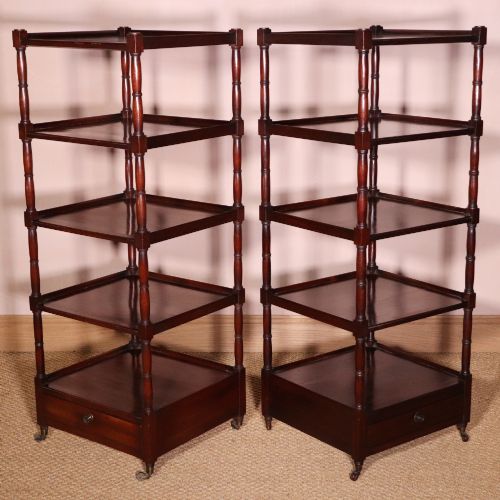
Mahogany Standing Shelf
Mahogany standing shelf pieces bring practical tiered storage and classic timber grain into a room, offering display space for books and decorative objects.
Mahogany Standing Shelf
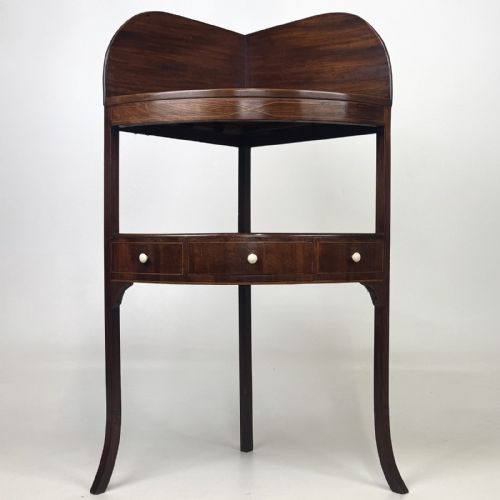
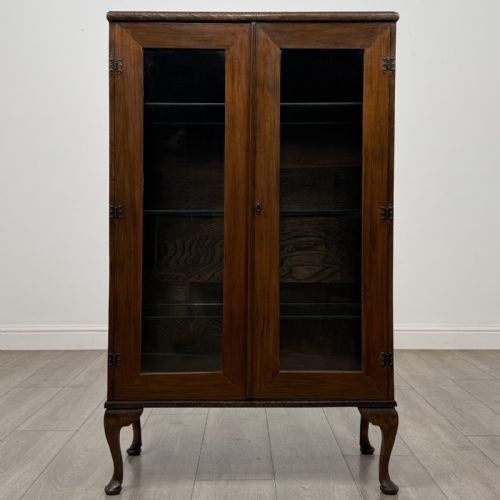
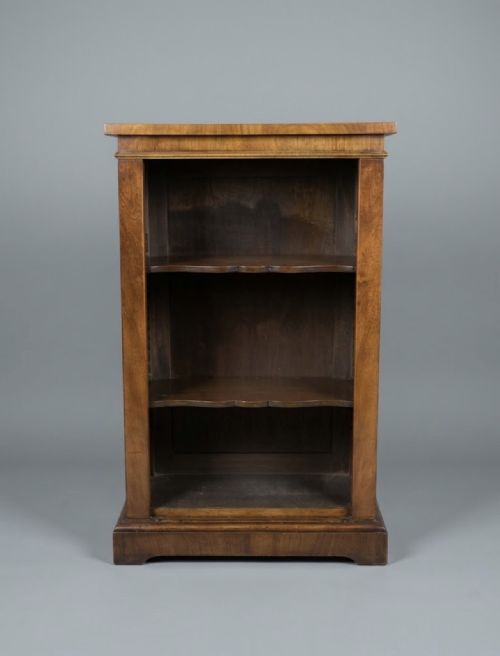
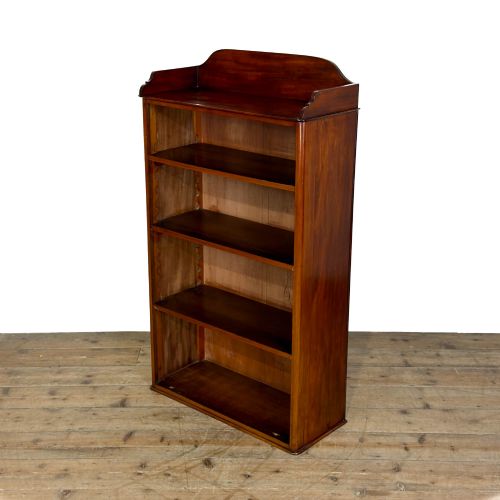
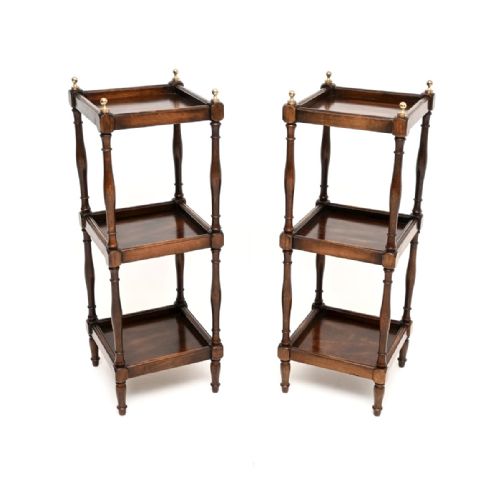
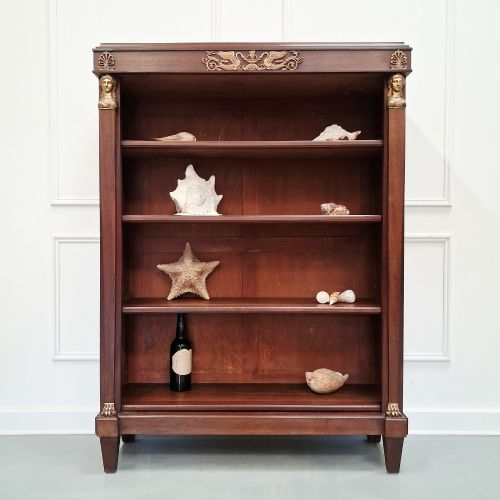
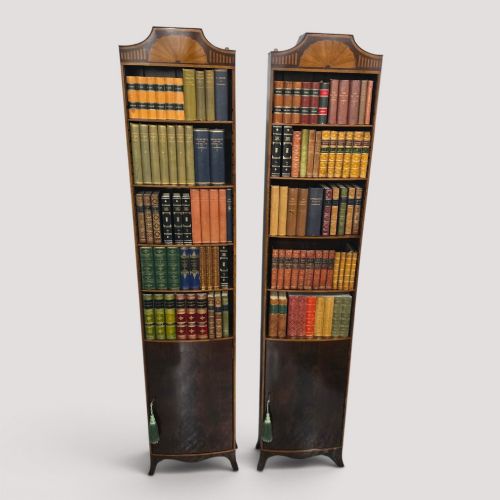
A mahogany standing shelf functions primarily as a versatile piece of furniture designed to hold books, display ornaments, or organise daily items in a living space. When exploring a mahogany standing shelf, buyers frequently encounter multiple tiers, corner configurations, and open bookcases originating from the Georgian, Regency, Victorian, and Edwardian periods.
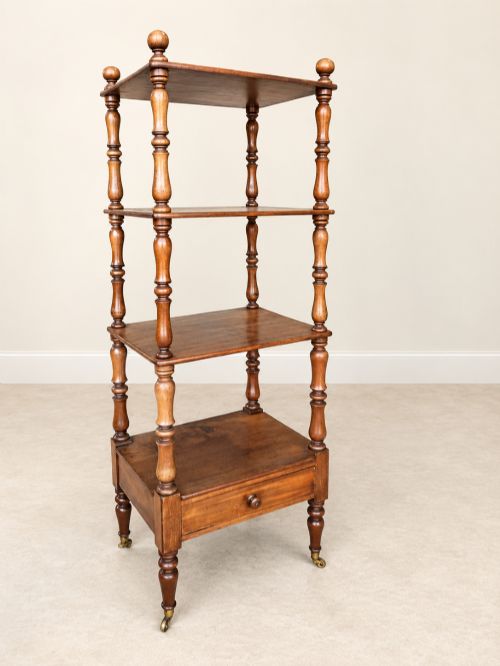
The objects span several practical forms including whatnots, étagères, tiered stands, and waterfall bookcases alongside standard open shelving. Pieces from the nineteenth and early twentieth centuries dominate the selection, showing how domestic storage needs evolved while maintaining a preference for upright timber furniture.
How They Were Made
Cabinet makers constructed these pieces primarily using solid and veneered mahogany, often incorporating secondary timbers and decorative details like satinwood, boxwood, and wood inlay. Structural elements frequently relied on turned or barley twist supports, while mobile examples incorporated brass castors to allow easy movement across floorboards.
Joinery techniques matched the period of production, with early Georgian and Regency items showing precise hand-cut joints, whereas Edwardian pieces utilised contemporary workshop methods. Surface finishes depended on hand-applied polishes that highlighted the natural figuring and deep red-brown tones of the primary wood.
Some Victorian whatnots come equipped with revolving tiers, turning a simple bookshelf into an entertaining piece of stationary furniture.
What Varies in Quality
Quality rests heavily on the selection of timber, where richly figured mahogany veneers and careful matching of grain patterns elevate a piece above standard utility furniture. The crispness of inlaid banding, the turning of upright columns, and the integration of fine details like brass galleries or castors demonstrate the maker's original investment of time and skill.
Proportion and structural integrity define the remaining differences across the range. Pieces that maintain balanced lines without sagging shelves, coupled with honest patination accumulated over decades, represent the higher tiers of craftsmanship.
Trevor Page & Co·Edwards & Roberts·Gillows
The Mahogany Standing Shelf Glossary
- Whatnot
- A moveable open set of shelves used for displaying ornaments or books, standing upright on legs.
- Étagère
- A piece of furniture consisting of a series of open shelves for holding small objects or books.
- Waterfall bookcase
- A set of open shelves where each tier steps back progressively from the one below it, creating a cascading profile.
- Inlay
- A technique of inserting pieces of contrasting wood into a recessed surface to form decorative patterns.
- Barley twist
- A carved wooden column resembling a spiralling rope, commonly used for the vertical supports of stands and tables.
Mahogany Standing Shelf: Frequently Asked Questions
What rooms suit a mahogany standing shelf?
These versatile pieces fit comfortably in studies, living rooms, and bedrooms where open storage is required.
Their compact footprints allow them to utilise corner spaces or narrow wall sections effectively without dominating the room.
How do I care for mahogany shelves?
Dust the timber regularly with a dry cloth and avoid placing the furniture in direct sunlight or near heat sources.
Applying a traditional beeswax polish occasionally helps to maintain the lustre and nourish the grain.
Are these shelves sturdy enough for heavy books?
Most pieces were built to support substantial volumes, particularly Georgian and Victorian examples constructed from solid timber.
However, inspecting the shelf supports and joints helps determine the weight capacity of lighter tiered stands.
How do I tell Regency from Edwardian pieces?
Regency items typically display clean architectural lines, brass accents, and rich dark mahogany timber from the early nineteenth century.
Edwardian pieces often feature lighter construction, delicate stringing, and decorative wood inlay characteristic of the early twentieth century.