


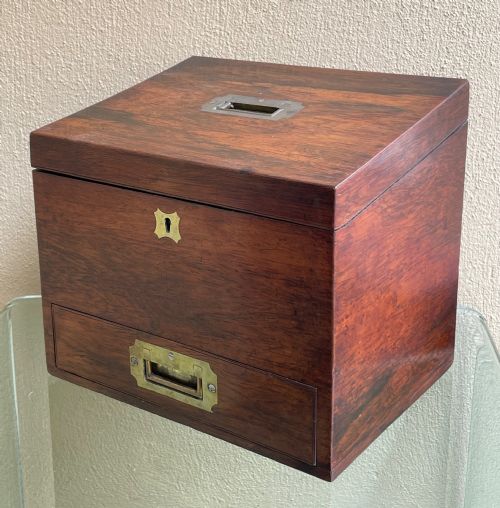
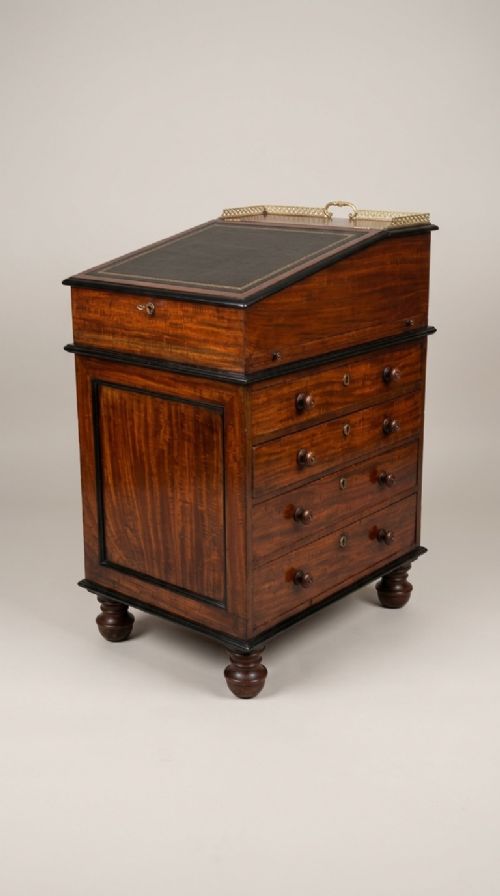
Mahogany Sloped Desk
A mahogany sloped desk brings tactile warmth and enduring utility to any room, offering a purposeful space for correspondence and study.
Mahogany Sloped Desk
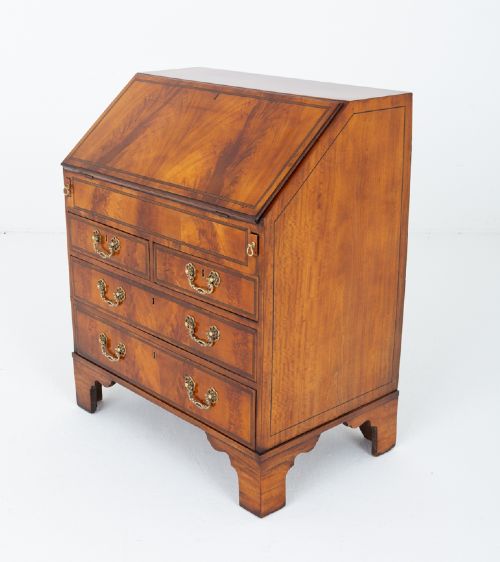
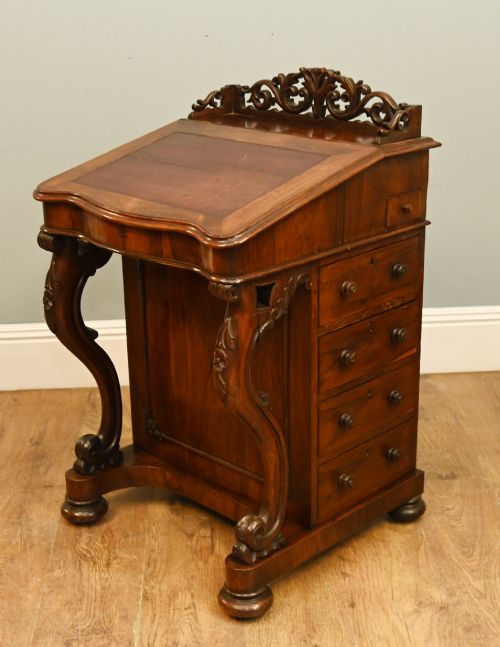
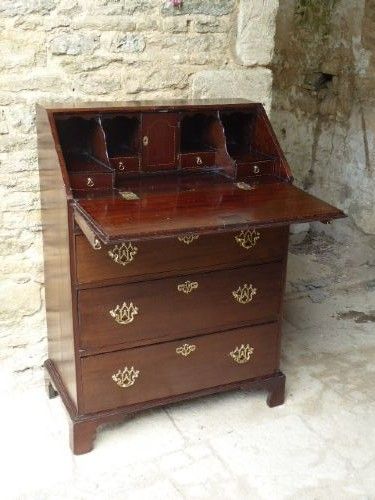
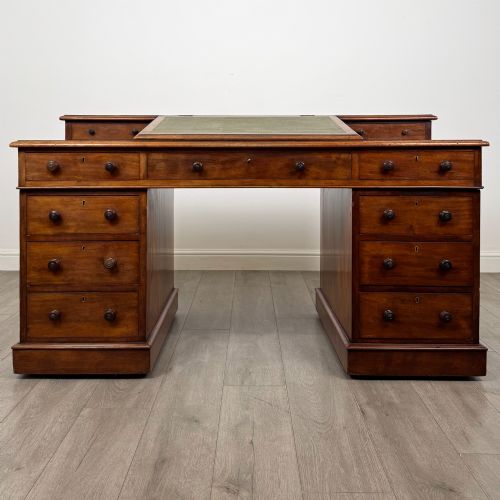
A mahogany sloped desk encompasses various forms designed for writing and storage, including traditional bureaux, campaign slopes, and davenports. The selections span the eighteenth century, Georgian era, Regency period, and Victorian times, alongside Edwardian examples.
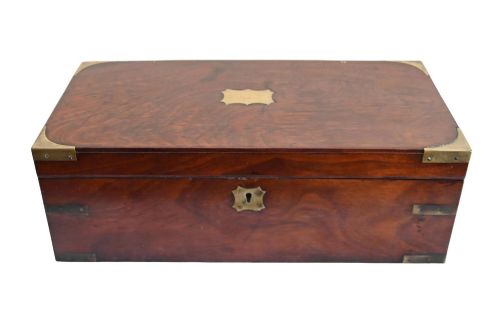
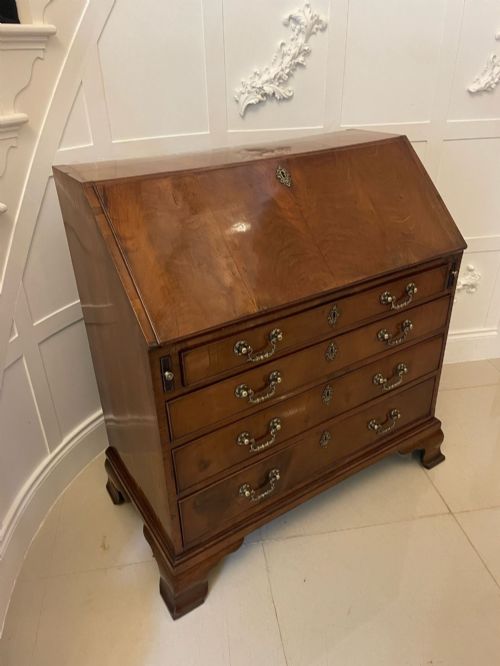
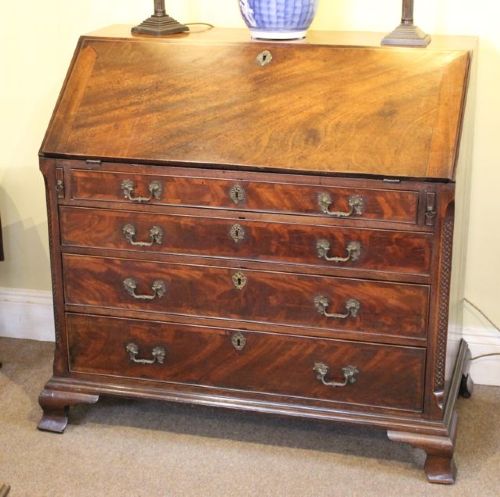
The most common forms found on this page are the classic fall-front bureau and the compact writing slope, both constructed predominantly in mahogany and often featuring internal compartments and drawers.
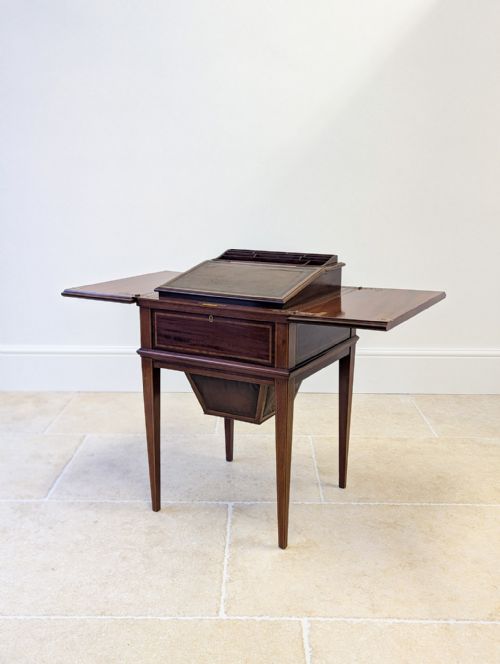
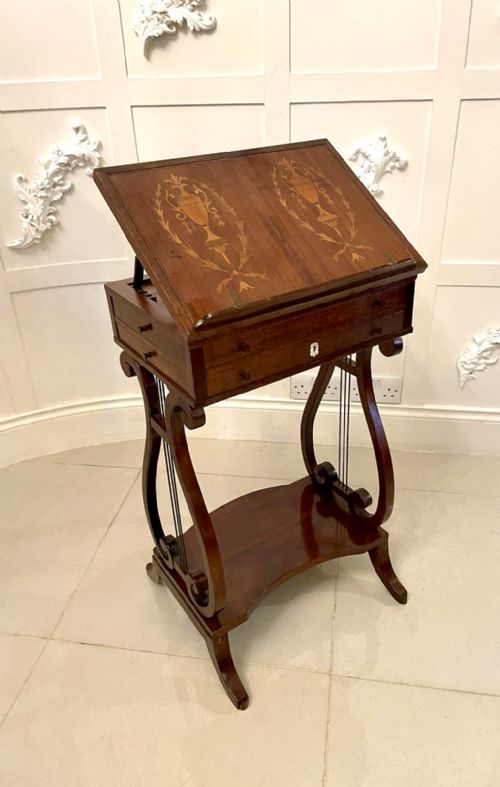
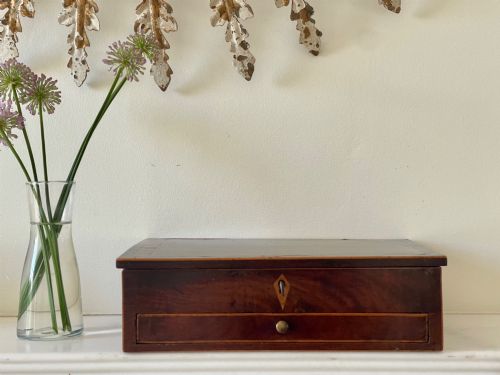
Pieces range from simple, utilitarian writing boxes to elaborate bureau bookcases and metamorphic tables incorporating satinwood, boxwood, and brass details.
How They Were Made
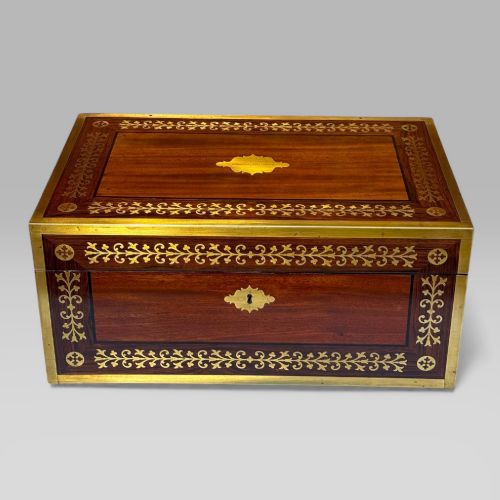
Cabinet makers utilised dense timbers such as mahogany, often selecting figured varieties for exterior surfaces and pairing them with secondary woods like oak. Surfaces were frequently enhanced with satinwood or boxwood inlay, whilst brass featured heavily in campaign hardware, hinges, and lock escutcheons.
Writing surfaces frequently incorporated inset leather or tooled leather panels to provide a suitable texture for penwork. Construction methods relied on traditional dovetailing for drawers and secure joinery to withstand the rigours of travel or daily domestic use.
Listings feature items spanning the 18th Century through to the Edwardian period, constructed from mahogany, oak, walnut, and satinwood.
What Varies in Quality
Quality rests significantly upon the choice of timber and the figuration of the mahogany grain, where superior examples exhibit deep natural chatoyancy and carefully matched veneers. The precision of the inlay work, whether boxwood, satinwood, or brass stringing, further distinguishes finer pieces from standard workshop output.
Interior architecture dictates value, with top-tier desks offering intricate arrangement schemes, secret compartments, and finely turned small drawers. Structural integrity, original brasses, and the survival of functioning locks and keys complete the distinction between ordinary and exceptional items.
Gillows of Lancaster
The Mahogany Sloped Desk Glossary
- Bureau
- A writing cabinet featuring a sloping fall-front that opens to reveal a fitted interior of small drawers and pigeonholes. It typically sits above a chest of drawers.
- Campaign Slope
- A portable writing box reinforced with brass corners and straps designed for travel. These boxes often open to form an inclined writing surface lined with leather.
- Davenport
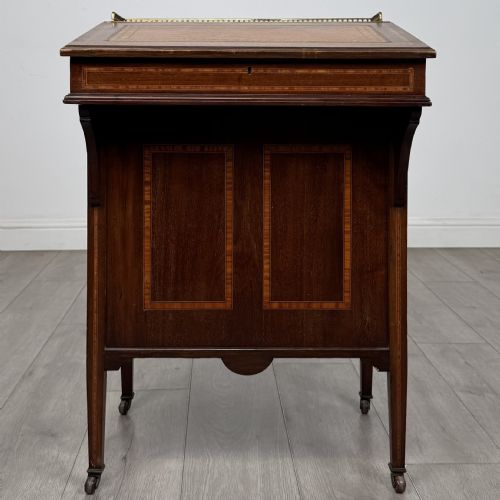
- A compact desk featuring a sloping writing top above a pedestal of drawers. The design originated in the early nineteenth century and frequently includes side drawers and a stationery compartment.
- Satinwood
- A luminous timber native to India and Sri Lanka, utilised for contrasting inlay and veneering. It provides a bright, golden yellow counterpoint to dark mahogany.
- Escutcheon
- A protective plate surrounding a keyhole, commonly cast in brass on these pieces. It serves both a functional purpose and a decorative role on drawers and fall-fronts.
Mahogany Sloped Desk: Frequently Asked Questions
What is a mahogany sloped desk?
A mahogany sloped desk is a piece of antique furniture designed for writing, featuring an angled writing surface. These range from portable folding boxes to large freestanding bureaux with drawers.
They combine practical storage with traditional cabinet making, utilising dense timber and fitted internal compartments.
How do I use a writing slope?
A writing slope opens to reveal an inclined writing surface, often lined with leather, designed to provide an ergonomic angle for handwriting. Internal compartments store paper, ink, and pens.
Many portable versions fold flat into a secure box for storage or travel.
How do I tell a Georgian bureau apart from a Victorian one?
Georgian bureaux generally date from the eighteenth to early nineteenth century, displaying restrained proportions, bracket feet, and classical quarter-column details. Their interiors often feature stepped pigeonholes and secret compartments.
Victorian and later examples tend to incorporate heavier proportions, distinct moulding profiles, and occasional machine-cut veneers or varied interior woods.
Where should I place a davenport desk?
A davenport works well in smaller rooms or study spaces due to its compact footprint. Its finished back allows it to sit freestanding away from a wall.
Ensure it receives adequate natural light for writing whilst avoiding direct heat sources that could dry out the mahogany timber.