
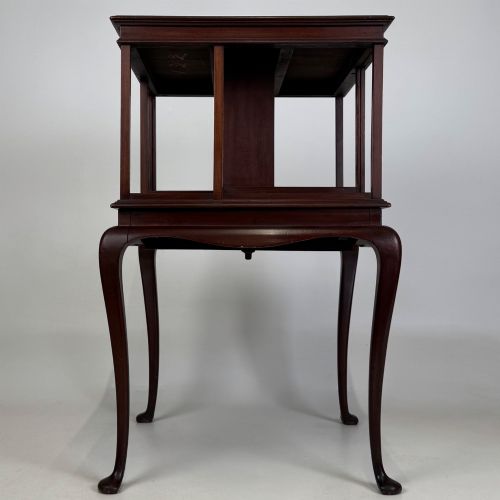
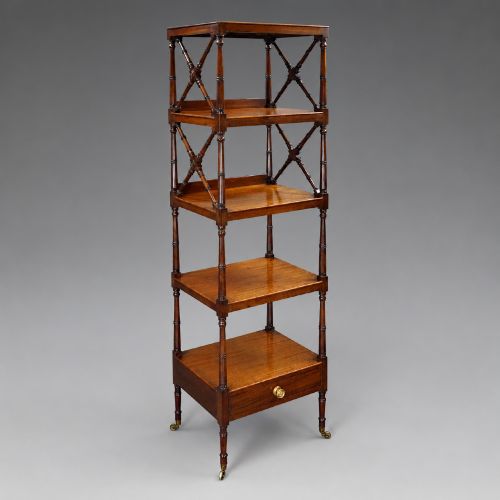
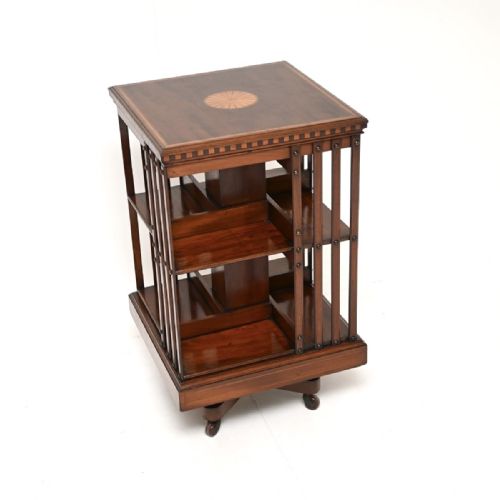
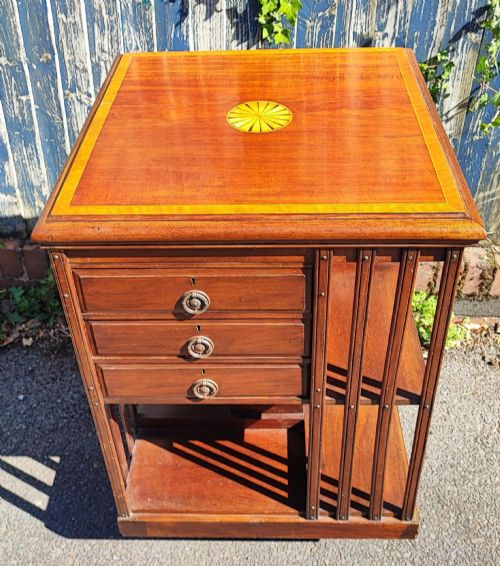


Mahogany Side Table Bookcase
These mahogany side table bookcase pieces combine generous book storage with practical table surfaces, offering timeless utility for period interiors.
Mahogany Side Table Bookcase
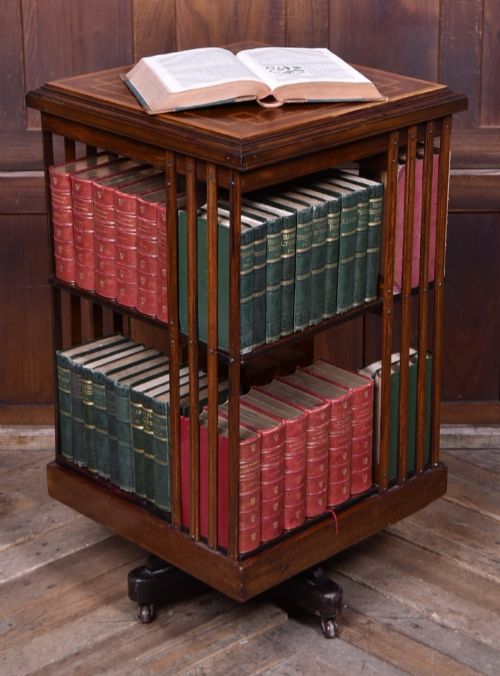
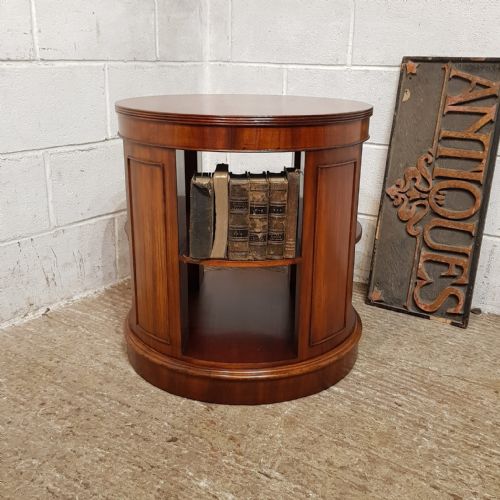
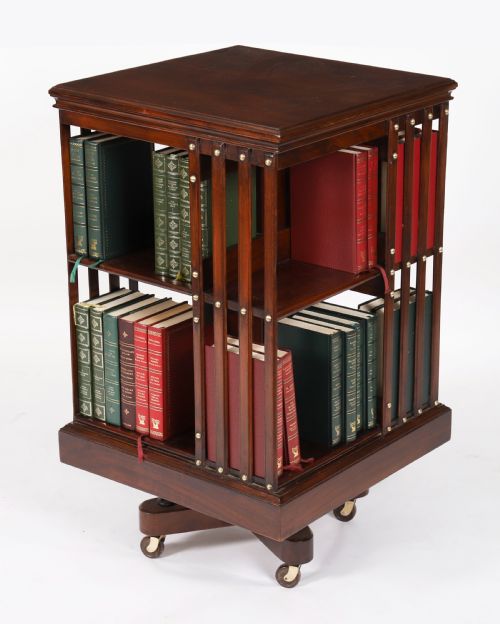
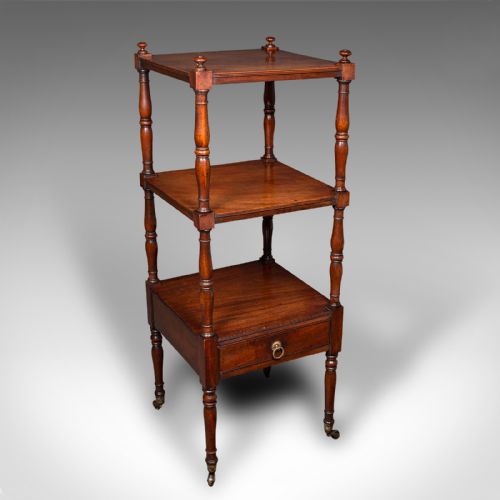
A mahogany side table bookcase brings together practical surface space and integrated shelving, taking the form of revolving bookcases, tier étagères, and compact bedside cabinets. Buyers searching this phrase look for functional wooden furniture that serves multiple purposes within a room, keeping volumes accessible while holding lamps or decorative objects on top.
The selection on this page relies heavily on Edwardian and Georgian examples, alongside Victorian forms spanning the nineteenth and early twentieth centuries. Revolving bookcases dominate the offerings, often constructed in round or square formats that spin smoothly on brass and iron hardware.
Alongside revolving models, the inventory includes tiered whatnots, open display stands, and occasional tables with inlaid details in satinwood. These items range from late eighteenth-century George III pieces to later revival styles, offering sturdy mahogany construction suited to traditional library and living spaces.
How they were made
Makers utilised solid mahogany and polished veneers over secondary timbers, selecting the wood for its rich grain and durability. Construction techniques involved precise joinery to build multi-tiered revolving mechanisms and stable cabinet frames that could support the weight of numerous books.
Surface decoration frequently incorporated contrasting satinwood inlay, bringing lighter tones into the dark mahogany ground. Metal components such as brass castors, internal iron pivots, and inset marble tops added both functional strength and decorative contrast to the finished furniture.
Listings feature mahogany, satinwood inlay, brass, iron, and marble materials across revolving bookcases, étagères, and whatnots.
What varies in quality
The standard of a mahogany side table bookcase rests on the choice of timber and the precision of its revolving or tiered construction. Superior examples display carefully matched grain patterns across the shelves and tabletops, along with crisp, well-defined satinwood stringing and inlay.
Hardware choice distinguishes standard production from finer workshops, visible in the weight of the brass fittings and the smoothness of the internal turning mechanism. The overall proportion and architectural balance of the piece determine its visual presence within a period room.
Maple and Co
The Mahogany Side Table Bookcase Glossary
- Mahogany
- A durable tropical hardwood prized for its deep reddish-brown colour and fine grain. It forms the primary structural and visual material across these tables and bookcases.
- Satinwood
- A pale, lustrous timber utilised for contrasting inlay work and geometric stringing on Edwardian and Georgian surfaces.
- Étagère
- A set of open shelves supported by columns or pillars, designed for displaying books and small ornamental objects. This form appears across multiple nineteenth-century tiers.
- Whatnot
- A freestanding piece of furniture featuring multiple open shelves for storage and display. Eighteenth and nineteenth-century examples often incorporate slender corner posts and delicate turnings.
- Sheraton Revival
- A late nineteenth and early twentieth-century design movement inspired by the lighter furniture forms of the eighteenth century. It frequently employs mahogany paired with satinwood inlay.
Mahogany Side Table Bookcase: Frequently Asked Questions
How do revolving bookcases function?
These tables rely on a hidden central pivot mechanism supported by iron or brass hardware beneath the shelving tiers. This allows the entire bookcase section to turn smoothly in either direction for easy volume selection.
Craftsmen balanced the weight distribution carefully so the loaded shelves remain stable while rotating beside a chair or desk.
Where were side table bookcases placed?
Period interiors utilised these compact items beside armchairs in libraries, near writing desks, or alongside beds as multi-tier storage. Their small footprint permitted placement in tight corners or between windows where larger cabinetry would not fit.
The flat top surface served to hold reading lamps, pocket watches, or tea cups within arm's reach of the seated reader.
How do I distinguish Edwardian from Georgian pieces?
Georgian pieces from the eighteenth century typically display heavier proportions, hand-cut joinery, and restrained carving without factory-produced veneers. Edwardian and revival pieces often incorporate machine-cut satinwood inlay and lighter framing influenced by Sheraton designs.
Examining the underside, drawer linings, and secondary timbers helps clarify the period of manufacture.
What care does mahogany require?
Mahogany benefits from occasional treatment with appropriate wood waxes to nourish the grain and maintain its natural lustre. Direct sunlight and sudden temperature shifts should be avoided to prevent timber movement or veneer lifting.
Dusting with a soft, dry cloth keeps the polished surface free from grit that might scratch the finish.