


Inlaid Mahogany Library Table
An inlaid mahogany library table brings warmth and functional elegance to a room, uniting rich timber with crisp decorative detail.
Inlaid Mahogany Library Table
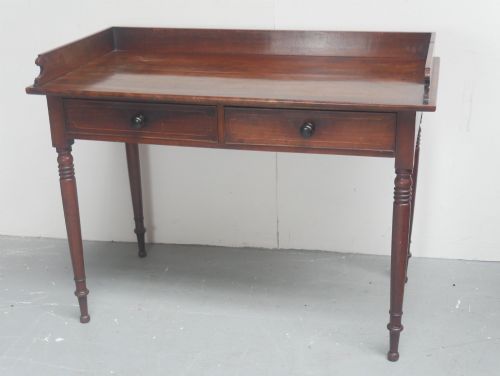
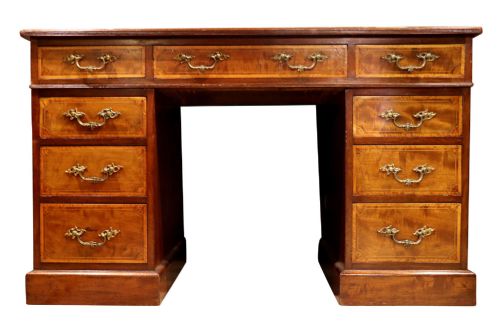
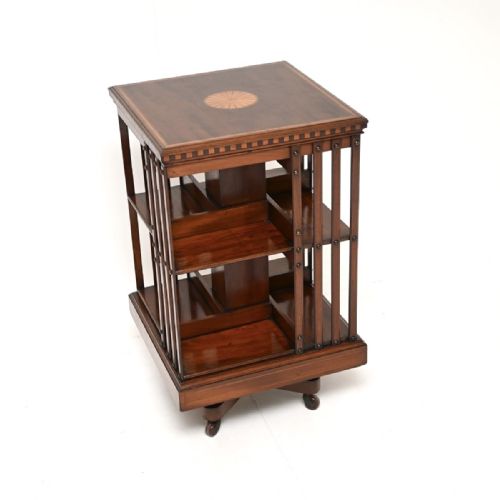
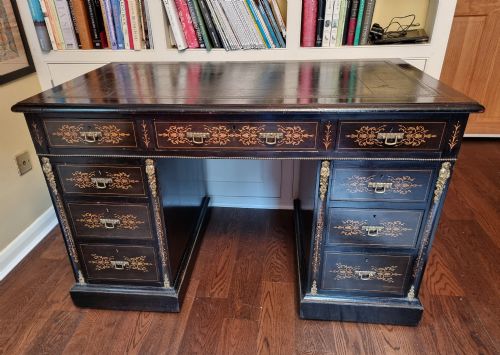
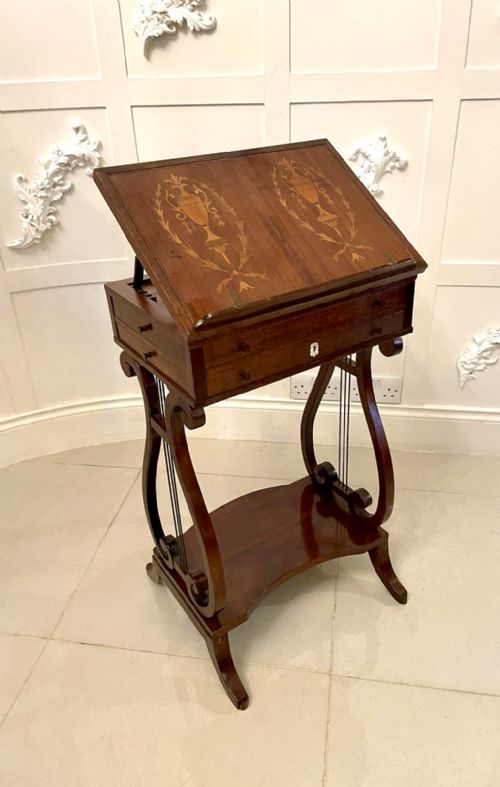
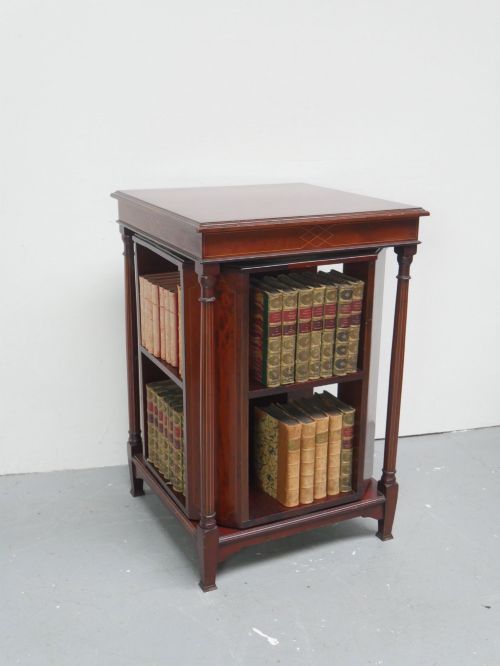
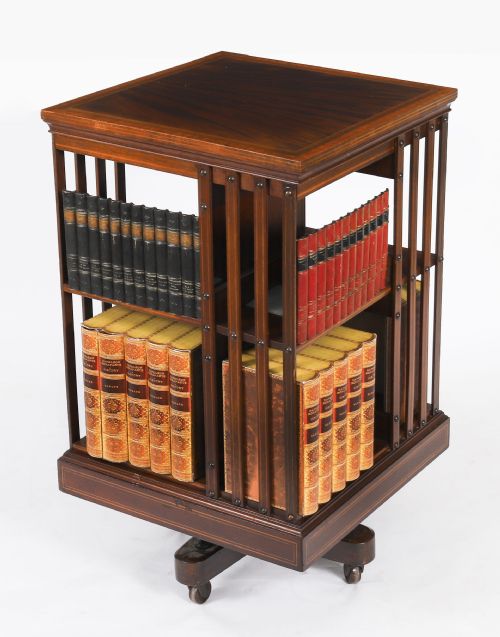
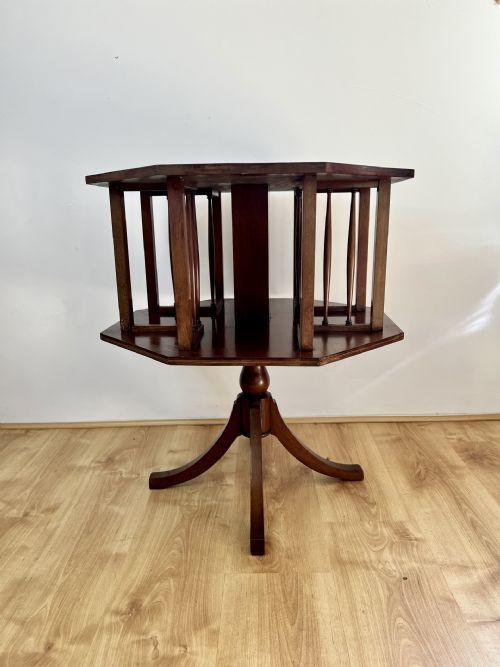
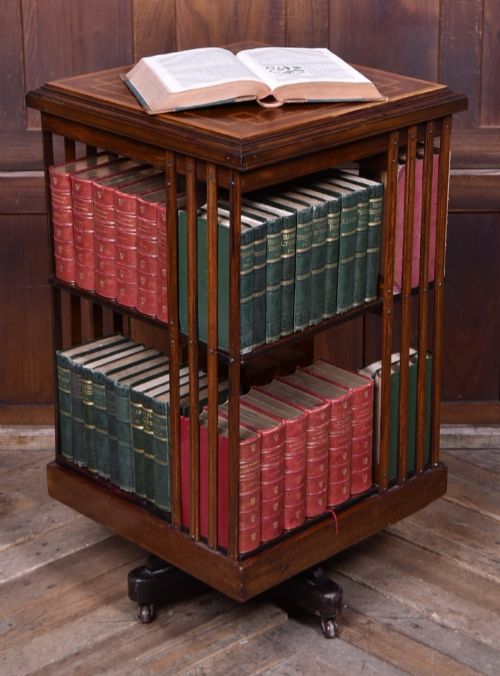
An inlaid mahogany library table is a refined surface designed for reading and writing, appearing across Georgian, Regency, and Edwardian periods. These pieces combine sturdy timber structures with decorative detailing such as satinwood inlay or brass work, creating functional centerpieces for studies and libraries. Buyers encounter various forms, from sofa tables and writing desks to revolving bookcases sharing the same timber and decorative vocabulary.
The versions met most frequently on this page span the late nineteenth and early twentieth centuries, particularly Edwardian interpretations of earlier Sheraton styles. These later pieces often incorporate rotating tiers or leather writing surfaces alongside delicate satinwood banding. Earlier Regency and Georgian examples also emerge, showing bolder brass stringing and richer flame mahogany figures.
Materials and construction
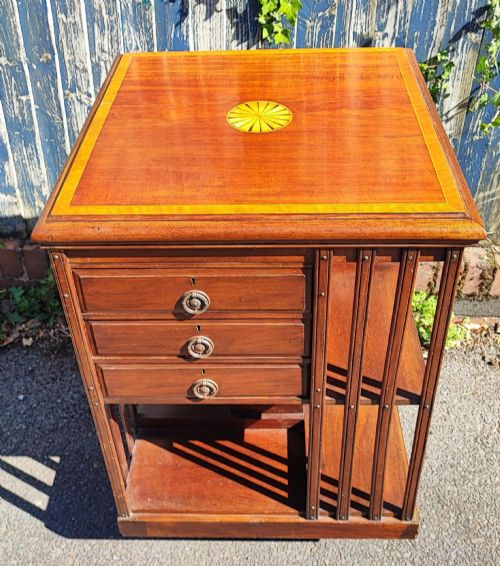
Makers built these tables primarily using solid mahogany and figured mahogany veneers, selected for deep grain patterns and warm natural tones. Craftsmen enhanced these surfaces by cutting recesses into the timber to receive contrasting satinwood, ebony, or brass inlays, creating sharp geometric borders and floral motifs. Leather inserts appeared frequently on writing surfaces, often tooled with gold leaf around the perimeter.
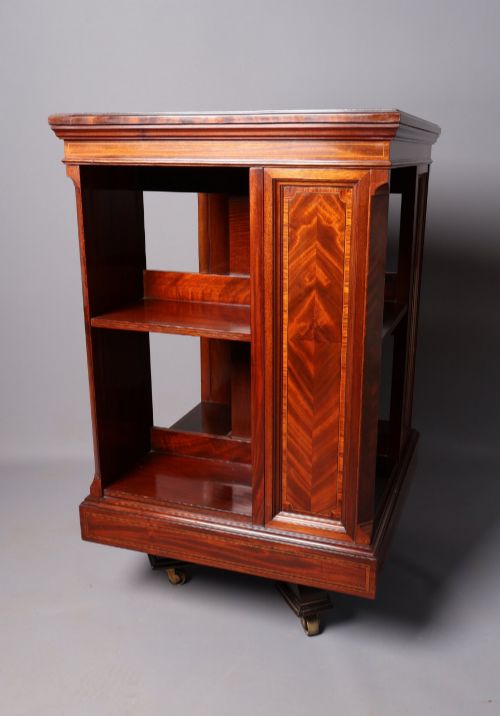
Structural stability relied on traditional joinery methods suited to the specific form, whether supporting a pivoting book tier or a freestanding sofa table with drop leaves. Brass castors, paw feet, and original handles completed the mobile elements of these pieces, allowing heavy timber furniture to move smoothly across carpeted floors.
Some revolving bookcases hide unexpected zodiac motifs on their rotating tops, bringing a touch of celestial navigation into the study.
Factors of quality
Quality rests significantly on the selection of timber and the precision of the inlay work. Finer examples display carefully matched flame mahogany veneers across the top surfaces, while superior inlay work sits flush with the surrounding wood without visible gaps or excessive filler.
Hardware and secondary timbers also distinguish higher grade pieces. Original brass locks, handles, and castors matching the period indicate a well-preserved piece, while secondary woods like oak or mahogany used in drawer linings point to thoughtful construction.
Edwards and Roberts·James Shoolbred·Bush of London·Francoise Linke
The Inlaid Mahogany Library Table Glossary
- Satinwood inlay
- A decorative technique where contrasting light-toned satinwood is set into the darker mahogany surface. This method creates delicate geometric borders and graceful motifs typical of Sheraton and Edwardian design.
- Flame mahogany
- A veneer cut from the point where a branch joins the main tree trunk, producing a distinctive rippled pattern resembling flickering flames. Cabinet makers prized this figure for prominent table tops.
- Sofa table
- A rectangular freestanding table fitted with two drop leaves, originally designed to stand in front of a sofa. These pieces typically feature double-pedestal ends or trestle supports.
- Stringing
- A narrow strip of contrasting wood or metal inlaid into the surface of furniture to form a fine linear border. This detail frames table tops and drawer fronts.
Inlaid Mahogany Library Table: Frequently Asked Questions
How do I care for the leather top?
Clean the leather surface gently using a slightly damp cloth, avoiding harsh chemical cleaners or excess water that might damage the surrounding wood. Nourish the hide periodically with a neutral leather balm to maintain flexibility and prevent cracking.
Keep the table away from direct sunlight and heat sources, which cause the leather to dry out and the timber to warp over time.
Where should I place a revolving bookcase?
Position a revolving bookcase beside an armchair or freestanding in a room where access from all sides is practical. The rotating action allows convenient selection of books without requiring a fixed wall placement.
Ensure adequate clearance around the rotating tier so books clear nearby furniture when spun.
How do I distinguish Edwardian from Regency tables?
Edwardian tables, particularly those influenced by Sheraton revival styles, often feature lighter satinwood crossbanding, delicate proportions, and sometimes integrated revolving book tiers. The timber finishes tend to be slightly brighter and the construction lighter.
Regency examples generally display bolder brass inlay, darker flame mahogany figures, and heavier pedestal or saber leg supports reflecting classical architectural influences.
Can I use a writing table for daily work?
These tables function well for modern writing and laptop use, provided you protect the antique surface from scratches and moisture. Using a matching blotter or desk pad preserves the original leather or polished timber.
Check the height of the kneehole space to ensure comfortable seating proportions for your specific chair.