
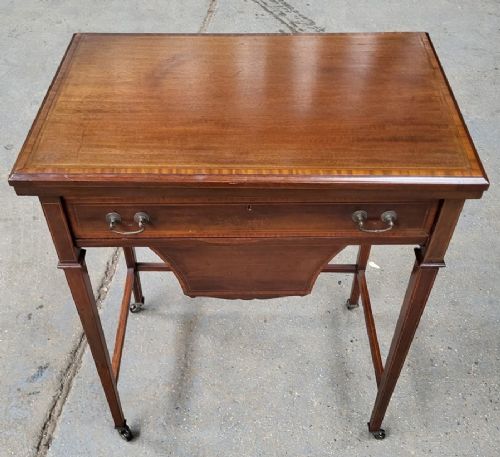
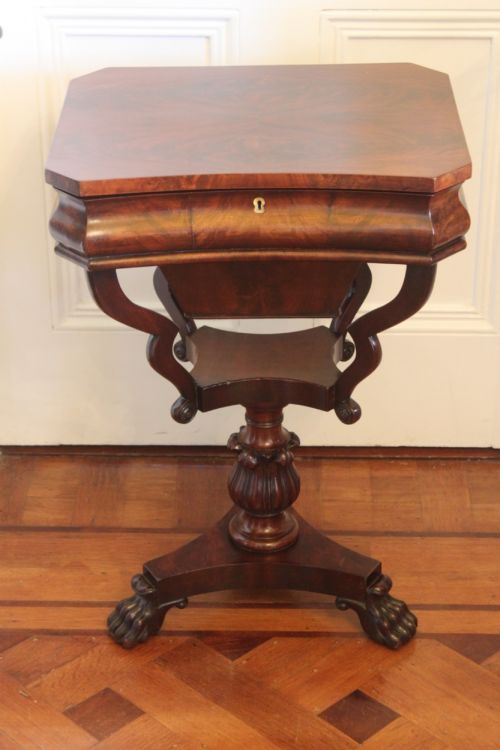
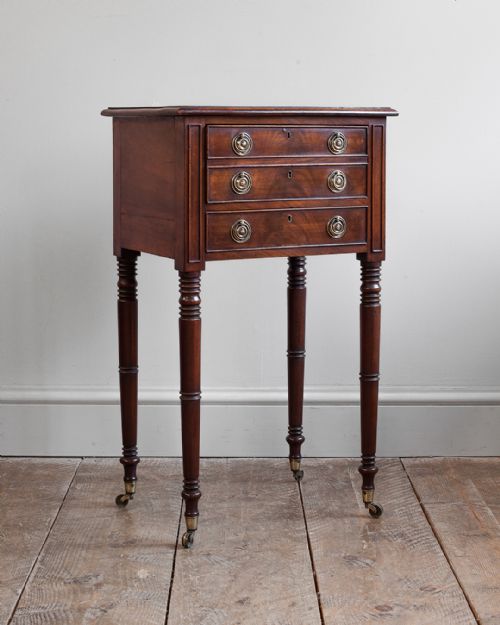
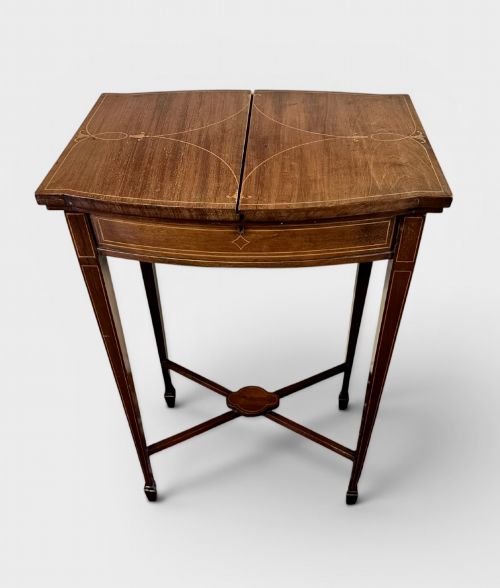
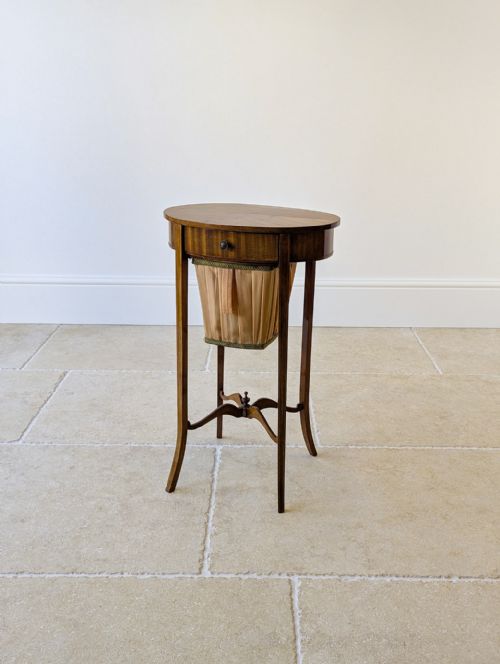


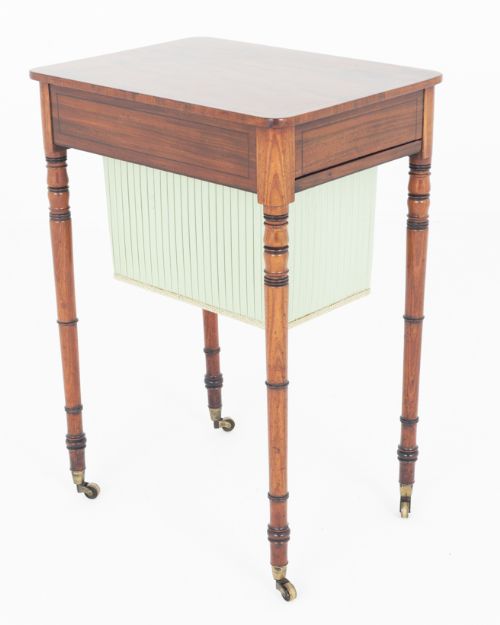


Mahogany Sewing Box Table
A mahogany sewing box table combines a neat surface with a fitted interior for needlework, offering both utility and warm timber grain.
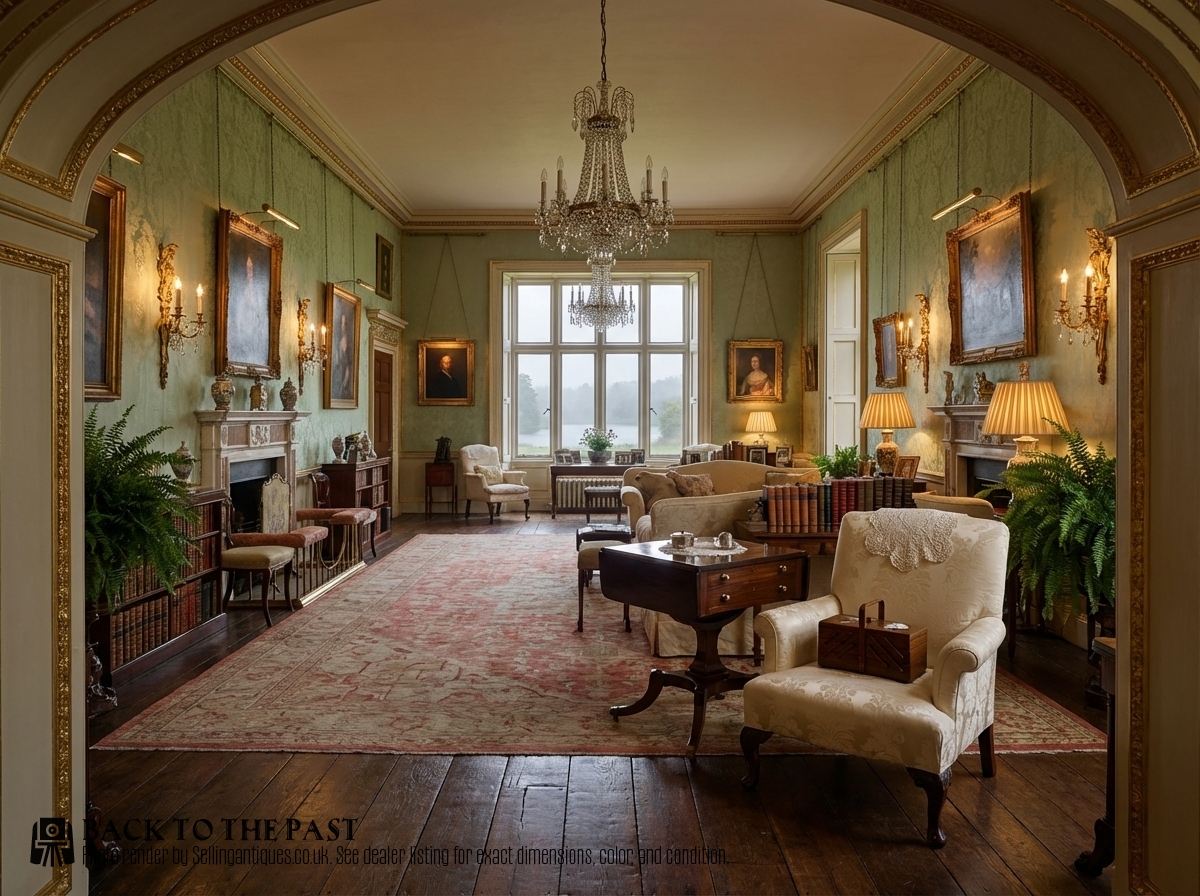
Mahogany Sewing Box Table
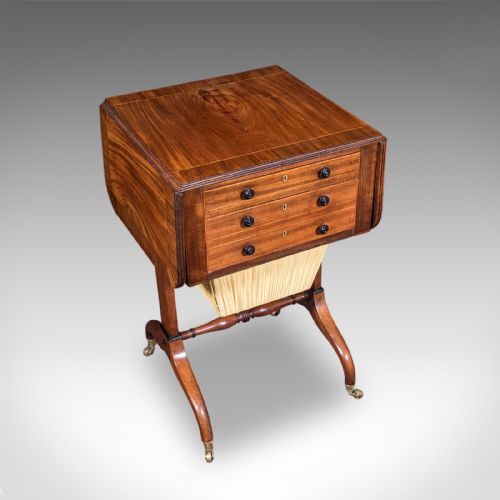
A mahogany sewing box table serves as a functional piece of furniture designed for needlework and small domestic tasks, appearing frequently across the Regency, Victorian, and Edwardian periods.
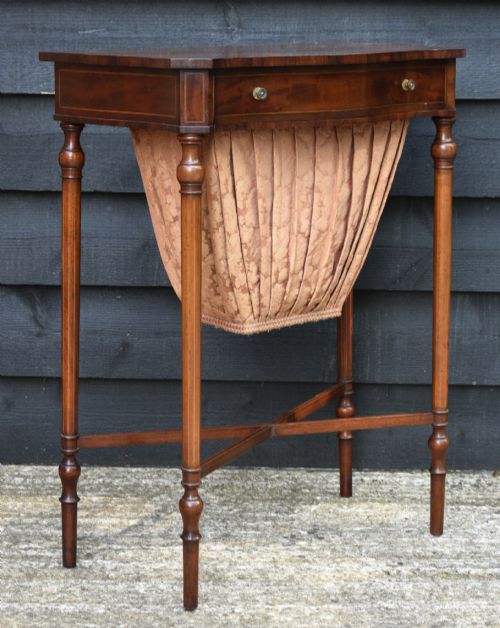
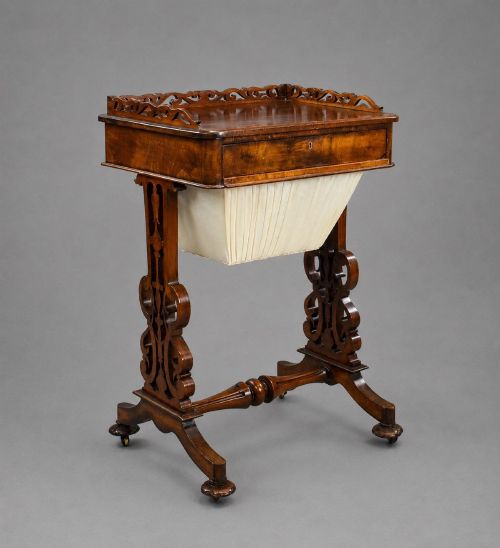
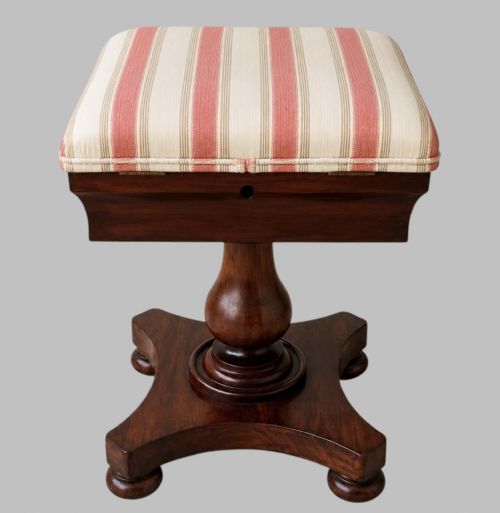
Buyers encounter forms that range from drop-leaf work tables and octagonal lamp tables to freestanding stands with fitted interiors and hanging silk baskets.
These items function equally well as occasional side tables or dedicated work tables in a modern interior, retaining their original purpose of holding sewing equipment and writing materials.
Materials and Construction
Cabinet makers utilised solid mahogany and figured veneers such as flame mahogany and curl grain, often selecting timber with rich natural patterns for the primary surfaces.
Inlay work in contrasting woods like satinwood, boxwood, and shell decoration enhanced the tops and borders of later Edwardian and Sheraton Revival examples.
Internal compartments, writing slides, and drop-down silk bags were constructed with precise joinery to organise thread, needles, and small accessories neatly out of sight.
Listings feature mahogany sewing tables across the Regency, Victorian, and Edwardian eras, incorporating satinwood inlay and silk work bags.
Assessing Quality
The standard of a mahogany sewing box table depends heavily on the selection of the timber grain, with figured and flame mahogany veneers showing superior visual depth compared to plain boards.
Refinement in secondary details such as boxwood inlay, brass fittings, and the intact survival of internal compartments or silk collection bags elevate a piece above standard utility items.
Structural integrity in the pedestals, lyre ends, or tapered legs ensures the table remains stable and balanced despite the shifting weight of hinged lids and pull-out boxes.
The Mahogany Sewing Box Table Glossary
- Flame mahogany
- A veneer cut to produce a vivid, flickering flame-like pattern across the timber surface. It was favoured by cabinet makers for prominent table tops and lid panels.
- Work table
- A multi-purpose domestic table featuring internal compartments, drawers, or fabric bags for holding sewing and needlework supplies. These pieces were essential for ladies' sitting rooms.
- Regency
- An English design period spanning roughly from the late eighteenth century to the eighteen-twenties, characterised by classical restraint, pedestal bases, and clean architectural lines.
- Cross-banded
- A border technique where thin strips of veneer are laid across the grain of the main panel. This creates a neat framing effect around table tops and drawer fronts.
- Serpentine
- A gently undulating curved shape seen on the front edges or sides of cabinet furniture. It requires skilled carpentry to shape the solid timber or veneer accurately.
Mahogany Sewing Box Table: Frequently Asked Questions
What is inside a sewing box table?
Inside these tables you typically find small wooden compartments, divided trays, and sliding ledges designed to organise threads, pins, and bobbins.
Many examples also incorporate a hanging silk basket or fabric bag suspended below for larger needlework projects and spare cloth.
How do I date a mahogany sewing table?
Dating relies on observing the overall style, timber selection, and construction methods. Regency pieces often feature pedestal bases or lyre ends, while Edwardian versions frequently display delicate boxwood inlay.
Secondary indicators include the presence of brass hardware, the grain of the mahogany veneer, and the style of the legs or feet.
Can I use one as a lamp table?
These tables adapt easily to modern rooms as bedside stands or lamp tables beside a sofa. Their compact proportions and useful surface area make them practical for everyday placement.
The enclosed storage space also provides a convenient spot for small items you want to keep tidy but close at hand.
What is the difference between a work table and a sewing box?
A work table generally stands on legs or a pillar base and functions as a full piece of furniture with a working surface. A sewing box is often a smaller, portable container meant to sit on top of another surface.
However, many antique listings use the terms interchangeably when describing boxes mounted onto dedicated stands.