


Mahogany Serving Cabinet
A mahogany serving cabinet is a practical dining room focal point that brings timeless timber grain and formal presence to a home.

Mahogany Serving Cabinet
A mahogany serving cabinet encompasses traditional sideboards, credenzas, buffets, and serving cupboards designed for dining rooms and entertaining spaces. These pieces appear across Georgian, Regency, and Victorian periods, alongside later revival styles and early twentieth-century examples.
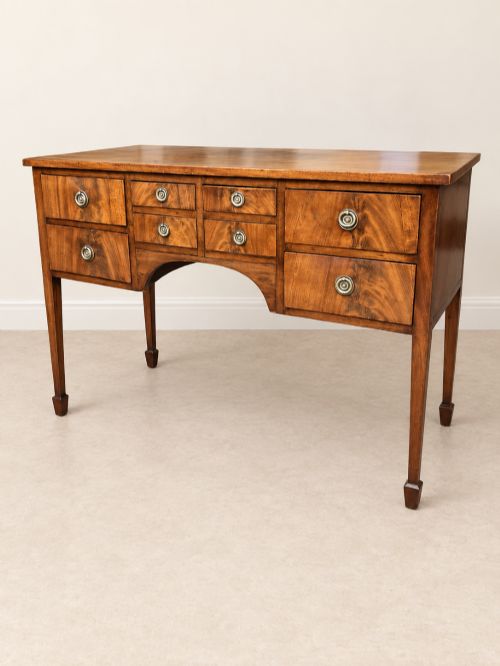
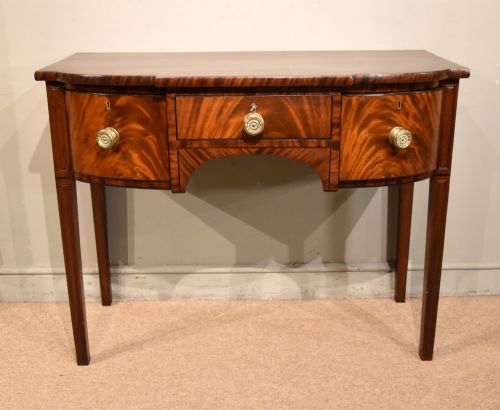
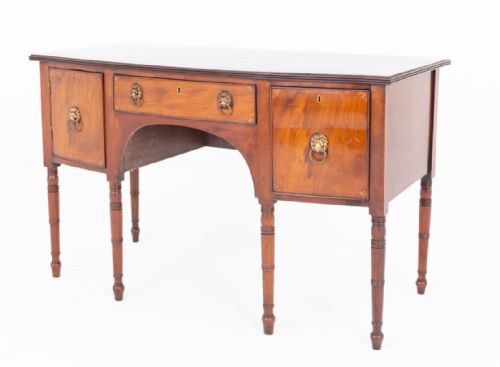
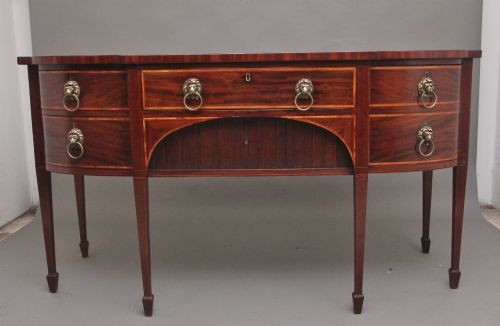
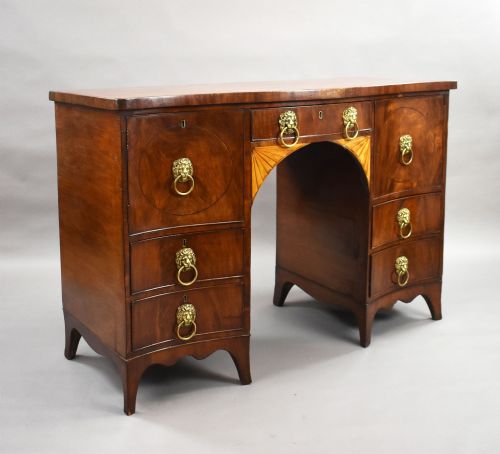
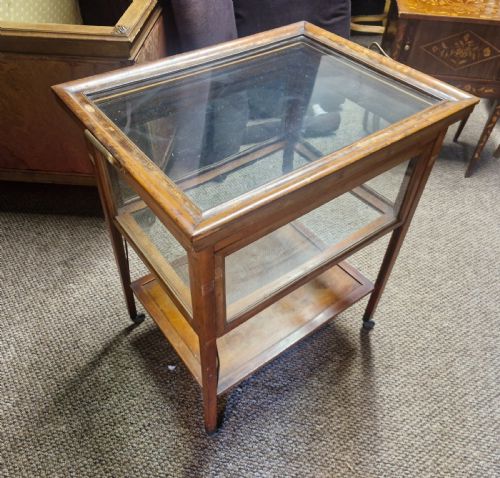
The most common form on this page is the sideboard, often featuring a bowfront or serpentine shape. Alongside traditional sideboards, listings include tea and cake trolleys, dumb waiters, shop serving counters, and chiffoniers.
Origins span English workshops and Belgian makers, capturing formal dining room furniture from the eighteenth century through to the early twentieth century. Buyers encounter both straight-fronted and breakfront configurations designed for holding tableware and serving food.
Materials and construction
Cabinet makers utilised solid mahogany and flame mahogany veneers over secondary timbers to achieve rich, deep red-brown surfaces. Flame mahogany provides striking grain patterns across drawer fronts and cabinet doors.
Decoration relied on contrasting timber inlays including satinwood and boxwood, alongside brass details such as stringing, gallery rails, and handles. Selected pieces incorporate marble tops, glass elements, and hand-carved details like barley twist columns.
Several trolleys include drop sides and rolling wheels, ready to wheel tea and cake into the parlour at a moment's notice.
Assessing quality
Quality rests in the choice of timber and the precision of the cabinet work, particularly the selection of well-figured flame mahogany veneer and crisp boxwood or satinwood inlay. The integration of solid brass mounts and well-fitted drawer linings separates standard utility pieces from exceptional ones.
Proportion and architectural balance dictate the standing of a piece, with superior examples displaying harmonious bowfront or breakfront curves, elegant tapered legs, and original hardware. The integrity of the timber movement and the depth of the polished finish reveal the care taken during original construction.
The Mahogany Serving Cabinet Glossary
- Bowfront
- A convex curved cabinet front that swells outward in the centre, commonly seen on Georgian and Regency sideboards.
- Breakfront
- A cabinet front where the central section projects forward from the flanking outer sections.
- Serpentine front
- A cabinet front featuring a concave centre flanked by convex ends, creating a flowing undulating line.
- Chiffonier
- A low cabinet with doors, often topped with a small shelf or tier, used for serving and storage in dining rooms.
- Dumb waiter
- A tiered freestanding piece of furniture used for holding plates and food during meals without servant attendance.
Mahogany Serving Cabinet: Frequently Asked Questions
What is a mahogany serving cabinet used for?
These pieces function as dining room storage for tableware, linens, and serving dishes, while the top surface provides a convenient station for food and drink during meals.
Modern homes use them in dining rooms, living spaces, and hallways to combine practical storage with formal period character.
How do I identify a Georgian mahogany sideboard?
Georgian sideboards typically exhibit clean architectural proportions, straight or bowfront shapes, and subtle stringing or inlay work in boxwood and satinwood.
They rely on the natural warmth of solid mahogany and flame mahogany veneers rather than heavy ornamentation.
What is the difference between a sideboard and a buffet?
Sideboards generally feature a combination of drawers and cupboards designed specifically for dining room storage and serving.
Buffets often serve a similar function but may incorporate upper cabinet tiers or alternative configurations for holding dishes.
Where were these serving cabinets made?
The pieces originate primarily from English workshops, reflecting the prevailing furniture styles of Georgian, Regency, and Victorian periods.
Selected examples hail from continental makers, including nineteenth-century Belgian workshops demonstrating distinct regional carving techniques.