
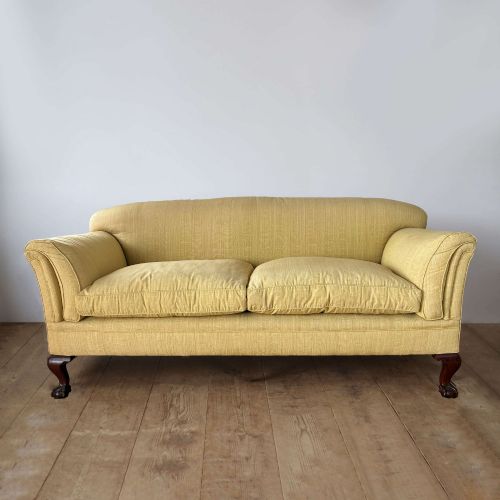
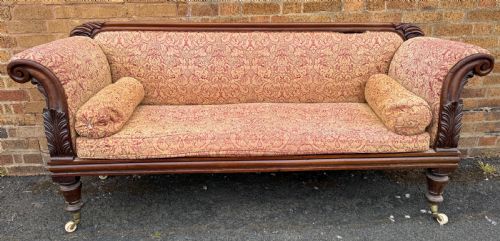


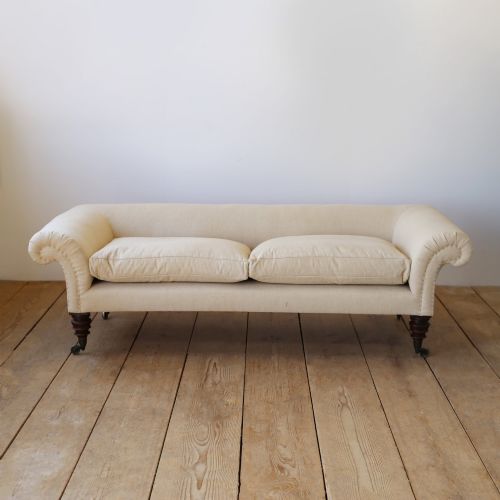

Mahogany Scroll Arm Settee
A mahogany scroll arm settee brings architectural presence to a room, offering generous scroll ends and rich timber frames from the nineteenth century.
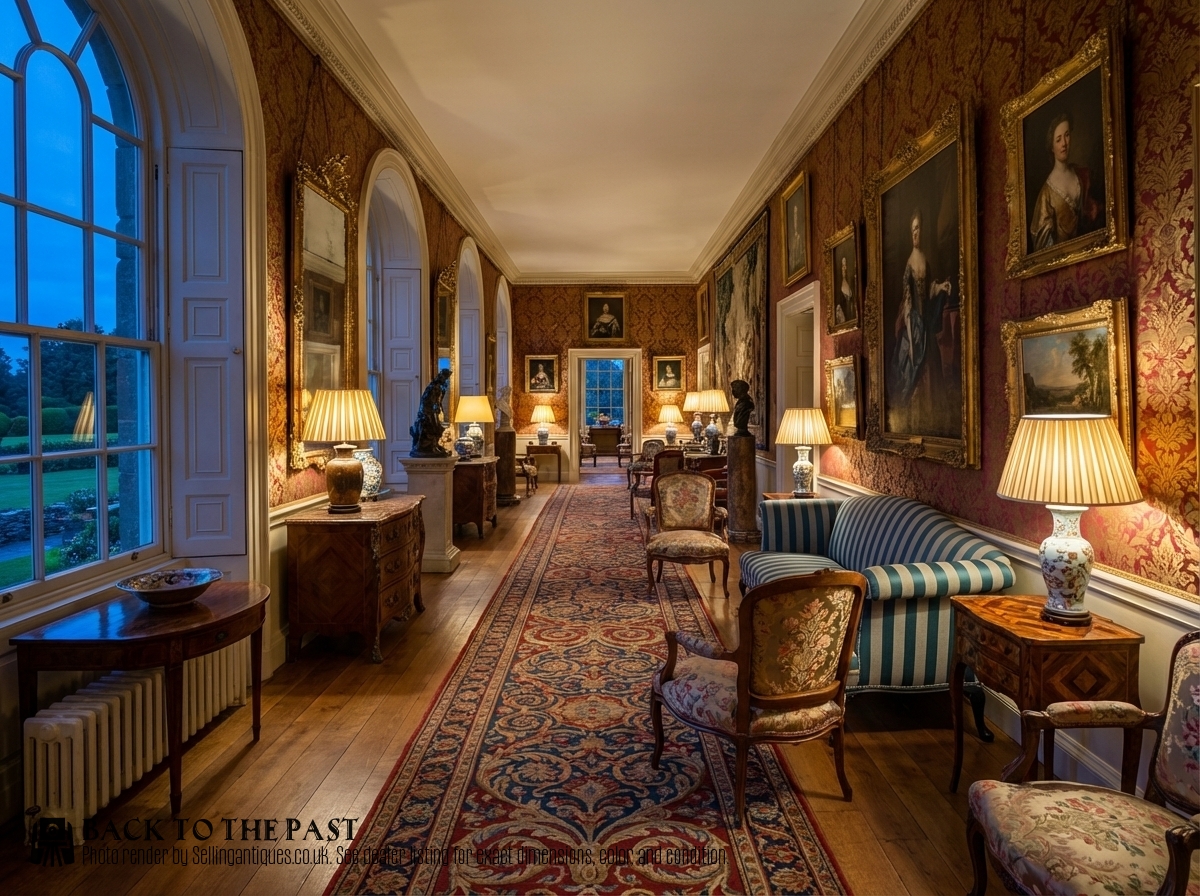
Mahogany Scroll Arm Settee
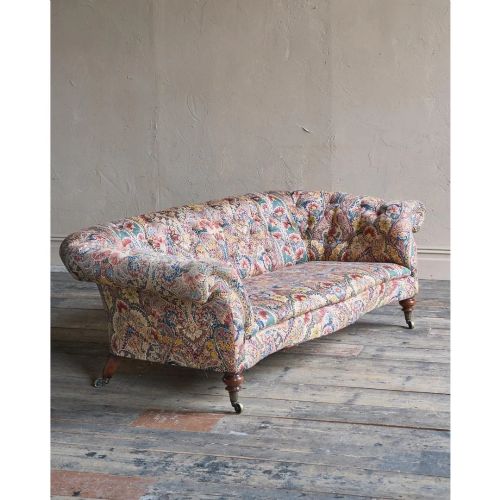
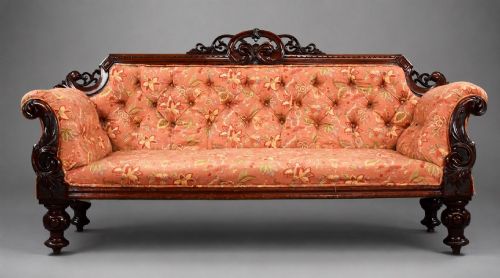
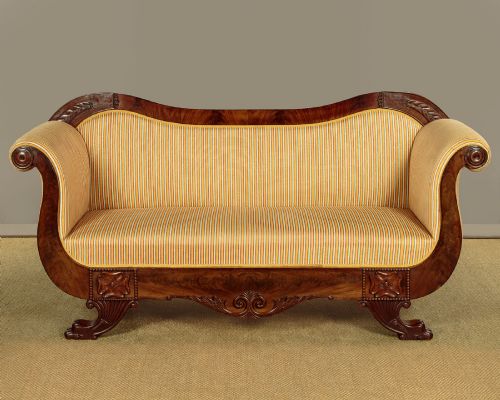
A mahogany scroll arm settee represents a substantial seating form primarily originating from the nineteenth century, encompassing Regency, William IV, and Victorian periods. Buyers search for these pieces to anchor a drawing room or country house interior with deep timber show frames and scrolling ends.
The selections available here rely heavily on nineteenth century craftsmanship, including double-ended sofas and library settees. Most examples unite solid mahogany frames with traditional upholstery methods, ranging from damask to leather covers.
The variety spans grand Regency lines and later Victorian interpretations, often styled with carved woodwork and generous proportions. These forms function practically as long seats while serving as focal points for traditional and eclectic spaces.
Materials and construction
Makers shaped structural frames from dense mahogany, occasionally incorporating rosewood, supporting the timber with internal webbing and hessian foundations. These woods provided the necessary strength to support prominent scroll ends and carved show frames.
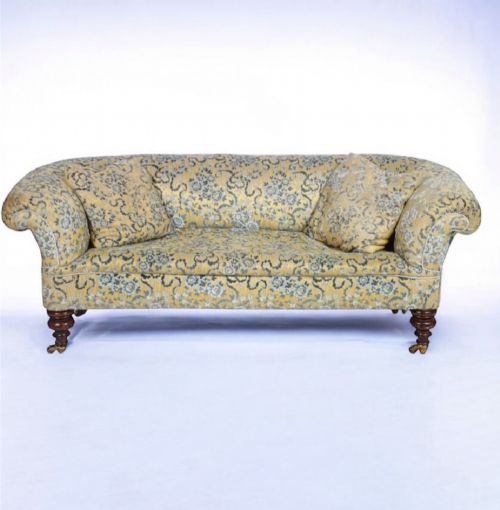
Upholstery techniques combined traditional stuffing materials with durable top fabrics like damask, woven textiles, and brown leather. Brass castors frequently finished the feet, allowing these heavy timber settees to move across carpeted floors.
Listings on this site feature nineteenth century periods exclusively, utilising mahogany frames paired with brass, leather, and various woven upholstery fabrics.
Judging quality and proportion
Quality rests in the crispness of the timber carving and the architectural balance of the scroll arms. Superior examples exhibit harmonious proportions where the show frame integrates smoothly with the upholstered body.
The integrity of the original mahogany timber and the restraint of the carved details separate finer pieces from heavier, less refined iterations. Premium items maintain structural clarity in their show frames without losing the elegance of their period styling.
Howard and Sons
The Mahogany Scroll Arm Settee Glossary
- Scroll arm
- A terminal element that curves outward or inward in a spiral profile, providing the defining silhouette for these settees.
- Show frame
- The exposed wooden structure surrounding the upholstered portions of a sofa, typically carved from mahogany.
- Double ended
- A symmetry in design where both ends of the settee feature matching scroll arms or raised backs, allowing a user to recline from either side.
- Chaise longue
- An elongated seat designed for reclining, sharing stylistic periods and frame materials with nineteenth century settees.
- Chesterfield
- A heavily upholstered sofa style characterised by deep buttoning and uniform arm and back heights, appearing frequently in nineteenth century inventories.
Mahogany Scroll Arm Settee: Frequently Asked Questions
How do I style a mahogany scroll arm settee?
Position the settee away from walls in a larger room to let the carved mahogany show frame and scroll ends remain visible from all angles. Pair the piece with neutral textiles to balance the dark timber tones.
Incorporate antique brass lighting or complementary nineteenth century occasional tables nearby to anchor the seating arrangement within a traditional interior scheme.
What periods do these settees represent?
The listings on this page span the nineteenth century, primarily capturing Regency, William IV, and Victorian eras. These periods share a reliance on rich mahogany timbers and sculptural framing.
Distinction between the periods often lies in the carving style, with Regency pieces favouring classical lines and William IV examples displaying bolder, heavier proportions.
How do I care for antique mahogany frames?
Maintain the timber by dusting regularly with a soft, dry cloth and avoiding direct sunlight that might fade the mahogany polish. Apply appropriate furniture wax sparingly to preserve the finish.
Keep the settee away from direct heat sources to prevent the wood from drying out or splitting along the structural joints.
What is the difference between a settee and a couch?
Settees generally feature fully upholstered backs and arms designed for upright sitting, while nineteenth century couches often incorporate asymmetric or single scroll ends intended for reclining.
Both forms utilise similar mahogany framing techniques and period upholstery fabrics across the available selections.