
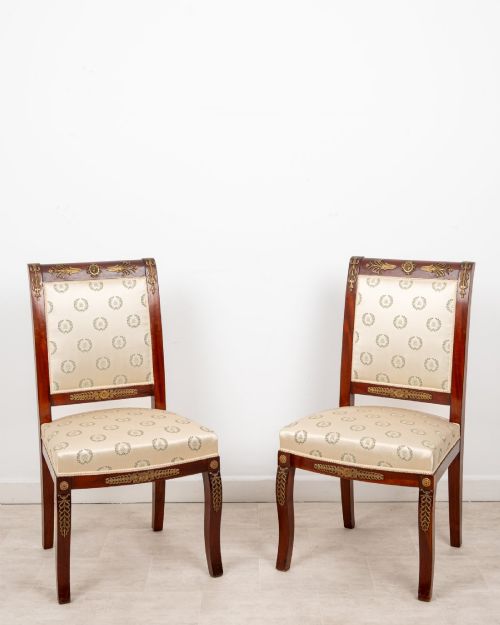


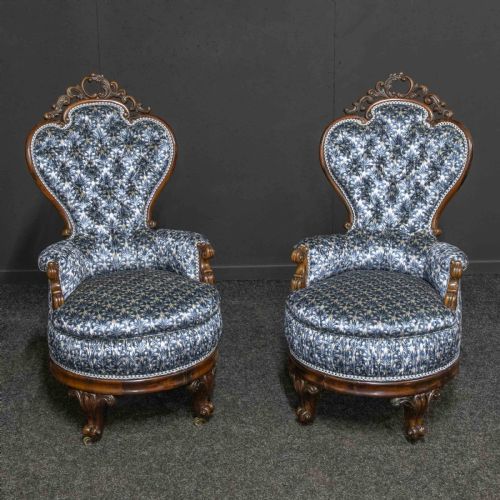


Mahogany Salon Chairs Pair
A mahogany salon chairs pair offers refined seating shaped by Victorian and Edwardian craftsmanship.
Mahogany Salon Chairs Pair
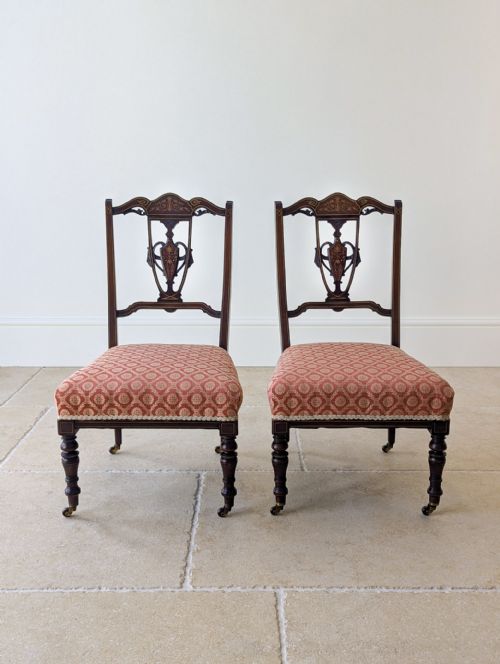
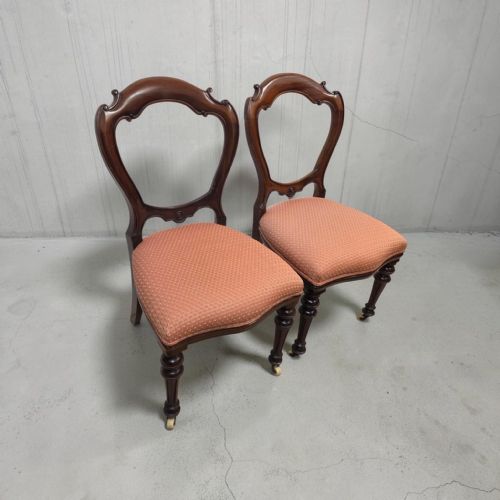
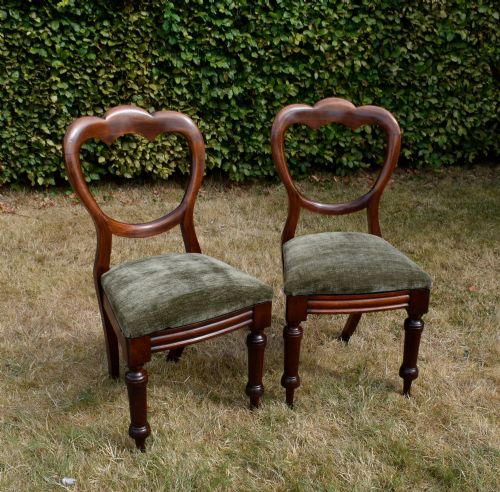
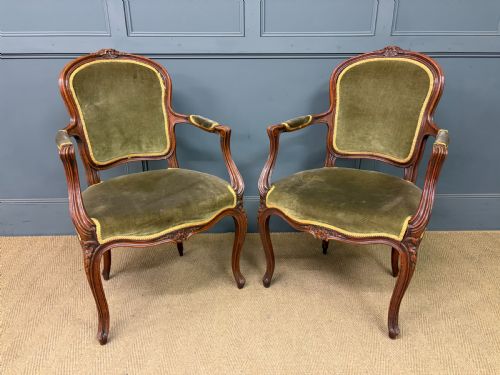
When searching for a mahogany salon chairs pair, collectors encounter seating designed primarily for formal reception rooms and parlours during the nineteenth and early twentieth centuries. The pieces on this page span Victorian, Edwardian, and nineteenth-century periods, showcasing forms from open armchairs to balloon-back and tub designs.
Victorian examples often display robust carved details and curved timber frames, whilst Edwardian versions frequently incorporate delicate string inlay and satinwood marquetry. Many pairs originate from English or French workshops, reflecting revival styles ranging from Sheraton and Chippendale to Louis XV and Empire.
Buyers frequently find matching his and hers configurations, occasional chairs, and open carvers intended for drawing rooms. These seats combine decorative presence with domestic utility, serving as functional focal points within period interiors.
Materials and construction
The primary structural timber across these listings is mahogany, selected for its strength, rich grain, and suitability for intricate carving. Cabinetmakers frequently paired this dark wood with lighter contrasting veneers such as satinwood for marquetry panels and decorative string inlay.
Upholstery forms a vital component of the construction, utilising traditional textiles including damask, velvet, tapestry, fabric, and silk damask. Metal elements such as brass castors and ormolu mounts appear on select pieces, adding functional and decorative contrast to the timber frames.
His and hers pairs ensure that Victorian gentlemen and ladies could recline with equal dignity in the drawing room.
Distinctions in quality
Quality in these chairs rests upon the crispness of the timber carving and the precision of any inlaid marquetry work. Superior examples demonstrate fluid joinery where the grain aligns harmoniously across structural joints and exposed frames.
The distinction between standard production and finer pieces often lies in the depth of ornamentation, such as hand-carved petal backs or finely cast ormolu mounts. Original upholstery materials and sympathetic restoration further elevate the standing of a matched pair.
Hewetson and Milner·Henry Thomas Peters·John Linnell
The Mahogany Salon Chairs Pair Glossary
- Balloon back
- A rounded, oval-shaped chair back that curves outward, commonly found on Victorian seating.
- Marquetry
- Decorative veneer work forming pictorial or geometric patterns using contrasting woods like satinwood and mahogany.
- Bergere
- An enclosed upholstered armchair featuring exposed wooden framing and woven cane or padded sides.
- Ormolu
- Gilt-bronze mounts applied to furniture for decorative enrichment, frequently seen on French revival pieces.
- Tub chair
- An upholstered armchair with a continuous curved back and arms forming a single semi-circular enclosure.
Mahogany Salon Chairs Pair: Frequently Asked Questions
What is a salon chair?
A salon chair is a light, decorative seat designed for use in a formal reception room or parlour rather than heavy daily dining.
These pieces prioritise aesthetic appeal and comfort, often featuring upholstered seats and backs supported by slender mahogany frames.
How do I date these chairs?
Dating relies on identifying characteristic design details, such as heavy carved balloon backs on Victorian pieces or delicate satinwood inlay on Edwardian examples.
Construction methods and timber selection also provide clear chronological markers for nineteenth-century furniture.
Were these sold as pairs originally?
Many salon chairs were produced in matching sets or pairs, sometimes including complementary ladies and gents armchairs for drawing room suites.
Surviving pairs reflect coordinated interior schemes where symmetrical seating arrangements dominated formal entertaining spaces.
How should I care for mahogany?
Mahucolour mahogany benefits from minimal intervention, requiring only dusting with a soft cloth and protection from direct sunlight and heat sources.
Avoid chemical polishes that can build up on the timber surface and obscure the natural grain of the wood.