
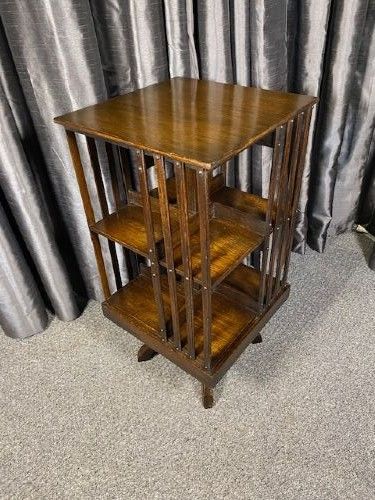
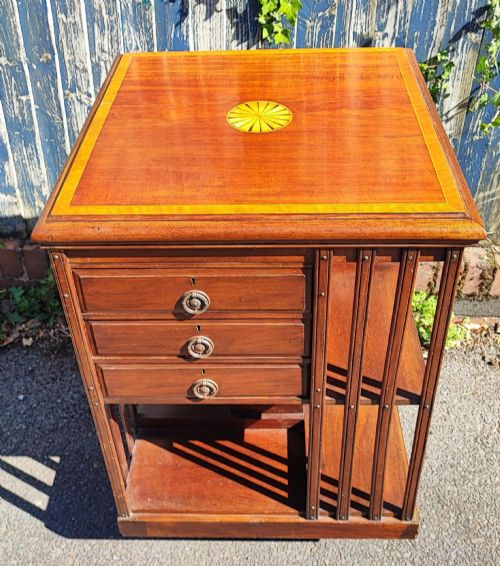
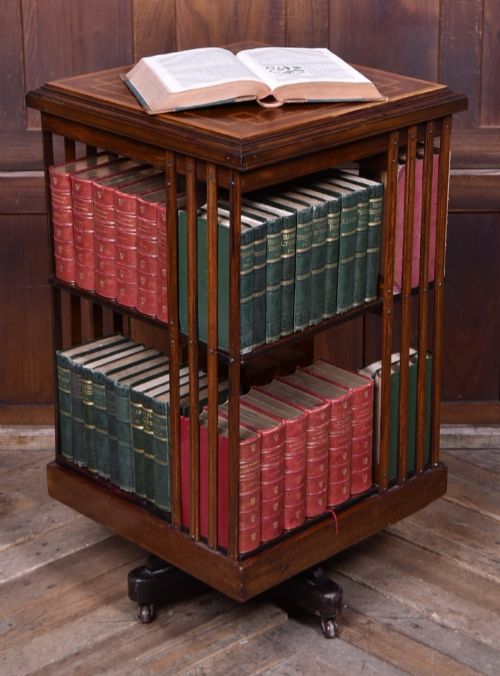
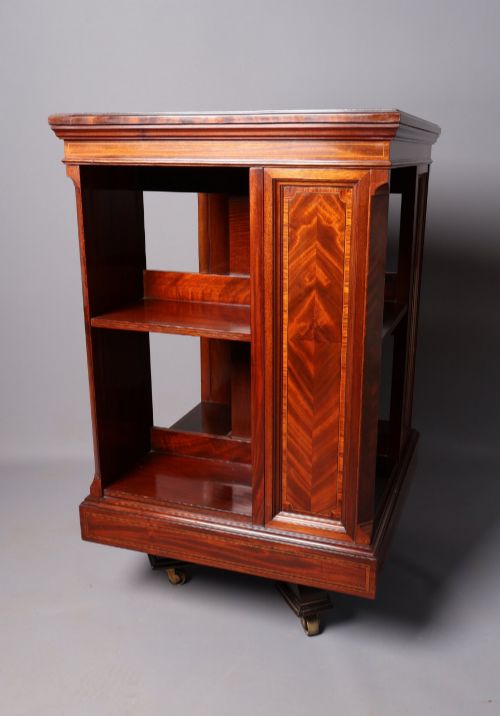
Mahogany Revolving Book Table
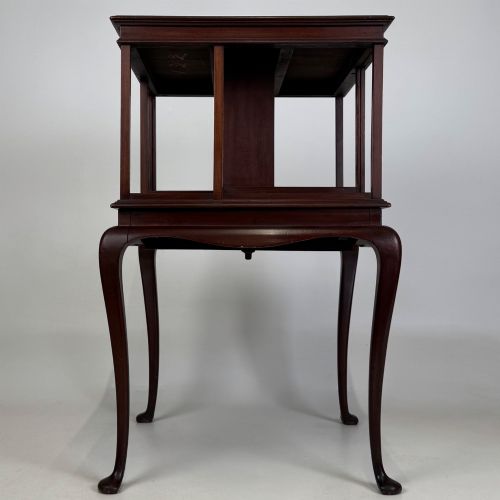
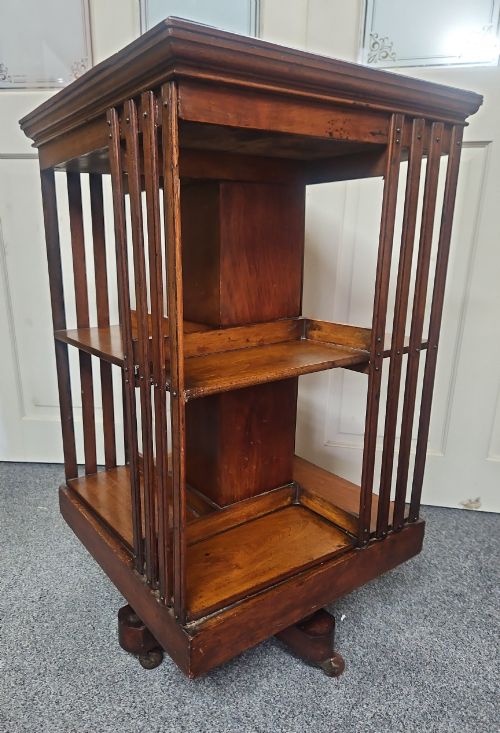
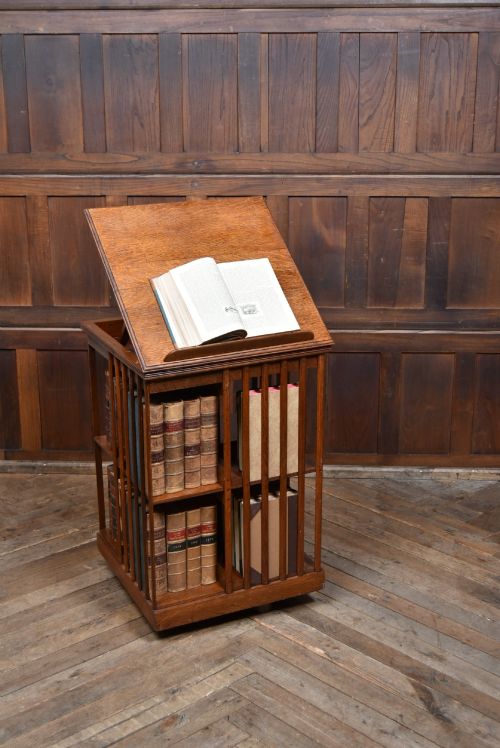
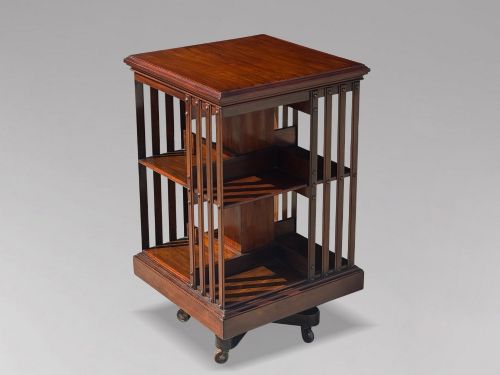
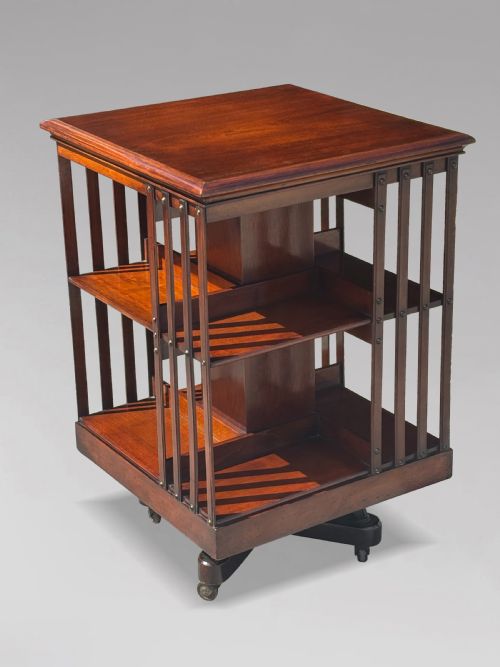
A mahogany revolving book table is a practical piece designed to hold volumes within reach while turning smoothly on a central spindle.
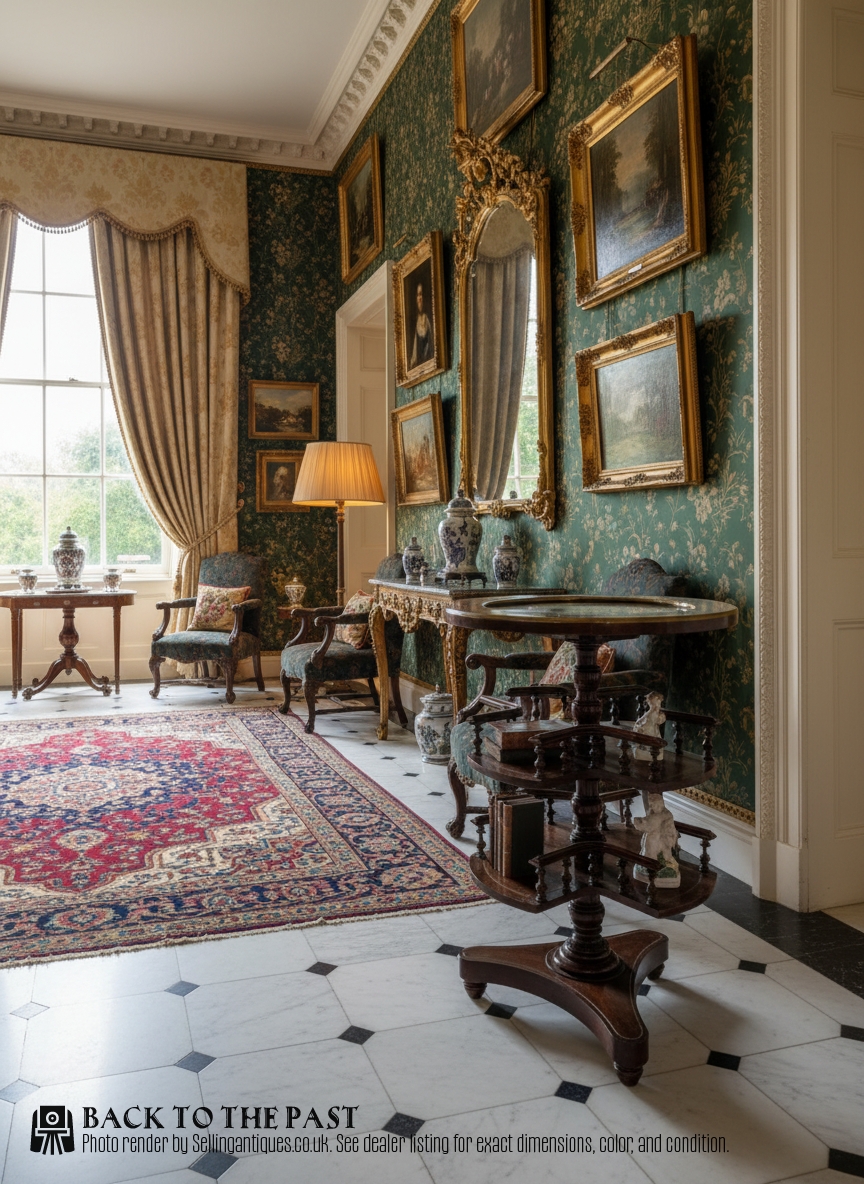
Mahogany Revolving Book Table
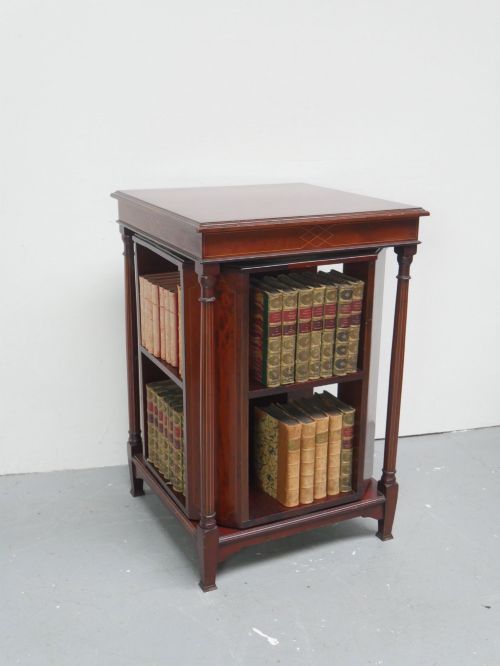
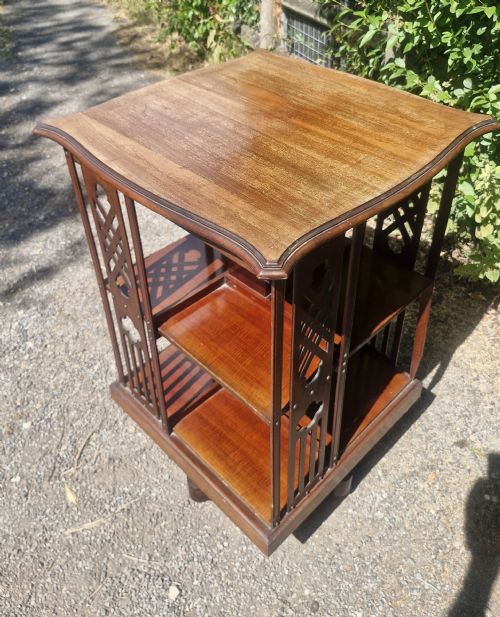
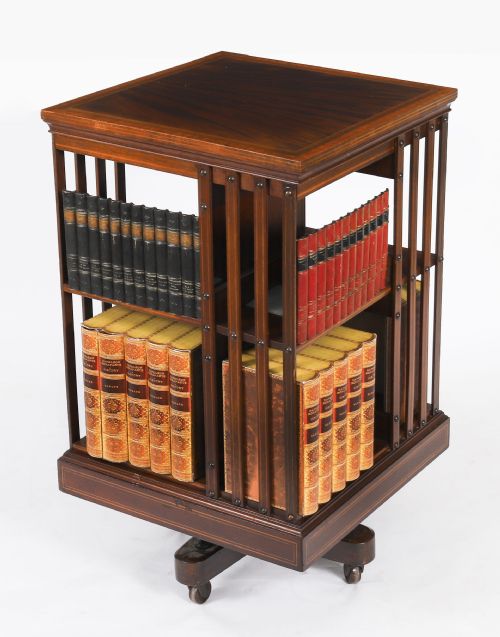
A mahogany revolving book table combines the function of a small surface with compartments for volumes, allowing a reader to access multiple texts from a single seated position. The pieces found here span the Victorian, Edwardian and early twentieth century periods, appearing in forms that range from compact tabletop versions to substantial floor-standing bookcases.
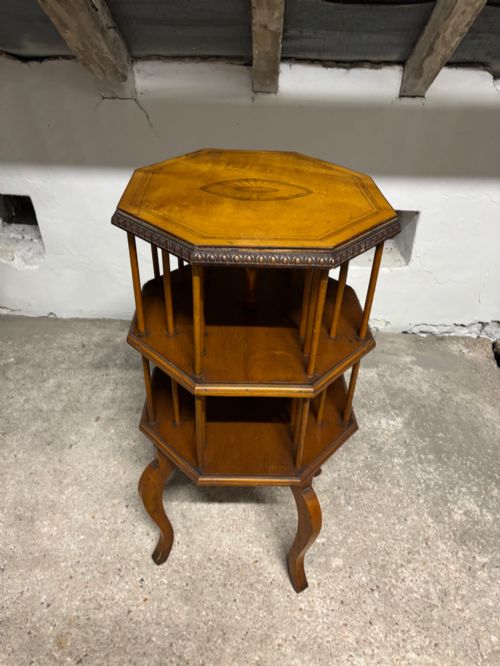
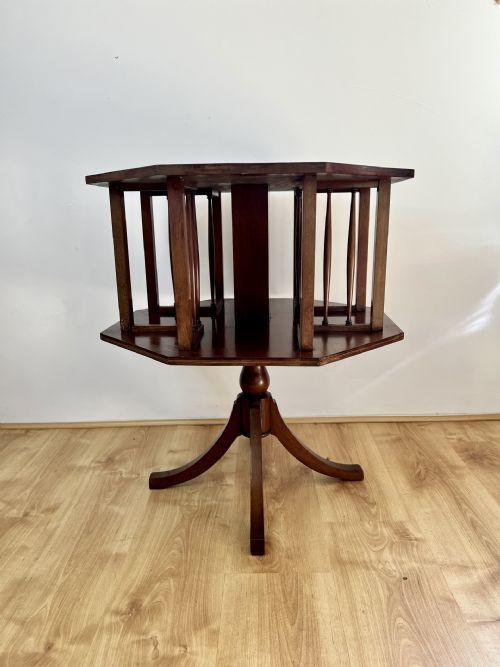
Most examples originate from the late nineteenth and early twentieth centuries, reflecting the domestic habits of the Victorian and Edwardian eras. They take the shape of round, square or occasionally octagonal furniture, sometimes combining a revolving book section beneath an occasional table, card table or drum top.
How they were made
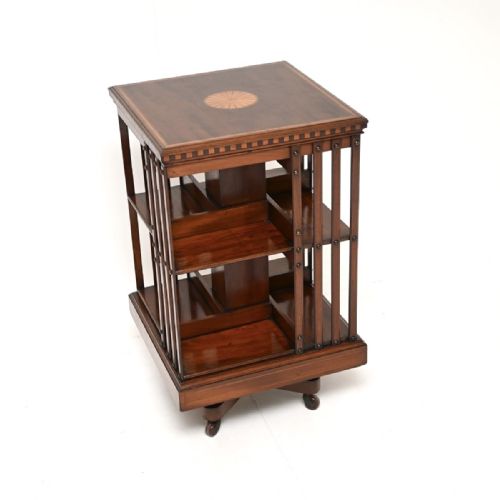
Makers utilised solid mahogany and mahogany veneers for the main structure, frequently incorporating secondary timbers such as oak alongside brass mechanisms for the internal pivot. Surface decoration often relied on satinwood inlay, satinwood banding or ebonising to contrast with the dark grain of the mahogany.
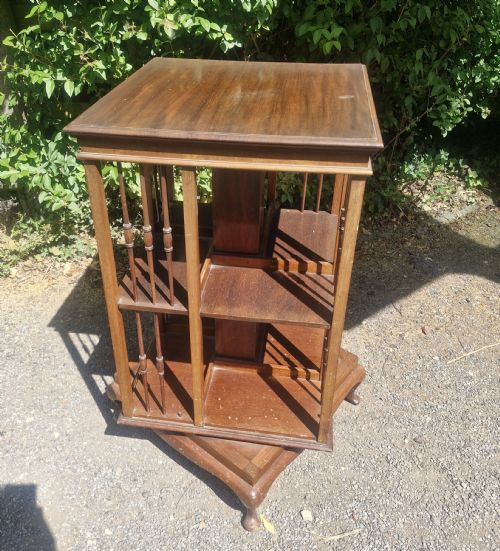
Internal construction typically involved a cruciform divider supporting the shelf tiers above a hidden iron or brass revolving pivot mechanism. Tabletop variations frequently rested upon a low platform base or castors, designed to permit easy rotation without tipping the weight of the books.
What varies in quality
The smoothness of the rotation depends entirely upon the original engineering of the internal pivot mechanism and the balance of the timber frame. Superior examples maintain a steady, silent spin without lateral wobble, even when the shelves are fully loaded with heavy volumes.
Execution of decorative details marks the distinction between standard production and finer workshops. Crisp satinwood inlay, carefully matched flame mahogany veneers and well-defined mouldings separate high-grade output from simpler utility items.
Maple & Co·Shapland & Petter
The Mahogany Revolving Book Table Glossary
- Flame mahogany
- A timber figure produced from the branching part of the mahogany tree, creating a distinctive flame-like pattern across the veneer. It was selected for prominent surfaces on better quality furniture.
- Satinwood banding
- A narrow strip of pale exotic timber inlaid around the edges of mahogany panels to create a contrasting border. This decorative technique appears frequently on Edwardian pieces.
- Revolving pivot
- The central mechanical assembly concealed beneath the shelves that allows the bookcase to turn freely in a full circle. It often incorporates brass or iron components.
- Drum table
- A circular table with a wide frieze containing drawers or compartments, occasionally adapted to incorporate open revolving book storage below. These combine display space with a functional upper surface.
- Table top bookcase
- A miniature version designed to sit upon a desk, sideboard or larger table rather than directly on the floor. These compact items preserve the rotating mechanism in a reduced scale.
Mahogany Revolving Book Table: Frequently Asked Questions
How do I care for the timber?
Maintenance requires regular dusting with a dry lint-free cloth and occasional application of appropriate furniture wax to nourish the mahogany grain. Direct sunlight and sudden changes in room temperature should be avoided to prevent veneer cracking.
Keeping the revolving mechanism clean and lightly lubricated ensures the piece continues to turn smoothly without placing strain on the central spindle.
Were these made for floors or tables?
Makers produced both floor-standing models and miniature tabletop versions, depending on the intended domestic setting. Floor-standing variants usually incorporate low bases with castors for stability.
Tabletop editions served smaller studies or parlours where space was limited, allowing users to place the revolving shelves directly onto an existing desk or surface.
How do I distinguish Edwardian from Victorian examples?
Victorian pieces tend to display heavier proportions, darker finishes and occasional use of ebonised details or marble tops. They date from the nineteenth century.
Edwardian items often feature lighter satinwood inlay, Sheraton revival influences and a more restrained aesthetic associated with the early twentieth century.
What holds the books in place?
Cross-shaped internal wooden partitions divide the circular or square tier into distinct quadrants, preventing volumes from sliding sideways as the structure turns. These dividers provide structural rigidity to the shelf tiers.
Some variations include raised rims or borders on the upper surface to keep objects from slipping off when the table is rotated.