

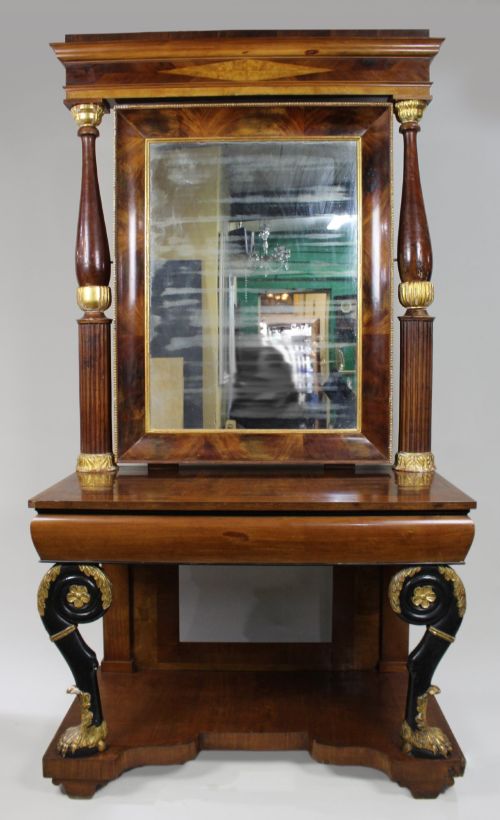

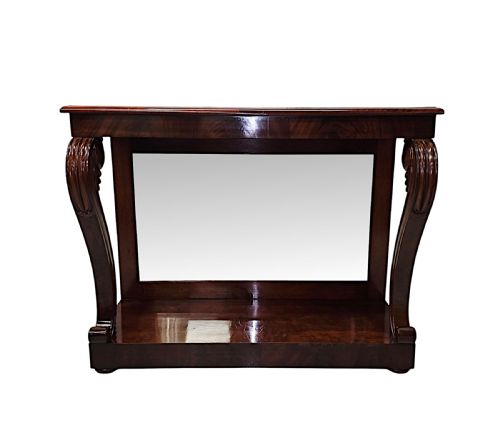
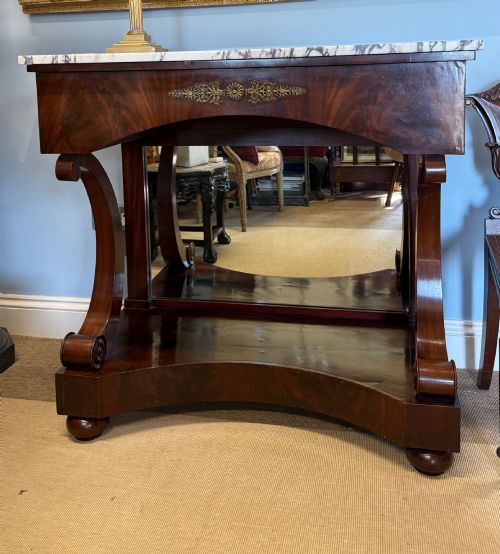


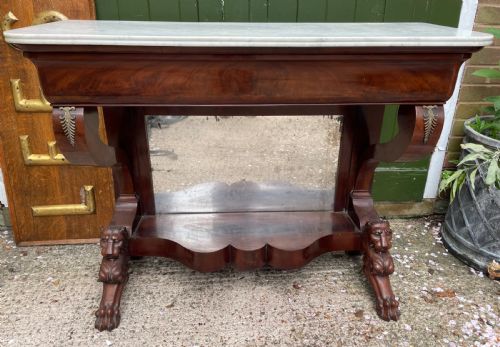

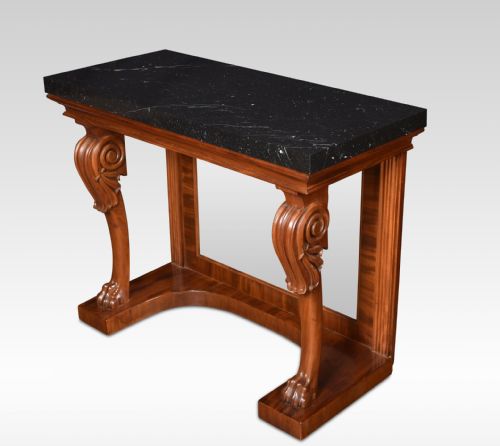


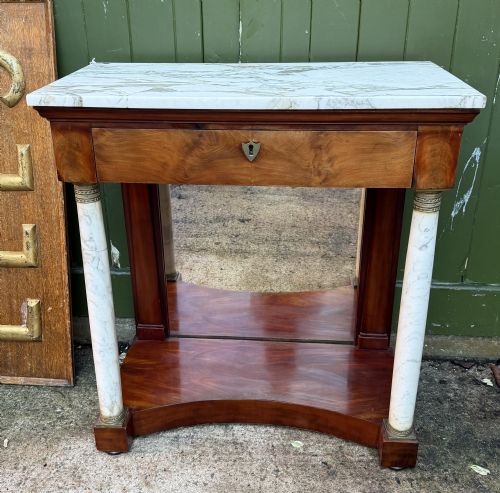

Mahogany Pier Mirror Console
These mahogany pier mirror console pieces bring architectural presence and deep timber warmth to a hall or drawing room.
Mahogany Pier Mirror Console
A mahogany pier mirror console combines a heavy timber console table with an integrated wall glass, designed to stand against the structural pier between windows. These pieces emerge across the nineteenth century, drawing on Regency, Victorian, and continental styles including French Empire and Italian Empire.
The inventory on this page shows a mix of console tables, mirror-backed pieces, and paired console tables dating from the early nineteenth century through to the twentieth century. Makers and designers of the period utilised rich timbers like flame mahogany alongside marble and parcel gilt to create monumental hall furniture.
How they were made
Cabinetmakers constructed these forms using solid mahogany and figured flame mahogany veneers laid over secondary carcase timbers. Surfaces often incorporate polished carrara marble tops, brass mounts, and parcel gilt highlights to frame the tall mirror plates.
The glass itself was silvered and set into architectural wooden frames designed to reflect light deep into nineteenth-century reception rooms. Joinery techniques balanced the heavy downward pressure of marble slabs with tall upright mirror frames secured to the wall.
Mahogany Pier Mirror Console Retail Price Guide 2026
Typical asking prices for mahogany pier mirror console among the pieces listed under this phrase on Sellingantiques today, from the lower quarter to the upper quarter. They describe what is for sale here now, not the wider market.
The listings on this page span the Regency, Victorian, and William IV periods, alongside continental French Empire and Italian Empire styles.
What varies in quality
Quality rests in the selection of the mahogany veneer, where striking flame patterns and consistent grain alignment separate superior examples from plain timber carcases. The depth of the carving, the crispness of the parcel gilt, and the weight of the marble slab define the standard of the piece.
Structural integrity matters deeply in console tables that support heavy stone tops without excessive reliance on wall fixing. Finer examples retain their original mercury mirror plates and heavy brass mounts rather than later replacements.
The Mahogany Pier Mirror Console Glossary
- Pier glass
- A tall mirror designed specifically to hang on the narrow stretch of wall between two windows. It frequently matches a console table placed directly beneath it.
- Console table
- A table supported against a wall by console brackets or legs rather than four independent vertical posts. These often feature heavy marble tops.
- Flame mahogany
- A veneer cut from the fork of the mahogany tree where the branch meets the trunk. This produces a distinctive flickering, flame-like grain pattern.
- Parcel gilt
- A decorative technique where selected portions of a carved wooden surface are partially gilded with gold leaf. This highlights specific mouldings or ornaments against the dark mahogany.
Mahogany Pier Mirror Console: Frequently Asked Questions
Where should I place a pier mirror console?
These pieces suit entrance halls, drawing rooms, or dining rooms where a strong vertical focal point is required. They traditionally occupy the wall space between two windows to reflect natural light into the interior.
Because of their integrated mirror backs and marble tops, they anchor a room effectively without dominating the floor space.
How do I care for the mahogany and marble?
Clean the mahogany surfaces with a soft, dry cloth and apply occasional high-grade wax to nourish the timber grain. Avoid placing the wood in direct sunlight or near heat sources to prevent timber movement.
Clean the marble top with mild soap and warm water, avoiding acidic cleaners that can etch the polished stone surface.
How can I tell a Regency piece from a Victorian one?
Regency pieces often display restrained classical lines, architectural proportions, and restrained brass or gilt enrichment influenced by ancient Roman and Greek forms. Victorian examples frequently employ heavier proportions, elaborate carving, and more complex mirror frames.
Examining the secondary timbers and the construction methods inside the carcase helps confirm the period of manufacture.
Are these consoles freestanding?
Most console tables designed with pier mirrors require attachment to the wall for safe support, particularly when carrying heavy marble tops. The tall mirror component fastens securely to the wall structure while the table base rests on the floor.
Checking the original fixing points on the back frames ensures stability in modern rooms.