





Mahogany Partner Desk Style
These large double-sided tables provide workspace on both faces, built for boardrooms and studies.
Mahogany Partner Desk Style
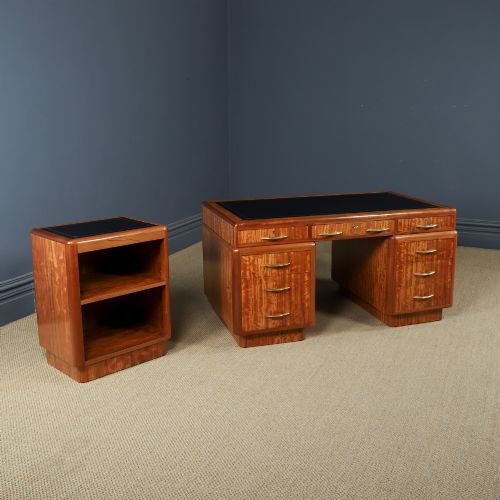
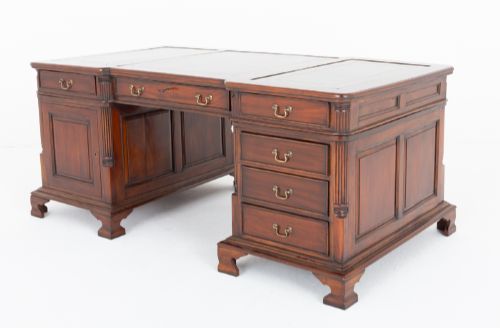
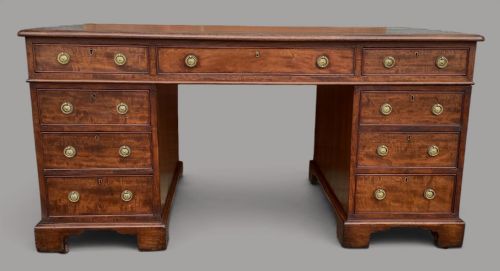
A mahogany partner desk style piece places drawers and cupboards on both sides so two people can sit opposite each other. The records show these items originating across the nineteenth and twentieth centuries, spanning Victorian, Edwardian, and Georgian revival periods.
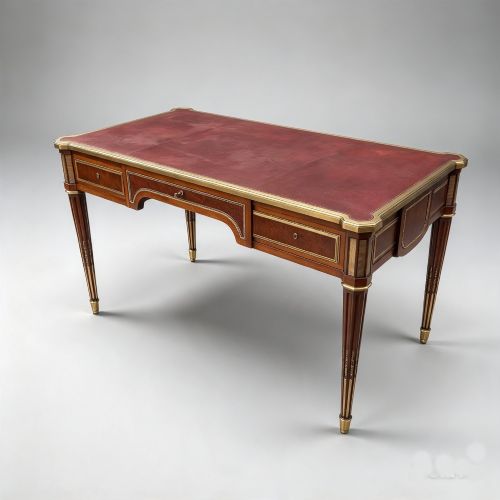
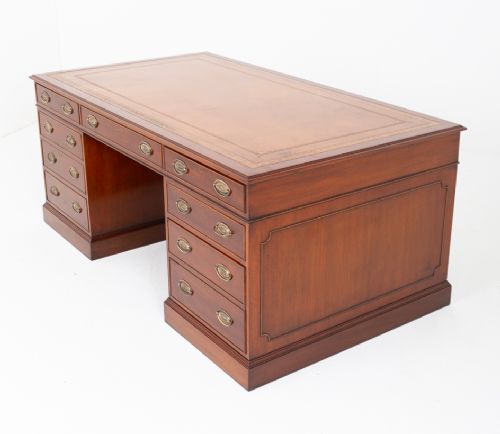
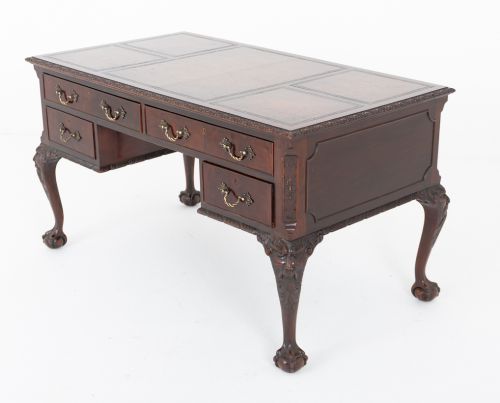
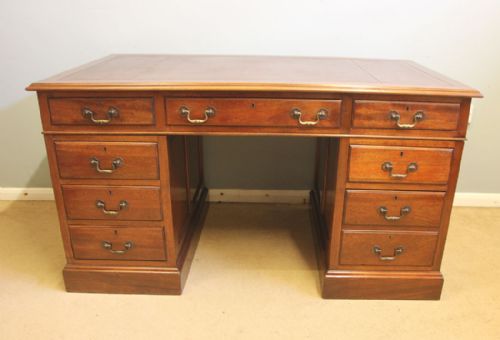
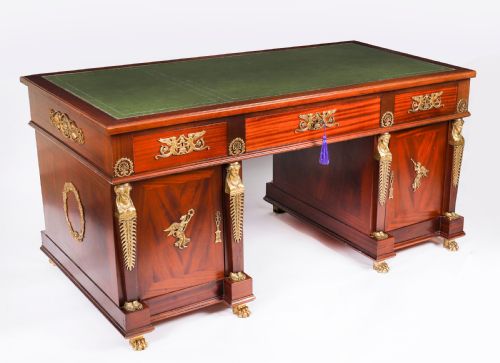
Most examples found here take the form of twin-pedestal desks or library tables in styles ranging from Chippendale and Sheraton to French Empire. They utilise sturdy timber frames fitted with wide kneeholes and inset leather writing surfaces.
How they were made
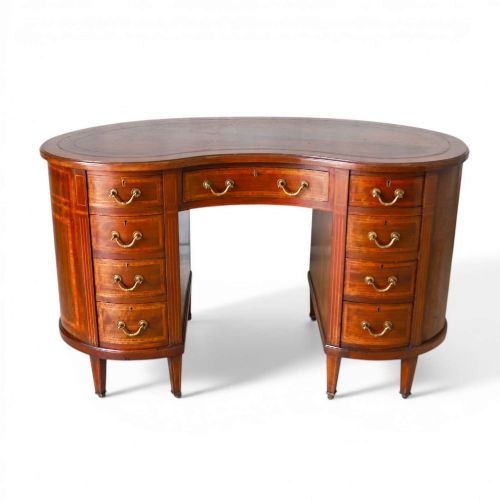
Cabinet makers built these pieces using solid mahogany and figured veneers, often incorporating brass hardware, satinwood stringing, and gilt bronze or ormolu mounts. Tops were inset with tooled leather writing surfaces, while drawers utilised traditional dovetail joints.
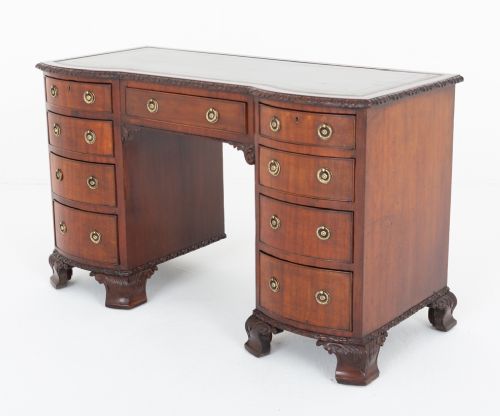
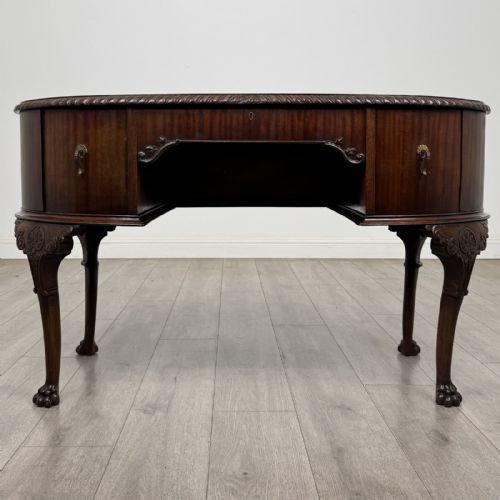
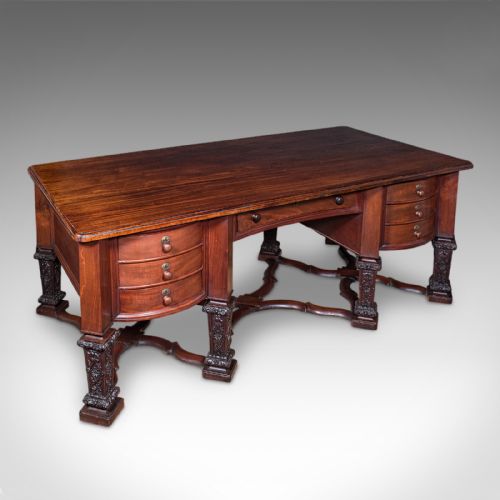
Revival pieces from the nineteenth and twentieth centuries drew upon Georgian and French design vocabularies, employing serpentine shapes, carved mahogany details, and inlaid borders.
Mahogany Partner Desk Style Retail Price Guide 2026
Typical asking prices for mahogany partner desk style among the pieces listed under this phrase on Sellingantiques today, from the lower quarter to the upper quarter. They describe what is for sale here now, not the wider market.
Secret drawers hidden behind faux book spines occasionally turn up in nineteenth-century library desks.
What varies in quality
The degree of carving and the selection of timber dictate the distinction between standard production and top-tier workshop output. Figured and curl mahogany veneers require superior skill to match across large double-sided surfaces.
Hardware choice and internal construction also separate examples, with heavy brass mounts, finely tooled leather tops, and well-executed secondary woods marking out superior library desks.
Gillows·Richard Bridgens·S and H Jewell
The Mahogany Partner Desk Style Glossary
- Partners desk
- A large double-sided desk with pedestals of drawers or cupboards facing both directions. It allows two people to work opposite one another.
- Pedestal desk
- A freestanding writing table supported by two separate stacks of drawers. The top rests upon these pedestals, creating a central kneehole.
- Ormolu
- Gilded bronze ornamentation applied to furniture. It provides decorative mounts on French Empire and revival pieces.
- Serpentine front
- A furniture front curving inward and outward in a continuous wave. This shape requires skilled joinery to execute in solid mahogany.
Mahogany Partner Desk Style: Frequently Asked Questions
How do I use a partner desk in a modern room?
These large tables function well as central room pieces rather than being pushed against walls. Their double-sided nature allows chairs to sit on both faces.
Adequate floor space is required around the entire piece to maintain access to the drawers and cupboards on opposite sides.
What is the difference between a partner desk and a standard pedestal desk?
Standard pedestal desks feature drawers on one side with a finished panel facing the rear. Partner desks include functional drawers or cupboards accessible from both front and back.
This double-sided arrangement doubles the storage capacity and allows two people to use the desk simultaneously.
How do I care for the leather top?
The inset leather surface benefits from occasional cleaning with a damp cloth followed by neutral leather cream. Avoid harsh chemical cleaners or excessive moisture.
Protecting the leather from direct sunlight prevents fading and drying of the material over time.
Are these desks easy to move?
Due to their solid mahogany construction and large dimensions, these desks are heavy. Most examples separate into three distinct parts: the two pedestals and the top.
Lifting the top off first makes relocation manageable, though two people are generally required for safe transport.