

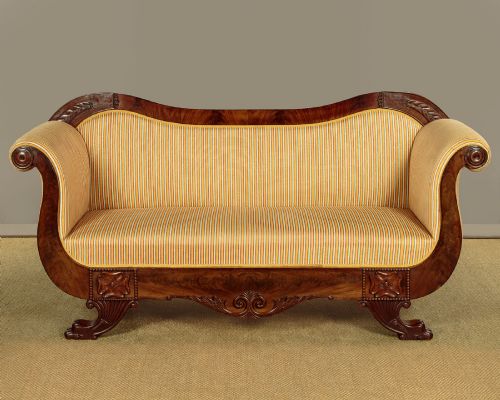
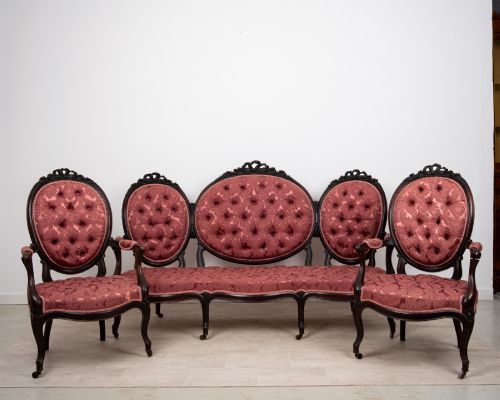
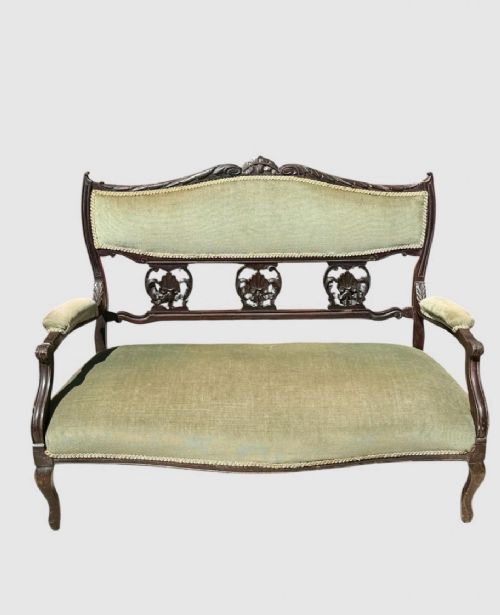


Mahogany Parlour Settee
A mahogany parlour settee brings rich timber frames and elegant seating into reception rooms, offering a refined focal point for period interiors.
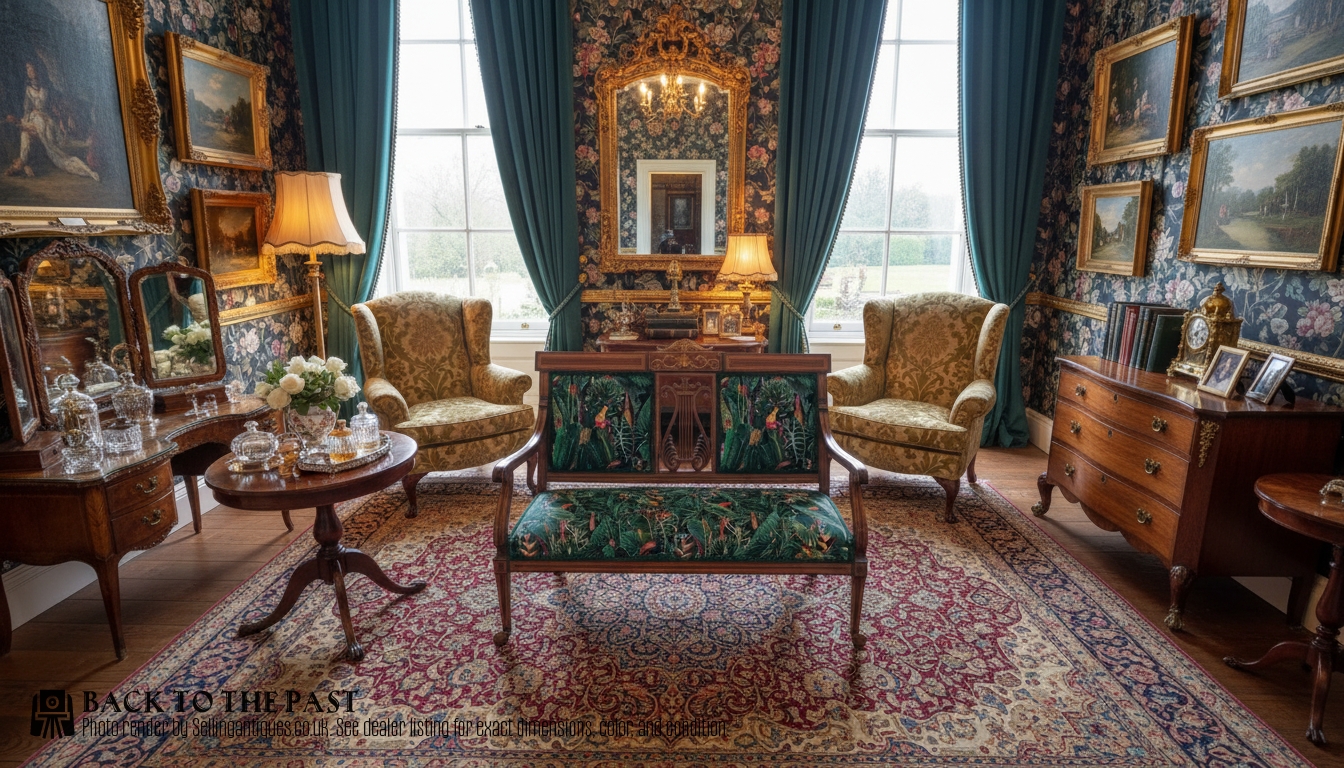
Mahogany Parlour Settee
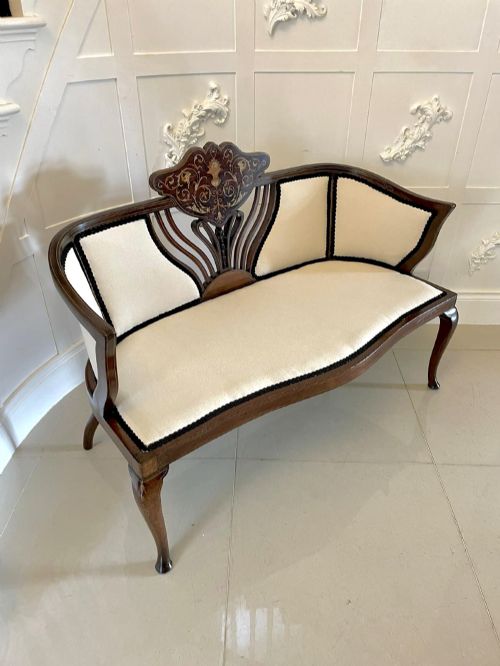
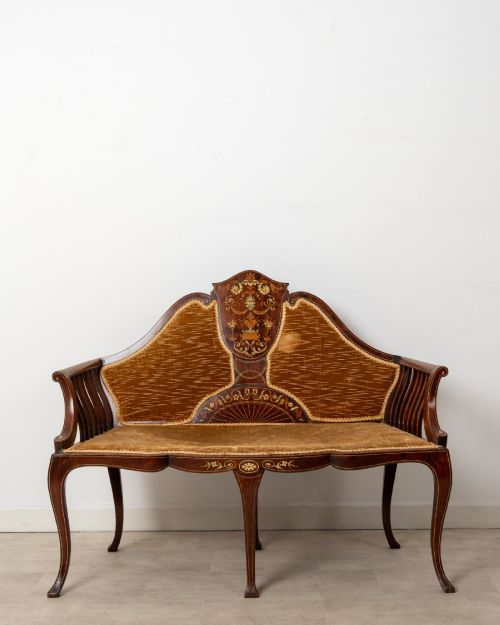
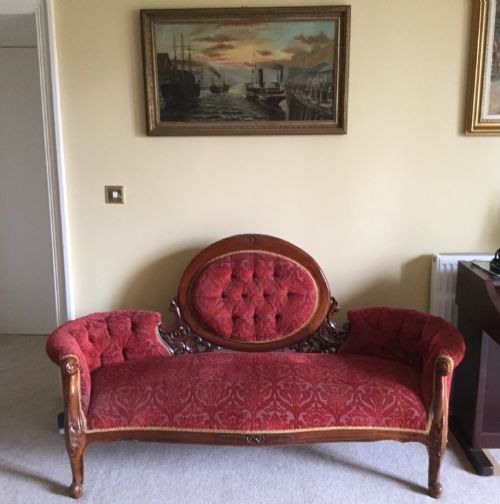
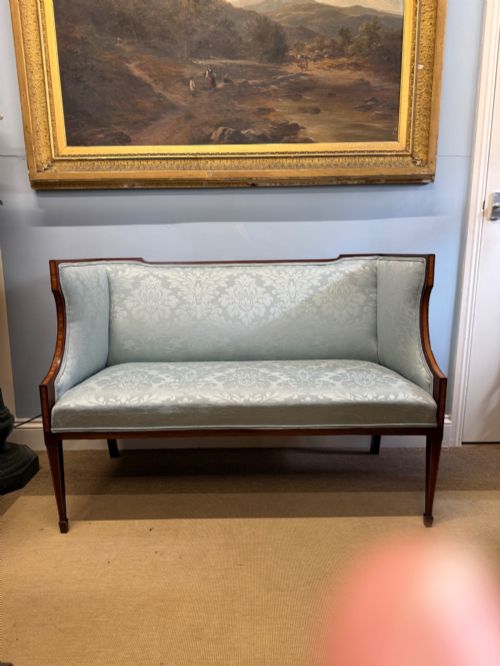
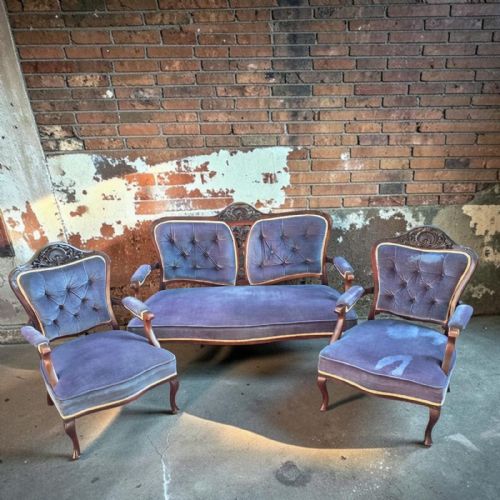
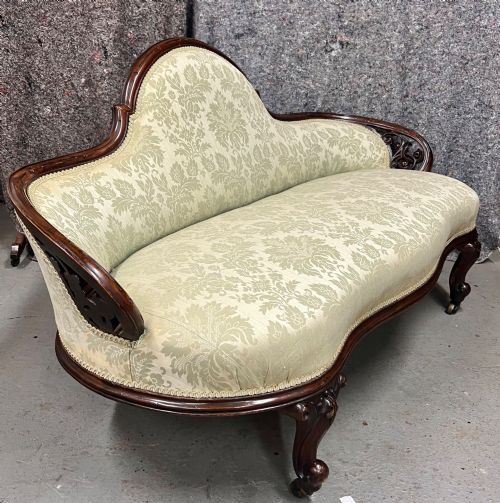
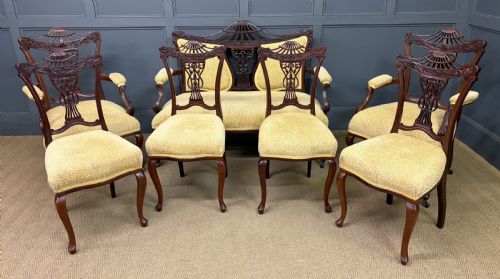
A mahogany parlour settee serves as a principal seating piece in a formal reception room, designed to combine aesthetic presence with comfortable lounging. The selections here span the nineteenth century and the Edwardian era, encompassing single settees, double-ended sofas, and matching salon suites.
Buyers will most frequently encounter Edwardian and Victorian versions, often featuring delicate timber frames, open backs, and upholstered seats. These range from simple two-seater couches to larger multi-piece parlour suites that include matching chairs.
Originating across different decades, these seats reflect changing tastes in domestic comfort, moving from heavy carved frames to lighter inlaid designs. Each piece provides a functional seat while retaining the distinct character of its manufacturing period.
Materials and construction
Cabinet makers utilised solid mahogany and mahogany veneers for the structural frames, often selecting the timber for its deep grain and durability. This wood provided a stable base capable of supporting intricate carvings and applied mouldings.
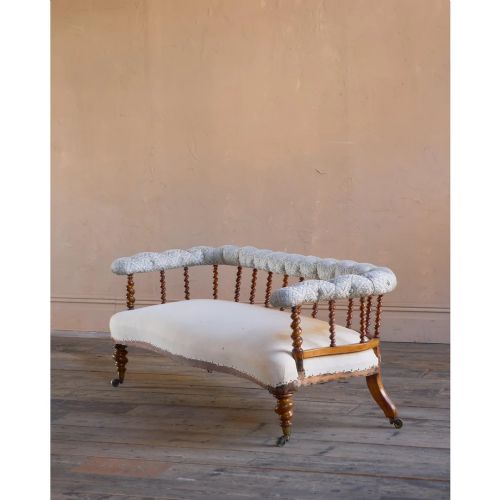
Decoration relied heavily on contrasting timbers, with satinwood and boxwood inlay creating geometric or floral motifs along the top rails and splats. Artisans also incorporated bone details, brass fittings, and turned spindles to enhance the visual appeal of the woodwork.
Upholstery techniques involved sprung bases paired with fabrics such as velvet, brocade, and patterned cloth, secured over deep buttoning or tight padding. Show wood frames exposed polished mahogany edges around the upholstered pads, highlighting the joinery.
Listings feature mahogany parlour settees spanning the Victorian and Edwardian periods, utilising satinwood inlay and traditional upholstery fabrics.
Distinctions in craftsmanship
The standard of a mahogany parlour settee depends upon the crispness of the timber carving and the precision of the contrasting inlay work. Finer examples display meticulous hand-cut stringing and balanced proportions that demonstrate advanced cabinet-making skills.
The integrity of the structural frame dictates the longevity of the piece, with tighter joints and heavier gauge mahogany marking superior workshop output. Original show wood surfaces that retain a rich, polished patina hold greater distinction than heavily stripped or altered frames.
Upholstery execution also defines the grade of the piece, where traditional sprung bases and deep buttoning reflect higher initial commission costs. Pieces that preserve integrated design harmony between the woodwork and the textile covering represent the upper tier of production.
C. Hindley & Sons·Maple and Co
The Mahogany Parlour Settee Glossary
- Mahogany
- A durable tropical hardwood prized for its reddish-brown colour and fine grain. Cabinet makers relied on it for structural strength and smooth carving.
- Inlay
- A decorative technique where contrasting materials like satinwood or boxwood are inserted into hollowed-out recesses in the mahogany surface. This creates flat, ornate patterns across the backrests and legs.
- Settee
- A medium-length upholstered seat with a back and arms, designed to accommodate multiple people. It functions as a primary living room furnishing.
- Show wood
- The exposed, polished timber portions of a seated furniture piece that remain visible around the upholstered sections. It showcases the quality of the carpentry.
- Salon suite
- A matching set of seating furniture, typically comprising a settee and several armchairs. These matched sets furnished formal Victorian and Edwardian drawing rooms.
Mahogany Parlour Settee: Frequently Asked Questions
What is a mahogany parlour settee?
A mahogany parlour settee is a formal upholstered seat framed in polished timber, designed for nineteenth and early twentieth-century reception rooms. These pieces combine wooden structural frames with padded seating surfaces.
They served as central gathering furniture in period homes, offering both decorative elegance and practical seating for guests.
How do I date a settee?
Dating relies on stylistic clues found in the woodwork, such as heavy carved scrolls for Victorian pieces or lighter inlaid satinwood motifs for Edwardian examples. Construction methods and upholstery styles also provide clear chronological markers.
Comparing the decorative details against documented periods helps establish whether a piece belongs to the early nineteenth century or the later Edwardian era.
Were these settees used in bedrooms?
While primarily intended for formal parlours and drawing rooms, smaller double-ended or end-of-bed sofas were occasionally placed in large bedrooms or dressing rooms. These specific variants offered secondary seating within private chambers.
Their compact dimensions allowed them to fit comfortably against bedroom walls or at the foot of large beds.
How do I care for the timber?
Maintaining the mahogany frame involves keeping the wood away from direct heat sources and sudden humidity changes to prevent splitting or warping. Regular dusting with a soft, dry cloth preserves the polished surface.
Occasional application of appropriate wax polish helps nourish the grain and maintain the deep natural lustre of the wood.