
Mahogany Open Shelves
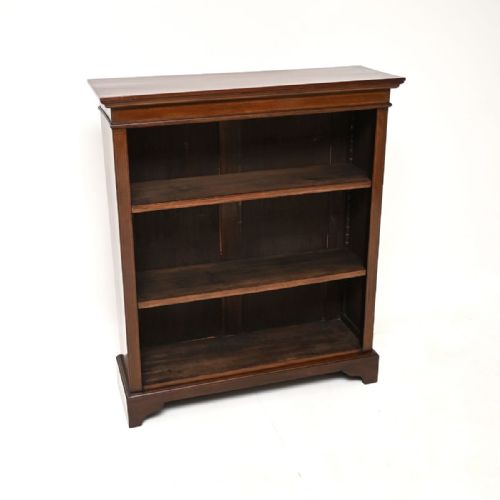
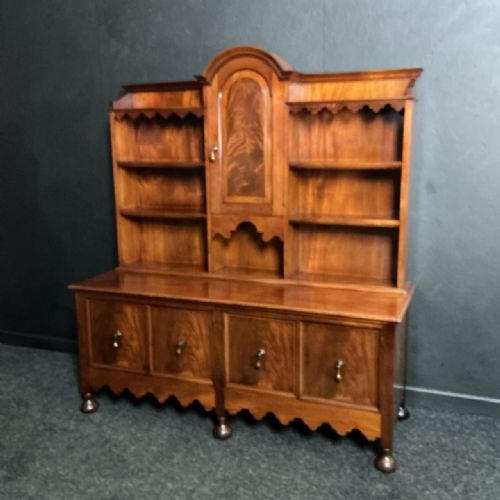
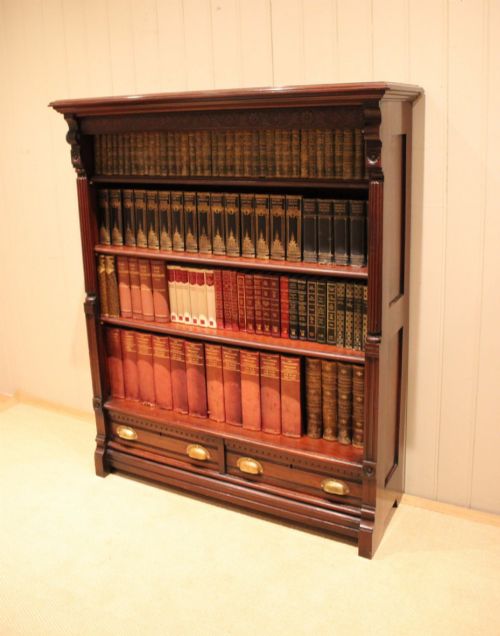
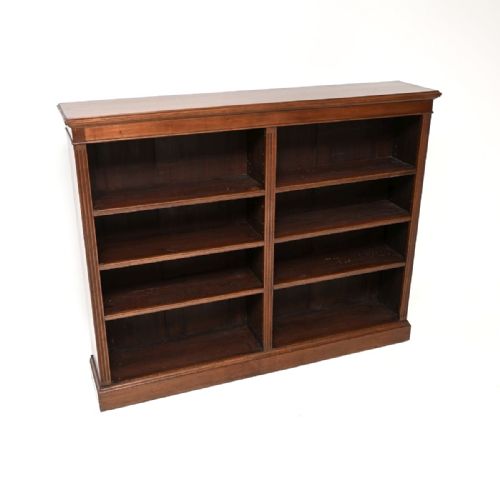
Mahogany open shelves bring warmth and accessible storage to a room, spanning periods from George III designs to Edwardian interpretations.
Mahogany Open Shelves
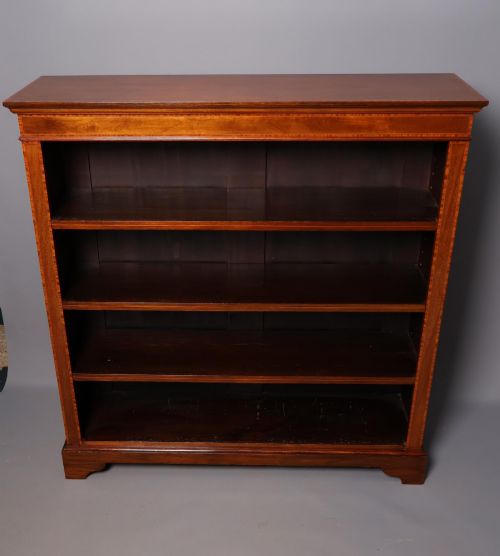
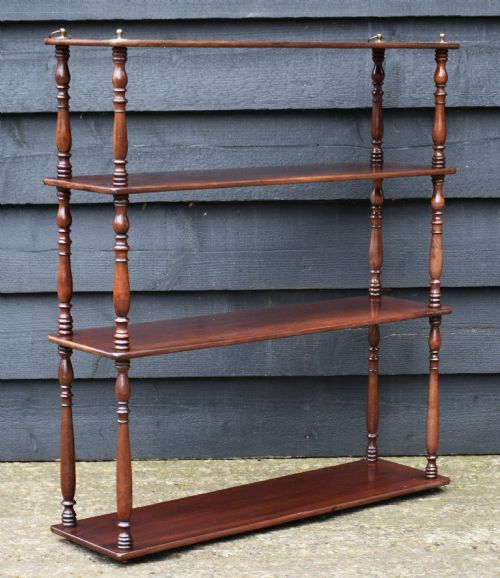
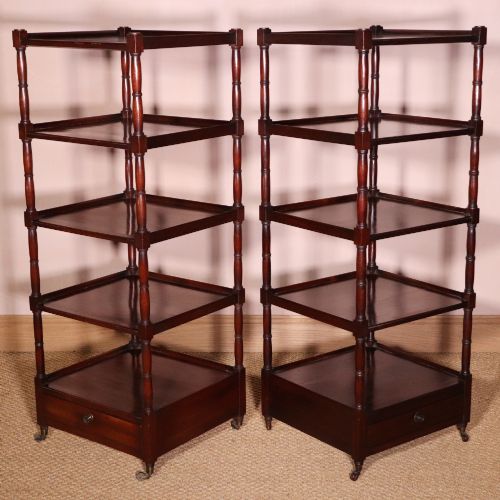
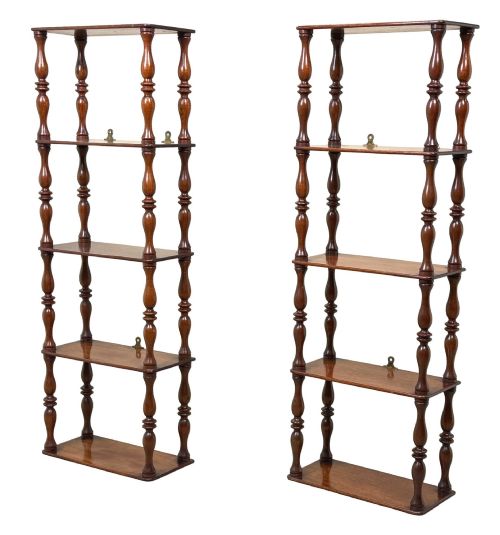
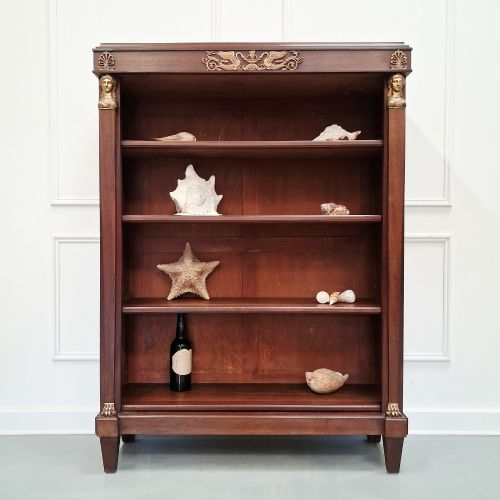
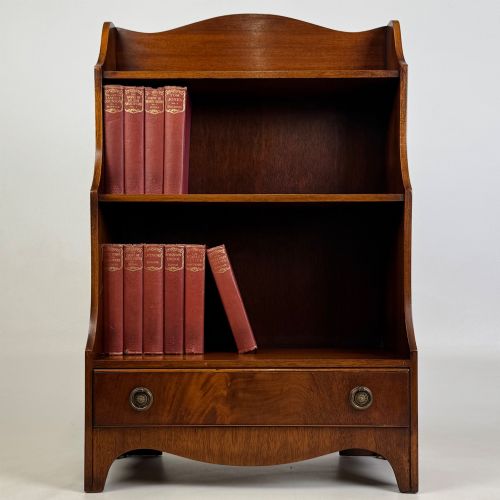
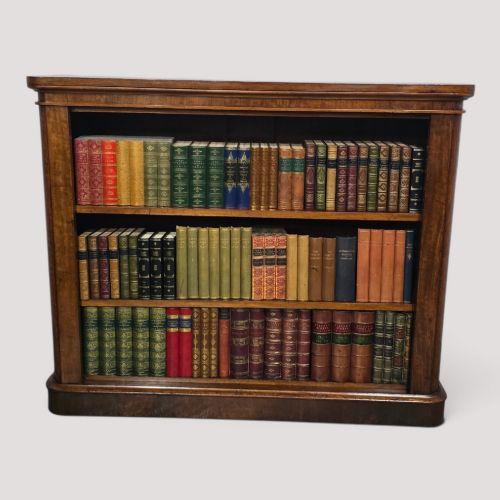
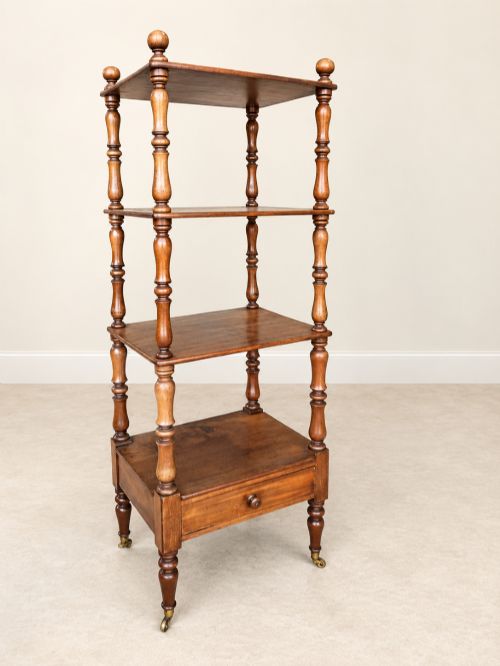
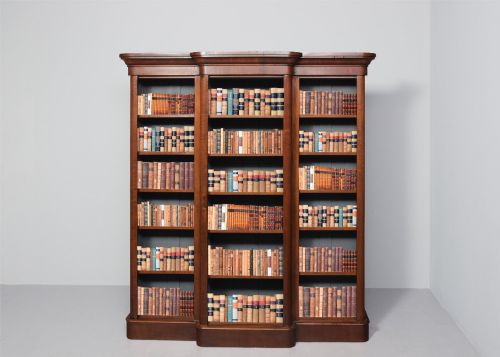
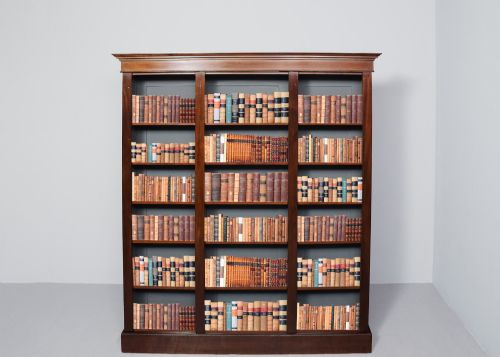
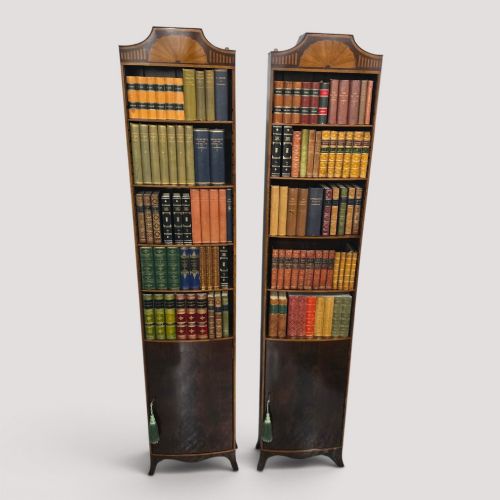
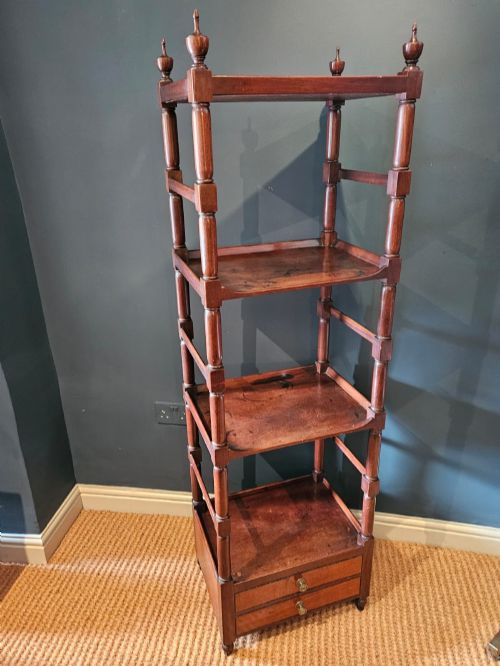
When you search for mahogany open shelves, you encounter various forms designed for books, display, and storage without doors. These range from tall floor-standing bookcases to multi-tiered whatnots, waterfall bookcases, and hanging wall shelves.
The pieces on this page originate from the Georgian, Regency, Victorian, and Edwardian periods, as well as early 20th-century revivals. Floor-standing bookcases with adjustable shelves and tiered stands appear most frequently.
Originating in domestic libraries, parlours, and drawing rooms, these items provided practical display for volumes and ornaments. Their open structure distinguishes them from traditional cabinets by placing collections on direct view.
How they were made
Cabinet makers utilised solid mahogany and flame mahogany veneers over secondary timbers, often accentuating surfaces with satinwood stringing or boxwood inlay. Structural integrity relied on traditional joinery, with taller pieces incorporating brass castors and column supports.
Decorative elements included carved details, barley twist uprights, fretwork panels, and ormolu mounts depending on the period. Finish was applied through polishing, which highlights the natural grain and deep colour of the timber.
What varies in quality
Quality rests upon the selection of timber, particularly the choice of figured flame mahogany for primary surfaces and the precision of inlaid stringing. Better examples demonstrate careful proportion in graduated tiers and robustness in structural supports like uprights and shelves.
Waring & Gillow
The Mahogany Open Shelves Glossary
- Waterfall bookcase
- A set of open shelves where each tier steps back progressively from the one below, creating a cascading profile. This form gained popularity during the Regency and Victorian eras.
- Flame mahogany
- A veneer cut from the fork of the mahogany tree where the branch joins the trunk. This timber exhibits a distinctive, fiery ripple pattern used on prominent surfaces.
- Breakfront
- A piece of furniture where the central section projects forward from the flanking wings. This architectural layout adds depth and shadow to large bookcases and low cabinets.
- Etagere
- A French-derived term for a piece of freestanding furniture consisting of a set of open shelves for displaying nick-nacks. They appear frequently in 19th-century interiors.
Mahogany Open Shelves: Frequently Asked Questions
How do I date mahogany open shelves?
Dating relies on combining style markers, timber characteristics, and construction methods observed across different eras. Georgian and Regency pieces often show lighter framing and classical proportions, while Victorian examples tend to be heavier with deeper tones.
Secondary details like shelf adjustment mechanisms and castors also help narrow down the decade of production. Comparing the piece against documented cabinet-making trends of the 19th and early 20th centuries provides further clarity.
Are shelves usually adjustable?
Many floor-standing bookcases and larger library shelves feature adjustable heights, often utilising wooden ratchets, brass shelf studs, or traditional tracks. Smaller pieces such as hanging wall shelves and graduated whatnots generally have fixed tiers.
When evaluating a piece, check the interior uprights for the presence of adjustment slots or peg holes. Fixed shelves are more common in earlier or lighter decorative furniture.
Where should I place these shelves?
Mahogany open shelves suit studies, living rooms, and hallways where books and decorative objects require accessible display. Freestanding low bookcases function well beneath windows or against principal walls.
Taller upright bookcases and multi-tiered whatnots require stable wall placement, particularly if they lack heavy bases. Keeping them out of direct sunlight preserves the rich colour and grain of the mahogany.
What is the difference between a whatnot and a bookcase?
A bookcase is primarily constructed for housing books, often featuring deeper shelves and more robust vertical partitions. A whatnot is designed for general display, featuring lighter open tiers intended for ornaments, porcelain, and small volumes.
Whatnots frequently incorporate multiple levels supported by slender columns, whereas bookcases focus on storage capacity for reading material. Both share an open format but serve distinct domestic functions.