

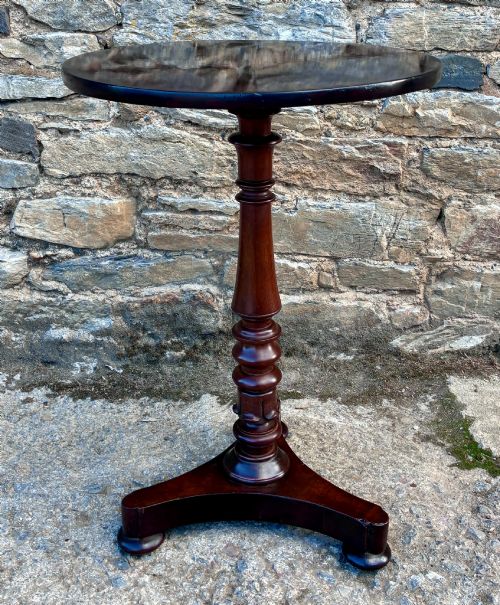
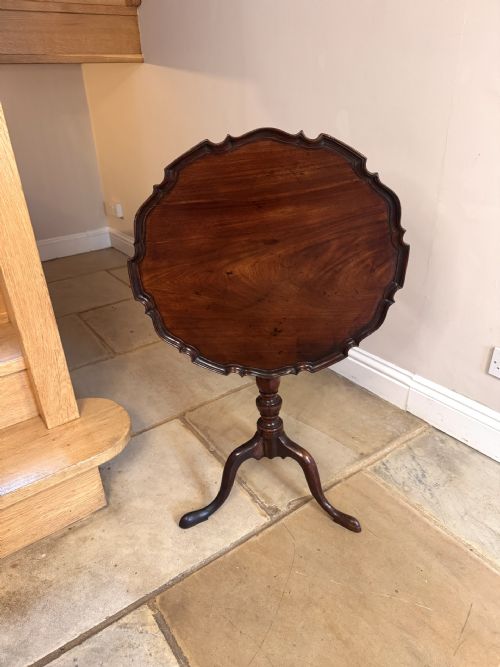
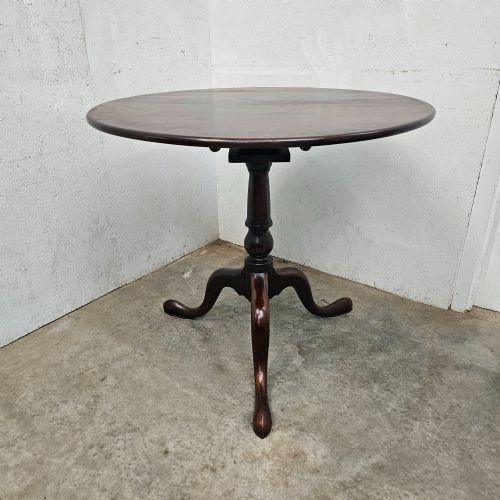
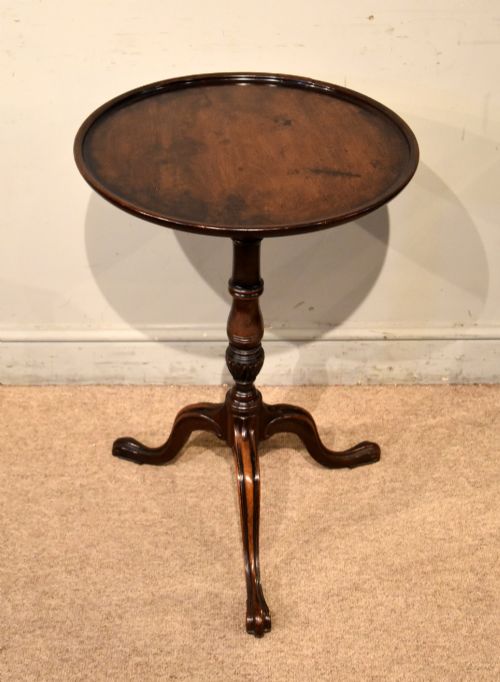
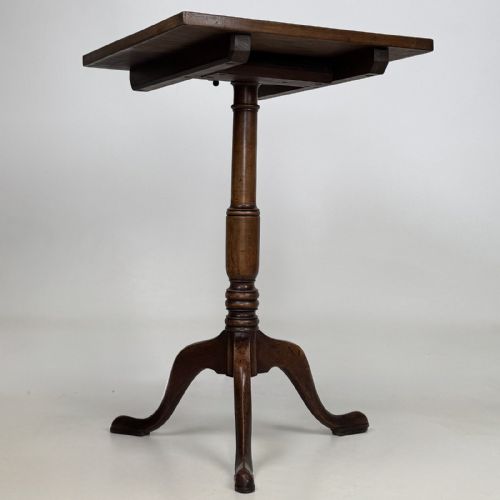
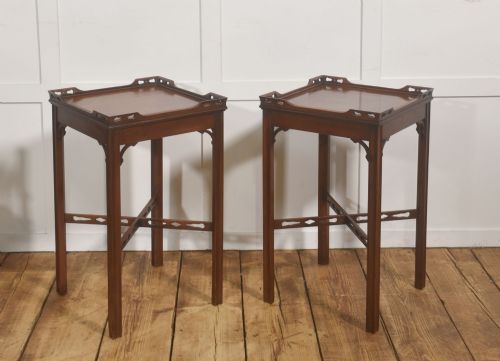
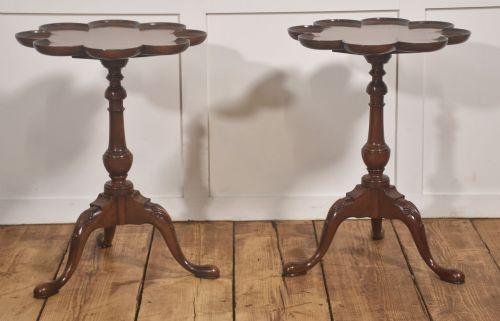
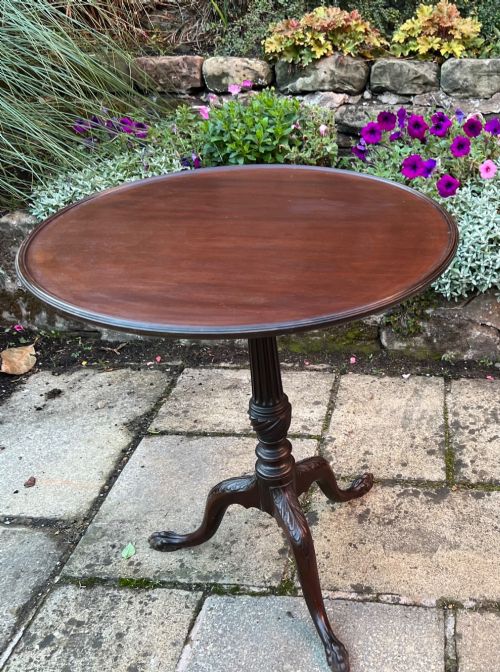
Mahogany Occasional Stand
Mahogany occasional stands bring compact utility to a room, appearing in forms from tripod wine tables to kettle stands across Georgian, Victorian and Edwardian periods.
Mahogany Occasional Stand
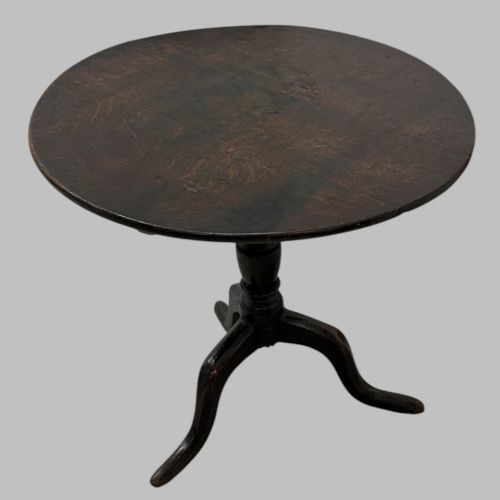
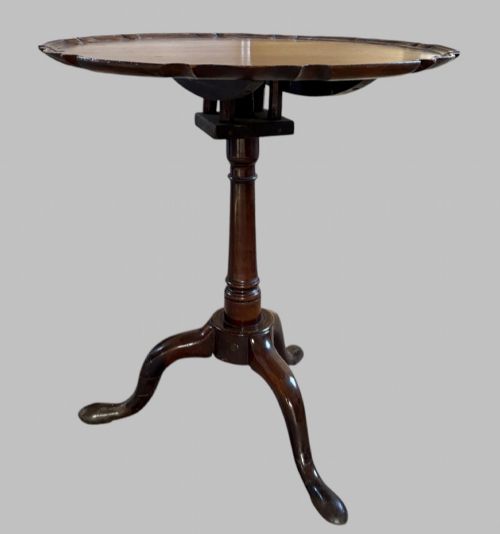
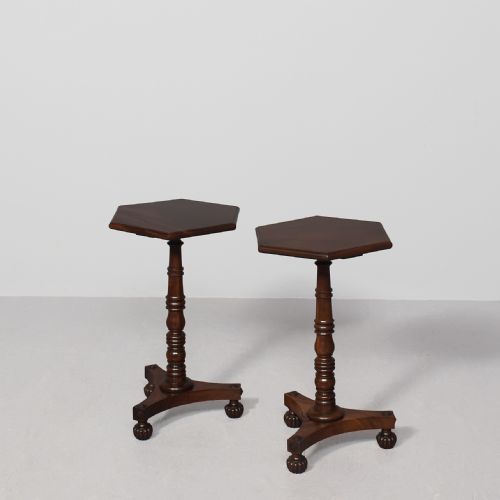
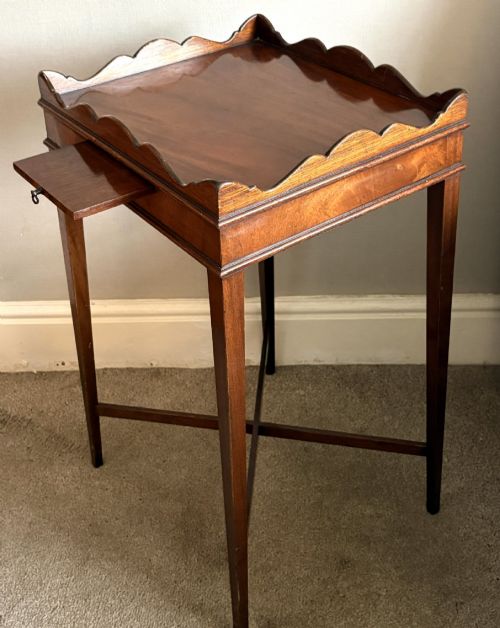
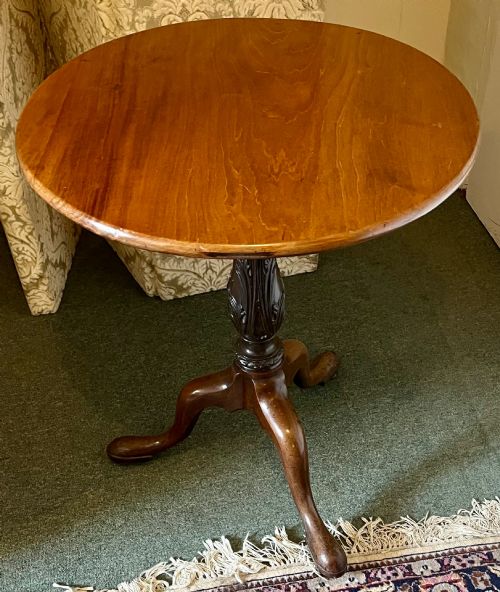
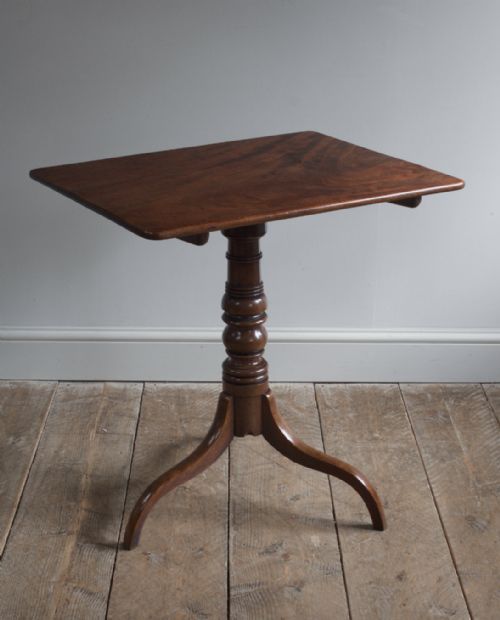
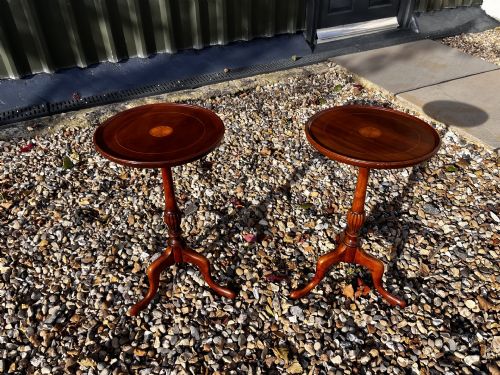
A mahogany occasional stand serves as a versatile small table designed for holding lamps, wine glasses or decorative objects in various reception rooms. These pieces encompass specific forms such as tripod tables, wine tables, kettle stands, side tables and butler tray tables.
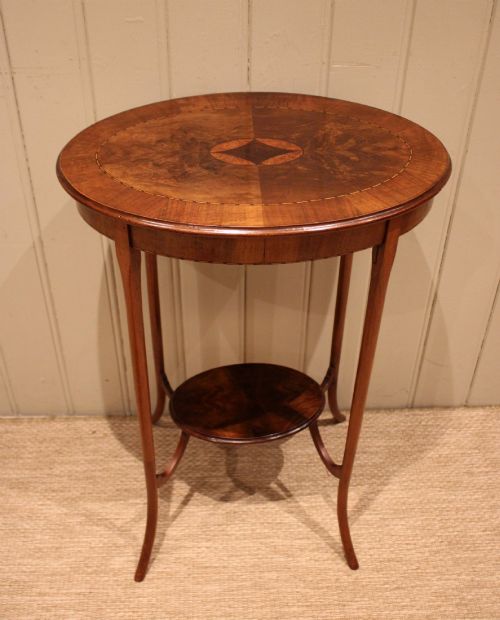
The versions most commonly met span the Georgian, Victorian and Edwardian eras, displaying styles from simple George III tripod designs to inlaid Edwardian lamp tables. Occasional tables and wine tables dominate the available selection, frequently featuring circular or rectangular tops.
Origins stretch from the 18th century through to the early 20th century, capturing shifts in domestic furniture design from utilitarian candle stands to decorative drawing-room side tables. Each period imparts distinct stylistic cues, whether through Chippendale revival carving or delicate satinwood stringing.
Materials and construction
Makers utilised solid mahogany and mahogany veneers as the primary timber, often selecting dense growth rings for stability on slender tripod legs. Secondary contrasting woods such as satinwood, boxwood, rosewood and fruitwood provide delicate inlay and stringing on late periods.
Metal components appear in functional capacities, including brass galleries surrounding table tops, tilt-top mechanisms, and gilded brass mounts on Victorian examples. Turning and carving shape the central pillars and cabriole legs, while tilt-top snap actions utilise integrated wooden catches.
Mahogany Occasional Stand Retail Price Guide 2026
Typical asking prices for mahogany occasional stand among the pieces listed under this phrase on Sellingantiques today, from the lower quarter to the upper quarter. They describe what is for sale here now, not the wider market.
Materials appearing across the inventory include solid mahogany, rosewood, satinwood, fruitwood inlay and brass hardware.
Judging quality and craftsmanship
The refinement of timber selection and depth of carving separate standard production from finer workshop output, particularly in the crispness of acanthus leaves on tripod knees or reeding along columns. Finer examples maintain structural integrity in the tilt-top mechanism without wobble at the birdcage or block joint.
Inlaid pieces demonstrate quality through the precision of marquetry and stringing, where contrasting boxwood and satinwood sit flush within the mahogany ground without visible filler. The integration of brass galleries and castors indicates high-tier manufacture intended for prominent display spaces.
Bulstrode Cambridge·Trevor Page Co
The Mahogany Occasional Stand Glossary
- Tripod table
- A small occasional table supported by a central pillar resting on three legs. These tables often feature tilt-top mechanisms for storage against a wall.
- Wine table
- A compact circular or oval stand traditionally used for holding glassware during social gatherings. They typically stand at a height suited for use beside seating.
- Tripod
- The three-legged base configuration common to 18th and 19th-century candle stands and occasional tables. The legs frequently terminate in pad or spade feet.
- Gallery
- A raised pierced brass or wooden rail surrounding the perimeter of a tabletop. This feature prevents items from sliding off small lamp and wine tables.
- Tilt-top
- A hinged tabletop mechanism allowing the surface to fold vertically when not in use. This clever engineering saved valuable floor space in period drawing rooms.
Mahogany Occasional Stand: Frequently Asked Questions
What is a mahogany occasional stand used for?
These versatile stands function primarily as support surfaces for portable lighting, drinks, or decorative items within domestic living spaces.
Historical examples served specific needs like holding tea kettles, candles or wine glasses near seating areas.
How do I identify a Georgian tripod table?
Georgian versions from the 18th century typically feature substantial mahogany timbers with patinated surfaces, hand-carved pillars and distinct leg joints.
Look for traditional construction methods such as pegged tenons and tilt-top mechanisms without modern metal screws.
What distinguishes an Edwardian lamp table?
Edwardian iterations often incorporate delicate lightwood inlay, satinwood banding, or simpler square and oval silhouettes suited for drawing rooms.
They frequently display lighter proportions than their Victorian or Georgian predecessors, reflecting changing interior tastes around 1900.
How do I care for antique mahogany furniture?
Maintain the wood by keeping pieces away from direct heat sources and sudden humidity shifts that cause timber to split or warp.
Apply occasional traditional wax polish to nourish the surface and preserve the natural patina accumulated over centuries.