
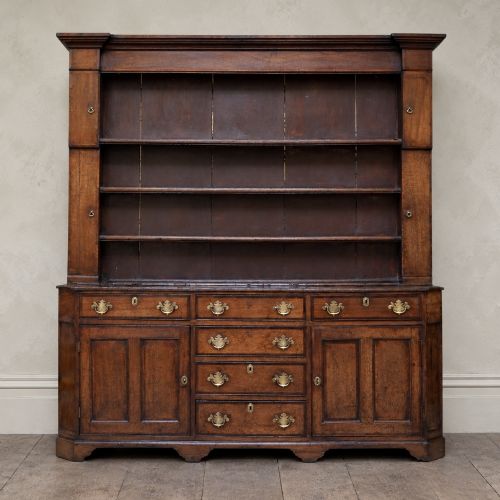
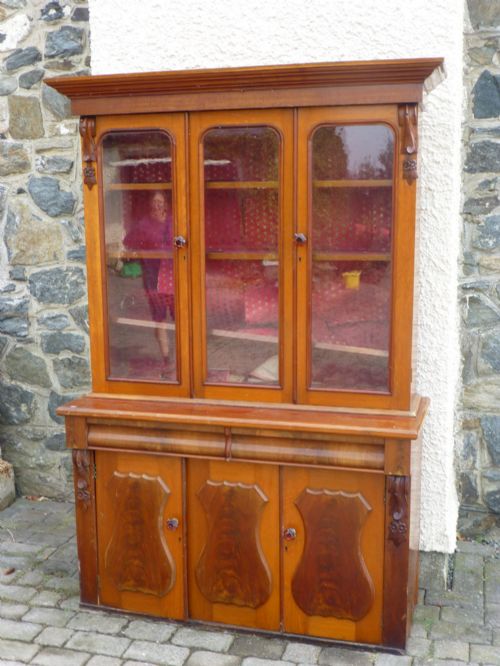
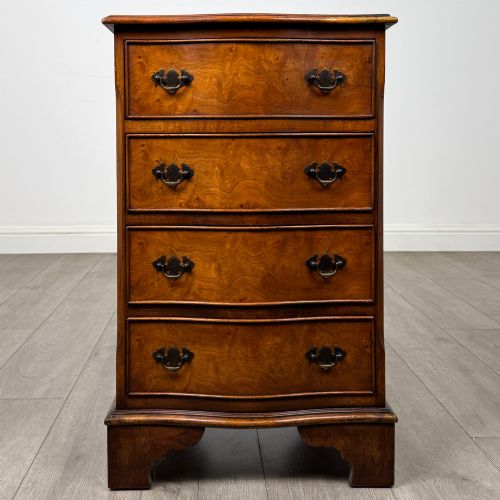
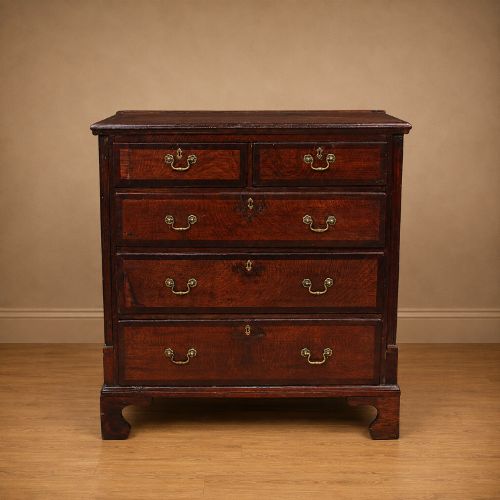
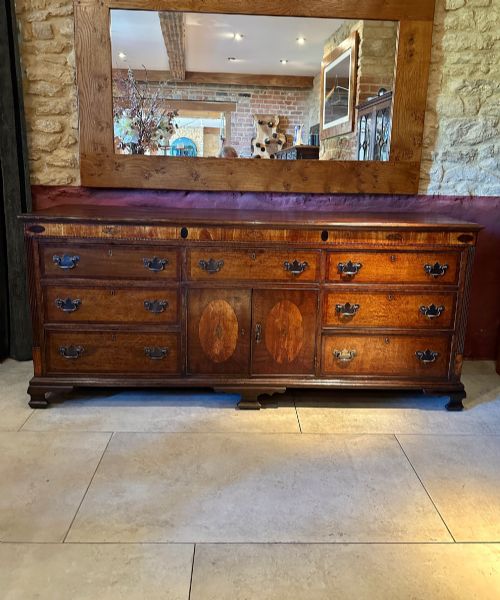

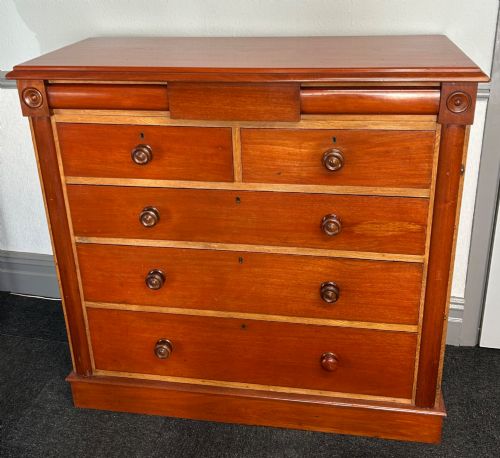


Mahogany Oak Dresser
A mahogany oak dresser brings together two principal cabinet woods in domestic furniture designed for storage and display.

Mahogany Oak Dresser
A mahogany oak dresser typically combines a sturdy primary structural timber with contrasting wood veneers, crossbanding, or drawer linings. The search phrase covers both kitchen storage pieces with plate racks and multi-drawer storage furniture sharing this distinct wood combination.
Most examples found on this page date from the Georgian period through the nineteenth century, originating from regional workshops in England, Scotland, and Wales. Vernacular kitchen dressers, low dresser bases, and formal chests of drawers make up the primary forms available.
Makers often constructed the main framework from domestic oak while utilising imported mahogany for drawer fronts, banding, or upper display racks to achieve a striking visual contrast. These pieces served practical domestic roles in country houses and farmhouses before entering the antique market.
Materials and construction methods
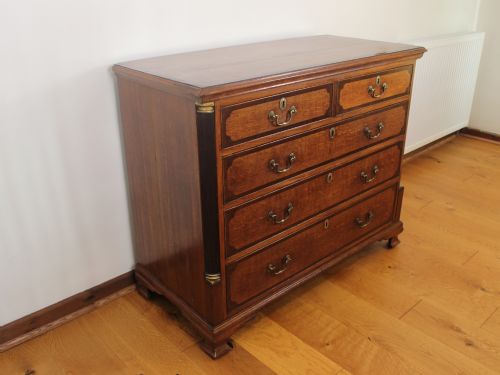
Cabinet makers relied on solid oak for structural integrity, drawer linings, and carcass frames, applying mahogany as veneers or solid panels to external surfaces. Crossbanding and inlay work using boxwood, ebony, or fruitwood frequently border the main drawer fronts.
Traditional joinery techniques such as dovetailing secure the drawer construction, whilst brass handles, hinges, and glass panes complete the fittings on glazed bookcase sections. Secondary timbers like pine and copper occasionally appear in internal or backing components.
Listings feature eighteenth-century and nineteenth-century pieces incorporating brass, glass, copper, and multi-wood marquetry inlay.
Assessing quality in construction and material
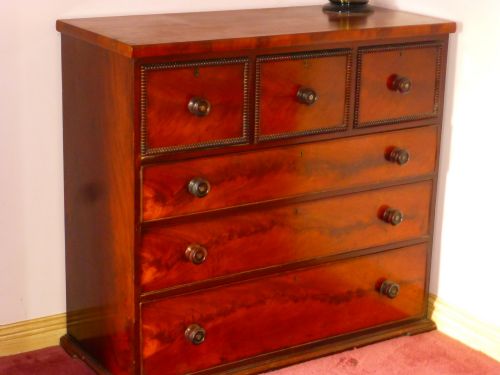
Quality depends upon the choice and figure of the mahogany veneer, particularly where flame mahogany or precise crossbanding frames the drawer sections. The crispness of the inlay work and the integration between the oak carcass and mahogany elements determine the overall refinement.
Original hardware, including brass handles and period glass, elevates a piece alongside untouched surface patination developed through centuries of domestic use. Structural integrity in the joints and uncompromised timber thickness separate standard utility pieces from finer regional workshop outputs.
The Mahogany Oak Dresser Glossary
- Crossbanding
- A strip of veneer applied across the grain of the primary wood to form a decorative border around drawer fronts.
- Dresser base
- The lower portion of a kitchen or dining room storage unit, often featuring drawers and cupboards without an upper plate rack.
- Flame mahogany
- A figured wood veneer displaying characteristic rippled patterns resembling flames, prized for high-status cabinet work.
- Glazed dresser
- A storage piece featuring glass-fronted upper doors or a bookcase section designed for the display of ceramics.
- Vernacular furniture
- Domestic pieces built by regional craftsmen following local traditions rather than strict London neoclassical patterns.
Mahogany Oak Dresser: Frequently Asked Questions
What is a mahogany oak dresser?
A mahogany oak dresser is a storage piece combining an oak structural carcass with mahogany veneers, drawer fronts, or crossbanding. These items range from kitchen dressers with plate racks to low dresser bases and multi-drawer chests.
Craftsmen utilised the distinct properties of both timbers to create functional domestic furniture that highlighted the contrast between pale oak and rich mahogany.
How old are these dressers?
Most pieces originate from the Georgian and Victorian eras, spanning the eighteenth and nineteenth centuries. Regional workshops across England, Wales, and Scotland produced these items for domestic storage and display.
Construction details, timber selection, and handle styles help determine the approximate decade of manufacture for individual examples.
Where were these dressers made?
Makers constructed these pieces in regional workshops across the British Isles, with notable examples originating from Welsh counties like Anglesey, as well as English regions such as Cheshire and Shropshire.
Local timber availability and vernacular design traditions heavily influenced the specific form and layout of each regional piece.
How do I care for my dresser?
Protect the wood by maintaining stable indoor humidity levels and keeping the furniture away from direct heat sources and strong sunlight. Regular dusting with a soft cloth preserves the historic patination on the mahogany and oak surfaces.
A light application of traditional wax polish helps maintain the finish without building up heavy residues on the crossbanding or inlay.