
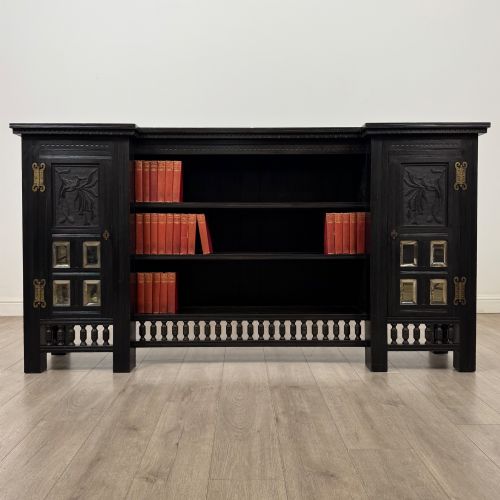
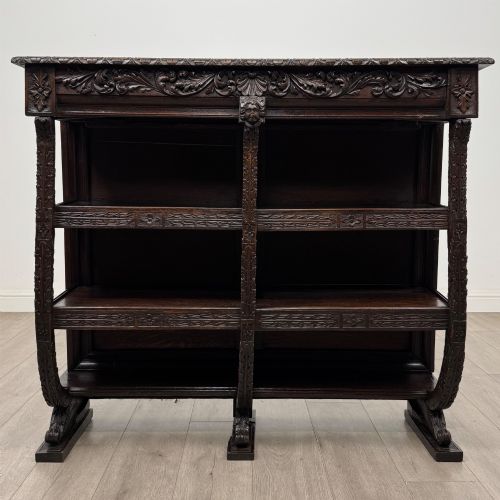
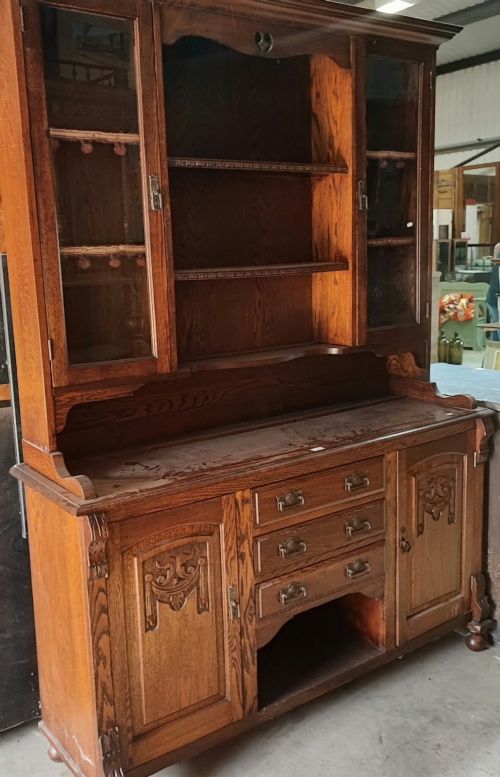
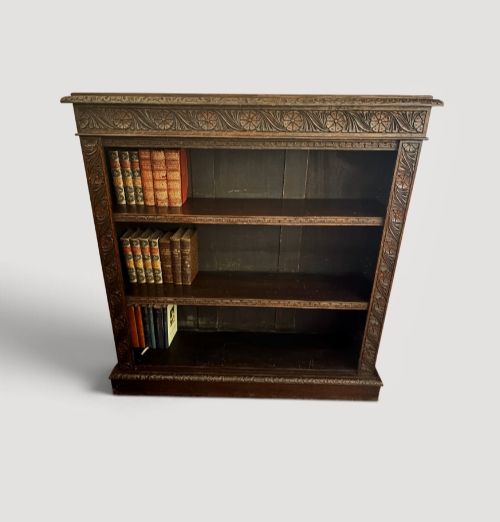
Victorian Oak Display Shelves
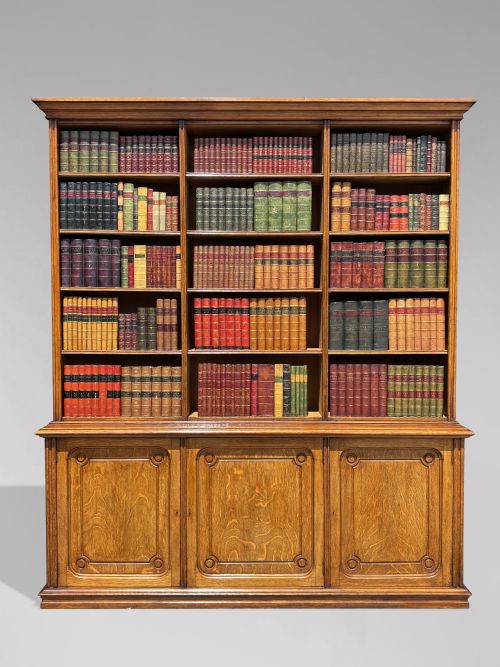
These Victorian oak display shelves bring sturdy timber and honest utility to a room, holding books and porcelain while grounding the walls.

Victorian Oak Display Shelves
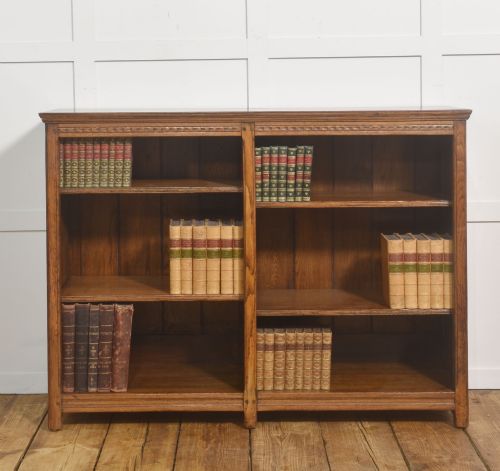
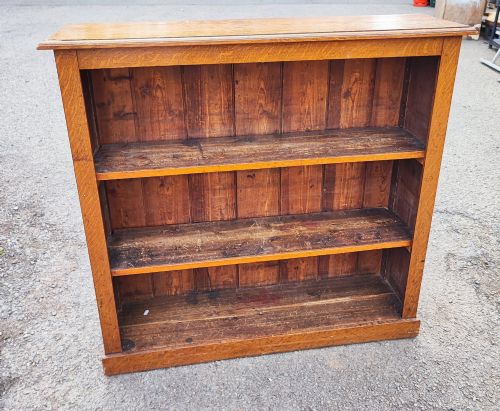
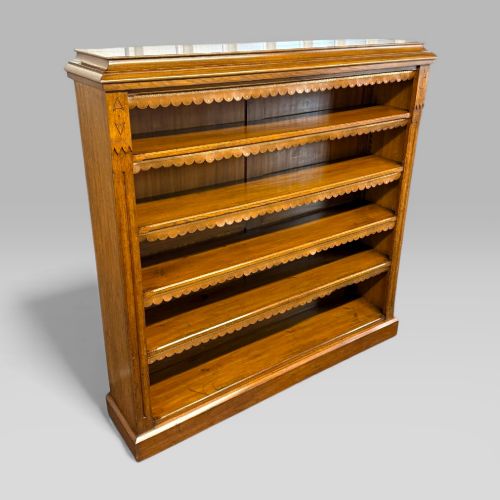
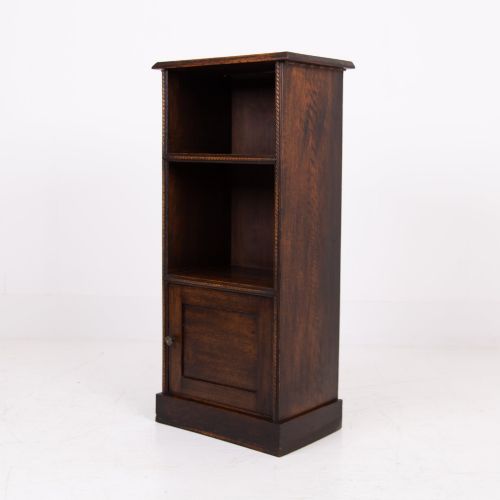
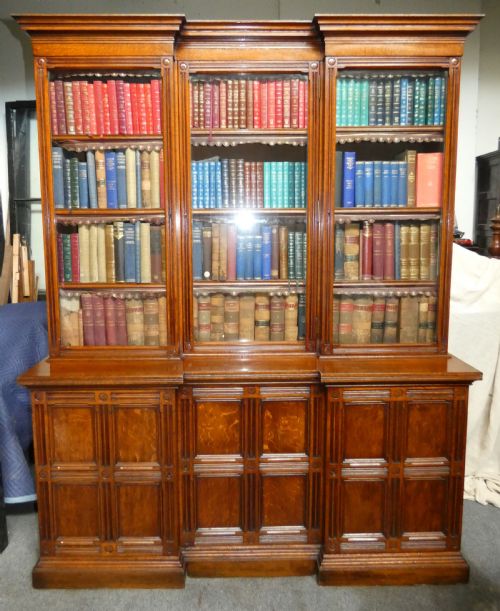
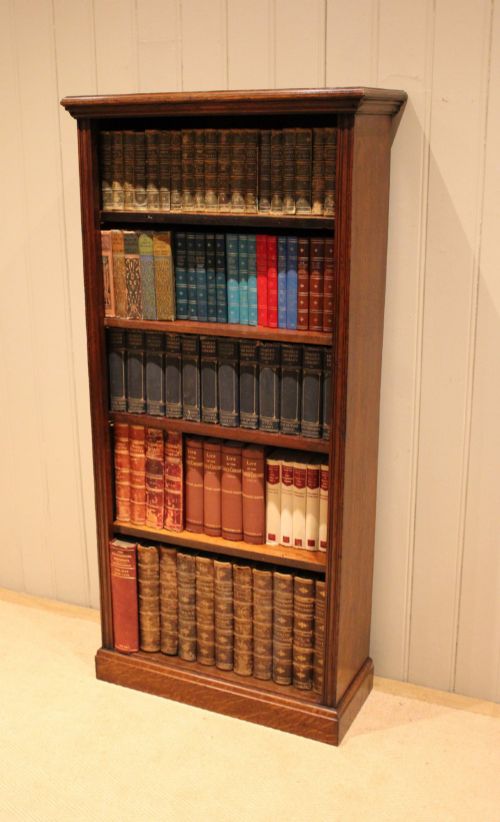
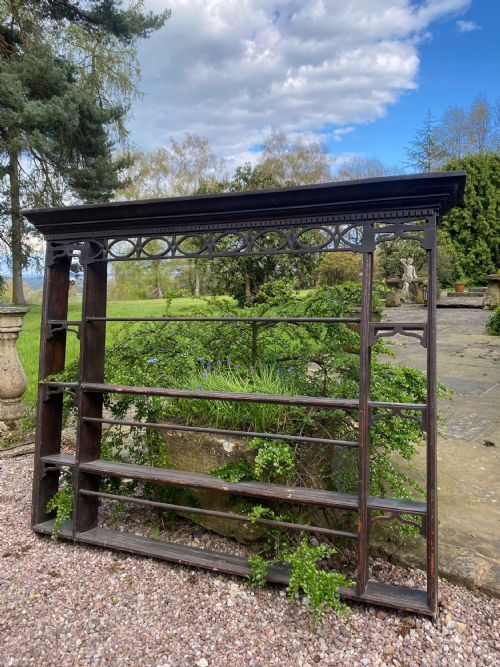
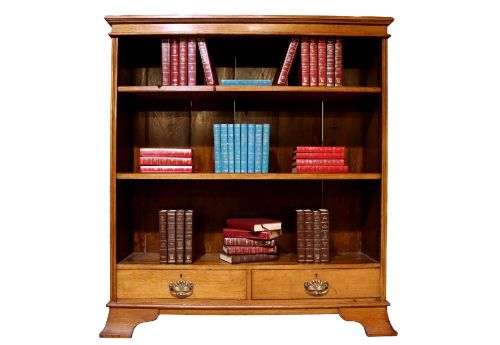
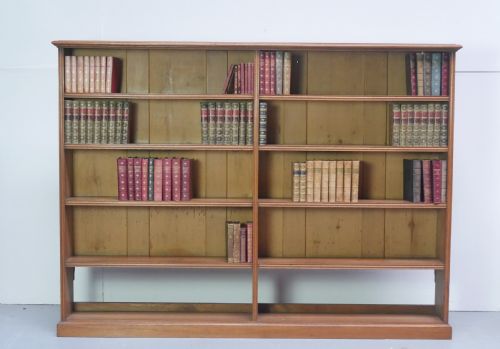
When you search for victorian oak display shelves, you enter a field defined primarily by open bookcases, wall-hanging shelves, and glazed cabinets produced during the nineteenth century. The examples met most frequently on this page take the form of open-fronted bookcases and multi-tier wall shelves intended for domestic libraries and reception halls.
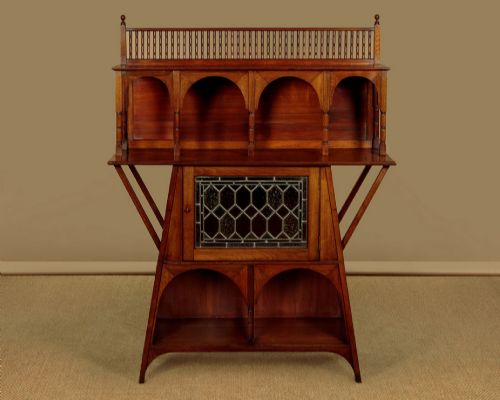
Builders of this period drew on styles ranging from plain utilitarian designs to ornate Gothic Revival, Aesthetic Movement, and Arts and Crafts interpretations. These pieces vary from modest wall racks to large breakfront library bookcases fitted with adjustable shelving and lower cupboards.
Materials extend beyond standard timber to include pollard oak, golden oak, and tiger oak, frequently complemented by glass, brass fittings, and occasional lead details. The surviving stock bridges several decades, anchoring its origins firmly in the Victorian era alongside related Edwardian and French pieces.
What separates the tiers of quality
Quality rests upon the selection of the timber and the depth of the carving. Plain boards lack the visual interest found in tiger oak or pollard oak examples.
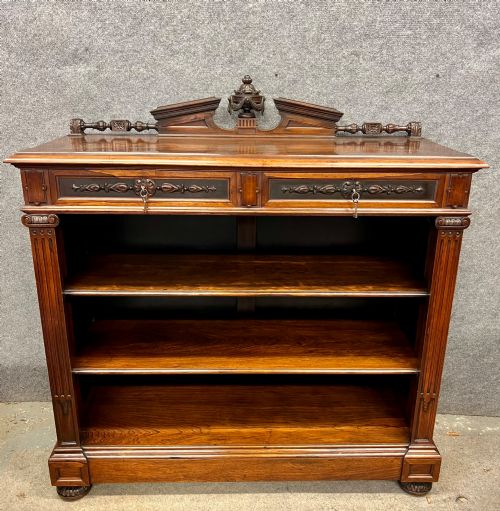
Execution of detail defines the upper tier, distinguishing crisp, hand-carved Gothic tracery and fret-work from mechanical production. Fitted adjustable shelving systems and robust backboards further separate superior pieces from standard workshop output.
Listings feature oak, pollard oak, walnut, and pine across the Victorian, Edwardian, and eighteenth-century periods.
Liberty & Co.·John Moyr Smith
The Victorian Oak Display Shelves Glossary
- Breakfront
- A piece of furniture whose central section projects forward from the flanking wings. This layout creates depth and architectural presence in large bookcases.
- Pollard oak
- Timber taken from trees that were pollarded, producing a dense, highly figured grain with knot clusters. Cabinet makers prized this timber for decorative panels.
- Gothic Revival
- A nineteenth-century design movement inspired by medieval architecture. Pieces in this style feature pointed arches, trefoils, and heavy carved mouldings.
- Aesthetic Movement
- A late-nineteenth-century style emphasising artistic visual qualities over strict historical revival. Such pieces often display refined craftsmanship and simplified forms.
- Waterfall bookcase
- A set of open shelves where each tier steps back progressively from bottom to top. This creates a cascading silhouette popular for domestic book storage.
Victorian Oak Display Shelves: Frequently Asked Questions
What fits on wall shelves?
Wall shelves accommodate small books, framed portraits, and decorative plates. Their shallow depth keeps items accessible.
Heavier volumes belong on floor-standing bookcases rather than wall-mounted tiers.
How do shelves adjust?
Many Victorian bookcases utilise wooden ratchet strips or brass studs inside the cabinet sides. These allow the timber shelves to move up or down.
Fixed shelves are usually nailed or housed permanently into the vertical uprights.
Are these pieces solid oak?
Most examples use solid oak for the primary framework, door frames, and carved elements. Secondary woods like pine or beech occasionally appear in drawer linings and backs.
Checking the interior boards confirms the timber construction.
Where should I place them?
Open bookcases suit studies, living rooms, and hallways where regular access to books is needed. Wall shelves mount easily above sideboards or seating.
Direct sunlight should be avoided to protect the polish on the oak.