



Mahogany Music Paper Stand
These mahogany music paper stand examples are functional utility items designed for holding scores, folios and periodicals, answering the domestic need for orderly storage.
Mahogany Music Paper Stand
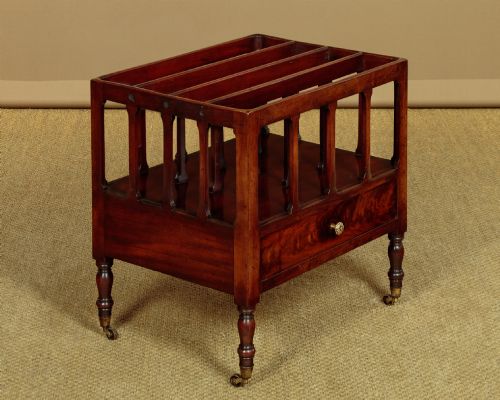
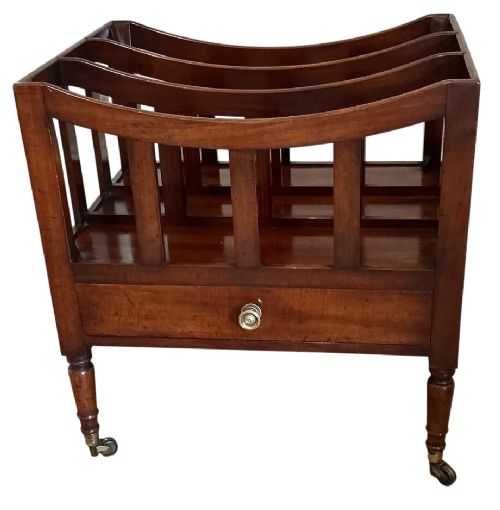
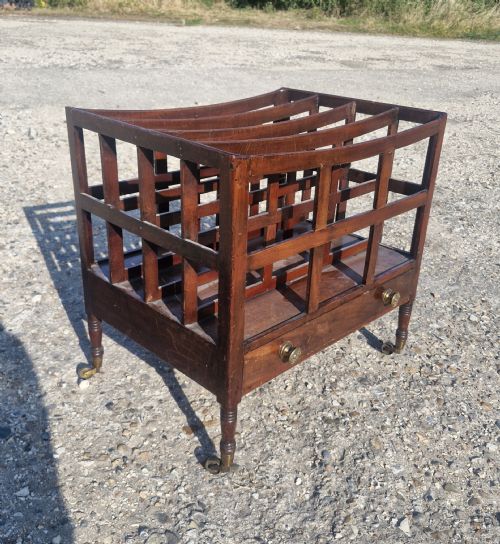
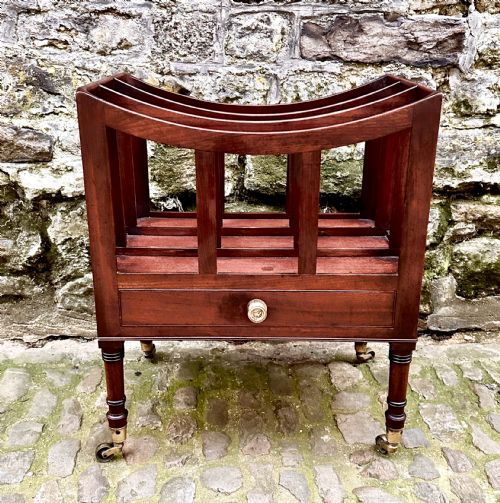
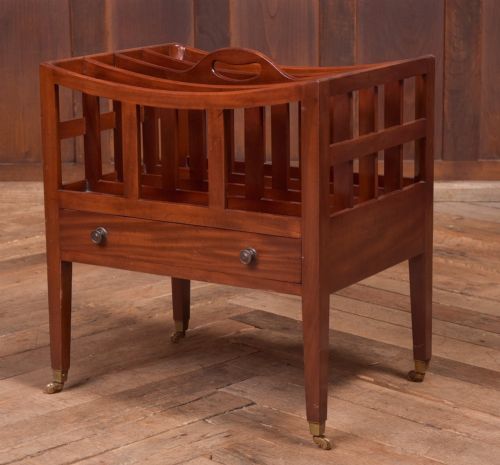
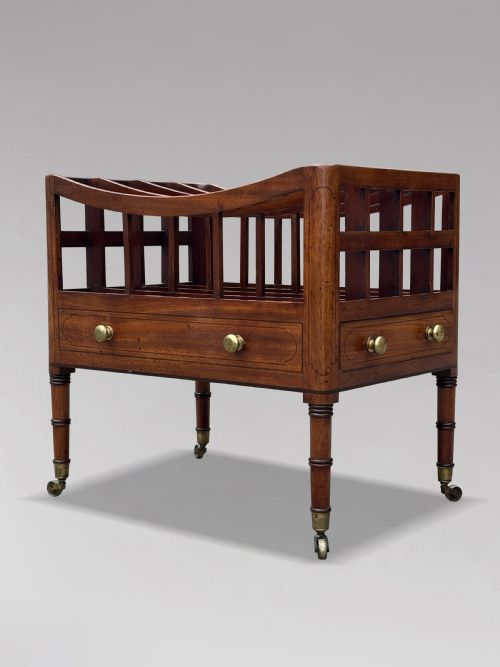
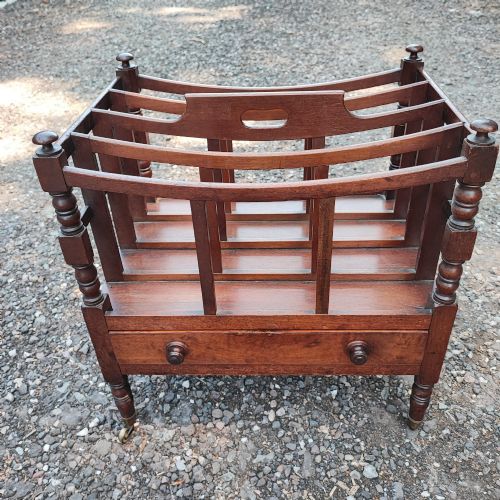
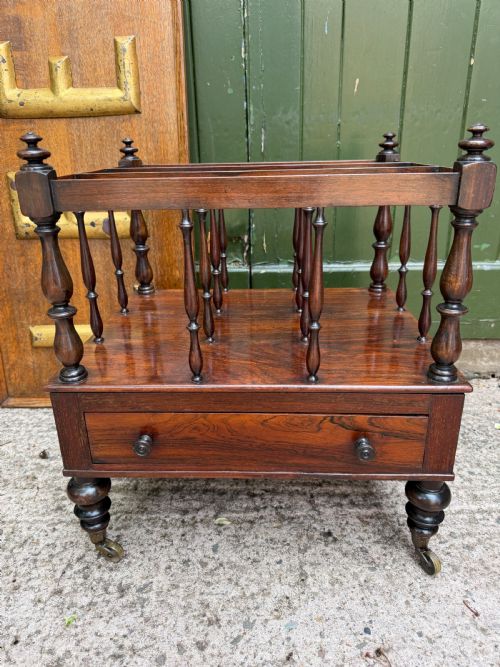
A mahogany music paper stand typically takes the form of a Canterbury, a specialised low stand designed with partitioned sections for holding sheet music, folios and magazines. These pieces emerge across the Georgian, Regency, William IV, Victorian and Edwardian periods, appearing frequently alongside related cabinet forms such as folio cabinets and music filing units.
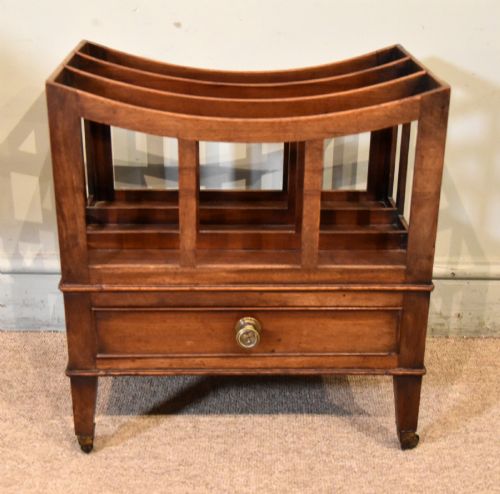
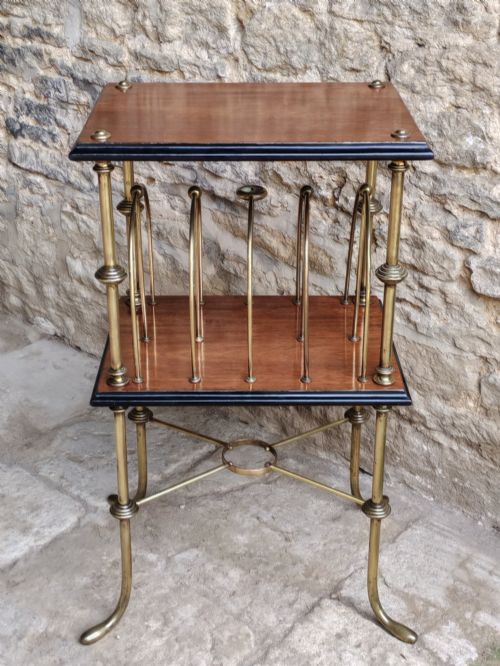
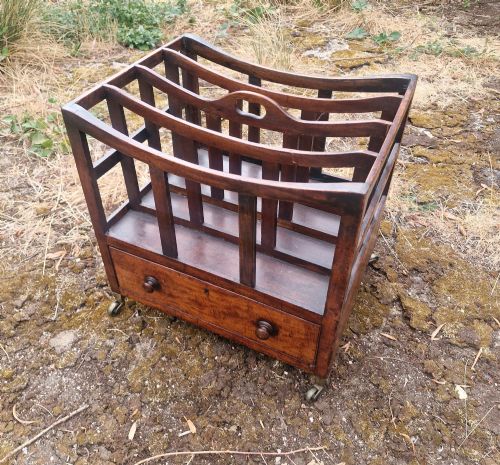
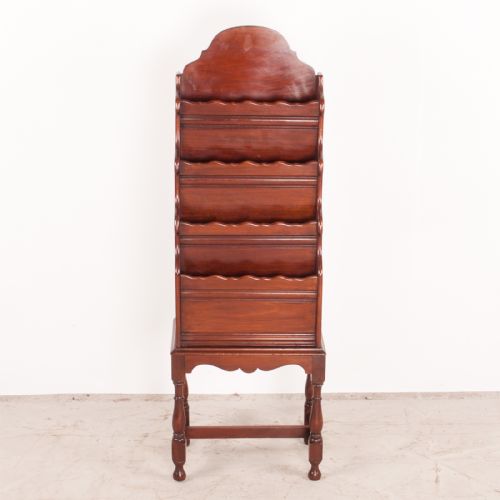
The primary version met on this page is the Canterbury, often featuring three or four pierced scroll divisions above a low drawer and raised on turned feet with castors. Alongside these are boat-shaped models, magazine racks and tiered shelving stands that serve the same domestic purpose of paper storage in the drawing room or music room.
Originating largely in English workshops, these items reflect the changing domestic requirements of the nineteenth and early twentieth centuries. The selection spans formal Georgian proportion, Regency elegance, William IV solidity, and later Edwardian revivalism.
Materials and construction
Makers construct these stands predominantly from solid mahogany and mahogany veneers, occasionally incorporating contrasting timbers such as rosewood, satinwood, boxwood and ebony for inlay and banding. Brass details appear frequently, including carrying handles, castors and structural rods that reinforce the open framework.
Joinery methods rely on traditional cabinet-making techniques, utilising dovetailed drawer construction and turned wooden supports. Pierced fretwork and scroll-cut divisions require careful hand-sawing and shaping to achieve the distinctive open slatted profile of the Canterbury.
Mahogany Music Paper Stand Retail Price Guide 2026
Typical asking prices for mahogany music paper stand among the pieces listed under this phrase on Sellingantiques today, from the lower quarter to the upper quarter. They describe what is for sale here now, not the wider market.
Some nineteenth-century examples include hidden compartments designed specifically for storing violin rosin.
Assessing craftsmanship
Quality reveals itself in the choice of timber and the precision of the joinery rather than mere ornamentation. Finer examples display carefully figured mahogany grains, crisp turning on the legs, and well-executed fretwork or inlays of ebony and boxwood.
Structural integrity separates ordinary production from superior workshop output, seen in the retention of original brass castors and the solid attachment of the partitioned divisions. Pieces bearing attribution to known makers or exhibiting refined proportions command greater attention.
Howard and Sons of London·Gillows of Lancaster
The Mahogany Music Paper Stand Glossary
- Canterbury
- A low stand with partitioned uprights used for holding music sheets, newspapers and magazines. It often incorporates a single drawer beneath the divisions and rests on castors.
- Folio cabinet
- A specialised piece of furniture designed for storing large flat sheets of paper, prints or musical scores. These enclosed cabinets provide greater protection for delicate documents than open racks.
- Banding
- A narrow strip of contrasting veneer inlaid around the edges of a surface to create a decorative border. This technique highlights the geometric lines of Georgian and Regency cabinetry.
- Scroll division
- An upright partition shaped into a curved scroll profile that separates the compartments of a rack. These decorative divisions often feature pierced hand-grips for portability.
- Castor
- A small wheel mounted on a swivel attached to the base of a piece of furniture to allow easy movement. Original brass castors indicate untouched period hardware.
Mahogany Music Paper Stand: Frequently Asked Questions
What is a Canterbury used for?
A Canterbury serves as a specialised stand for organising and transporting sheet music, folios and periodicals within a room. The partitioned upper section keeps papers upright and sorted.
Historically placed beside a piano or in a drawing room, the piece provides accessible storage for daily reading material and musical scores.
How do I distinguish Regency from Victorian examples?
Regency stands typically exhibit restrained classical proportions, elegant saber or turned legs, and crisp brass handle details. The timber choice leans towards rich, dense mahogany with minimal applied ornament.
Victorian versions often display heavier turning, more robust framing, and occasionally bolder carving or applied mouldings that reflect mid-nineteenth-century taste.
Are these stands suitable for modern magazines?
Most standard magazine formats fit comfortably within the partitioned sections of these stands. The generous width of the traditional dividers accommodates contemporary periodicals alongside historical sheet music.
Care should be taken with oversized publications to ensure they sit securely without straining the wooden divisions.
What timber was used in these pieces?
Mahogany forms the primary structural and visual material across almost all examples. Workshops frequently supplemented this with secondary timbers and decorative veneers.
Accents of rosewood, satinwood, boxwood and ebony appear in stringing and inlay work, while brass provides functional hardware for handles and castors.