

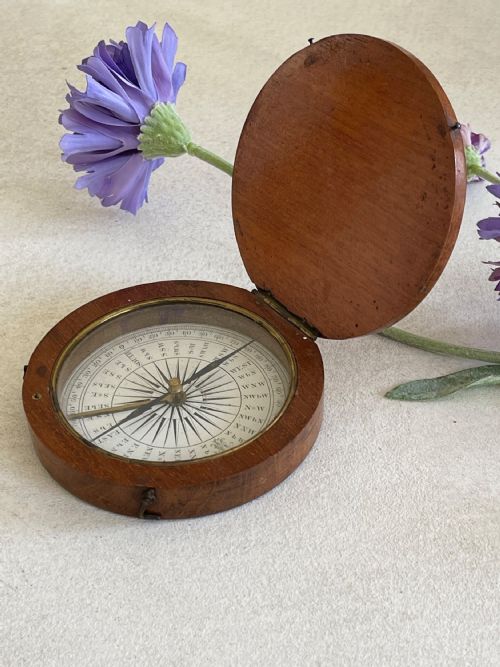


Mahogany Maritime Box
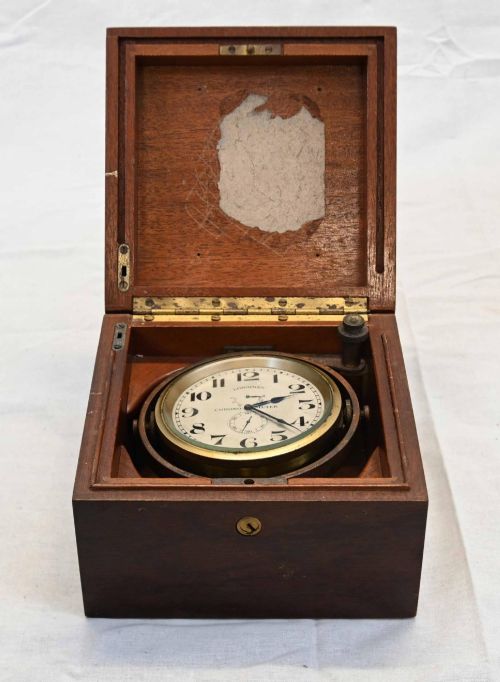
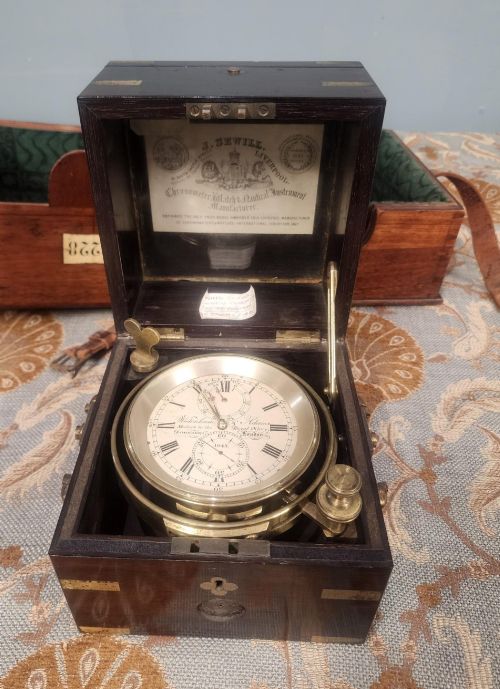
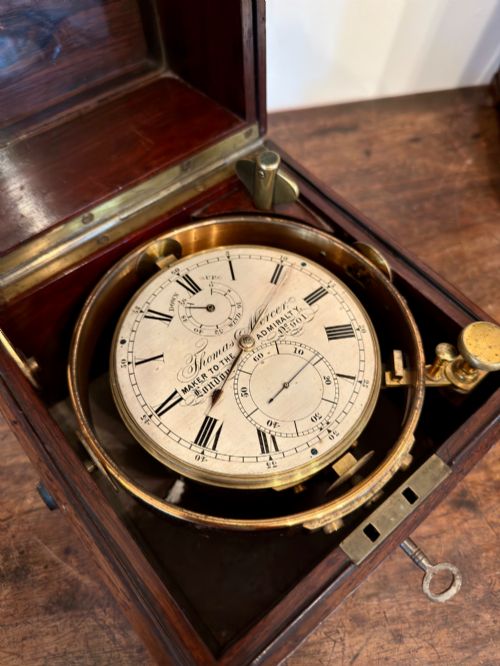
A mahogany maritime box is a fitted case or chest built for navigation, exploration, and shipboard life.
Mahogany Maritime Box
A mahogany maritime box encompasses practical navigational equipment, scientific instruments, and storage chests associated with the sea. These items span periods from the Georgian era through the Victorian period and into the mid-twentieth century.
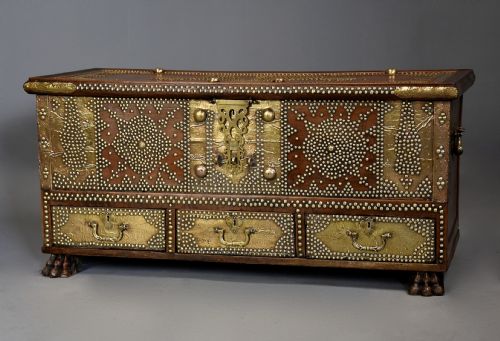
Buyers encounter marine chronometers, compasses, deck watches, celestial globes, and ship dioramas housed in sturdy wood cases. Storage forms such as traders chests and master shipwrights tool trunks also appear within this group.
Origins stretch from English workshops to Zanzibar and Anglo-Indian makers, reflecting global trade routes and naval expansion. Each object served a precise function for captains, explorers, and navigators at sea.
How they were made
Makers utilised dense timber, predominantly mahogany and other hardwoods, to withstand shipboard moisture and heavy use. Brass fittings, hinges, and corner brackets reinforced the wooden structures against constant movement.
Interior components incorporated glass, silvered metal dials, paper charts, and painted details for delicate scientific instruments and dioramas. Iron and brass fastenings secured heavy chests and tool trunks.
Craftsmen fitted complex clockwork movements inside chronometers and secured compasses within gimbal rings to maintain level operation during rolling voyages.
Mahogany Maritime Box Retail Price Guide 2026
Typical asking prices for mahogany maritime box among the pieces listed under this phrase on Sellingantiques today, from the lower quarter to the upper quarter. They describe what is for sale here now, not the wider market.
Listings feature items from the Georgian, Victorian, and mid-twentieth century periods, constructed in mahogany, brass, and glass.
What varies in quality
The precision of the internal movement or instrument separates standard functional items from master-grade scientific apparatus. Signed dials and recorded maker names elevate the standing of chronometers, compasses, and barocyclanometers.
Cabinetwork quality shows in the choice of solid mahogany, tight joinery, and the execution of brass stud decoration or recessed carrying handles. Decorative detailing on ship dioramas and Zanzibar chests adds visual distinction to the piece.
Mercer of London·Thomas Mercer·Litherland Davies Of Liverpool·Samuel Porter·Henri de Magnac·Stanley London·James McCabe·John Lilley Son London
The Mahogany Maritime Box Glossary
- Marine chronometer
- A precise timekeeper used at sea to determine longitude by means of celestial navigation. These instruments sat in gimballed boxes to keep them level.
- Artificial horizon
- A device used to measure the altitude of a celestial body when the natural horizon was obscured. Black glass sets aided this measurement by reflecting a stable surface.
- Zanzibar chest
- A heavy wooden storage chest decorated with brass studs and strapwork, reflecting East African and Indian trade influences. These trunks travelled on merchant vessels.
- Gimbal
- A pivoted ring system that allows a compass or chronometer to remain horizontal regardless of the tilt of a ship. It isolates the instrument from motion.
- Barocyclanometer
- A specialised barometer designed to detect tropical revolving storms and typhoons. Navigators relied on them to anticipate extreme weather.
Mahogany Maritime Box: Frequently Asked Questions
What is a marine chronometer?
A marine chronometer is a highly accurate clock designed to determine longitude on a vessel by tracking Greenwich Mean Time. They were essential tools for deep-sea navigation before electronic positioning.
Housed in fitted mahogany boxes with brass gimbals, these timekeepers remained level despite the rolling motion of a ship.
How do you date a wooden chest?
Dating relies on construction methods, timber choice, and hardware styles. Georgian and Victorian examples show distinct joinery techniques and brass mount designs.
Maker signatures, paper labels inside lids, and regional styles like Zanzibar or Anglo-Indian decoration also help narrow the production period.
What are ship dioramas?
Ship dioramas are three-dimensional model scenes depicting vessels under sail, often enclosed in glazed wooden display cases. Folk art examples capture traditional maritime craftsmanship.
Sailors and model makers constructed these scenes to record specific ships, clippers, or naval engagements from the nineteenth century.
Where were compasses stored?
Navigational compasses were housed in protective wooden cases made from mahogany or other hardwoods. These boxes often featured brass hooks, hinged lids, and compartments for related tools.
Explorers and ship captains carried pocket versions or relied on larger gimballed deck models during voyages.