


Mahogany Marble Top Sideboard
A mahogany marble top sideboard brings together cool stone and rich timber to anchor a room with substance and utility.
Mahogany Marble Top Sideboard
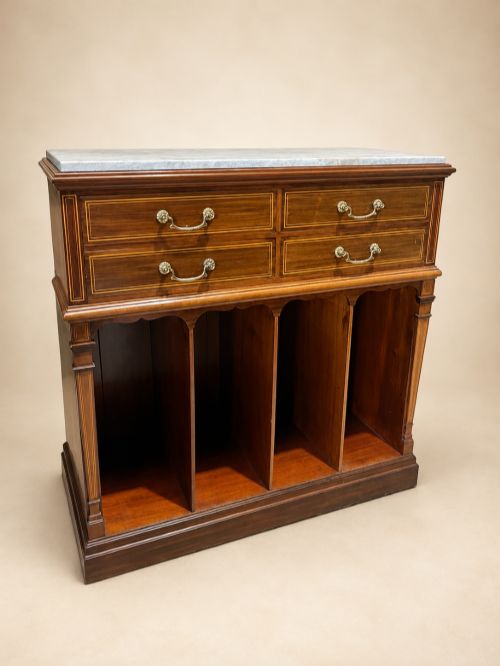
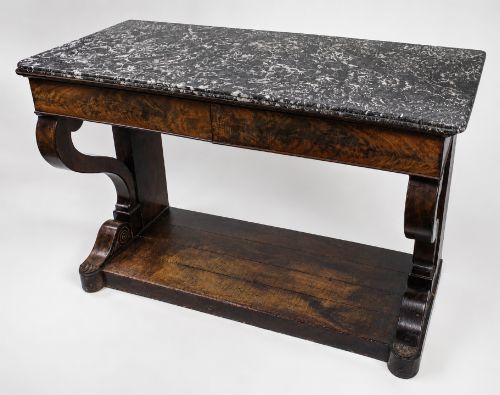
A mahogany marble top sideboard draws on periods from the eighteenth century through to the Edwardian era and the nineteen-thirties, spanning diverse forms such as commodes, washstands, and consoles alongside traditional buffets and credenzas. These pieces combine substantial timber carcases with durable stone surfaces, serving practical storage and display functions in domestic interiors.
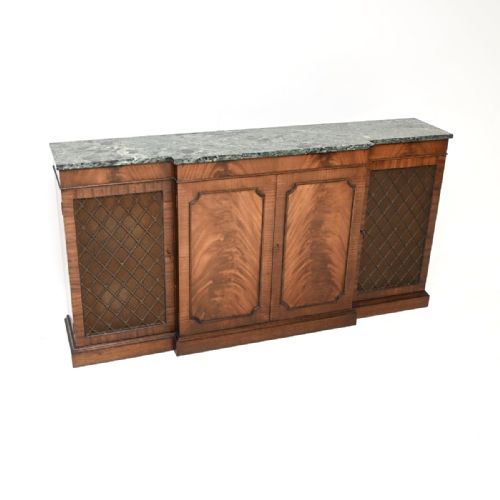
The versions most commonly met here follow French Empire, Louis XVI, and Regency traditions, often incorporating serpentine fronts or grill doors alongside more straightforward rectangular formats. Buyers encounter both British iterations featuring Cuban mahogany and continental variants influenced by cabinetmakers of the nineteenth century.
Makers and workshops across Britain and continental Europe utilised rich timbers and figured veneers to create these heavy case pieces, adapting classical styles for nineteenth and twentieth-century dining rooms, halls, and bedrooms.
Materials and construction methods
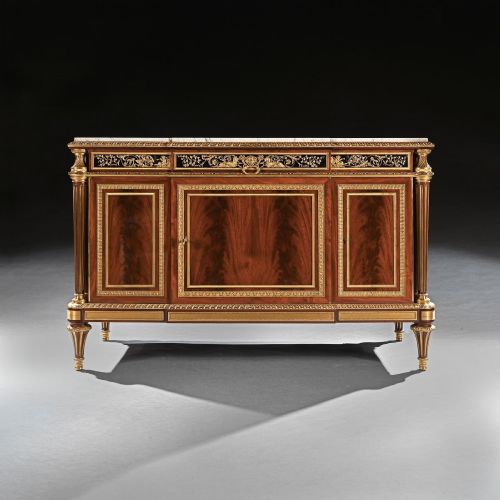
Craftsmen built the carcases primarily from solid mahogany and applied veneers, frequently incorporating satinwood inlay, parquetry, or marquetry details to enhance the visual depth of the timber facades. Brass and ormolu mounts, along with gilt bronze elements, were cast and fixed to accentuate corners, pilasters, and drawer fronts.
The heavy stone surfaces, often in white or rouge marble, were cut to follow the contours of the timber carcase, whether straight, bow-fronted, or serpentine. These slabs rest directly upon the cabinet top, secured by their own weight and precision fitting rather than complex mechanical fixings.
Several pieces conceal their contents behind fine brass grilles, letting the world guess what sits inside.
Distinguishing quality in construction
Quality rests in the selection of the timber and the precision of the cabinetmaker's joins, particularly where veneers meet at curved or serpentine corners. Superior pieces exhibit seamless parquetry and well-matched grain patterns across doors and drawer fronts, whereas simpler iterations rely on plain mahogany boards.
The weight and finish of the marble slab, along with the crispness of any cast ormolu and brass mounts, mark the difference between standard production and masterwork pieces. Finer examples display meticulous attention to interior detailing and robust carcase construction that prevents warping over time.
Henry Dasson·Collinson and Lock·Jean-Henri Riesener
The Mahogany Marble Top Sideboard Glossary
- Commode
- A low chest of drawers or cabinet with doors, often featuring a marble top and decorative mounts. These pieces originated in France and became central to formal reception rooms.
- Ormolu
- Gilt bronze mounts applied to furniture for decorative effect. The technique involves coating bronze with a finely ground gold-mercury amalgam and heating it.
- Marquetry
- The art of applying pieces of veneer to a structure to form decorative patterns and pictures. Craftsmen cut various coloured woods to fit precisely together.
- Serpentine
- A furniture front curving inward centrally and outward at the sides in a continuous wave. This shape requires advanced woodworking skill to execute correctly.
- Credenza
- A sideboard or buffet cabinet used for serving food and displaying plate. Nineteenth-century versions frequently incorporated glass or grill doors.
Mahogany Marble Top Sideboard: Frequently Asked Questions
What rooms suit a mahogany marble top sideboard?
These sturdy items suit dining rooms, hallways, and living spaces where a durable surface and enclosed storage are both required. The stone top provides a practical water-resistant shelf for serving food or displaying objects.
Their substantial weight and formal presence mean they anchor large walls effectively. Pairing them with contemporary or period seating creates a balanced interior contrast.
How do I care for the marble top?
Wipe the stone surface regularly with a soft cloth dampened in warm water and mild soap. Avoid acidic liquids like vinegar or wine, which can etch polished marble surfaces.
Apply a specialist stone wax periodically to protect the polish from stains and minor scuffs. Lifting rather than sliding heavy items across the stone prevents scratching.
How should I maintain the mahogany timber?
Dust the wood regularly with a dry, lint-free cloth to prevent grit accumulation. Feed the polished surface with a quality beeswax furniture polish once or twice a year to maintain the grain's depth.
Keep the cabinet away from direct heat sources and strong sunlight to prevent the timber from drying out or fading. Lift the piece from the base if repositioning to protect the structural joints.
How do I tell an Edwardian piece from a nineteenth-century one?
Nineteenth-century examples often display heavier classical influences such as French Empire or Regency motifs, utilising dense Cuban mahogany and bold ormolu mounts. The construction tends to feature hand-cut dovetails and solid timber carcase framing.
Edwardian interpretations frequently look back to Sheraton Revival styles with lighter satinwood inlay and refined proportions. The interior construction in later pieces often includes machine-sawn elements alongside traditional joinery.