

Mahogany Library Writing Table
Mahogany library writing table pieces are substantial working desks built for serious study, most frequently encountered here in substantial Georgian and Victorian forms.
Mahogany Library Writing Table
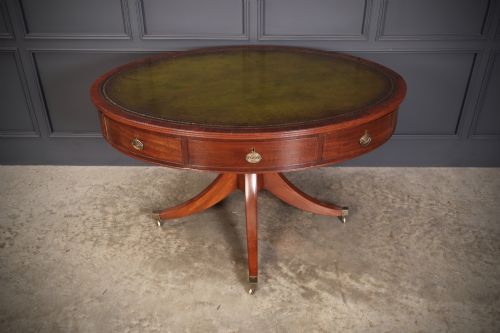
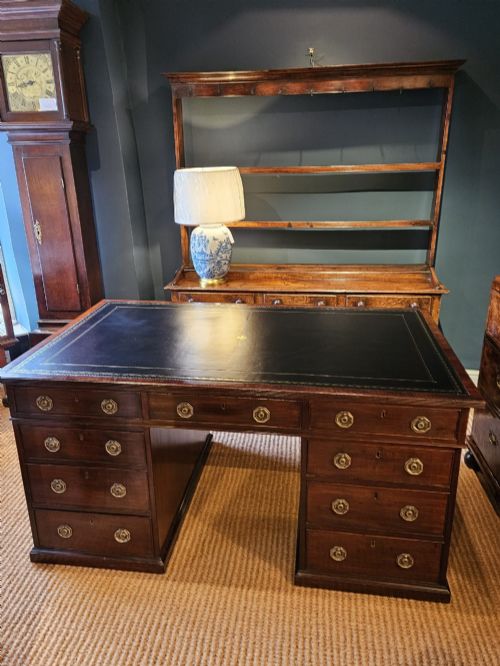
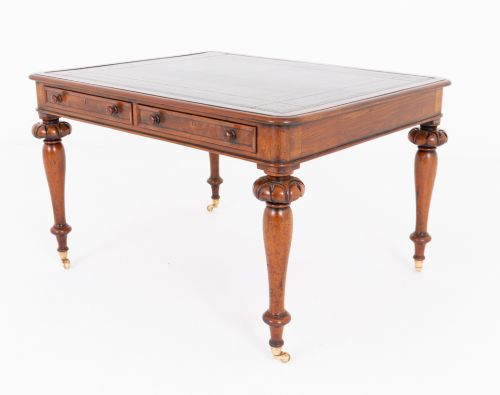
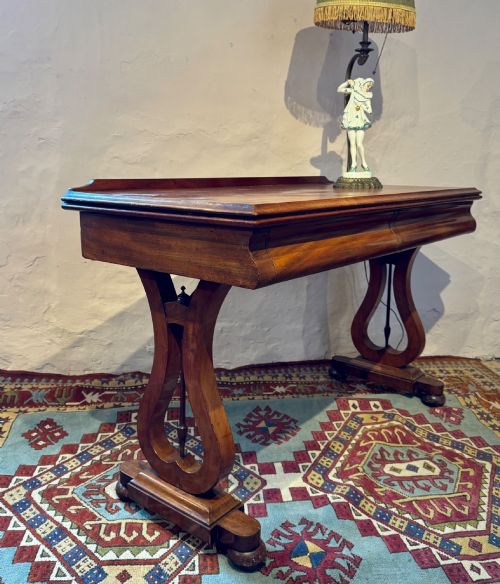
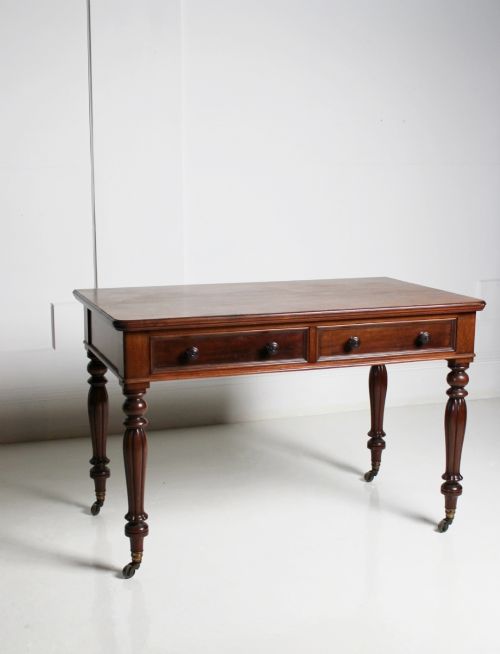
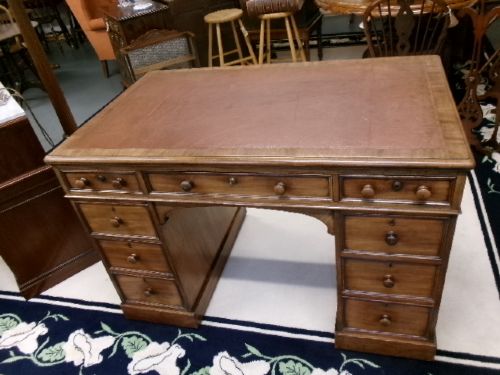
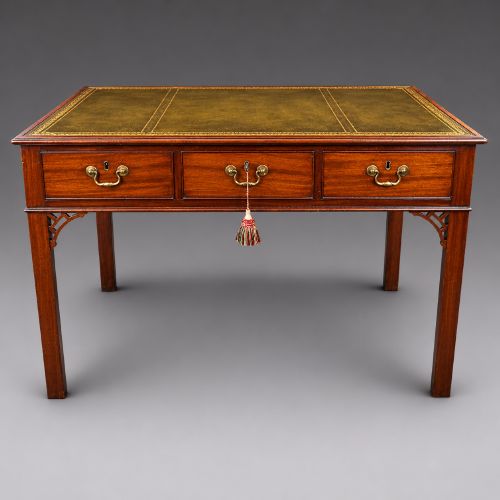
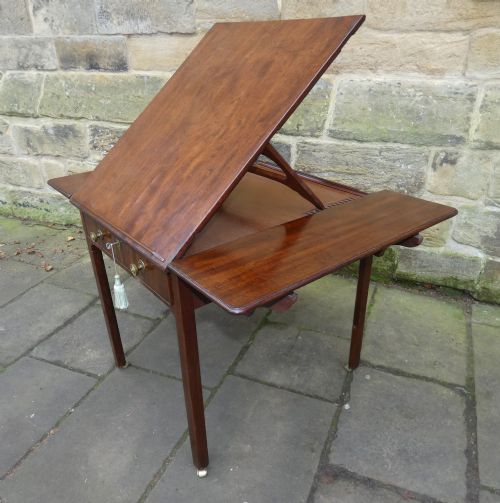
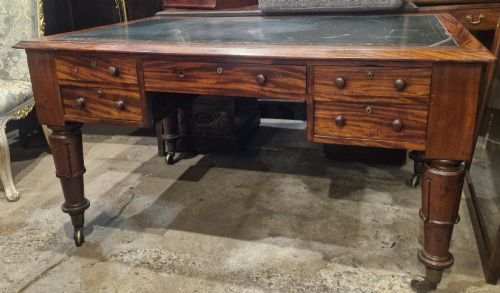
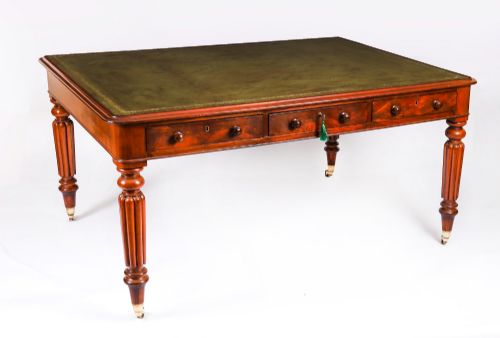
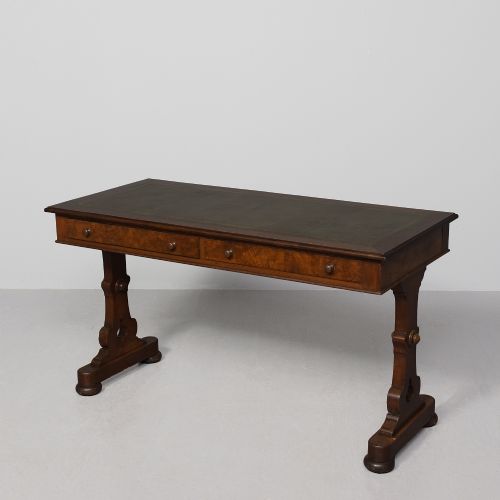
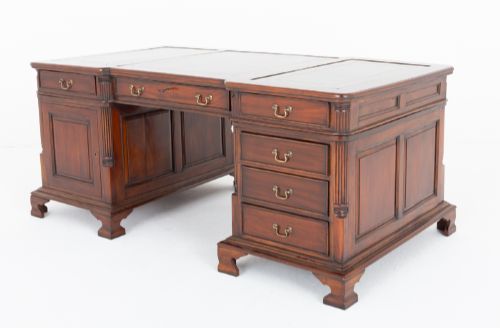
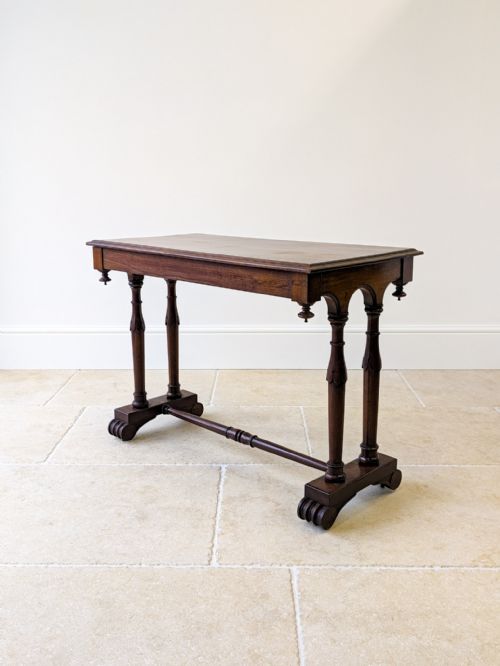
When you search for a mahogany library writing table, you encounter robust freestanding desks designed for studies, libraries and principal rooms. These pieces appear across several periods, most visibly in Georgian, Regency and Victorian eras, taking the form of partners desks, drum tables, pedestal desks and conventional writing tables.
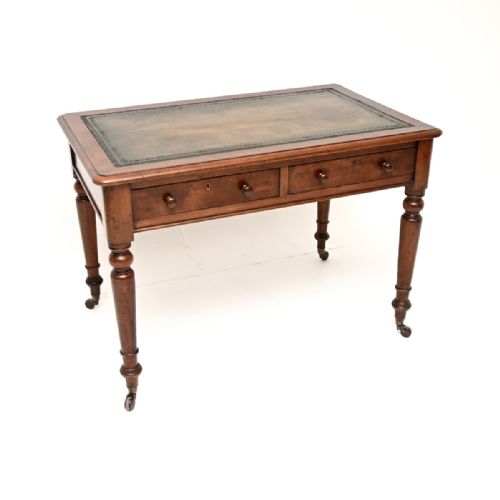
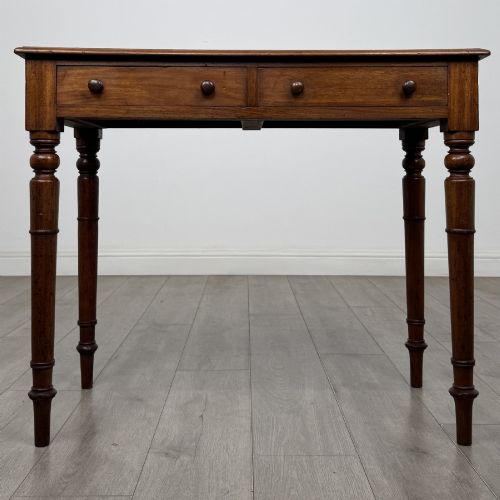
The objects listed on this page span straightforward two-drawer writing desks to large freestanding partners desks with drawers to both sides. Circular drum tables and revolving library tables also feature among the variations, alongside revival pieces from the Edwardian period and the later nineteenth century.
Originating primarily from English workshops, these items served as practical furniture for reading, correspondence and administration. Their heavy timber construction and finished backs allow them to stand away from walls in the centre of a room.
Materials and construction
The primary timber across these pieces is mahogany, frequently selected in figured variations such as flame mahogany to display rich grain patterns on top surfaces and drawer fronts. Secondary woods support the internal drawer construction, while satinwood and marquetry provide decorative inlay on specific revival and eighteenth-century examples.
Writing surfaces are typically lined with leather, often tooled with gilt borders, providing a flat plane for writing. Structural enrichment comes from applied brass hardware, handles, castors and occasionally gilt bronze mounts on continental or empire-style pieces.
Joinery follows traditional cabinet-making methods designed to withstand heavy daily use. Drawers feature dovetailed construction, and larger freestanding tables incorporate panelled carcases and turned or carved pedestals.
Mahogany Library Writing Table Retail Price Guide 2026
Typical asking prices for mahogany library writing table among the pieces listed under this phrase on Sellingantiques today, from the lower quarter to the upper quarter. They describe what is for sale here now, not the wider market.
Current listings feature mahogany tables spanning the eighteenth, nineteenth and early twentieth centuries, including Georgian, Victorian, Regency and Edwardian periods.
Factors of quality
Quality in a mahogany library writing table rests upon the selection of timber and the precision of its execution. Pieces employing finely figured flame mahogany or intricate marquetry demonstrate a higher tier of craftsmanship than plain utility desks.
Proportion and scale dictate the success of the design, particularly in larger partners desks and drum tables where balance is essential. Crispness in carved details, such as pedestal mounts or edge moulding, separates standard workshop production from finer cabinet-work.
Originality of surface finish and hardware preserves the integrity of the piece. Tables retaining their original tooled leather inserts and brass fittings command greater appreciation among collectors.
W. Walker and Sons London
The Mahogany Library Writing Table Glossary
- Partners desk
- A large double-sided desk designed for two people to work opposite one another, featuring drawers and cupboards on both faces.
- Drum table
- A circular library table with a revolving or stationary top surrounded by a frieze of alternating real and dummy drawers.
- Flame mahogany
- A veneer cut from the fork of the mahogany tree, creating a distinctive wave-like flame pattern across the timber surface.
- Bureau plat
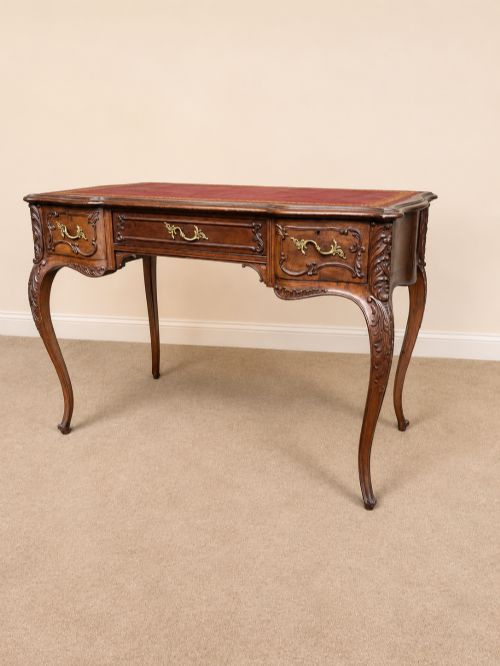
- A flat-topped writing table, often of French origin, typically fitted with pull-out slides and frieze drawers.
- Marquetry
- Decorative patterns formed by the insertion of thin pieces of wood, such as satinwood, into the mahogany veneer carcase.
Mahogany Library Writing Table: Frequently Asked Questions
What is a partners table?
A partners table is a large double-sided desk built with drawers and storage accessible from both the front and the back.
These pieces were made so two people could work opposite each other in a shared study or library.
How do I care for leather tops?
Leather writing surfaces require gentle cleaning with a slightly damp cloth and occasional treatment with appropriate leather dressings to prevent drying.
Avoid placing damp items or heavy direct heat sources onto the leather to preserve the finish.
Can these desks stand centrally?
Mahogany library tables are finished on all four sides precisely so they can stand in the middle of a room.
Unlike standard office desks meant for walls, these pieces present a polished facade from every angle.
How do I tell Regency from Victorian?
Regency pieces often display cleaner classical lines influenced by Greek and Roman revivals, sometimes featuring brass inlay or reeded legs.
Victorian examples tend to be heavier in proportion, occasionally incorporating richer carved decorations, pedestal bases or bobbin turnings.