

Mahogany Leather Top Table
Mahogany leather top tables bring centuries of functional craft into daily rooms, offering solid timber surfaces inset with hide for writing or study.
Mahogany Leather Top Table
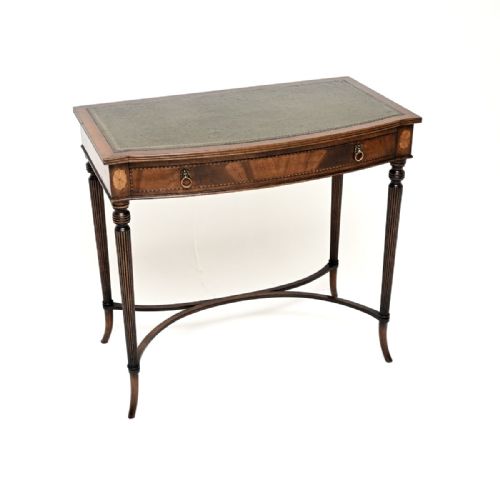
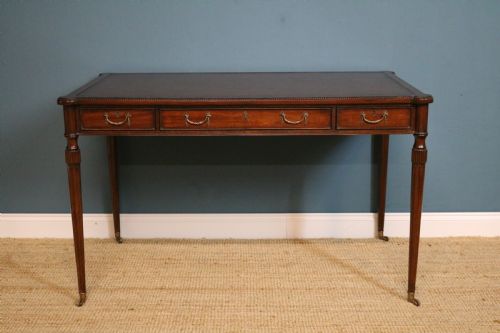
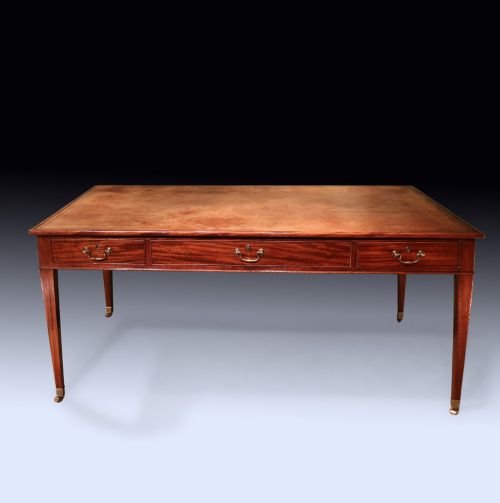
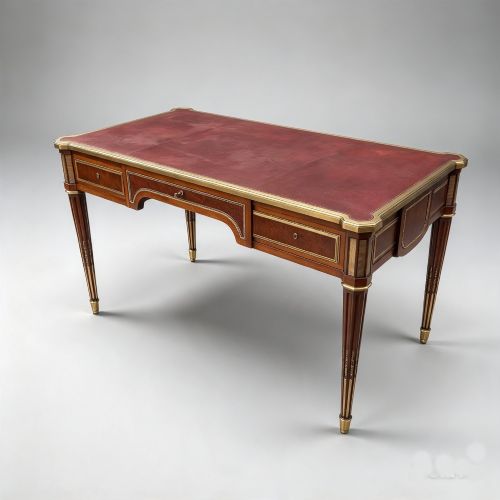
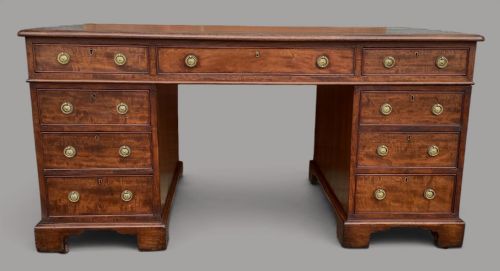
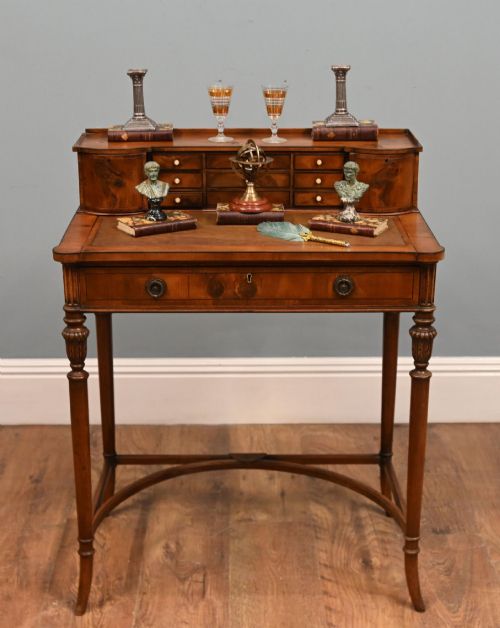
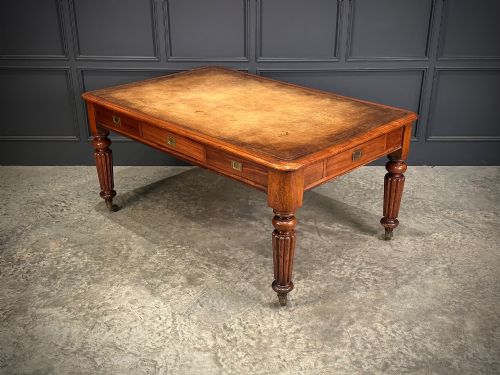
A mahogany leather top table combines dense tropical timber with a supple writing surface, appearing primarily as pedestal desks, partners desks, and library tables. These pieces emerge across the Georgian, Regency, William IV, Victorian, and Edwardian periods, stretching into later revivals.
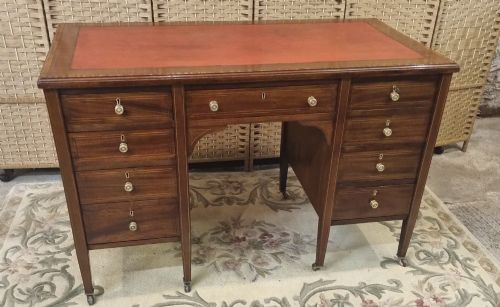
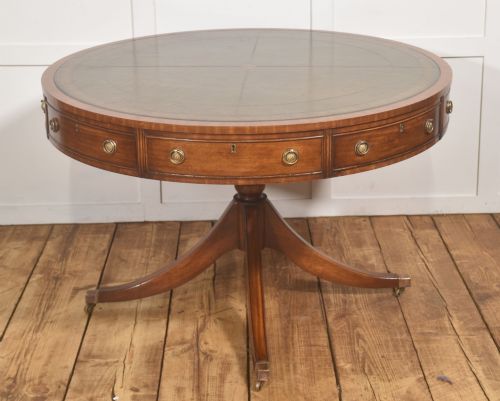
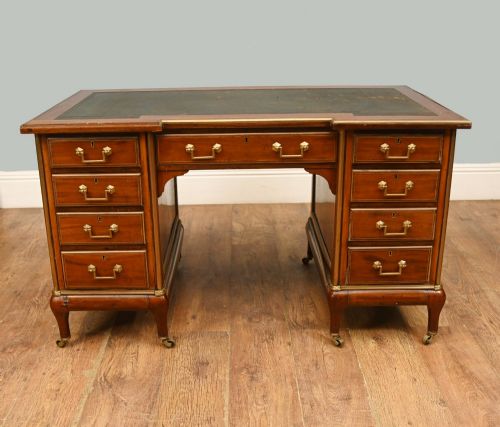
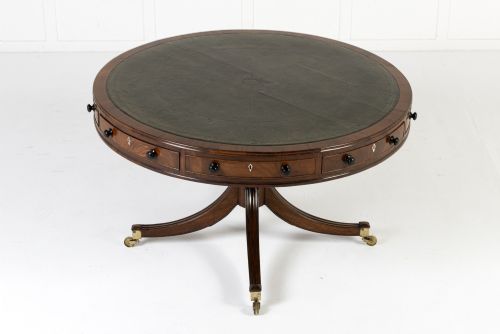
You will most frequently encounter nineteenth-century pedestal and partners desks on this page, alongside drum tables and occasional writing tables. Many examples feature fitted drawers, stationery compartments, or pull-out slides flanking the central writing insert.
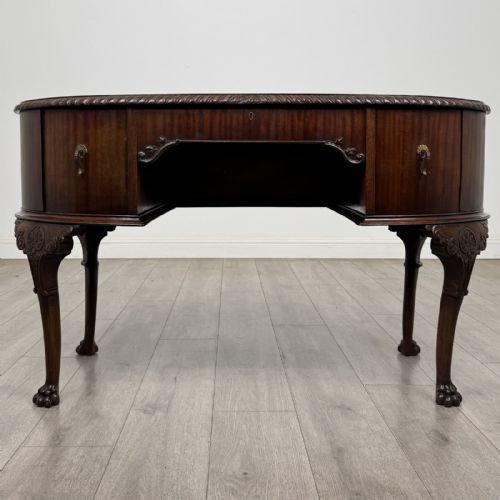
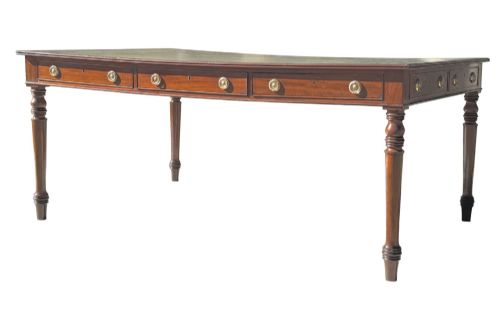
Forms range from compact kidney-shaped Edwardian writing desks to large George III and Victorian freestanding library tables. Each variation serves specific domestic or professional tasks, designed to be viewed from all sides within a room.
Materials and construction
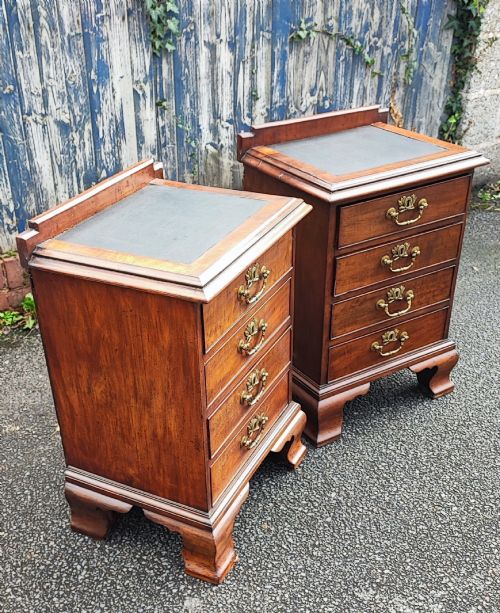
Cabinet makers utilised dense solid mahogany and flame mahogany veneers over secondary timbers, building heavy carcases designed to withstand decades of daily use. Drawer linings often employ oak or pine, joined with traditional hand-cut dovetails.
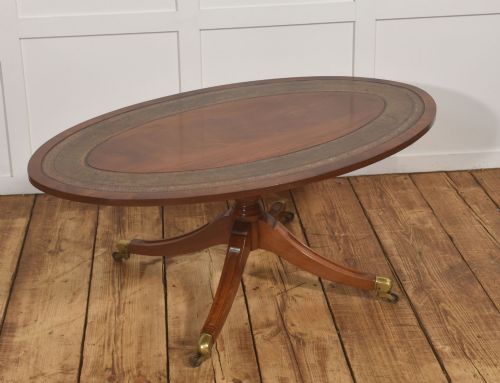
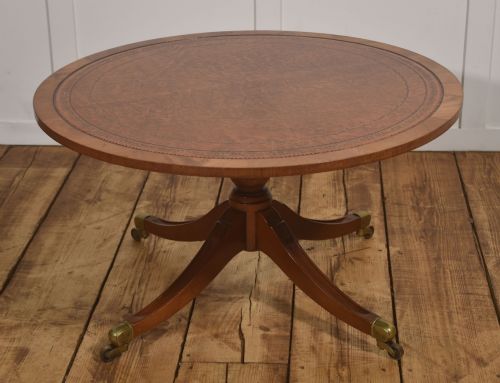
Writing surfaces employ inset leather hides, frequently hand-tooled with gilt or blind stamps around the perimeter. Brass handles, castors, and ormolu mounts provide structural hardware and decorative contrast to the dark timber.
Secondary woods such as maple appear in specific pieces, while inlaid satinwood stringing decorates later Edwardian and Victorian surfaces. Structural stability relies on heavy pedestals or sturdy turned and fluted legs.
Mahogany Leather Top Table Retail Price Guide 2026
Typical asking prices for mahogany leather top table among the pieces listed under this phrase on Sellingantiques today, from the lower quarter to the upper quarter. They describe what is for sale here now, not the wider market.
Some nineteenth-century kneehole desks include hidden stationery drawers designed to keep private correspondence safe from wandering eyes.
Assessing build and finish
Quality separates through the selection of timber figures, such as highly grained flame mahogany, and the crispness of carved mouldings or inlaid stringing. Superior examples maintain original hardware, handles, and leather surfaces that show honest patination.
Internal joinery distinguishes workshop standards, seen in dust boards between drawers, solid oak drawer sides, and fully finished backs for freestanding placement. Desks retaining fitted stationery interiors and working locks demonstrate higher original commissioning costs.
Maple & Co.·Trollope & sons·Johnstone & Jeanes·Charles Andrea Nosotti·Edwards & Roberts
The Mahogany Leather Top Table Glossary
- Partners desk
- A large double-sided pedestal desk designed with drawers and cupboards facing both directions so two people could work opposite each other. These substantial pieces often form the centrepiece of a library or study.
- Drum table
- A circular library table with a revolving or fixed top surrounded by frieze drawers, resting on a central pillar and tripod base. The leather inset sits flush within the mahogany top.
- Kneehole desk
- A compact pedestal desk featuring a central recess for the sitter's legs, flanked by stacks of smaller drawers. They provide dedicated writing space without the full bulk of a partners desk.
- Writing slide
- A pull-out wooden board integrated above the drawers to extend the working surface temporarily. These fitted boards slide flush into the frieze when not in use.
- Flame mahogany
- A veneer cut from the fork of the mahogany tree where branches meet the trunk, producing a rippling, flame-like pattern. Cabinet makers used this timber on prominent drawer fronts and tabletops.
Mahogany Leather Top Table: Frequently Asked Questions
What is a partners desk?
A partners desk is a large double-sided desk built with drawers and storage on both faces, allowing two people to sit opposite each other.
These pieces were traditionally used in offices, banks, and large estate libraries where professional associates needed shared workspace.
How do I care for the leather top?
The leather inset requires periodic treatment with specialised leather balms to prevent drying and cracking around the edges.
Avoid placing direct heat sources nearby and keep moisture away from the gilt tooling to preserve the finish.
How do I tell Victorian from Georgian tables?
Georgian tables tend to display restrained classical proportions, simpler mahogany grains, and hand-cut dovetails characteristic of eighteenth-century workshops.
Victorian examples often introduce heavier proportions, more elaborate veneers like flame mahogany, and varied aesthetic revivals.
Were these tables meant for offices?
Many large pedestal and partners desks served commercial and institutional offices, while smaller writing tables and drum tables populated domestic libraries and drawing rooms.
Freestanding models were specifically built to sit in the middle of a room rather than against a wall.