


Mahogany Jewellery Display Table
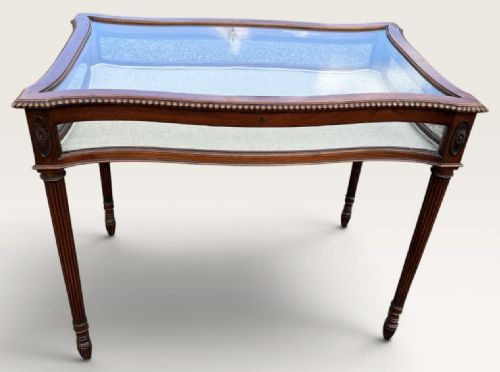
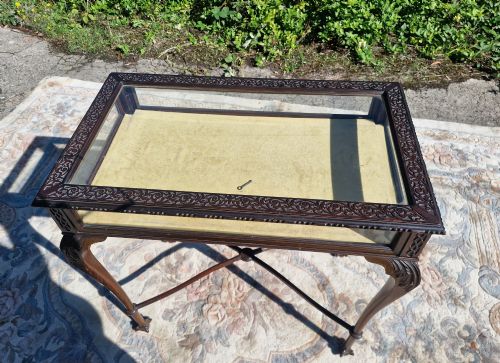
A mahogany jewellery display table is a glazed vitrine designed to hold small treasures, offering a clear top view while keeping items secure.
Mahogany Jewellery Display Table
A mahogany jewellery display table is typically encountered as an Edwardian or Victorian piece, spanning from the late nineteenth century into the early twentieth century. These objects function as glazed vitrines or bijouterie tables, designed specifically to showcase small valuables beneath glass tops.
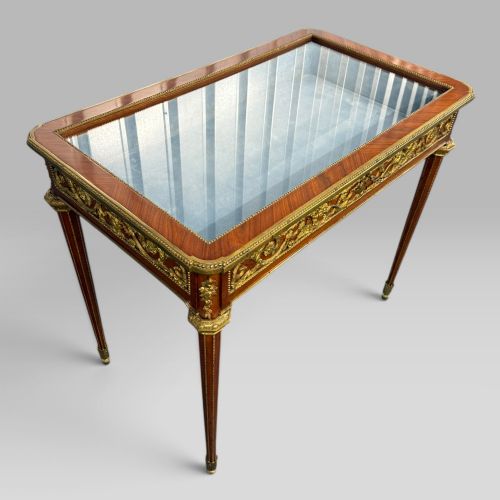
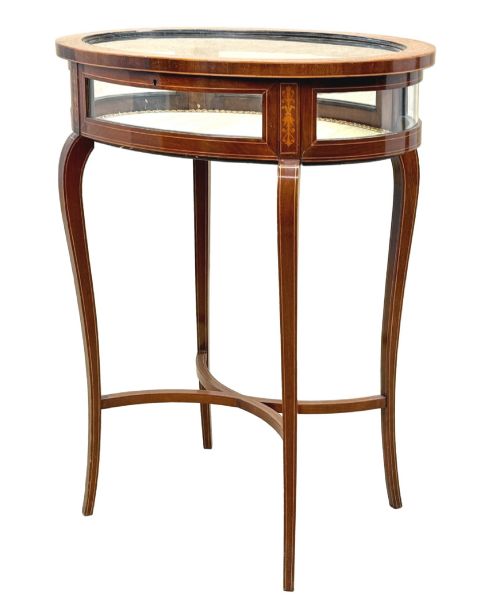
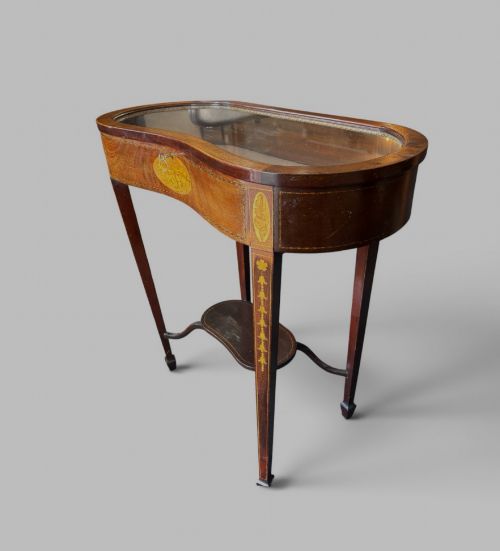
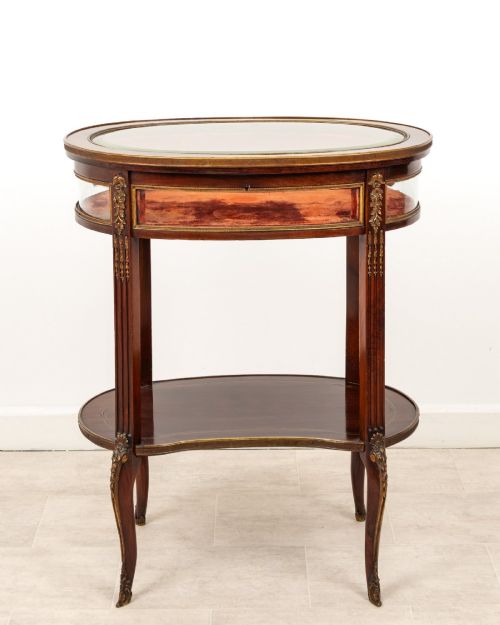
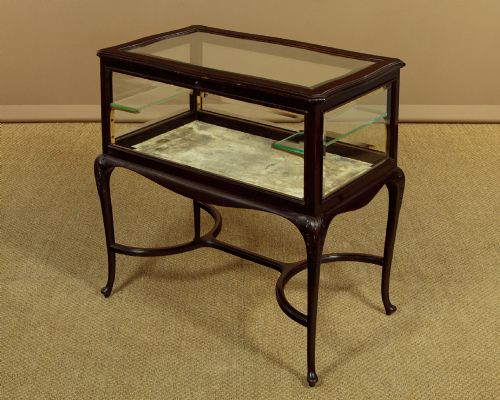
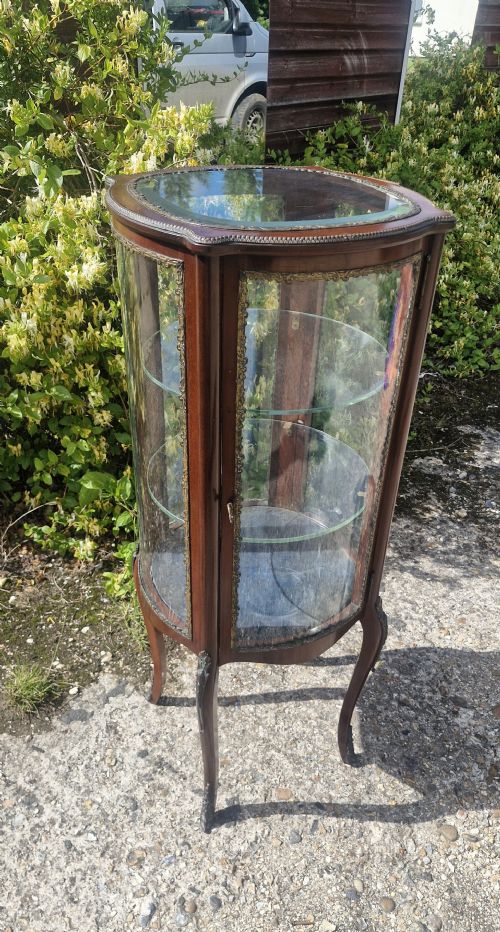
The physical forms vary from oval and serpentine shapes to kidney and rectangular formats. Examples emerge in various guises such as display cabinets, shop counters, and freestanding vitrines originating from English and continental workshops.
Materials and construction
Makers built these pieces primarily using solid mahogany, often complemented by contrasting veneers such as satinwood and kingwood, alongside intricate boxwood inlay and marquetry work. Glass forms the primary viewing surface for the top compartments and cabinet sides.
Metal elements play a significant structural and decorative role, with brass, gilt metal, and ormolu mounts fitted to edges, legs, and hinges. Velvet and fabric linings frequently cover the interior baseboards to cushion displayed items.
Archive records show occasional pieces adapted later for commercial watch displays bearing historical sign-written details.
Quality differences
The standard of a mahogany jewellery display table rests upon the precision of its timber selection, the crispness of any carved details, and the intricacy of satinwood or boxwood inlay. Pieces adhering to French Louis styles or specific revival aesthetics display greater complexity in their mounts and overall cabinetwork.
Subtleties in proportion, the integration of serpentine or kidney shapes, and the quality of applied ormolu or brass mounts distinguish standard production items from more ambitious workshops.
François Linke·Edwards and Roberts·Gillows
The Mahogany Jewellery Display Table Glossary
- Bijouterie table
- A specialised display table featuring a glazed top and compartment designed for holding small precious items, jewellery, and curiosities.
- Vitrine
- A glass-fronted or glass-topped cabinet intended for the exhibition of ornaments and valuable collections.
- Ormolu
- Gilded bronze mounts applied to furniture for decorative enrichment, frequently seen on French revival pieces.
- Marquetry
- Decorative woodwork where pieces of veneer are fitted into a ground to form geometric or floral patterns.
- Serpentine
- A gently undulating curved line forming the front or sides of a cabinet, popular in late periods.
Mahogany Jewellery Display Table: Frequently Asked Questions
What are these tables used for?
These tables serve primarily to exhibit small collectables, trinkets, and personal ornaments under glass while keeping them protected from dust and handling.
Historically, they allowed collectors to curate and present their valuable pieces in drawing rooms and reception spaces for guests to admire.
How do I date a mahogany display table?
Dating relies on identifying stylistic markers, timber characteristics, and construction methods associated with specific decades like the Edwardian era or the Victorian period.
Details such as machine-sawn timber versus hand-cut elements, alongside the presence of specific revival styles, help narrow down the decade of manufacture.
Are French and English tables different?
French examples frequently lean towards Louis styles with elaborate ormolu mounts and curved profiles, while English versions often focus on mahogany with subtle satinwood inlay.
Continental pieces tend to employ kingwood and distinct marquetry patterns compared to their domestic counterparts.
How should I care for the interior fabric?
Original velvet or fabric linings require gentle vacuuming with a low-suction attachment through a protective mesh screen to avoid fibre damage.
Direct sunlight should be avoided to prevent the fading of both the textile linings and the mahogany timber exterior.