
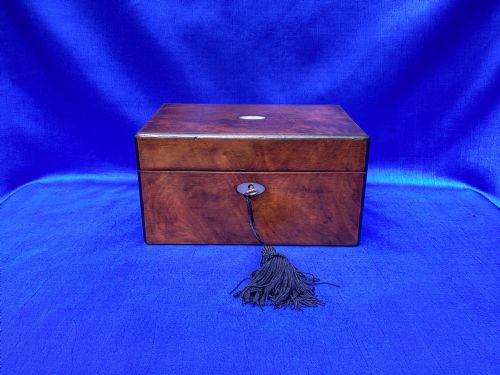


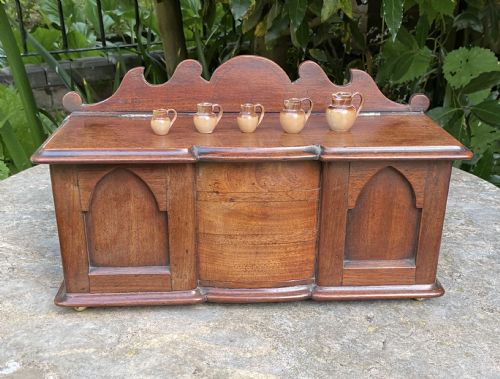
Mahogany Jewellery Box Chest
A mahogany jewellery box chest is a small-scale timber cabinet designed to store precious items, combining cabinetmaker skill with domestic utility.
Mahogany Jewellery Box Chest
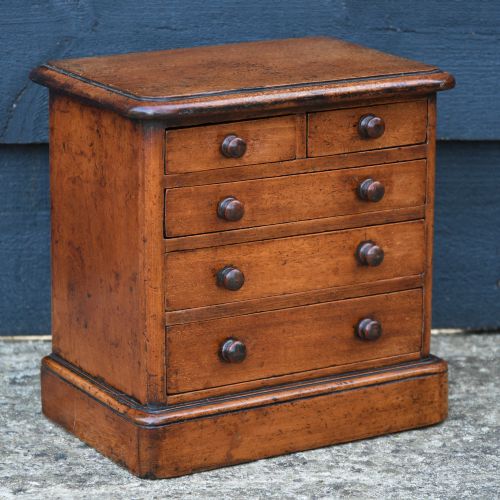
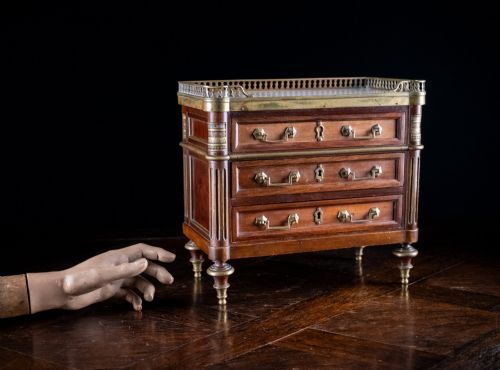
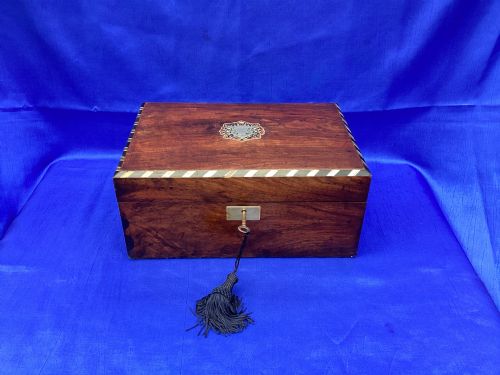
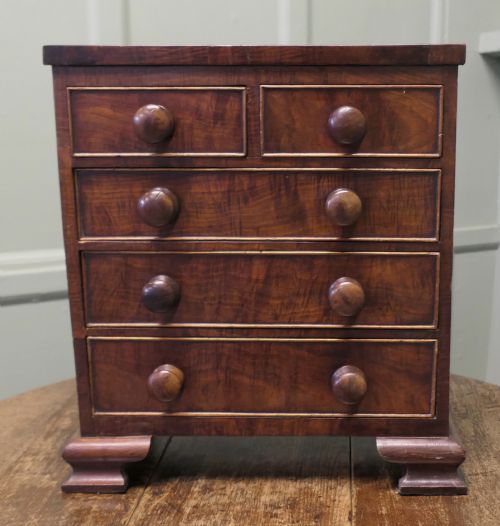
A mahogany jewellery box chest takes several compact forms, most commonly appearing as a miniature chest of drawers, a table cabinet, or a fitted box with internal compartments. These pieces span the eighteenth, nineteenth, and early twentieth centuries, encompassing Georgian, Victorian, and Edwardian periods.
Many examples are designated as apprentice pieces or miniature furniture, reflecting the meticulous scale work of period cabinetmakers. Buyers most frequently encounter nineteenth-century Victorian pieces and Georgian forms featuring functional drawers designed for storage.
Origins range from British workshops to continental and Qing Dynasty examples, including specialised forms like watch repairer cabinets and sewing boxes. The unifying characteristic across these objects is the use of mahogany as the primary structural wood combined with compact proportions.
Materials and construction methods
Makers constructed these miniature chests primarily from solid mahogany and mahogany veneers over secondary timbers, frequently utilising boxwood for stringing and decorative inlay. Brass handles, escutcheons, and hinges provide structural reinforcement and functional hardware across the periods.
Surface ornamentation occasionally incorporates mother-of-pearl inlay, gilt bronze mounts, or marble tops, particularly on pieces influenced by Louis XVI styles or Arts and Crafts designs. Interiors often feature textile linings such as baise to protect stored items.
Joinery techniques mirror full-scale domestic furniture of the Georgian and Victorian eras, employing precise dovetail joints for miniature drawer construction and careful carcase assembly.
One extraordinary nineteenth-century chest served a watch and clock repairer, proving that even tiny drawers held very busy tools.
Assessing quality in miniature cabinetry
Quality in a mahogany jewellery box chest rests on the precision of the miniature scale joinery and the depth of the wood's natural patina. Finer examples display crisp dovetails, well-fitted drawers, and harmonious proportions that mimic full-sized cabinetwork.
The choice of secondary materials and decorative details further separates standard utility pieces from exceptional items. The inclusion of subtle boxwood stringing, well-cast brass hardware, or inlaid mother-of-pearl elevates the work of the maker.
Integrity of the original surface finish and the preservation of internal linings or period pulls indicate how well the object has survived through the nineteenth century and beyond.
The Mahogany Jewellery Box Chest Glossary
- Apprentice piece
- A small-scale item demonstrating a craftsman's skill to gain trade certification. These pieces often replicate full-sized chests of drawers.
- Bowfront
- A curved front profile popular in Georgian and Victorian cabinetmaking. This contour adds visual movement to miniature chests.
- Stringing
- Thin inlaid lines of contrasting wood used for decoration. Boxwood is frequently utilised for this linear detail on mahogany surfaces.
- Treen
- Small handmade wooden household objects. These items reflect the domestic utility and turned woodwork associated with period boxes.
- Escutcheon
- A protective plate surrounding a keyhole. Brass examples on these chests often double as decorative elements.
Mahogany Jewellery Box Chest: Frequently Asked Questions
What were miniature chests used for?
These small chests served multiple domestic purposes, primarily acting as specialised storage for jewellery, trinkets, or sewing accessories. Some functioned as portable repositories for valuables on dressing tables or travelling desks.
Cabinetmakers also produced them as miniature display pieces or demonstrations of technical proficiency rather than utilitarian storage.
How do I date a mahogany chest?
Dating relies on examining the construction methods, drawer dovetailing, timber choice, and secondary hardware styles. Georgian pieces generally show lighter framing and specific bracket feet or cockbeading.
Victorian examples often display heavier proportions, mahogany veneers, and machine-cut elements depending on the decade of production.
Are these pieces actually apprentice work?
Many nineteenth-century miniature chests carry the traditional description of apprentice pieces, though historians note many served as salesman samples or luxury domestic novelties.
Regardless of the exact workshop origin, the term indicates high-level miniature joinery executed by skilled hands.
How should I care for mahogany boxes?
Keep the timber away from direct heat sources and fluctuating humidity to prevent veneer lifting or wood shrinkage. Maintain the finish with occasional gentle dusting and appropriate wax conditioning.
Protect internal baise or silk linings by avoiding moisture and heavy pressure on fragile compartments.