

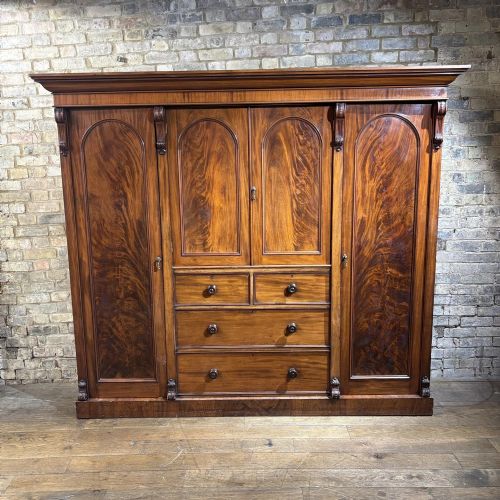
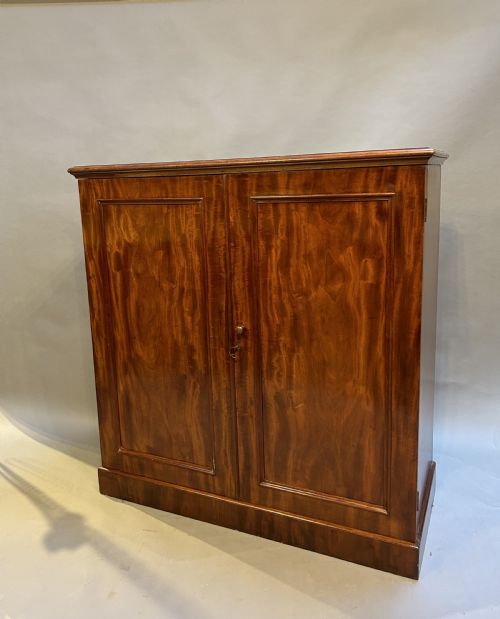


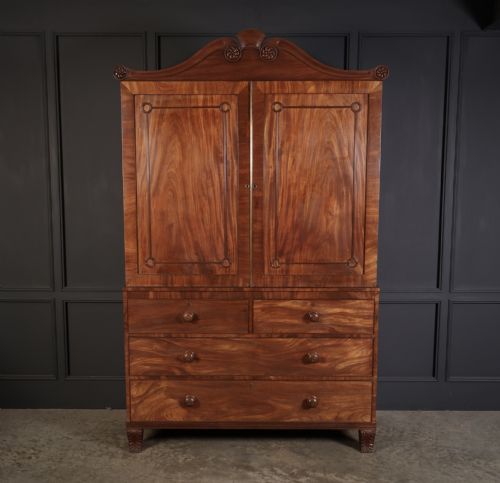

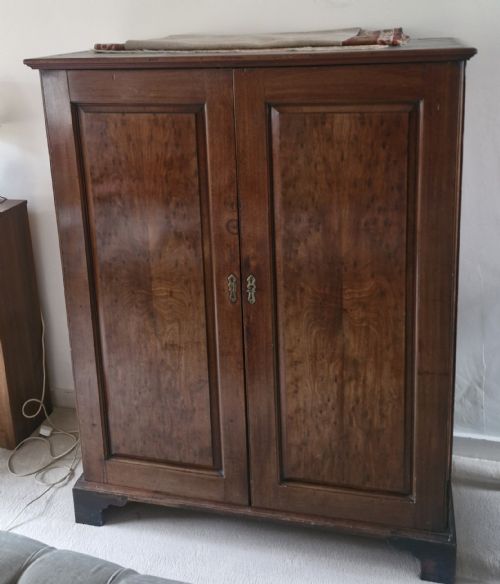


Mahogany Housekeeper Cupboard
A mahogany housekeeper cupboard is a sturdy domestic storage piece designed for linen and provisions, offering substantial presence and traditional utility.
Mahogany Housekeeper Cupboard
A mahogany housekeeper cupboard represents a substantial piece of domestic storage, historically used in large country houses and estates to store household linen, blankets, and provisions. When exploring this selection, buyers frequently encounter pieces described as linen presses, estate cabinets, and two-door cupboards.
The materials and construction span the 18th century, the Georgian era, the Regency period, and the Victorian and Edwardian phases. Most examples take the form of tall, two-door floor-standing furniture, sometimes combining upper storage with lower drawers or internal sliding trays.
Regional variations also appear within the inventory, including pieces originating from Wales or Scotland. These utilitarian yet finely finished items bridge the gap between working kitchen or estate office furniture and formal dining or bedroom storage.
How They Were Made
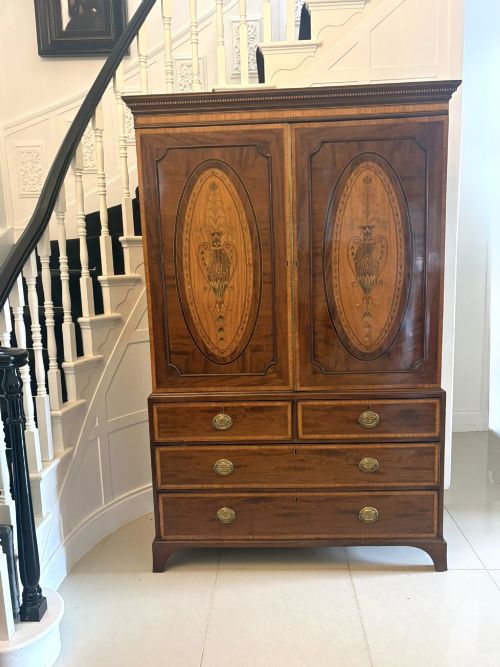
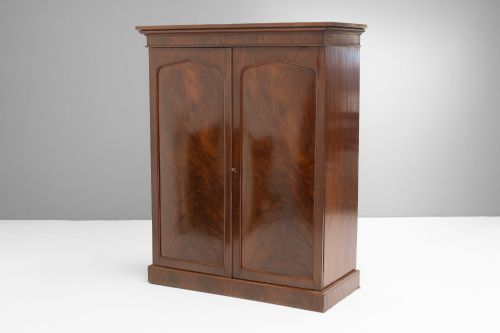
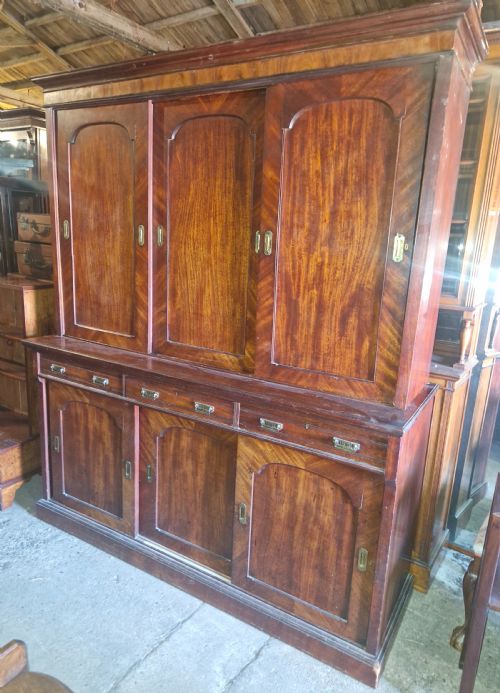
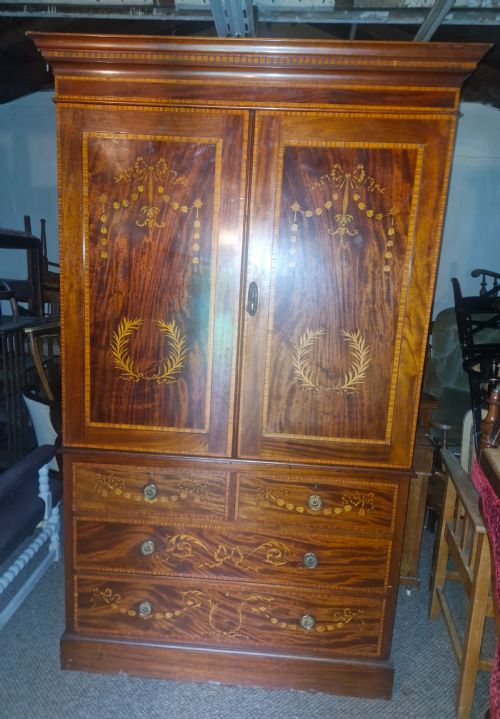
Cabinet makers utilised solid timber alongside flame mahogany veneer to construct these large storage pieces, often pairing the primary wood with secondary structural elements like pine. Selected panels display prominent grain figures, enhanced through careful timber choice and symmetrical arrangement.
Surface decoration frequently includes satinwood inlay, banding, and brass hardware such as escutcheons and handles. Internally, construction involves fitted shelves, sliding linen trays, and occasionally secretaire drawers designed for household accounts and administration.
Listings feature mahogany, pine, and satinwood across pieces attributed to the Georgian, Victorian, and Edwardian periods.
What Varies in Quality
The standard of a mahogany housekeeper cupboard depends heavily on the selection of timber veneers and the integrity of the original interior fittings. Pieces featuring striking flame mahogany grain and delicate satinwood inlay demonstrate a higher tier of craftsmanship than plain utility versions.
Proportion and architectural detail separate standard regional items from grand country house examples. The presence of untouched original brasses, smoothly operating sliding trays, and well-executed secondary woodwork elevates the standing of an individual piece.
Druce & Co·Heals
The Mahogany Housekeeper Cupboard Glossary
- Linen press
- A tall cupboard specifically designed with internal sliding trays or shelves for storing folded sheets and tablecloths. This form constitutes a primary configuration within the category.
- Flame mahogany veneer
- A thin slice of timber cut from the point where branches join the main trunk, producing a distinctive flickering flame pattern. Cabinet makers applied this to front panels for visual impact.
- Secretaire
- A drawer fitted with a drop-front writing surface and small internal compartments for stationery and paperwork. Found integrated into the upper or middle sections of certain cupboards.
- Crossbanding
- A border of veneer laid around the perimeter of a panel with the grain running at right angles to the centre. This technique frames the primary wood surface.
- Escutcheon
- A protective metal plate surrounding a keyhole, usually cast in brass. It prevents the wood around the lock from sustaining wear.
Mahogany Housekeeper Cupboard: Frequently Asked Questions
What is a mahogany housekeeper cupboard?
A mahogany housekeeper cupboard is a large piece of storage furniture traditionally used in country houses to organise household linen, bedding, and domestic provisions.
These pieces typically feature large upper doors enclosing shelves or sliding trays, paired with drawer configurations in the base section.
How were linen press cupboards used?
These cupboards served domestic staff in large estates as central storage hubs for freshly laundered textiles and household supplies.
The internal sliding trays allowed servants to stack folded linen neatly without disturbing adjacent piles.
How do I date a Georgian cupboard?
Dating a Georgian piece involves examining the construction techniques, timber selection, and hardware style. Pieces from this era often display solid proportions, hand-cut dovetails, and understated brass fittings.
Later Victorian adaptations frequently incorporate more pronounced veneer figures and heavier cornices.
Will a housekeeper cupboard fit in a modern home?
These pieces possess substantial dimensions, requiring careful measurement of ceiling heights and access routes before placement.
Their generous internal capacity makes them practical for contemporary use as wardrobe space or general hallway storage.