


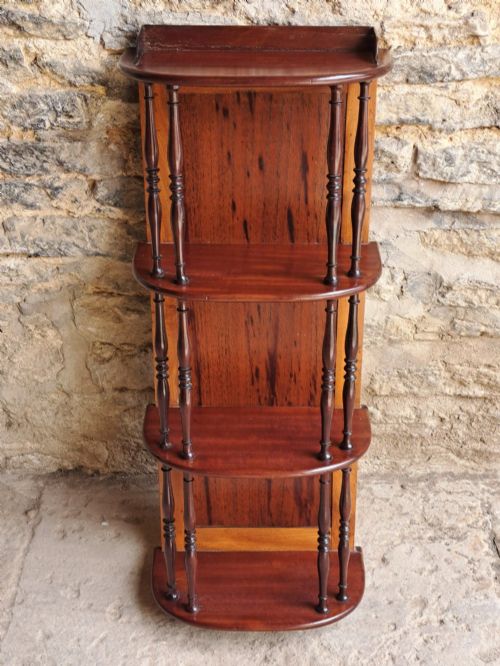


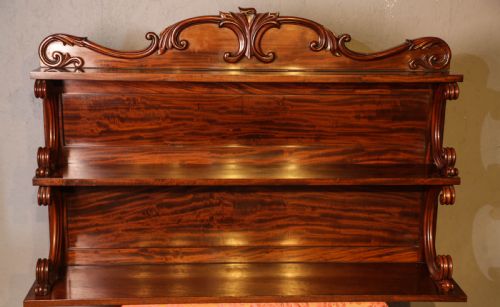


Mahogany Hanging Display Shelf
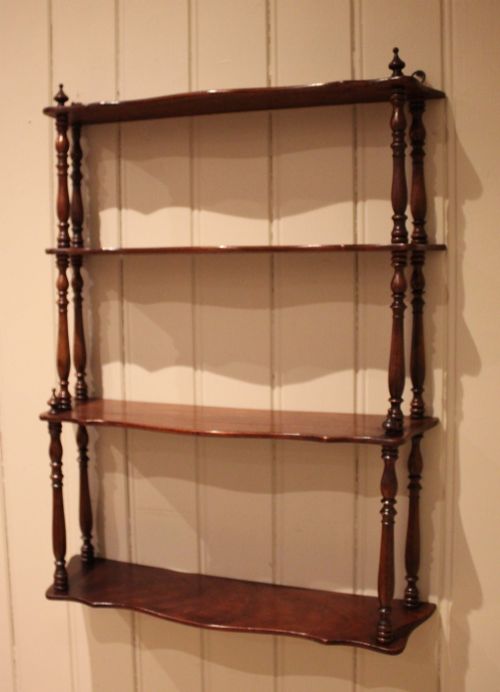
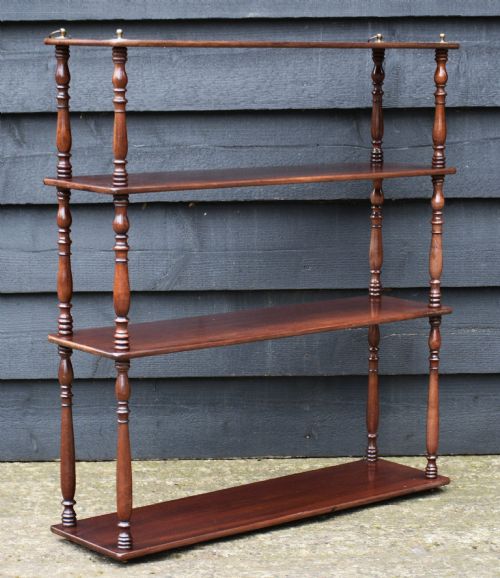
These mahogany hanging display shelf pieces bring warmth and practical storage to empty walls, offering a refined spot for books and small collections.
Mahogany Hanging Display Shelf
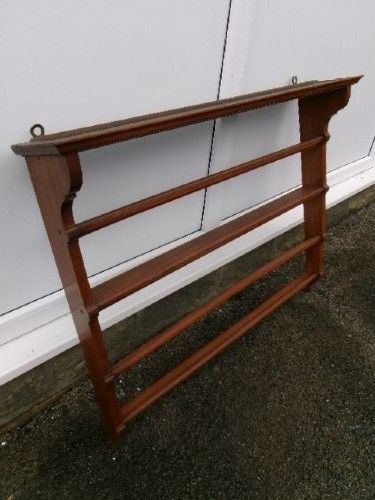
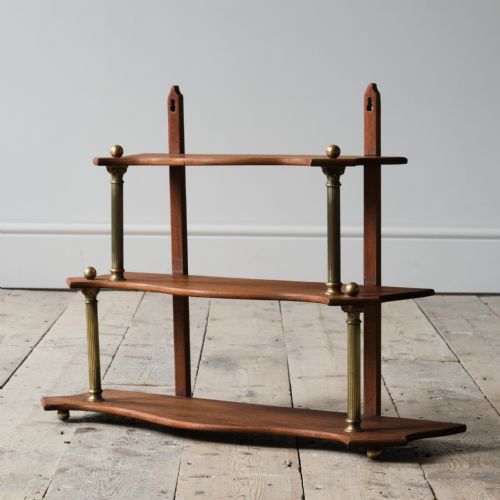
A mahogany hanging display shelf provides wall-mounted tiers for books, plates, and small ornaments, saving floor space while framing cherished objects. These pieces appear across the Georgian, Regency, Victorian, and Edwardian periods, stretching from the late eighteenth century into the early twentieth.
The common forms include multi-tier wall shelves, corner units, and enclosed wall cabinets with glass doors. Buyers frequently encounter standard wall-mounted bookcases alongside specialised designs like the waterfall shelf or the three-tier fretwork whatnot.
Originating primarily from British cabinet-making traditions, these shelves suit hallways, studies, and drawing rooms. The selection ranges from plain provincial formats to more elaborate revival styles featuring inlaid details.
Materials and Construction
Makers built these pieces primarily from solid mahogany and flame mahogany veneer, supplemented by secondary timbers such as oak. Workshops occasionally applied satinwood inlay to add decorative contrast to the darker primary wood.
Metal fittings like brass brackets, hinges, and hanging rings provided the necessary structural support for wall mounting. Glass panels appeared on enclosed cabinet doors to protect delicate items from dust while keeping them visible.
Mahogany Hanging Display Shelf Retail Price Guide 2026
Typical asking prices for mahogany hanging display shelf among the pieces listed under this phrase on Sellingantiques today, from the lower quarter to the upper quarter. They describe what is for sale here now, not the wider market.
Portable bookshelves from the nineteenth century let travellers carry their favourite reading material from room to room.
Judging Quality
The fineness of the timber selection determines much of the visual appeal, particularly when flame mahogany veneer or crisp satinwood inlay catches the light. Richness of grain and deep, natural polish distinguish the superior examples from simpler workshops.
Joinery techniques define the structural integrity, seen in the neatness of dovetail joints and the precise shaping of fretwork or bow fronts. Well-balanced proportions and securely integrated hanging points show the care taken by the original maker.
The Mahogany Hanging Display Shelf Glossary
- Mahogany
- A durable tropical hardwood prized for its deep reddish-brown colour and smooth grain. It served as the primary material for fine cabinet-making through the Georgian and Victorian eras.
- Flame mahogany veneer
- A thin slice of wood cut from the point where branches join the trunk, producing a rippling, flame-like pattern. Craftsmen applied it to drawer fronts and prominent panels for visual impact.
- Whatnot
- A piece of furniture consisting of multiple open shelves for displaying small objects. Wall-mounted versions keep collections elevated and within easy reach.
- Fretwork
- Openwork ornamentation cut from thin wood in geometric or scrolling patterns. It appeared frequently on the sides and galleries of mid-eighteenth-century inspired display shelves.
- Bow front
- A convex, outwardly curved front section found on certain corner shelves and cabinets. This shaping softened rigid room angles and added a sculptural element to the furniture.
Mahogany Hanging Display Shelf: Frequently Asked Questions
How do I hang a heavy antique shelf safely?
These wall-mounted pieces require sturdy fixings screwed directly into wall studs or heavy-duty masonry plugs rather than simple plaster anchors. Ensure the hanging brackets or rings on the back are secure before loading the shelves with books or heavy ceramics.
Distribute weight evenly across the tiers, placing heavier volumes on the lowest shelf to maintain stability. Period pieces often rely on historical brass brackets, which should be checked for strength before installation.
How do I tell a Georgian shelf from a Victorian one?
Georgian shelves, dating from the eighteenth century, typically display restrained classical proportions, simple mahogany grain, and clean architectural lines. Victorian versions from the nineteenth century often incorporate heavier mouldings, richer carved details, or decorative fretwork influenced by revival styles.
Examining the secondary timbers at the back of the piece and the type of fixings used can also help confirm the era of manufacture. Later Edwardian examples frequently feature lighter frames and delicate satinwood inlay work.
Can these shelves support heavy books?
Most hanging shelves were designed for lighter volumes, small ornaments, or decorative plates rather than heavy encyclopaedias. Portable bookshelves and sturdy multi-tier units can handle standard octavo volumes if the wall fixings are secure.
Avoid overloading open wall brackets, as historical joints can weaken over generations. If storing substantial book collections, a floor-standing bookcase remains the safer option.
How should I care for the mahogany finish?
Maintain the wood by dusting regularly with a soft, dry cloth and applying a quality beeswax sparingly once or twice a year. Keep mahogany furniture away from direct sunlight and heat sources to prevent the wood from drying out or splitting.
Avoid silicone-based polishes, which build up over time and dull the natural warmth of the grain. Gentle handling preserves the depth of the nineteenth-century polish.