


Mahogany Hall Settle
A mahogany hall settle offers a grand welcome, combining solid timber structure with storage or high backs designed for draughty corridors.
Mahogany Hall Settle
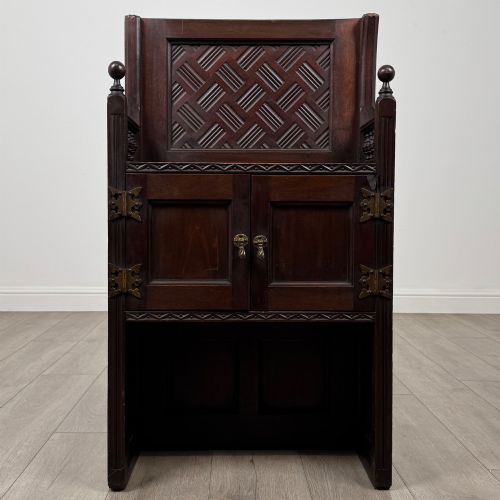
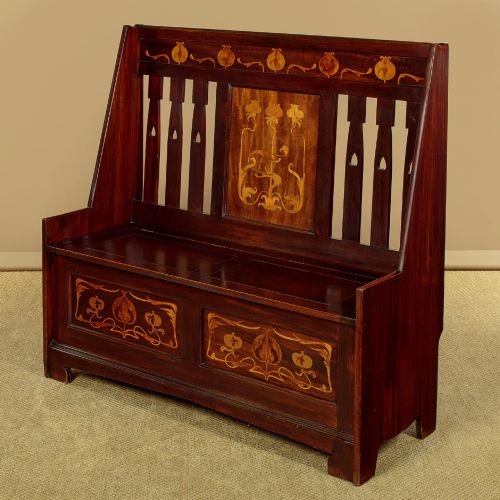
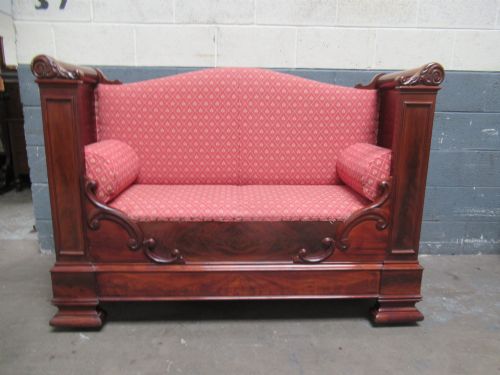
When you search for a mahogany hall settle, you are looking at substantial seating pieces designed primarily for entrance halls, corridors, and large landings. These items range from high-backed box settles with integrated storage to open bench seats and ladderback settees.
The pieces you are most likely to meet on this page hail predominantly from the nineteenth and early twentieth centuries, spanning Victorian, Edwardian, and Arts and Crafts aesthetics. Examples include carved Brazilian mahogany panelled box settles, Regency revival benches, and simpler nineteenth-century bench seats.
Origins and materials vary across the selection, featuring solid timbers alongside flame mahogany veneer and occasional boxwood inlay. Whether you need a narrow window seat or a deep-seated box settle with hinged storage, these items serve both a decorative and a practical function in a traditional interior.
How they were made
Makers constructed these settles using solid timber framing, frequently employing panels and high backs to block cold draughts in large hallways. Cabinetmakers worked mahogany alongside oak, applying flame mahogany veneer to prominent surfaces for a striking grain pattern.
Decoration relied on structural carpentry and subtle embellishments rather than excessive ornamentation, though some pieces feature detailed boxwood inlay or carved panels. Upholstery fabric, brass fittings, and sturdy joinery completed pieces designed to withstand heavy daily use in busy entranceways.
Some box settles spent generations guarding hallway corners, quietly swallowing muddy boots and lost gloves beneath their hinged seats.
What varies in quality
The distinction between standard utility seating and finer examples rests in the selection of timber and the ambition of the joinery. Superior pieces utilise finely figured Brazilian mahogany or rich flame veneers, matched with crisp carving and robust internal framing for box compartments.
Proportion and execution define the hierarchy of these items, from plain nineteenth-century benches to elaborate Arts and Crafts designs bearing maker attribution. The integrity of the original panels, the tightness of the joints, and the crispness of any inlaid boxwood separate ordinary workshop output from exceptional furniture.
James Shoolbred and Co.
The Mahogany Hall Settle Glossary
- Settle
- A wooden bench with a high back, solid arms, and often a hinged seat concealing a box for storage. It was designed to keep out draughts in domestic hallways and living spaces.
- Flame mahogany veneer
- A thin slice of mahogany cut from the fork of the tree where branches meet the trunk, displaying a distinctive flickering flame pattern. Cabinetmakers applied this to prominent panels for visual impact.
- Boxwood inlay
- Small pieces of pale boxwood inserted into recesses cut into the darker mahogany surface to create contrasting geometric or floral patterns. This decorative technique demands precise carpentry.
- Arts and Crafts
- A design movement favouring traditional craftsmanship, simple forms, and honest construction over mass-produced ornamentation. Pieces from this era often highlight the natural grain of the wood.
Mahogany Hall Settle: Frequently Asked Questions
What is a mahogany hall settle used for?
These pieces served as practical seating in entrance halls and corridors, offering a sturdy place to sit while putting on or removing outdoor footwear.
Many examples include an integrated box compartment beneath the hinged seat, providing hidden storage for boots, umbrellas, and household textiles.
Where should I place a hall settle?
A hall settle suits wide entrance halls, large landings, and boot rooms where its high back can protect against draughts from exterior doors.
Shorter bench seats and window seat variations also work well in garden rooms, dining spaces, or alongside long corridors.
How do I care for mahogany furniture?
Maintain the timber by dusting regularly with a soft, dry cloth and avoiding placement near direct heat sources or strong sunlight that might dry out the wood.
Apply a quality beeswax polish periodically to nourish the surface and preserve the natural sheen of the mahogany grain.
How can I date a hall settle?
Dating relies on observing construction methods, timber choices, and stylistic cues such as Regency curves, Victorian proportions, or Edwardian inlays.
Comparing the joinery style and hardware against documented pieces from the nineteenth and early twentieth centuries helps determine the approximate period of manufacture.