
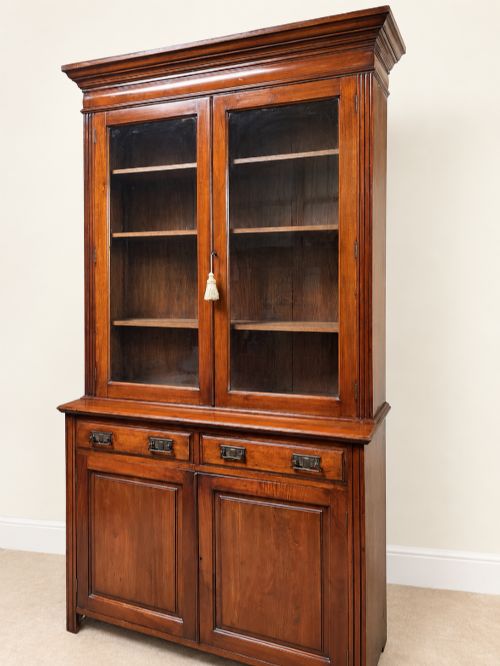
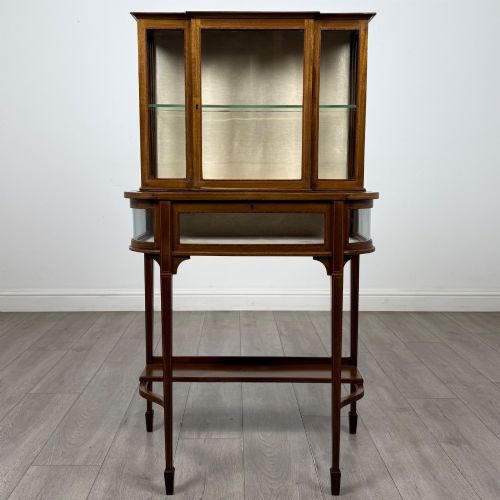
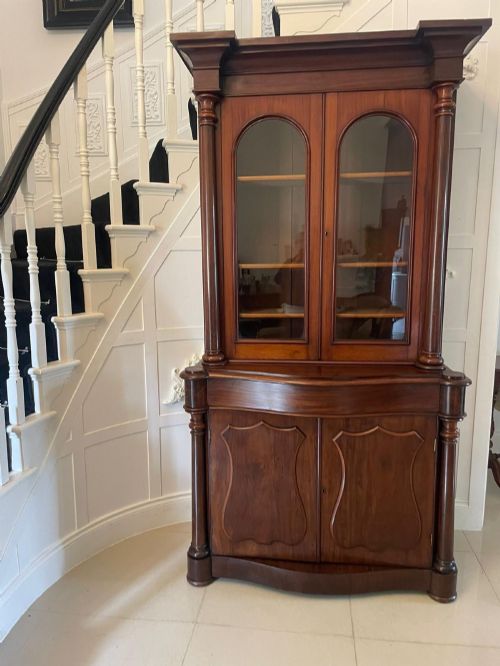
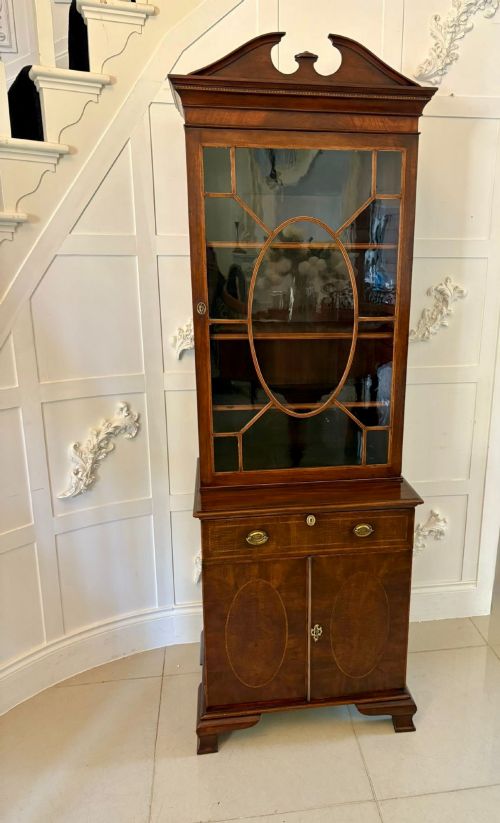

Mahogany Glass Cupboard
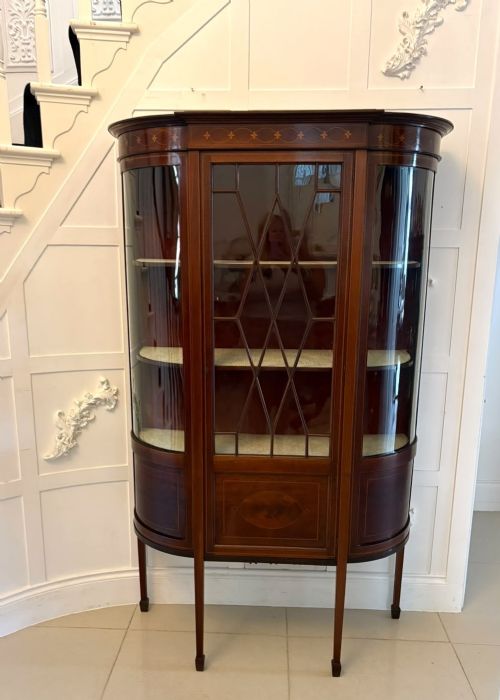
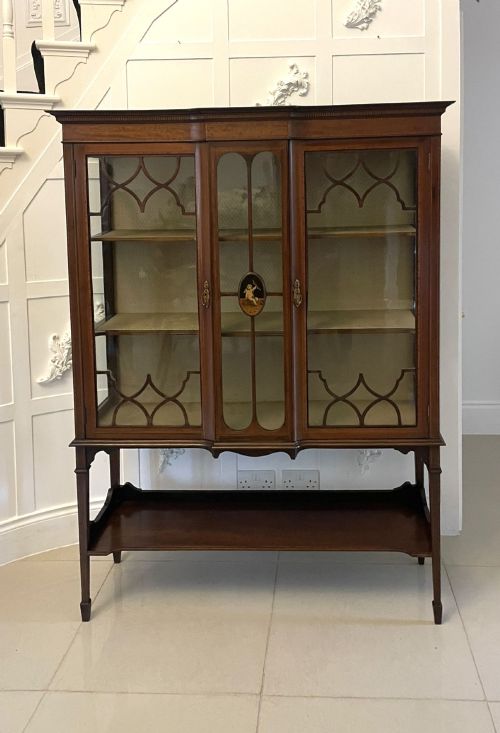
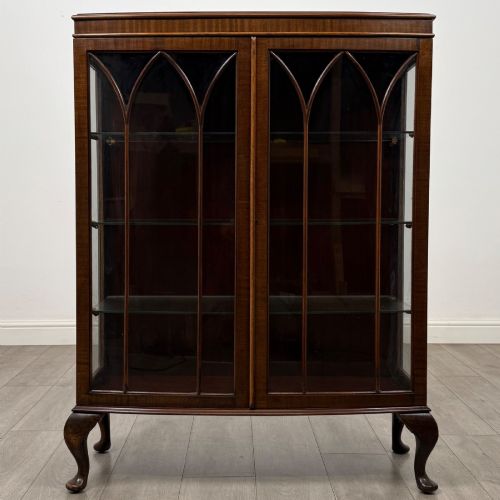
A mahogany glass cupboard is a glazed cabinet built to display books or precious objects while keeping dust away.
Mahogany Glass Cupboard
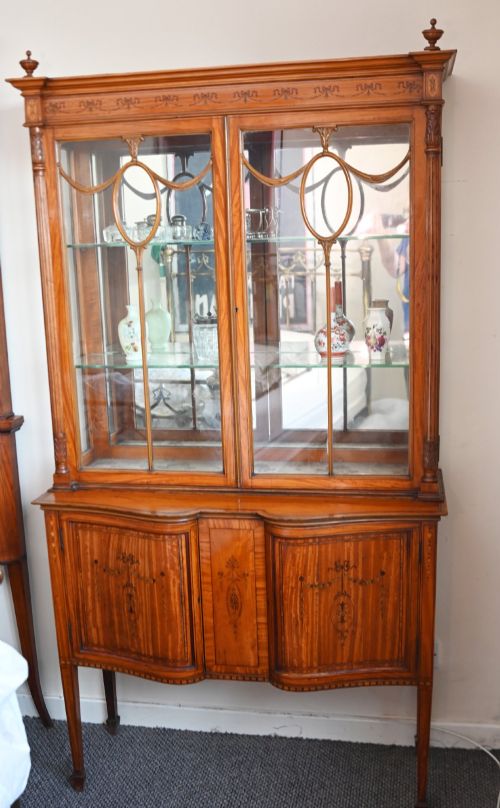
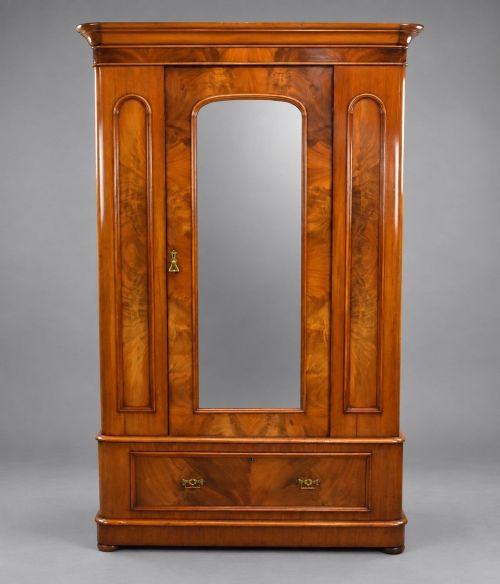
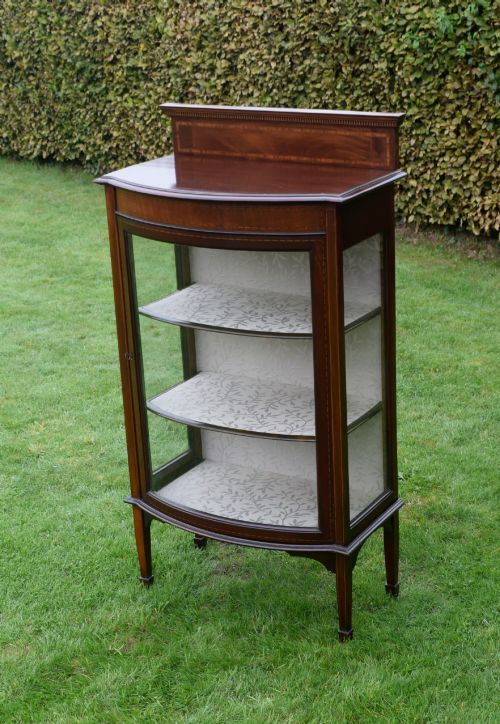
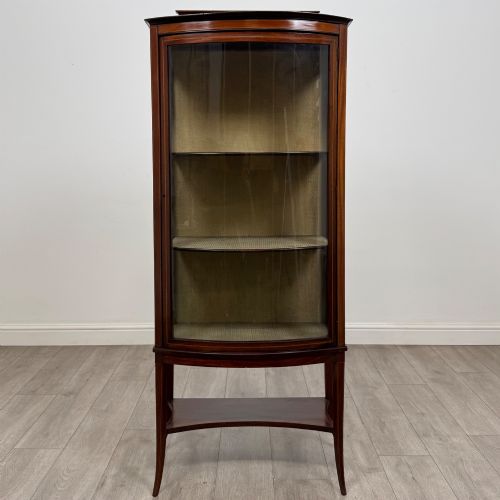
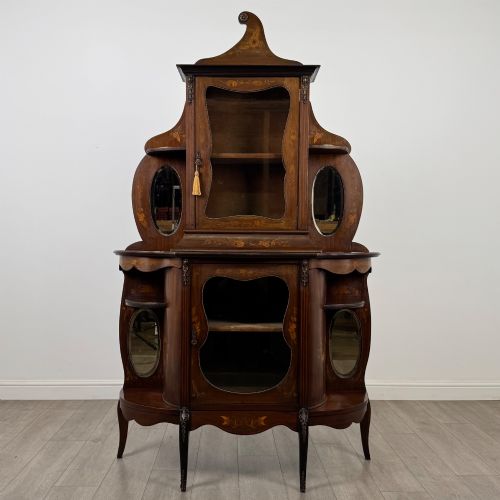
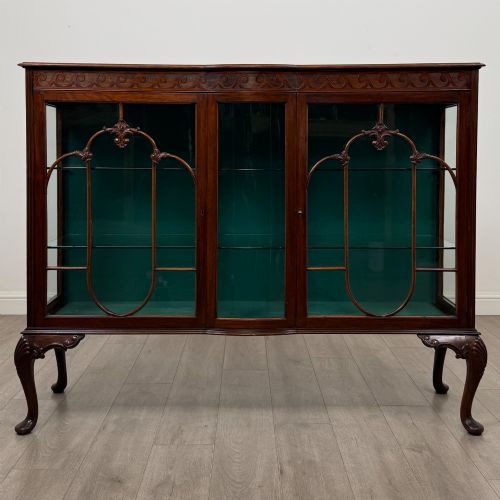
A mahogany glass cupboard brings together dark timber and transparent panels to protect contents while maintaining visibility. When buyers search for a mahogany glass cupboard, they encounter tall bookcases, corner cabinets, and low display vitrines spanning the Georgian, Victorian, and Edwardian eras.
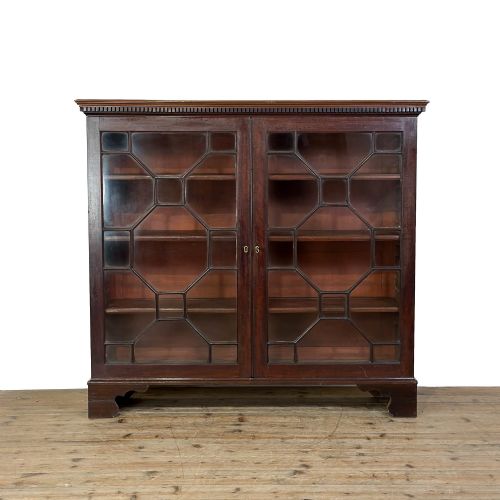
Victorian and Edwardian examples dominate the selection, often featuring glazed doors above lower wooden cupboards or drawers. Pieces from the Georgian period appear in architectural bookcase forms with astragal glazing bars dividing the glass.
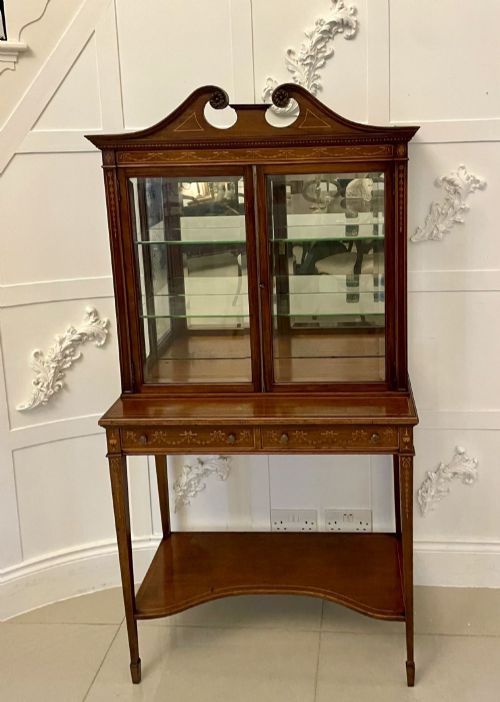
Makers and workshops of the nineteenth and twentieth centuries adapted these cupboards into revival styles, drawing on Sheraton and Chippendale motifs. Smaller variants such as tabletop miniature chests and corner cupboards also feature among the heavier library bookcases.
How they were made
Makers relied on solid mahogany and figured mahogany veneers applied to secondary woods, structuring the carcase to support heavy glass doors. Brass hardware secures the doors and internal shelving, while oak occasionally forms internal framing or drawer linings.
Satinwood inlay and marquetry embellish many Edwardian and late Victorian specimens, adding contrasting pale banding or floral motifs to the dark timber ground. Mirror glass panels occasionally back the interior display space to reflect light through the glazed upper sections.
Miniature apprentice chests appear alongside full-sized breakfront libraries, proving good things come in small scales.
What varies in quality
The sophistication of the timber grain and the precision of the inlay set finer cabinets apart from utilitarian storage. Figured mahogany displays rich, undulating patterns in the polished surface, whereas plain stock presents a uniform dark plane.
Joinery detail distinguishes the work, seen in delicate astragal glazing bars on eighteenth and nineteenth-century bookcases compared to heavier framing. Original decorative elements, such as painted panels or intact brass fittings, elevate a piece above later replacements.
Jas Shoolbred·Wylie and Lochhead
The Mahogany Glass Cupboard Glossary
- Astragal glazing
- Wooden bars dividing a glass door into smaller panes. These delicate mouldings define refined Georgian and revival bookcases.
- Marquetry
- Fitted pieces of coloured wood veneer assembled to create pictorial patterns. This technique decorates the surfaces of Edwardian display cabinets.
- Breakfront
- A piece of furniture whose central section projects forward from the flanking sides. This architectural arrangement structures larger Victorian libraries.
- Vitrine
- A glass-fronted display cabinet intended for porcelain and ornaments. French examples often incorporate curved glass and painted panels.
- Satinwood inlay
- Contrasting pale yellow timber inserted into recessed channels in the mahogany. It provides geometric border lines on Edwardian furniture.
Mahogany Glass Cupboard: Frequently Asked Questions
How do I clean the glass?
Use a soft cloth with mild glass cleaner applied to the cloth rather than sprayed directly onto the wood. Moisture can damage polished mahogany.
Keep liquids away from antique brass fittings and delicate satinwood inlay work to preserve the surrounding finish.
Can shelves be adjusted?
Many Victorian and Edwardian bookcases feature fixed wooden shelving systems built into the original carcase. Alterations risk compromising the internal structure.
Georgian bookcases typically rely on traditional fixed ledges rather than modern metal peg supports.
How do I identify a Georgian piece?
Georgian cupboards display hand-cut dovetails, heavy timber scantlings, and often individual crown glass panes within astragal frames. Proportions follow strict classical architectural rules.
Later Victorian revivals frequently incorporate machine-sawn elements and standardised hardware alongside older stylistic details.
Are keys usually included?
Original brass or steel locks remain common, but matching working keys are less frequent on nineteenth-century cupboards. Many locks were replaced or modified over decades of domestic use.
Specialist suppliers can often provide period-appropriate keys if required for the functional operation of the doors.