

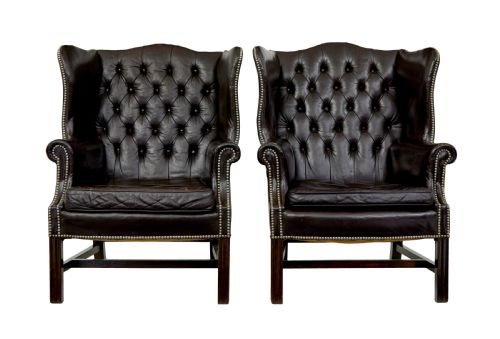
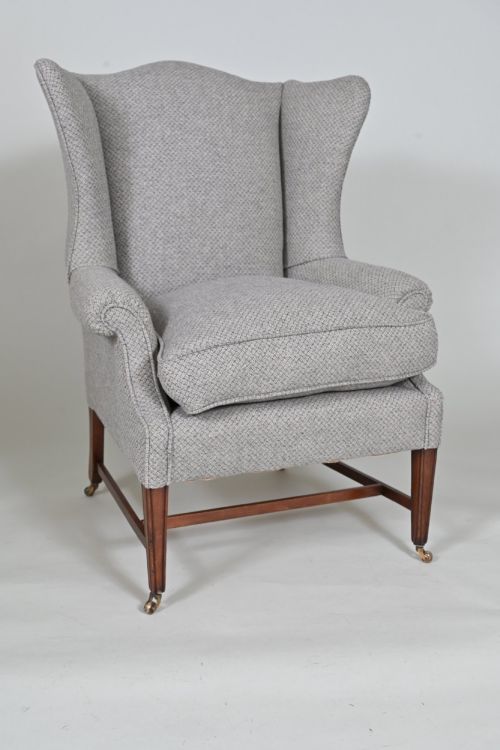
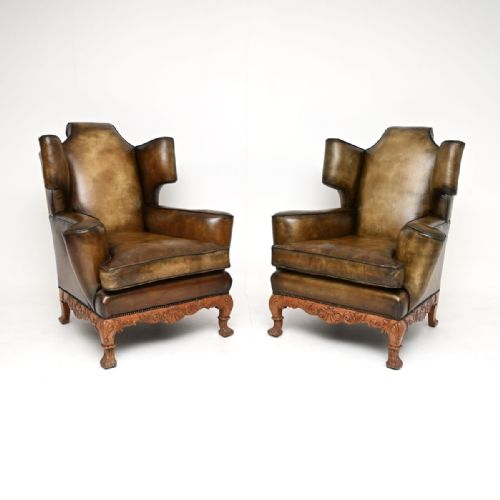


Mahogany Frame Wing Chair
A mahogany frame wing chair brings deep comfort and classic English style to any room.
Mahogany Frame Wing Chair
A mahogany frame wing chair combines a sturdy hardwood timber structure with high side panels designed to trap heat and block draughts. These armchairs appear in Victorian, Edwardian, and Georgian revival styles across the inventory.
Most examples found on this page date from the nineteenth century or the early twentieth century, reflecting classic British seating design. The exposed timber frame often shows rich grain and polished surfaces supporting upholstered bodies.
Buyers frequently encounter variants upholstered in leather, hessian, calico, or decorative fabric, sometimes paired with brass castors. Pairs and single armchairs both feature prominently among the available inventory.
How they were made
Craftsmen shaped solid mahogany and hardwood to build the structural frame, ensuring lasting strength for the sweeping wings and scrolled arms. Timber components received hand-polished finishes to highlight the natural grain.
Traditional upholstery techniques involved stuffing internal layers with horsehair or wool, secured beneath hessian and calico before applying the final leather or fabric cover. Brass tacks and fitted brass hardware frequently secure the edges and provide movement.
Mahogany Frame Wing Chair Retail Price Guide 2026
Typical asking prices for mahogany frame wing chair among the pieces listed under this phrase on Sellingantiques today, from the lower quarter to the upper quarter. They describe what is for sale here now, not the wider market.
Listings feature mahogany, hardwood, and brass elements across nineteenth and early twentieth century periods.
What varies in quality
The refinement of the timber carving and the integrity of the underlying hardwood frame define the upper tier of these armchairs. Subtly shaped cabriole legs and substantial proportions distinguish finer examples from simpler workshop productions.
The choice of covering material and the precision of the upholstery work shift the character and presence of each piece. Original leather patination or carefully executed traditional restoration preserves the historical integrity desired by collectors.
The Mahogany Frame Wing Chair Glossary
- Mahogany
- A dense tropical hardwood prized for its deep reddish-brown colour and durability in fine furniture frames.
- Wingback
- An armchair style featuring protective side panels attached to the armrests, originally designed to shield the sitter from hearth drafts.
- Calico
- A plain-woven cotton fabric traditionally used as an inner lining layer beneath the decorative outer upholstery.
- Hessian
- A coarse woven fabric made from jute fibres, utilised inside traditional upholstery builds to contain stuffing materials.
- Castor
- A small wheel attached to the base of furniture legs to allow easy movement across floor surfaces.
Mahogany Frame Wing Chair: Frequently Asked Questions
What is a wing chair?
A wing chair is a traditional upholstered armchair with high side panels, or wings, attached to the backrest. These panels originally served to trap fireplace heat and protect the sitter from cold room drafts.
Today, these chairs function as prominent reading or fireside seats that bring historical character and structured seating comfort to traditional or contemporary rooms.
How do I date a mahogany wing chair?
Dating relies on examining the timber characteristics, the style of the legs, and the construction methods visible beneath the upholstery. Victorian and Edwardian examples often display specific revival motifs influenced by earlier Georgian designs.
Matching the wood finish, hardware such as brass castors, and internal webbing materials helps place an armchair within the nineteenth or early twentieth century.
Where should I place a wing chair?
These armchairs suit living rooms, studies, or libraries where their high backs create a distinct focal point. Placing one beside a fireplace or in a quiet reading corner highlights their traditional function.
Because the mahogany frame and wings have substantial visual weight, they work well paired with side tables or positioned slightly angled toward the centre of a room.
How do I care for leather upholstery?
Leather upholstery benefits from regular dusting with a soft, dry cloth and occasional treatment with appropriate leather conditioners to prevent drying. Keeping the material away from direct sunlight and heat sources preserves the natural finish.
Gentle maintenance protects the historical character of antique leather while ensuring the surface remains supple for daily use.