

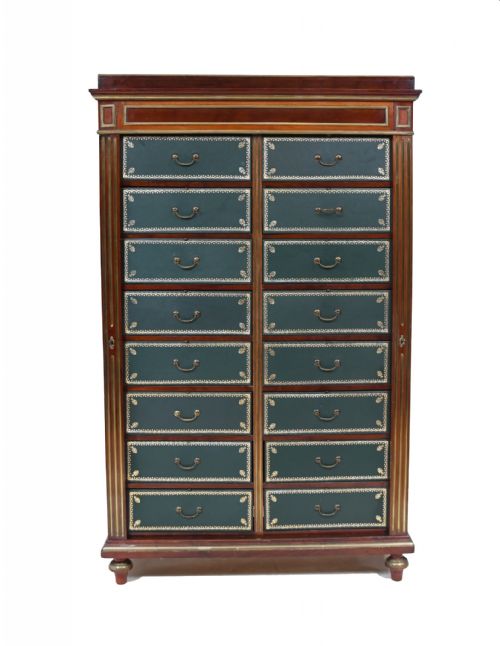


Mahogany Filing Drawers
Mahogany filing drawers organise correspondence and ledgers with deep timber character, built for busy offices and private libraries.
Mahogany Filing Drawers
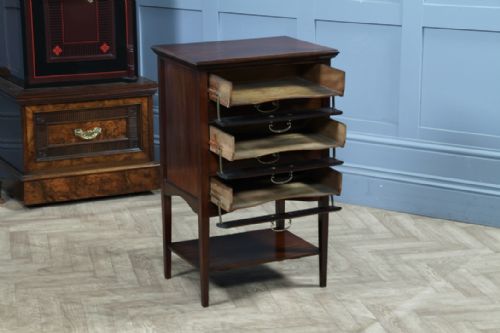
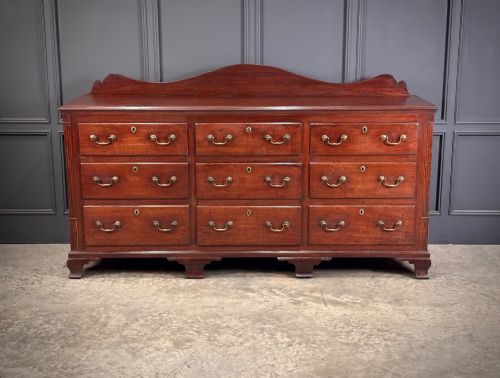
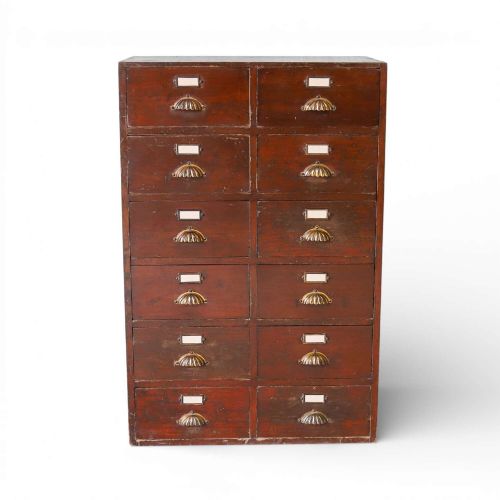
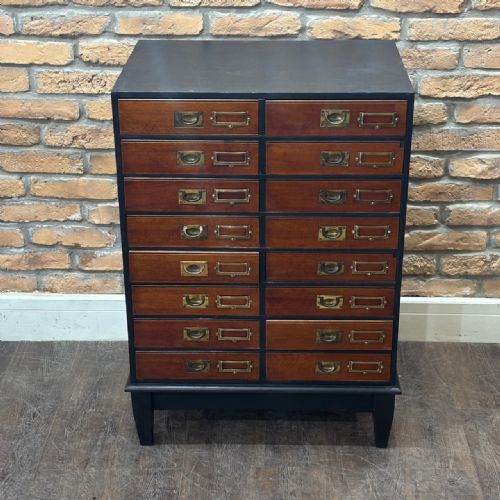
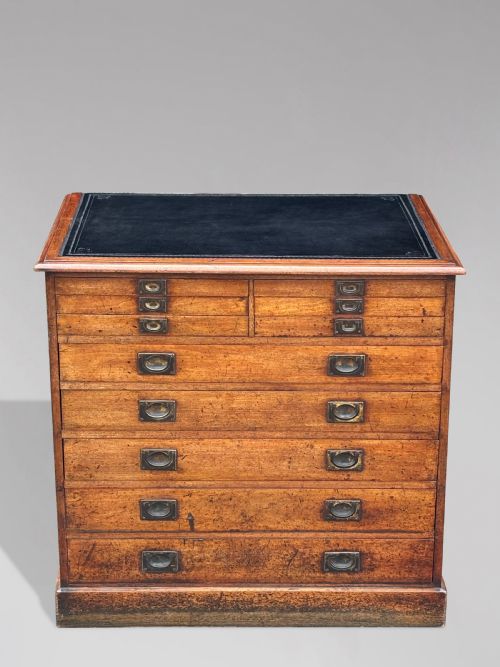
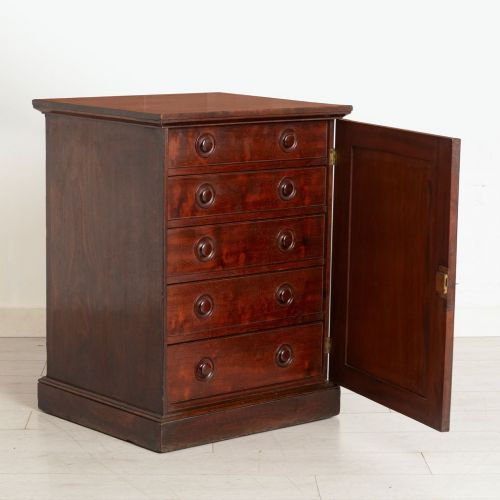
Mahogany filing drawers span sturdy 18th century plan chests, tall Edwardian music cabinets, and multi-drawer office pieces designed for paperwork. The selections on this page encompass campaign furniture, workshop banks, and French cartonnier chests intended for systematic sorting.
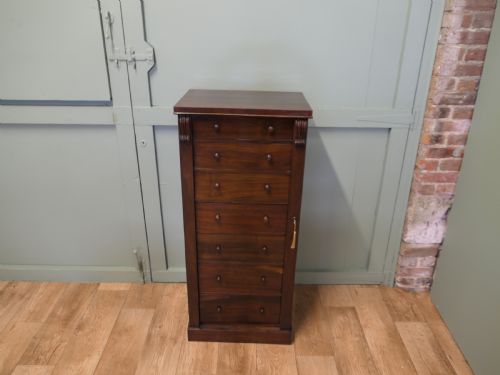
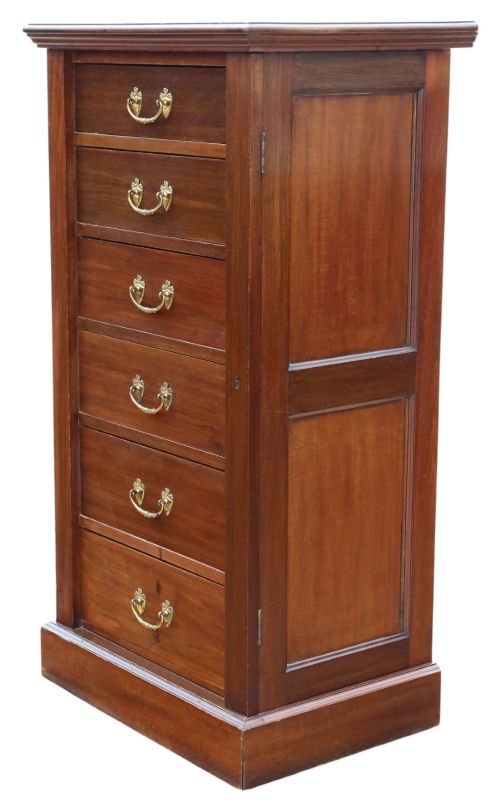
The practical forms include bankers' pedestals, Wellington chests with locking stiles, and modular filing cabinets fitted with brass label holders. These timber pieces served solicitors, musicians, and merchants before modern steel filing systems took over.
Makers adapted domestic chests of drawers into specialised storage by adding numerous shallow slots for sheet music, letters, or ledgers. Many examples retain original brass pulls and interior partitioning designed for specific filing formats.
Materials and construction methods
Cabinet makers utilised solid mahogany and flame mahogany veneers over secondary softwoods, reinforcing drawer sides with durable dovetail joints. These dense timbers provide the structural strength required to support heavy loads of paper without warping the carcase.
Functional hardware defines the category, incorporating brass campaign handles, drop-flap mechanisms, tambour fronts, and metal label holders. Secondary details often include leather writing surfaces and iron locking bars to secure confidential documents.
Mahogany Filing Drawers Retail Price Guide 2026
Typical asking prices for mahogany filing drawers among the pieces listed under this phrase on Sellingantiques today, from the lower quarter to the upper quarter. They describe what is for sale here now, not the wider market.
Some music cabinets still retain decades-old manuscript fragments tucked behind the drawer dividers by former pianists.
Assessing cabinet quality
Grading depends upon the integrity of the timber selection, particularly the figure of the mahogany and the crispness of the drawer dovetailing. Pieces retaining original brasses, functioning locks, and intact paper labels command higher regard among collectors.
Proportion and utility separate standard domestic chests from purpose-built filing furniture. Superior examples maintain smooth drawer operation across large banks of numerous compartments despite decades of heavy archival use.
The Mahogany Filing Drawers Glossary
- Cartonnier
- A piece of furniture fitted with multiple pigeonholes or shallow drawers specifically designed for storing papers, ledgers, and documents. These French storage cabinets frequently incorporate leather-bound drawer fronts.
- Wellington chest
- A tall, narrow chest of drawers secured by a hinged locking stile that fastens over the drawer edges with a padlock. This design originated in the 19th century for private office security.
- Tambour front
- A flexible sliding shutter formed of narrow vertical strips of wood glued to canvas, allowing access to internal filing compartments within a curved cabinet profile.
- Bank of drawers
- A large multi-drawer cabinet constructed for commercial, workshop, or estate archival storage. These heavy units provide extensive compartmentalisation for paperwork and office supplies.
- Campaign furniture
- Portable pieces built in sections with recessed brass fittings and carrying handles for easy transport during military or administrative travel.
Mahogany Filing Drawers: Frequently Asked Questions
How do I date a filing cabinet?
Dating relies upon construction methods, timber choice, and hardware styles such as brass label holders and drawer pulls. Early examples show hand-cut dovetails and solid timber carcases, while later pieces adopt patent mechanisms.
Stamped maker marks, patent plates, and regional cabinet-making traits help narrow the production decade between the 18th and early 20th centuries.
Were these used in homes or offices?
These pieces served diverse environments ranging from solicitors' chambers and merchant offices to private music rooms and estate studies. Tall music cabinets and sheet chests catered to domestic hobbies.
Larger multi-drawer banks and campaign units fulfilled demanding administrative roles in commercial and institutional settings before standard office furniture emerged.
How do I care for antique mahogany?
Maintain a stable indoor environment away from direct heat sources and strong sunlight to prevent the timber and veneer from drying out. Dust regularly with a dry cloth and apply occasional beeswax.
Avoid silicone polishes, which penetrate the grain and damage traditional shellac finishes over time.
What is the difference between a chest and a bank of drawers?
A standard chest of drawers typically provides three to five deep drawers intended for garments or domestic storage in a bedroom setting. A bank of drawers offers numerous shallow compartments.
Banks of drawers were built for commercial paperwork, music manuscripts, and office filing, featuring specific widths designed for ledgers and letters.