




Mahogany Fainting Chair
A mahogany fainting chair is a long upholstered seat designed for reclining in comfort, bringing elegance and nineteenth-century charm to any room.
Mahogany Fainting Chair
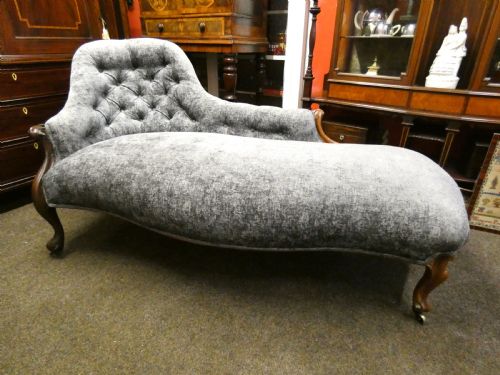
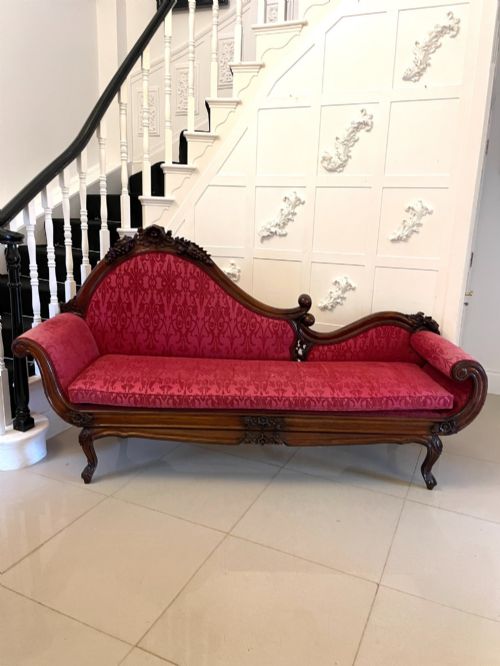
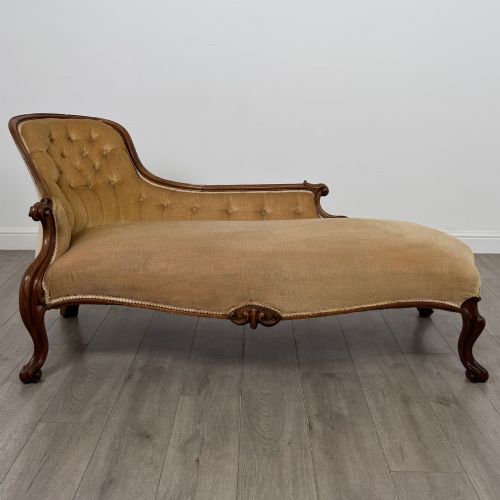
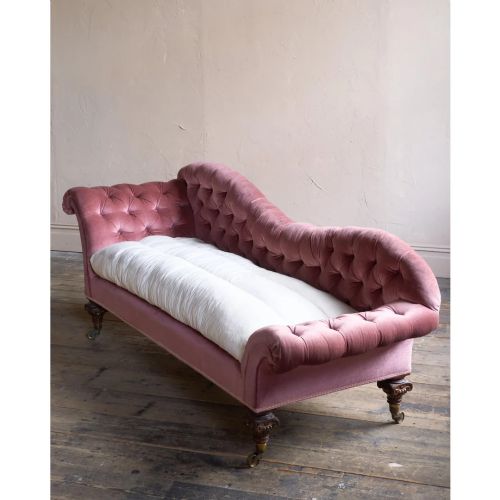
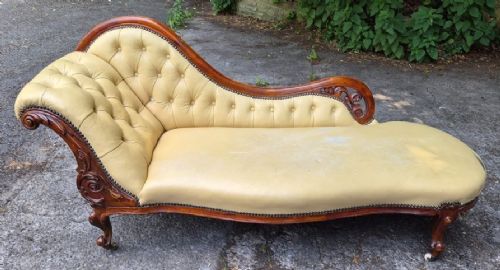
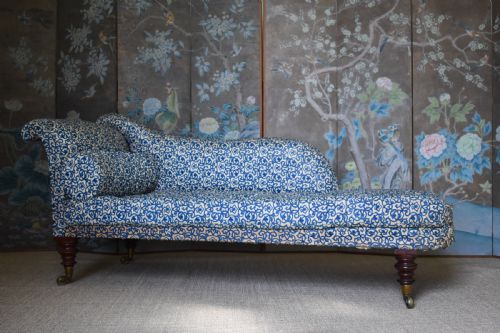
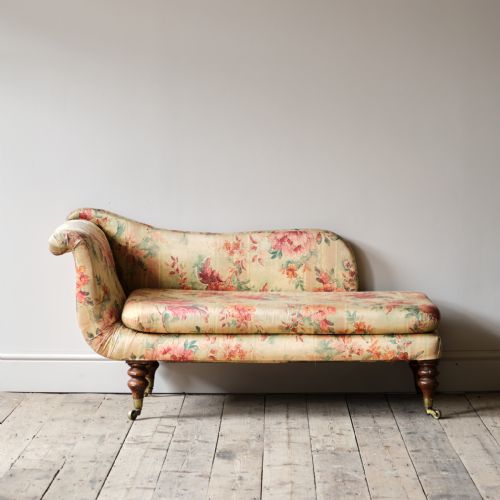
When you search for a mahogany fainting chair, you are looking at nineteenth-century chaise longues, day beds, and sofa couches shaped from rich timber. The pieces on this page span the Regency, William IV, and Victorian periods, often taking the form of a long seat with an elevated end for reclining.
These items served as day beds for resting in private quarters or parlours, combining structural timber with soft covers. They remain practical items for modern interiors, offering a comfortable place to stretch out while retaining traditional nineteenth-century character.
How they were made
The frames rely entirely on solid mahogany, chosen for its strength, rich grain, and suitability for carving intricate scrolls and structural supports. Cabinet makers shaped the timber into curved backs, low rails, and distinctive legs.
Upholstery forms the other half of the construction, utilising materials like velvet, damask, leather, and traditional fabric over sprung or stuffed bases. Brass fittings and castors often appear on the feet to allow movement across carpets and floorboards.
Several pieces feature ionic columns, letting you rest in the style of an ancient temple while recovering from a tight corset.
What varies in quality
The distinction between standard examples and the finest pieces lies in the crispness of the mahogany carving and the ambition of the frame design. Better items feature sculptural woodwork, such as detailed ionic columns or deeply moulded scrolls, rather than plain timber rails.
Another factor is the attribution to notable makers or workshops, which elevates the standing of a piece through documented craftsmanship and superior joinery. The choice and execution of the original upholstery materials, from heavy damask to supple leather, also reflect the original investment in the furniture.
Howard & Sons·Holland & Sons·Jas Shoolbred·Miles & Edwards·Gillows
The Mahogany Fainting Chair Glossary
- Chaise longue
- A long seated piece of furniture for reclining, literally translating from French as long chair. These items combine the functions of a chair and a sofa.
- Mahogany
- A durable tropical hardwood with a deep reddish-brown colour that darkens with age. It is the defining timber for the frames found in this category.
- Ionic column
- A classical architectural feature with scrolled capitals, occasionally used to support the wooden structure of early nineteenth-century day beds.
- Damask
- A reversible figured fabric traditionally woven with patterns of flowers or fruit. It frequently appears as the decorative upholstery on Victorian lounging furniture.
Mahogany Fainting Chair: Frequently Asked Questions
Where should I place a fainting chair?
These long seats sit well in large bedrooms, dressing rooms, or studies where there is sufficient floor space to appreciate their silhouette. Their asymmetrical design means they look best placed against a wall or angled in a spacious room.
Because of their length, they require a clear walkway around them so the timber frame and upholstery remain the focal point of the interior.
How do I date a mahogany fainting chair?
Dating relies on observing the stylistic details of the wood and the overall proportions of the frame. Regency and William IV examples tend to show classical architectural elements, whereas Victorian pieces often feature heavier scrolling and carved mahogany backs.
Maker signatures, stamps on the timber frame, or the specific type of upholstery fabric can also help narrow down the decade of production within the nineteenth century.
Are these chairs comfortable for daily use?
Most nineteenth-century day beds offer a firm, supportive lounge experience due to their traditional sprung or stuffed bases. They are well suited for reading or resting during the day.
Depending on the specific upholstery fabric or leather fitted to the piece, the seating surface can feel quite structured compared to modern cushioned sofas.