
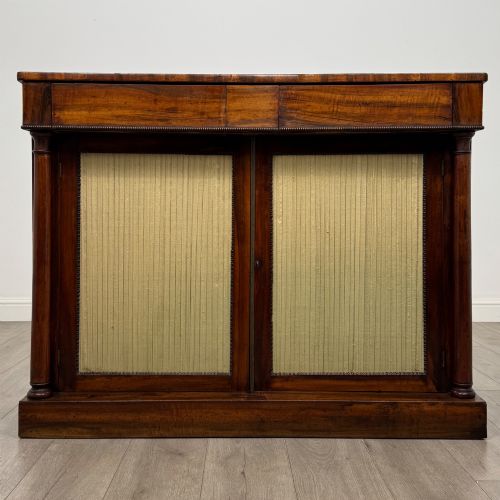
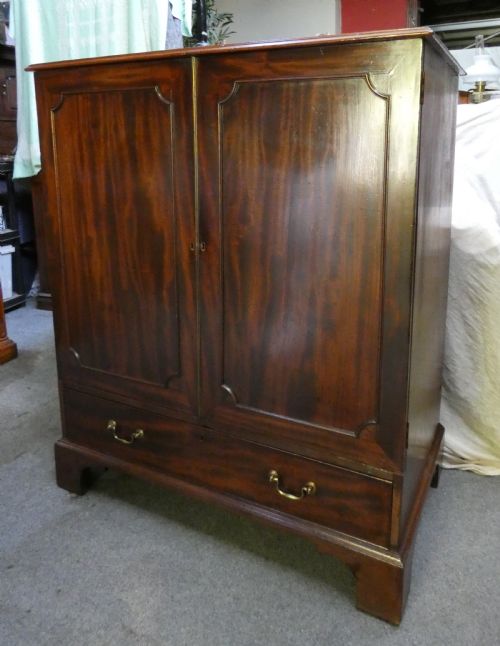
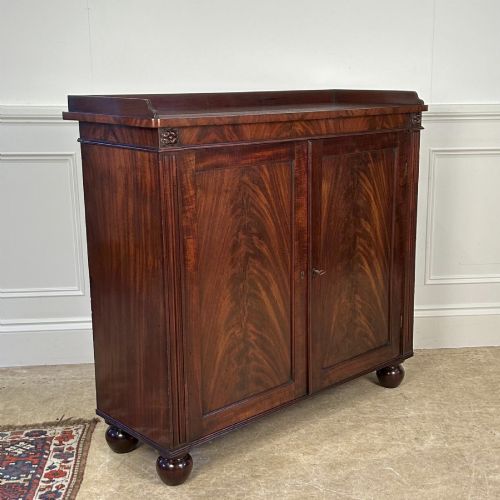
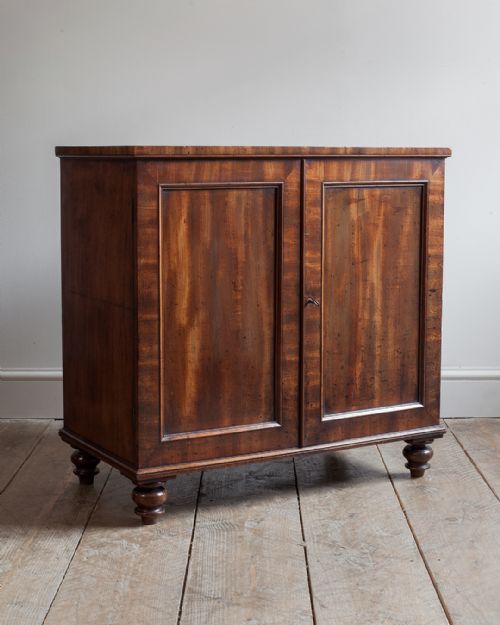


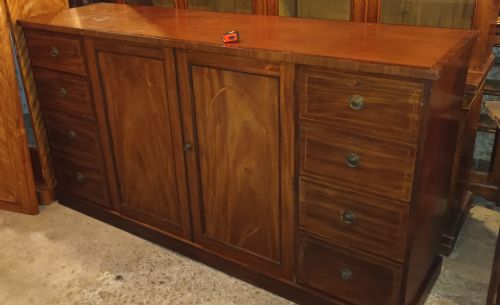


Mahogany Dwarf Cupboard
These mahogany dwarf cupboard pieces offer low-profile storage in dense timber, bringing period Georgian and Regency utility directly into modern rooms.

Mahogany Dwarf Cupboard
A mahogany dwarf cupboard provides low-slung storage through forms such as side cabinets, small presses, and glazed bookcases that sit beneath standard eye level. These pieces serve primarily to house linen, books, or household provisions while maintaining a compact footprint in domestic interiors.
The versions most commonly met across these listings span the eighteenth, nineteenth, and Victorian periods, often showing Georgian or Regency styling. Buyers encounter low two-door cupboards, dwarf linen presses, and secretaire cabinets constructed in this low proportion.
How they were made
Carpenters utilised solid mahogany and flame mahogany veneer laid over secondary timbers, often accentuating the polished surfaces with boxwood inlay and contrasting timber bands. These cabinet bodies incorporate brass hardware, such as hinges and locks, alongside glass doors or silk fabric panels where bookcases form part of the structure.
Construction methods rely on traditional joinery techniques suited to heavy hardwoods, creating stable carcases that house interior sliding trays, shelves, or drawers. Timber selection prioritises rich grain figures, particularly on the principal doors and secretaire drop-fronts.
Listings feature mahogany, boxwood inlay, and flame mahogany veneer across eighteenth, nineteenth, and Victorian periods.
What varies in quality
The calibre of a piece rests upon the selection of the timber grain, where matched flame veneer and delicate boxwood banding elevate standard utility furniture into high workshop production. Cabinetmakers who achieved harmonious proportions and precise drawer linings distinguish the finer examples from simpler provincial work.
Execution of the internal fittings, such as well-fitted linen slides or secondary drawer construction in oak, marks the difference between basic utilitarian storage and superior cabinet work. The integrity of the original brasswork and the crispness of any inlaid details further separate the tiers of craftsmanship.
Gillows
The Mahogany Dwarf Cupboard Glossary
- Dwarf cupboard
- A low-standing storage furniture piece designed with doors enclosing shelves or compartments, keeping the overall height beneath standard table or chest levels. This proportion suits placement beneath windows or within smaller rooms.
- Linen press
- A tall or dwarf cabinet featuring upper doors that open to reveal sliding shelves or trays originally intended for folded textiles and garments. Lower sections frequently incorporate wider drawers.
- Flame mahogany veneer
- A sliced sheet of timber displaying a distinctive branching flame pattern derived from specific sections of the mahogany log. Craftsmen applied this veneer to primary surfaces to create decorative visual movement.
- Boxwood inlay
- Narrow strips or geometric motifs of pale boxwood inserted into contrasting dark mahogany grounds. This technique defines borders and outlines panels on cabinet doors and drawer fronts.
- Secretaire cabinet
- A piece incorporating a pull-down or drop-front drawer that reveals a writing surface and small interior pigeonholes. It combines desk functionality with enclosed cupboard storage below.
Mahogany Dwarf Cupboard: Frequently Asked Questions
What is a dwarf cupboard used for?
These low cabinets serve to store household items, linens, or books while offering a flat top surface for display. Their reduced height allows them to fit beneath windows or in spaces where tall furniture dominates.
Historically, variations like linen presses kept textiles flat and organised on internal sliding trays, whereas standard cupboards housed general domestic goods.
How do I date a mahogany dwarf cupboard?
Dating relies on observing structural characteristics, timber choices, and stylistic details associated with periods like the Georgian, Regency, or Victorian eras. Cabinet construction methods, such as the hand-cut dovetails in drawers and the thickness of veneers, point toward specific decades.
Mouldings, leg forms, and hardware types further anchor the piece to eighteenth or nineteenth-century workshops.
Where should I place a dwarf cupboard?
Their low profile makes these cupboards versatile for hallways, dining rooms, or living spaces where they provide surface space without blocking light or views. They pair well beneath artwork or mirrors.
Placement should avoid direct sunlight and intense heat sources to protect the polished mahogany surfaces and delicate veneers from drying out.