
Mahogany Dressing Glass Mirror
A mahogany dressing glass mirror brings warmth and functional elegance to a bedroom, offering a pivoting reflection framed in rich timber.
Mahogany Dressing Glass Mirror
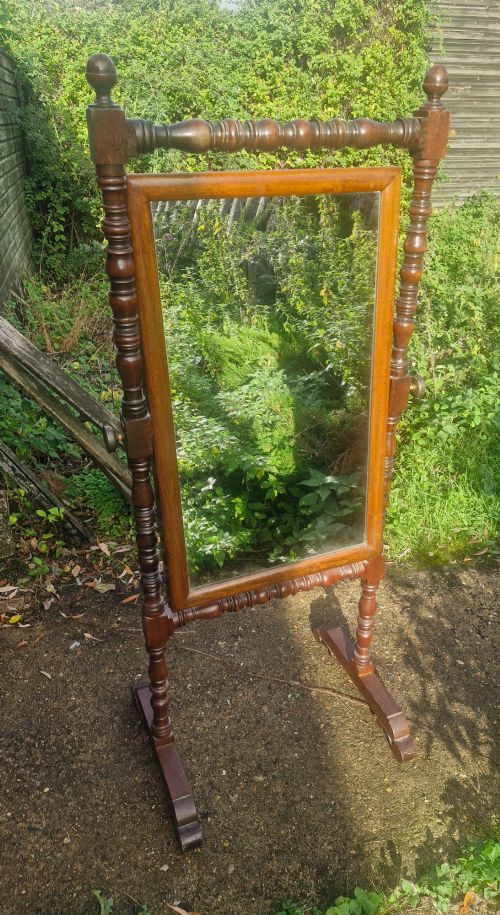
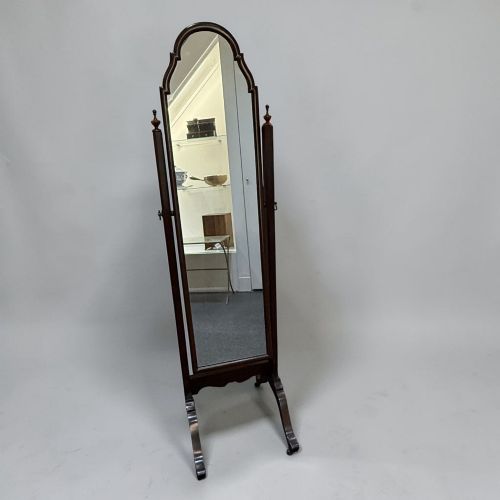
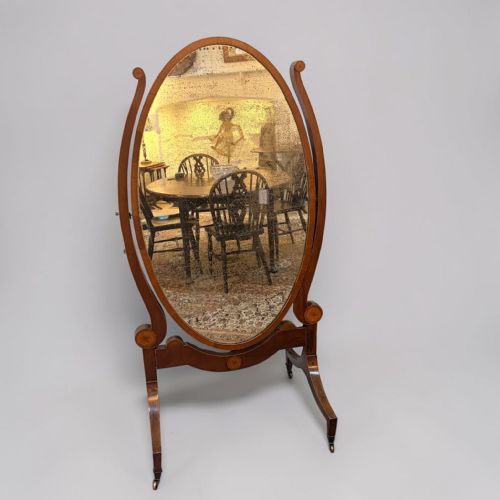
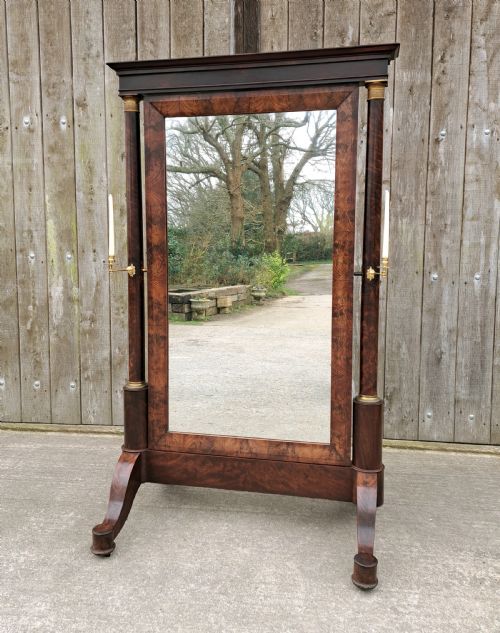
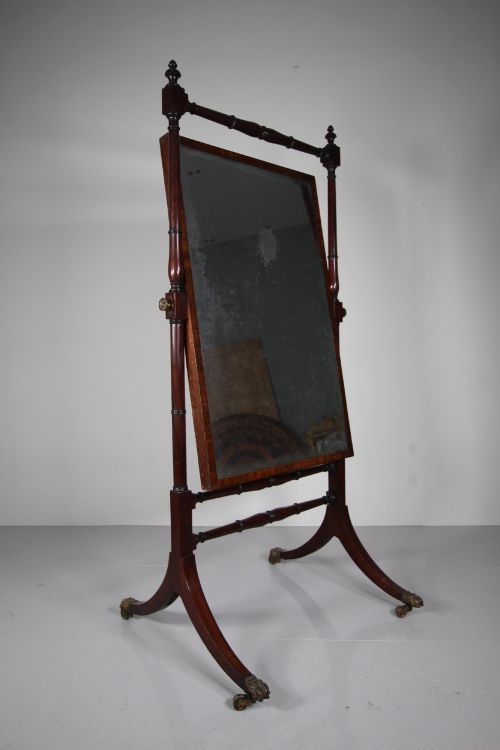
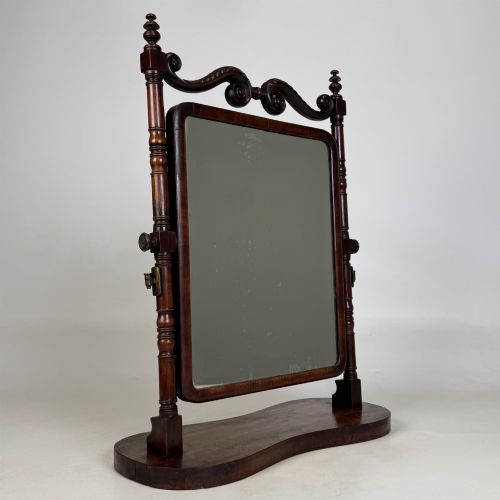
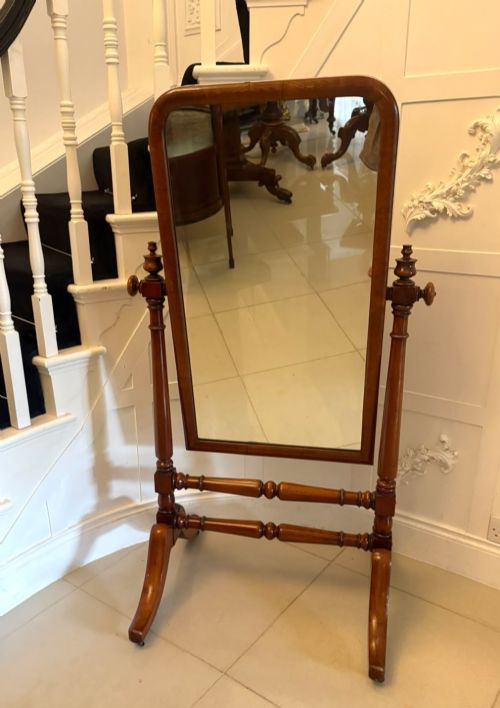
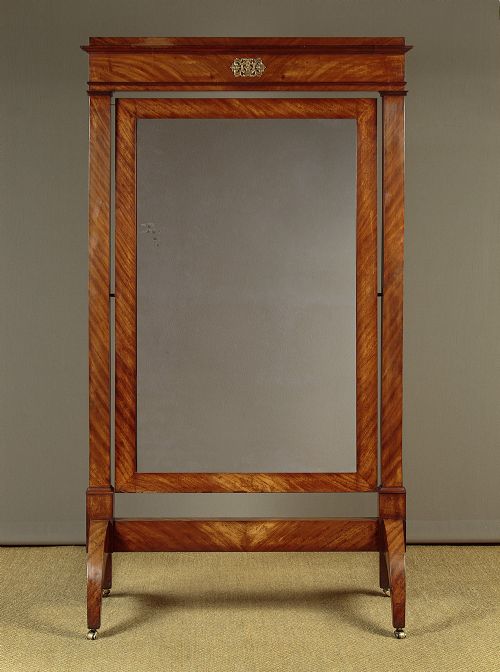
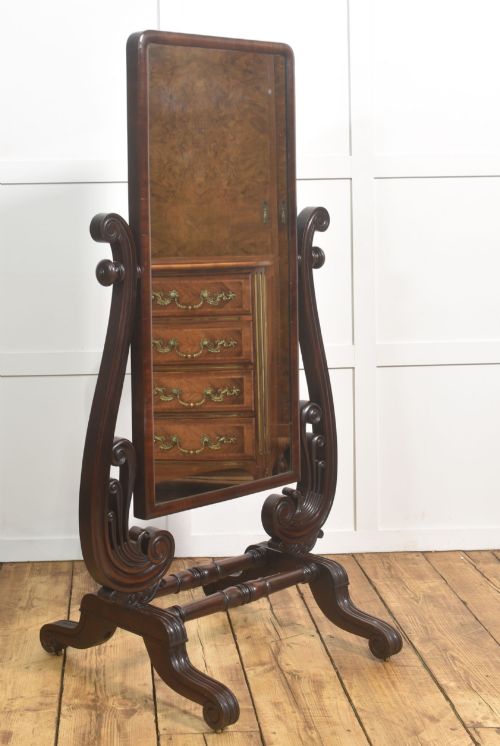
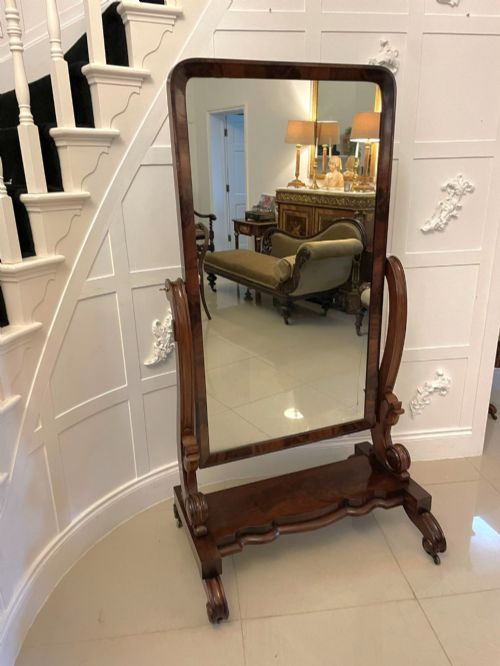
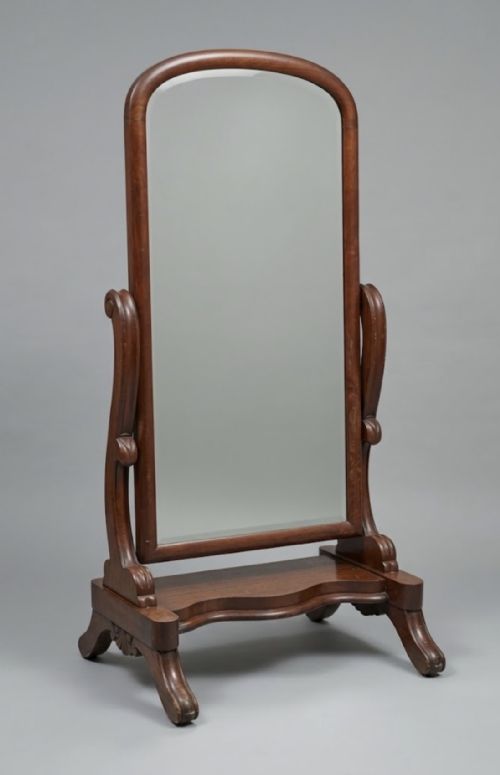
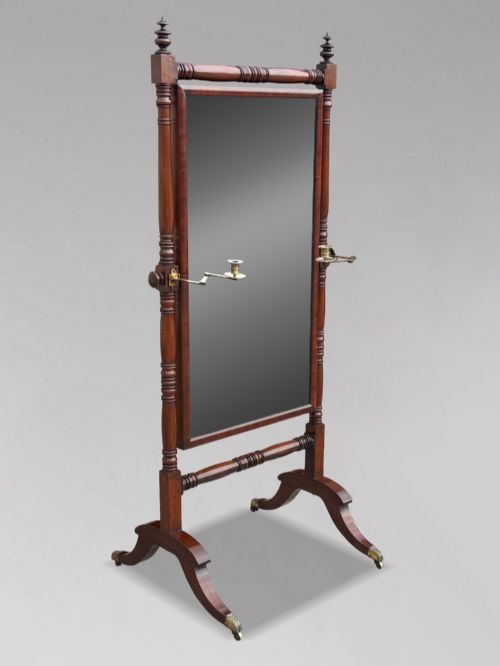
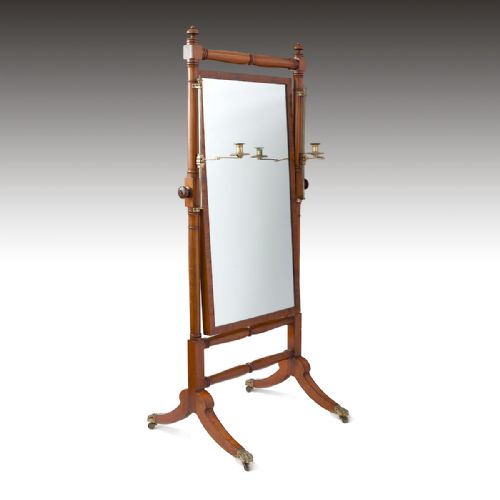
A mahogany dressing glass mirror is a pivoting glass plate set within a wooden frame, designed specifically to sit upon a table or stand independently on the floor as a cheval or full-length piece.
The pieces appearing on this page span several distinct periods including Georgian, Regency, Victorian, and Edwardian, alongside later 20th-century iterations.
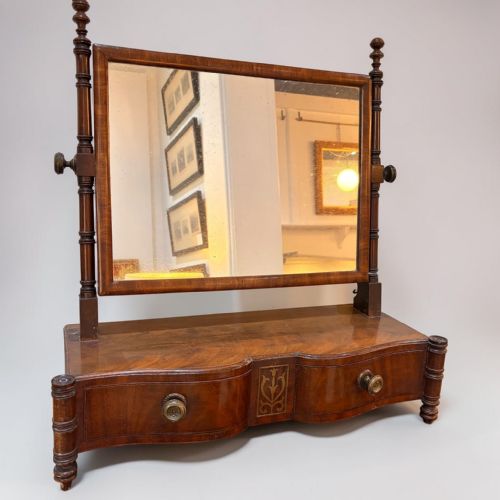
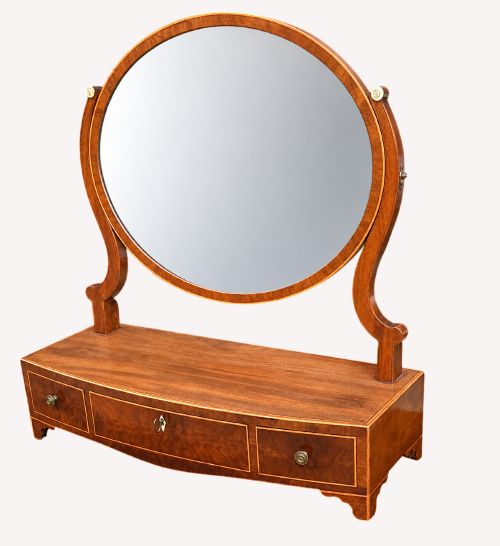
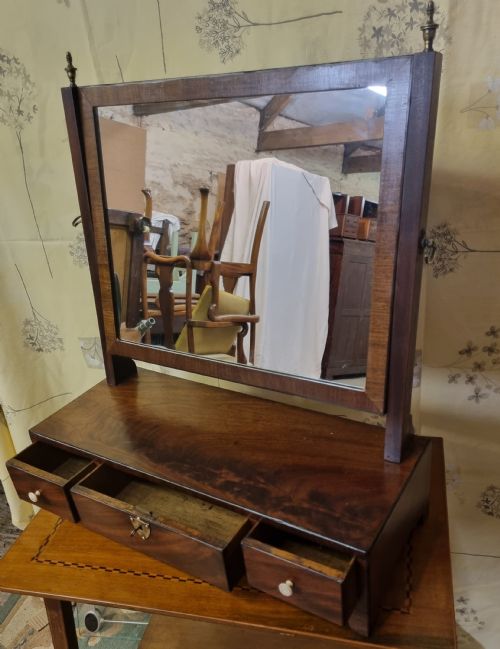
Tabletop toilet mirrors fitted with small drawers sit alongside large freestanding floor models supported by uprights and sturdy bracket feet or crossbanded bases.
Materials and construction methods
Makers utilised solid and veneered mahogany as the primary timber, frequently enhancing the surfaces with satinwood inlay, marquetry, or contrasting maple and bone details.
Mirrors incorporated adjustable swing mechanisms, sometimes supported by brass finials, swan neck handles, or barley twist uprights, allowing the glass to tilt at various angles.
Internal elements and secondary woods included bracket feet, three-drawer configurations, and jewellery compartments built directly into the base of the frame.
Some dressing mirrors doubled as secret jewellery cabinets, proving that Victorians loved hiding their trinkets inside the base of a swing glass.
Assessing quality in mahogany mirrors
Quality reveals itself in the depth of the mahogany grain and the crispness of any crossbanding, inlay, or parcel-gilt highlights applied to the frame.
The stability of the swing mechanism and the integrity of the brass hardware, such as swan neck handles and adjustable pivots, indicate superior craftsmanship.
Proportion and scale distinguish finer examples, where the balance between the upright supports, the mirror glass, and any underlying drawer base displays careful design harmony.
Heal & Sons·Gillow
The Mahogany Dressing Glass Mirror Glossary
- Cheval mirror
- A large floor-standing mirror mounted on a freestanding frame with upright pivots that allow the entire glass to swing. These tall mirrors appeared frequently in bedrooms and dressing rooms.
- Toilet mirror
- A smaller tabletop mirror designed to sit upon a dressing table or chest of drawers. They often feature a small box base equipped with small storage drawers.
- Crossbanding
- A decorative technique where a border of veneer is laid around the edge of a panel with the wood grain running perpendicular to the centre. This adds a refined framing effect to mahogany surfaces.
- Swing mirror
- Any mirror mounted on horizontal pivots between two vertical posts, allowing the user to tilt the glass angle. This mechanism is central to both tabletop and floor-standing dressing mirrors.
- Brackets feet
- Small furniture feet that curve outward and meet at a corner, commonly found supporting the base of Georgian and Victorian dressing mirrors. They provide stability to the upright frame.
Mahogany Dressing Glass Mirror: Frequently Asked Questions
What is the difference between a cheval mirror and a toilet mirror?
A cheval mirror is a tall, floor-standing piece designed to show the full length of a person. It relies on upright supports and a heavy base to remain stable.
By contrast, a toilet mirror is a smaller version built to rest on top of a dressing table or chest, frequently incorporating small drawers in its base.
How do I date a mahogany dressing mirror?
Dating depends on observing stylistic details, construction methods, and materials across the frame and hardware. Georgian and Regency examples often display lighter proportions, fine crossbanding, and brass swan neck handles.
Victorian and later pieces tend to introduce heavier turns, such as barley twist supports, or alternative secondary woods like maple and bone inlay.
Were these mirrors used only for dressing?
While primarily utilised in bedrooms and dressing rooms for personal grooming and adjusting attire, these mirrors also served to bounce natural daylight around smaller period rooms.
Tabletop variants with drawers doubled as compact storage for small valuables, cosmetics, and jewellery.
How should I care for the mahogany wood?
Keep the timber away from direct sunlight and strong heat sources to prevent the mahogany veneer and solid wood from drying out or fading. Dust the carved frame and glass regularly with a soft, dry cloth.