
Vintage Mahogany Floor Mirror
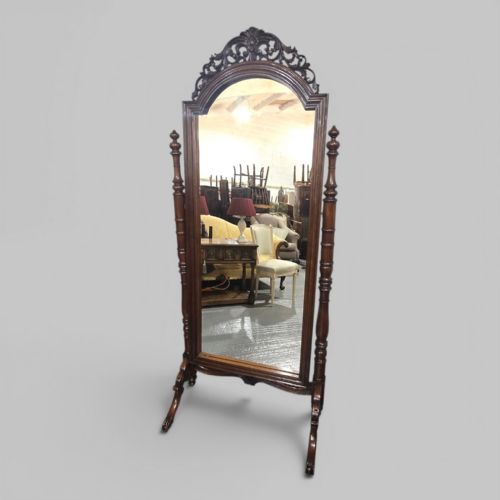
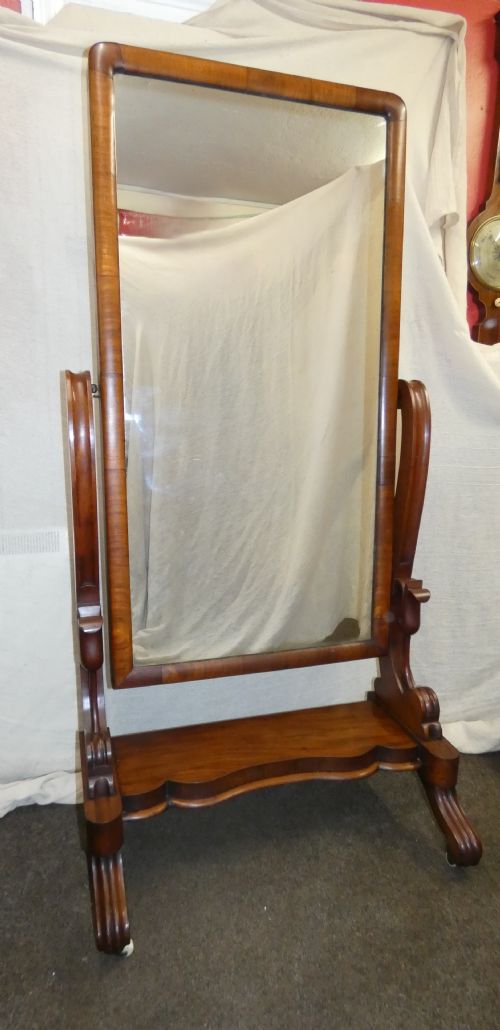
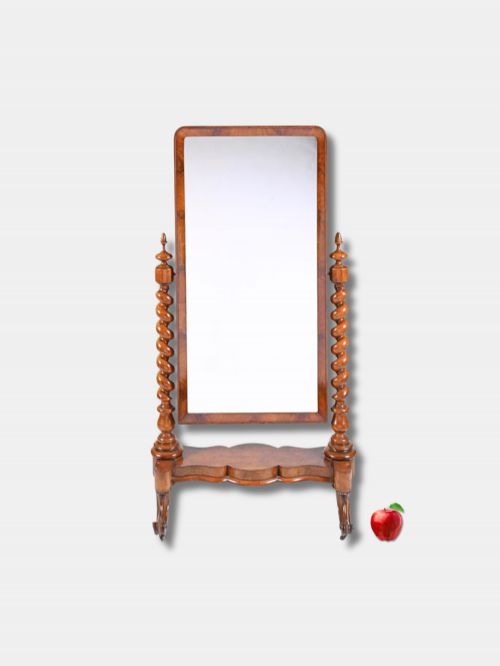
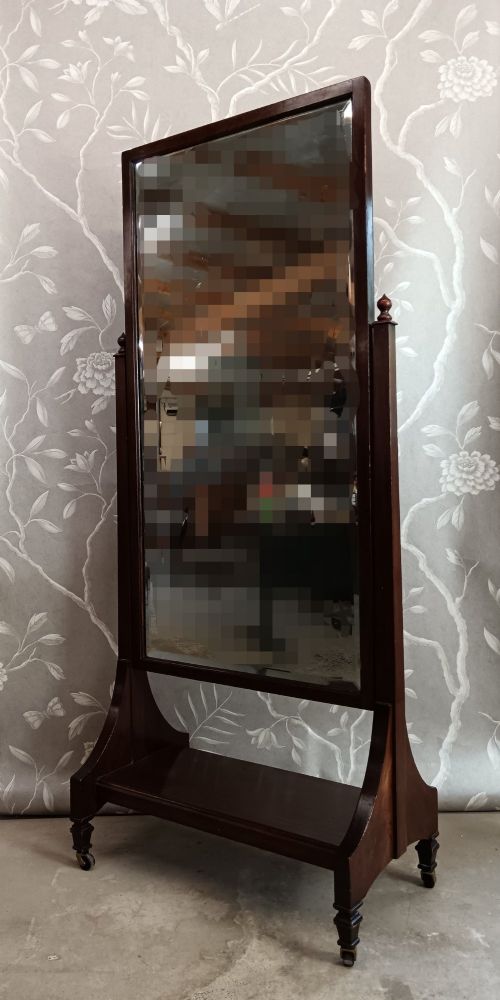
A vintage mahogany floor mirror brings scale and reflection to a room, offering the full-length view that cheval and dressing designs were built to provide.
Vintage Mahogany Floor Mirror
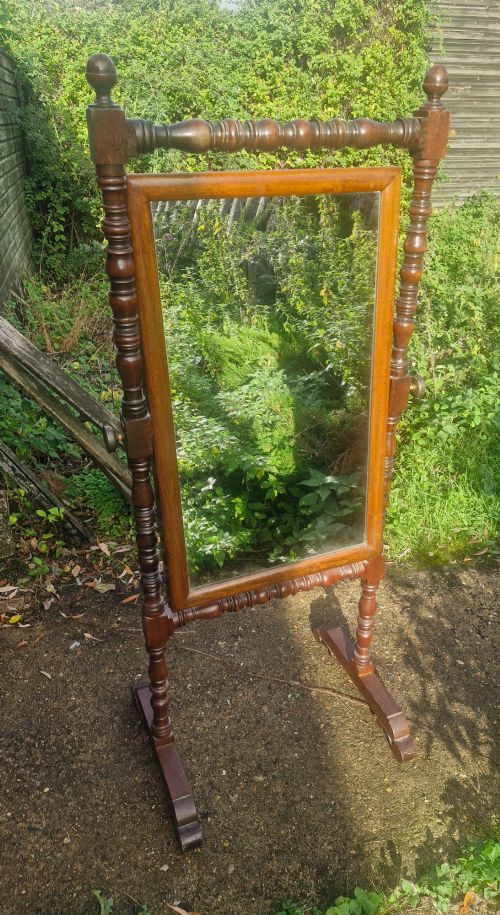
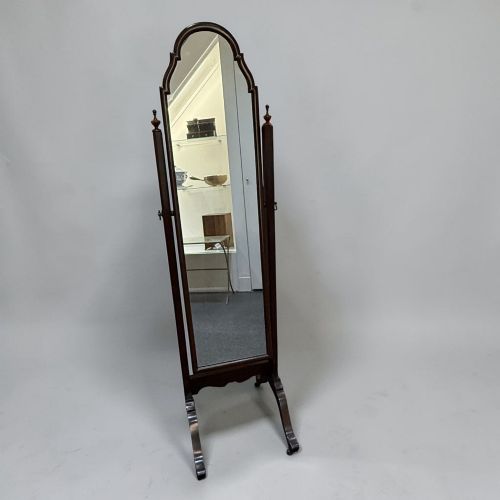
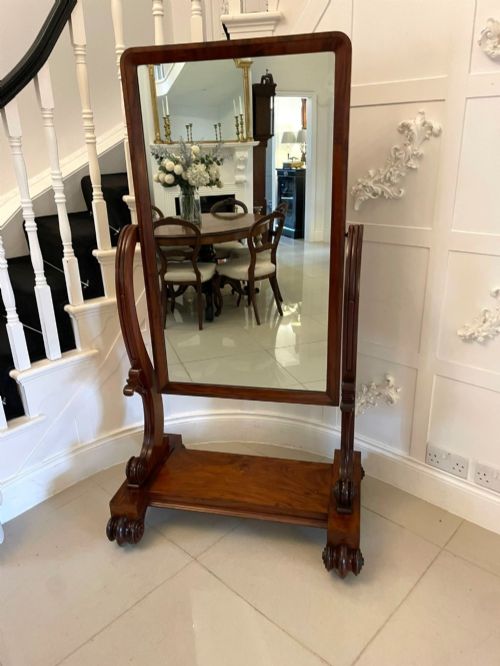
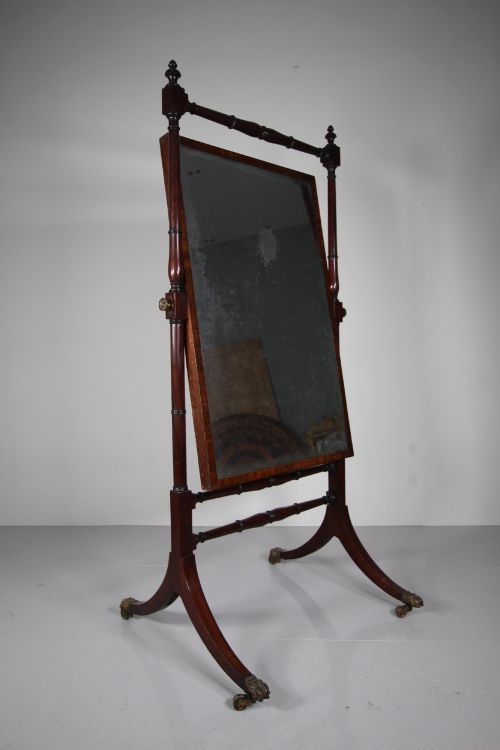
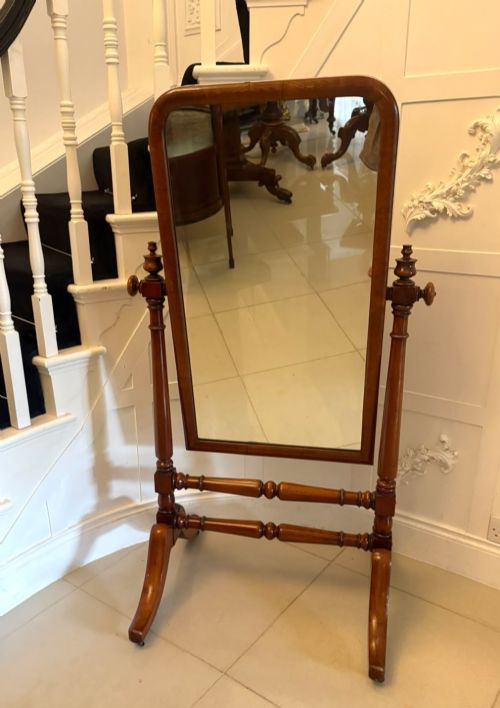
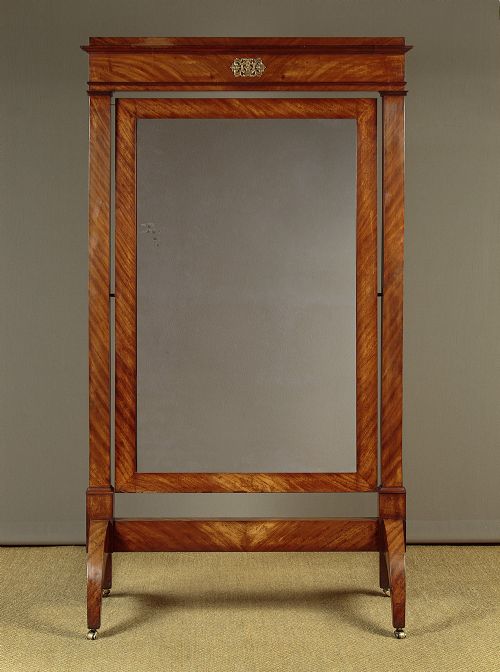
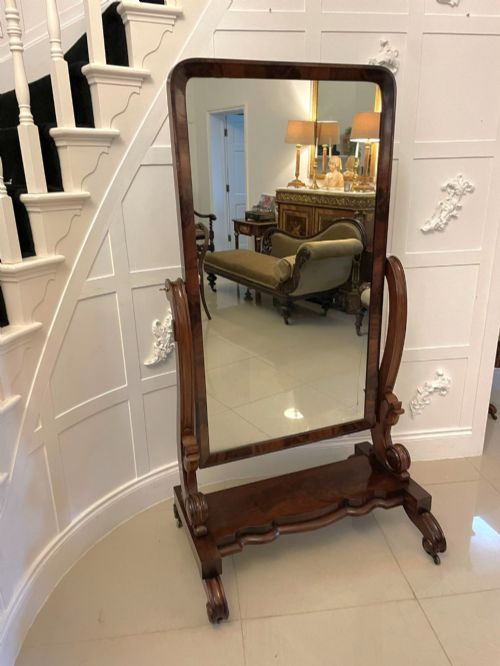
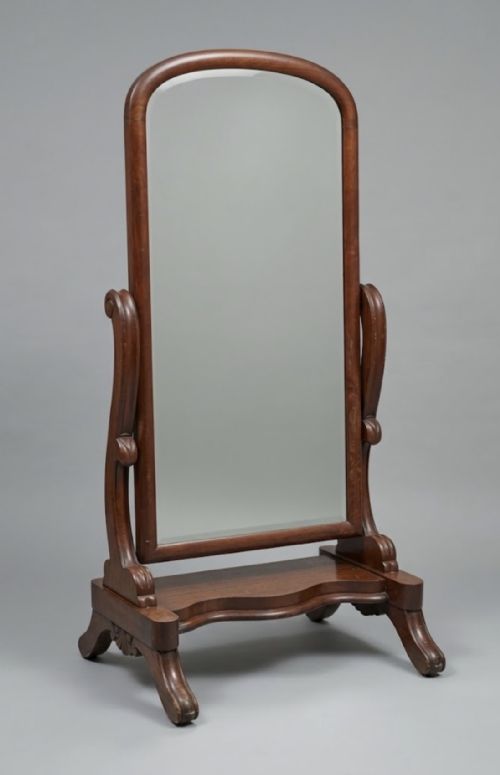
A vintage mahogany floor mirror is primarily encountered as a freestanding cheval mirror, resting within a frame that allows the glass to tilt. These pieces span the nineteenth century, Regency, Victorian, and Edwardian periods, appearing in forms from plain upright stands to decorative carved designs.
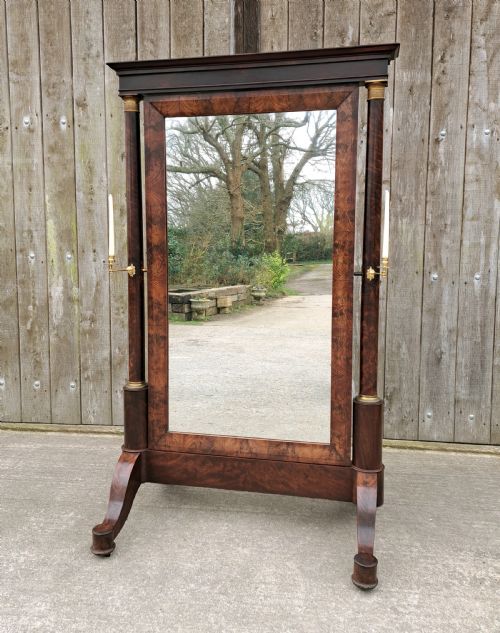
Buyers seeking a vintage mahogany floor mirror will find both English and French examples, alongside specific variants like gentleman's shaving stands and boot maker's mirrors. The selection ranges from substantial architectural frames to neat, slender profiles suited to bedrooms and dressing rooms.
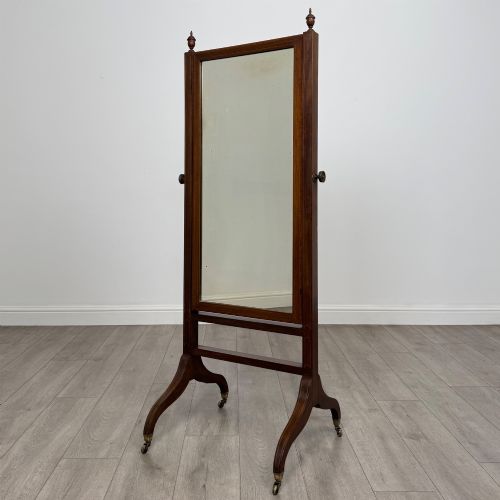
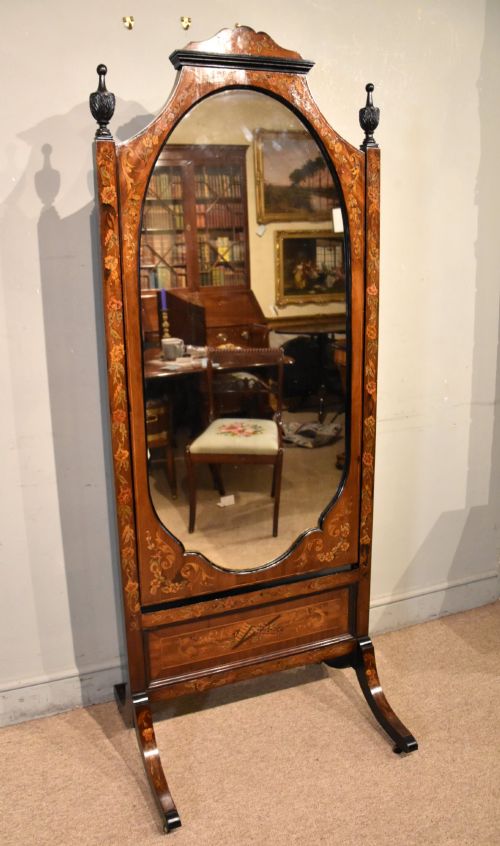
The core structure relies on a pivoting mirror plate suspended between two upright posts, supported by sturdy feet or sabre legs. While standard cheval designs dominate, occasional pieces incorporate brass articulated candle holders or marquetry inlay to enhance their decorative presence.
Assessing quality in floor mirrors
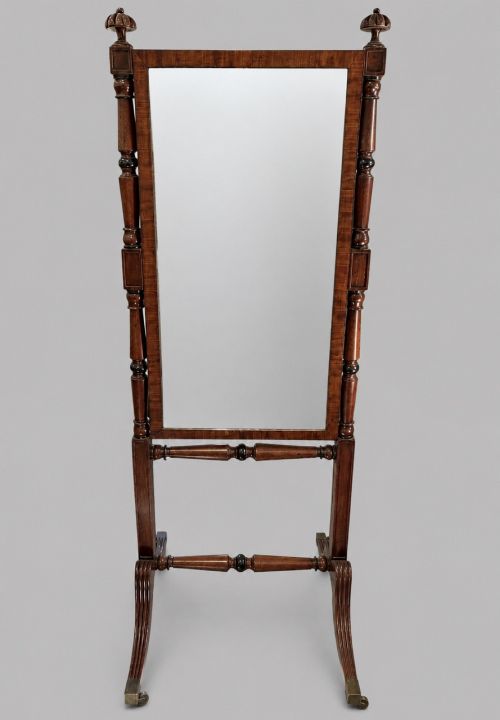
Quality rests in the weight and proportion of the timber frame, where solid mahogany and rich flame veneers demonstrate superior craftsmanship compared to plain surfaces. The robustness of the upright supports and the smooth action of the pivoting mechanism indicate careful initial construction.
Refinement in secondary details, such as brass sabots, castors, or inlaid marquetry, separates standard utilitarian pieces from finer decorative works. The clarity and thickness of the mirror glass itself further distinguish the manufacturing standard of the period.
The Vintage Mahogany Floor Mirror Glossary
- Cheval mirror
- A freestanding full-length mirror suspended on a pivoting frame between two upright posts. This design allows the user to tilt the glass to various angles.
- Sabot
- A metal shoe or cap fitted to the foot of a furniture leg. These protective covers are frequently cast in brass on Regency and William IV pieces.
- Flame mahogany
- A veneer cut from the fork of the mahogany tree where branches meet the trunk. It creates a distinctive, fiery grain pattern highly prized in antique furniture.
- Barley twist
- A carved spiral column resembling a twisted rope. This decorative turning is commonly found on Victorian mirror supports and legs.
- Marquetry
- Decorative patterns formed by inserting pieces of contrasting wood into a veneer. It adds ornamental detail to the frame borders of selected Edwardian and Victorian examples.
Vintage Mahogany Floor Mirror: Frequently Asked Questions
How do I tilt the mirror glass?
Most floor mirrors use pivoting side pins or screws set into the upright posts. Adjusting these tension fittings allows the glass to tilt smoothly to the desired angle.
Take care to support the glass with one hand while loosening or tightening the fixings to prevent sudden movement or strain on the frame.
Where should I place a floor mirror?
These pieces require stable flooring and sufficient clearance to tilt safely without striking nearby walls or furniture. Bedrooms, dressing rooms, and large hallways are traditional locations that accommodate their height and depth.
Positioning the glass opposite a window maximises natural light distribution across the room, enhancing both the reflection and the surrounding space.
How do I date a mahogany mirror?
Dating relies on stylistic clues such as leg shapes, framing details, and manufacturing marks. Regency and William IV pieces often feature sabre legs or brass castors, while Edwardian versions may display simpler inlaid borders.
Examining the construction methods of the backboards and the type of mirror glass provides further confirmation of the period of manufacture.
Are these mirrors heavy to move?
Solid mahogany frames combined with thick glass plates create substantial weight. Many period examples include original brass castors on the feet to assist with repositioning.
Lift the piece carefully by its main structural frame rather than the pivoting arms or decorative crestings when relocating it within a room.