
Mahogany Display Vitrine
Solid timber frames and generous glazing define the mahogany display vitrine, designed to protect and exhibit cherished possessions in any interior.
Mahogany Display Vitrine
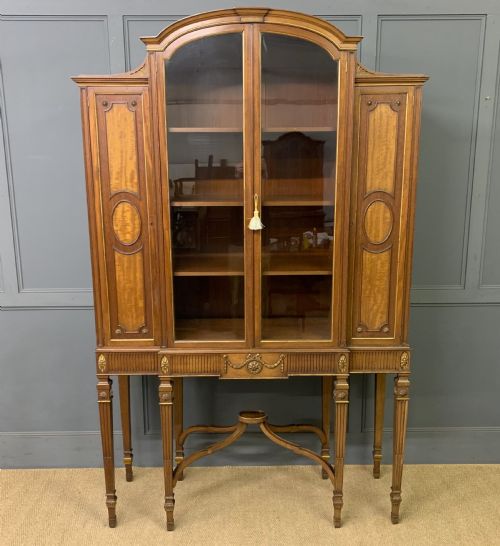
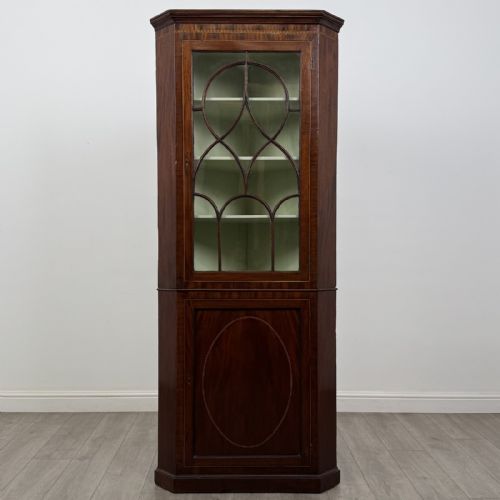
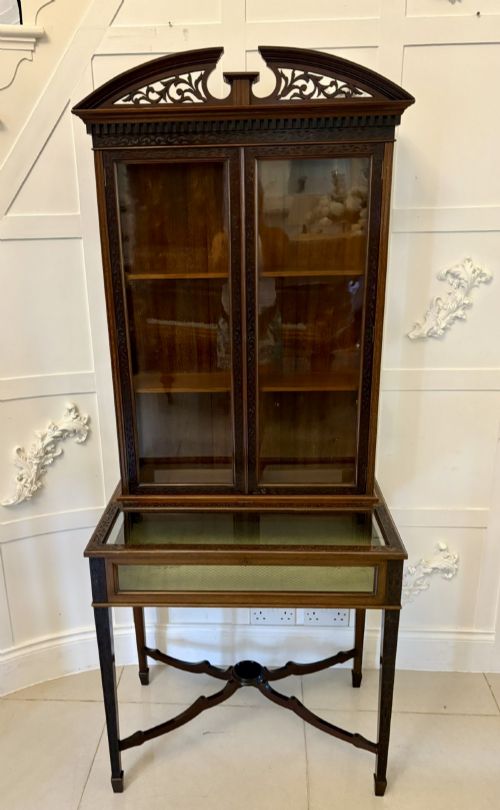
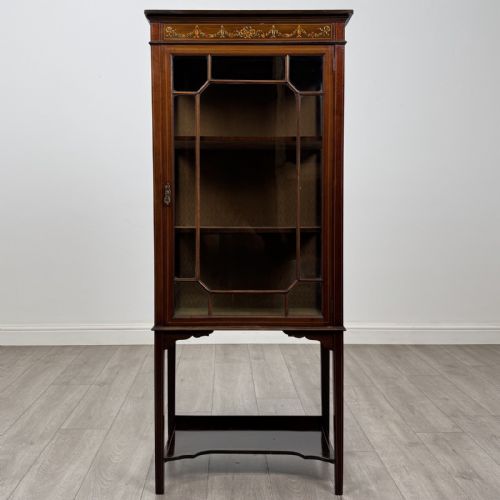
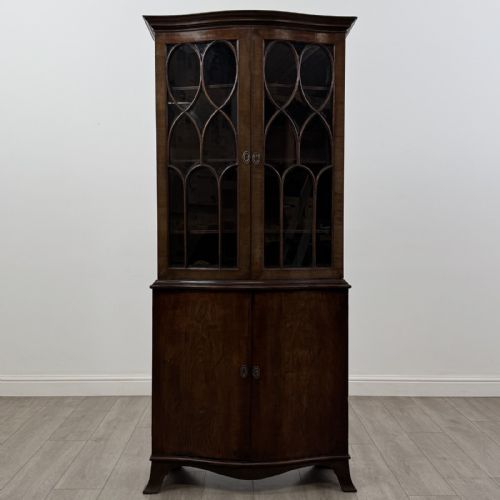
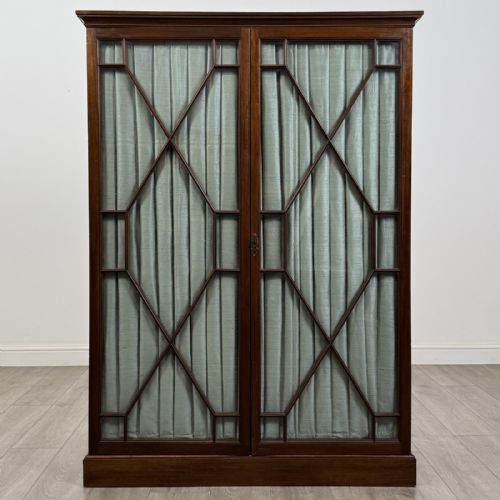
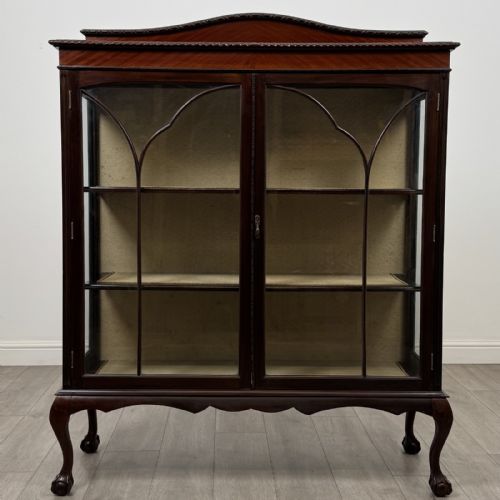
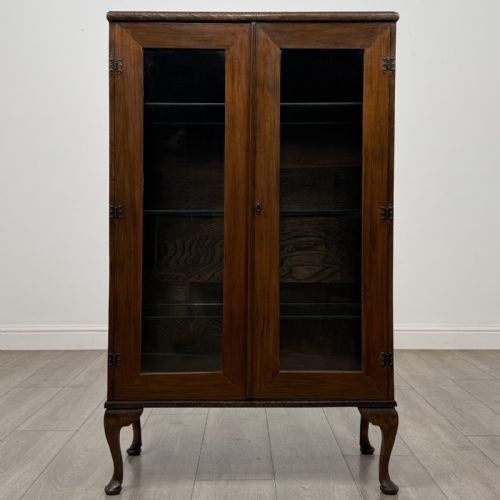
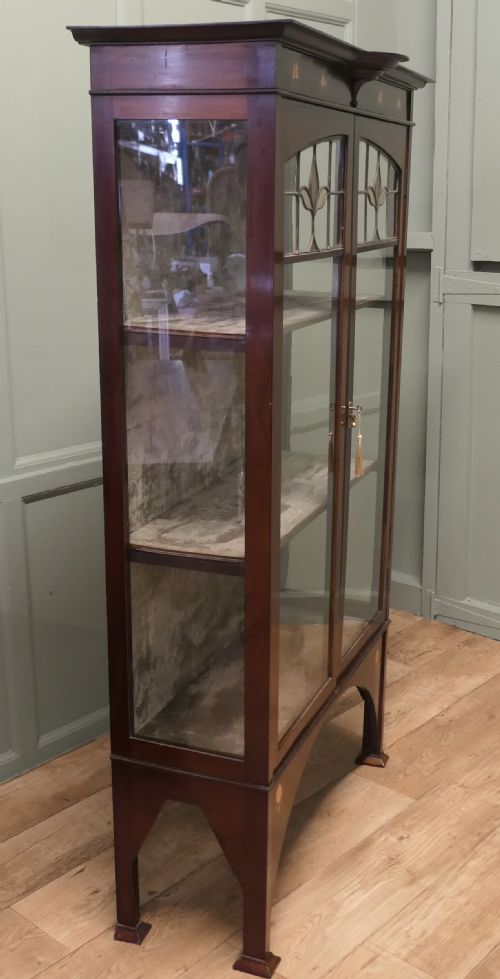
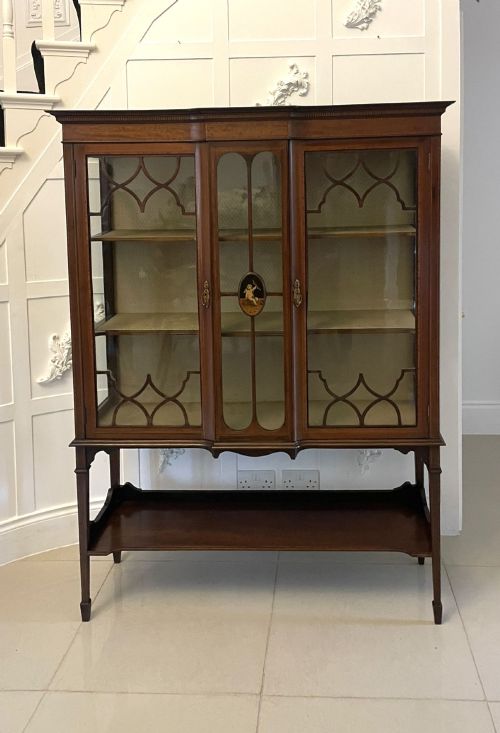
A mahogany display vitrine brings together dense tropical hardwood and transparent glass panels to form upright cabinets, low tables and corner units designed for holding collections. The pieces on this page span the Victorian, Edwardian and Georgian eras, alongside later revivals of French and classical styles.
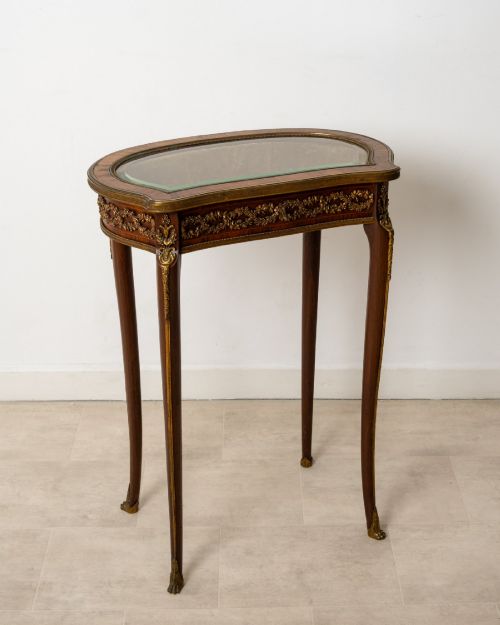
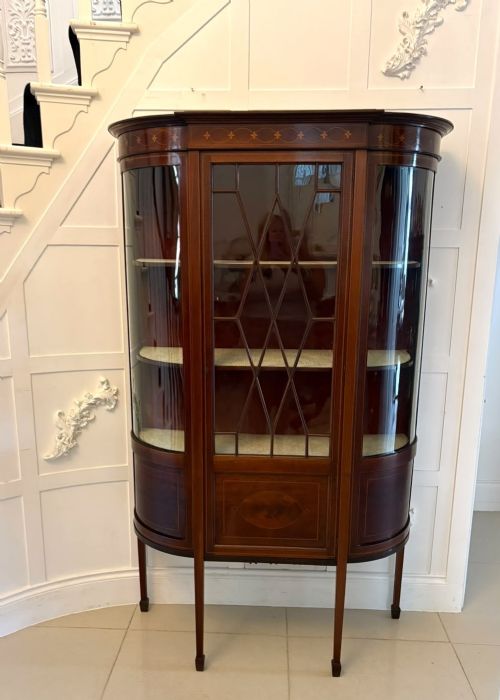
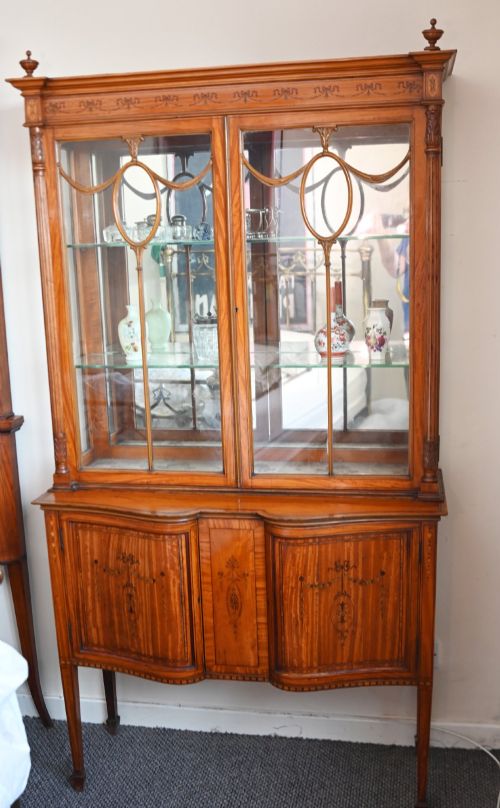
Tall freestanding breakfront bookcases and compact wall-mounted cabinets sit alongside dedicated bijouterie tables with glazed tops for jewellery and smaller objects. Edwardian satinwood inlay and late nineteenth-century Sheraton Revival influences appear frequently across the upright forms.
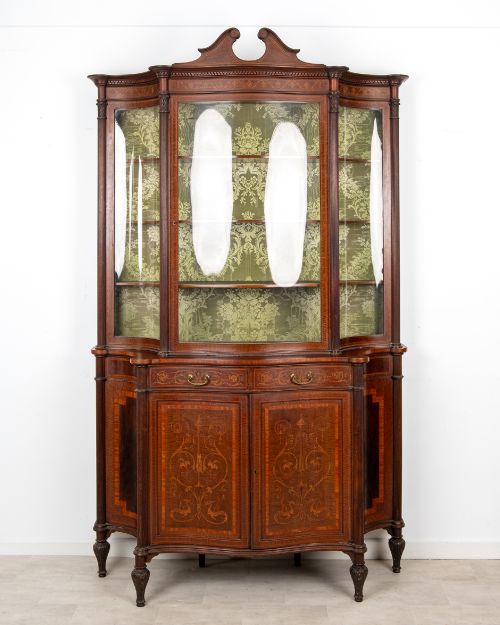
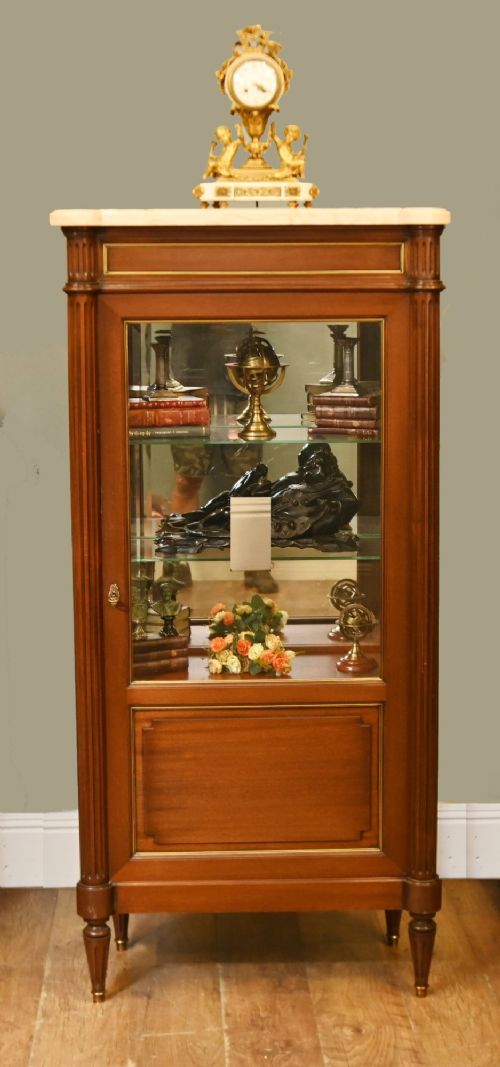
French-inspired models incorporate serpentine shapes and gilt bronze mounts, while simpler corner cabinets utilise wall space effectively. Each iteration uses timber frameworks to support expansive viewing areas for porcelain, curios and books.
How they were made
Cabinet makers constructed the primary carcases using solid mahogany and flame mahogany veneers, often enhanced with delicate satinwood inlay and marquetry detailing. Brass hardware, ormolu mounts and mirrored backs provide internal reflection and structural reinforcement.
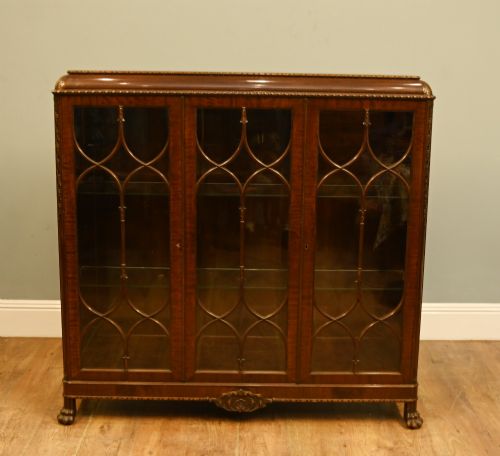
Glazing techniques range from simple square panes to complex astragal bars and curved glass doors on serpentine frames. Silk and velvet fabric linings frequently cover the interior display surfaces and shelves.
Some bijouterie tables were built low enough to inspect miniature treasures while seated in an armchair.
What varies in quality
The sophistication of the timber selection and the precision of the marquetry dictate the upper tiers of craftsmanship. Fine examples exhibit tight grain figures, seamless veneer matching and hand-carved decorative elements rather than stamped or cast substitutes.
Structural integrity relies on the original joinery remaining tight, particularly around heavy glazed doors and delicate table legs. Maker attribution, such as work bearing stamps from established London firms, elevates the standing of individual pieces.
F Sage And Co·Jas Shoolbred·Edwards And Roberts·Maple And Co·Shapland And Petter
The Mahogany Display Vitrine Glossary
- Vitrine
- A glass-fronted cabinet designed specifically for displaying fine porcelain, curiosities and objects of art. These pieces rely heavily on transparent panes to maximise visibility from multiple angles.
- Bijouterie table
- A specialised display table featuring a glazed top and a shallow internal compartment intended for jewellery and small valuables. They often stand on slender legs with delicate cross-stretcher supports.
- Astragal glazed
- A method of dividing a glass door or window into smaller panes using narrow wooden mouldings. This traditional technique creates geometric patterns across the front of tall cabinets.
- Sheraton Revival
- A late nineteenth and early twentieth-century design movement inspired by the neoclassical furniture of George Sheraton. Pieces from this period typically feature lighter proportions, satinwood crossbanding and classical motifs.
- Marquetry
- Decorative woodwork where thin pieces of contrasting veneer are fitted into a wooden panel to create pictorial designs. Makers utilised this technique on cabinet doors and tabletops to add ornamental colour.
- Serpentine front
- A cabinet or table front characterised by a gentle undulating curve that bulges outward in the centre and recedes at the sides. This contour requires skilled carpentry to fit drawers and doors accurately.
Mahogany Display Vitrine: Frequently Asked Questions
What is a mahogany display vitrine used for?
These cabinets serve to protect and display collections of porcelain, silver, glassware and small curiosities away from dust. The glazed panels allow natural light to illuminate the interior items from multiple sides.
Larger breakfront versions accommodate extensive book collections and decorative objects, whilst smaller tables focus attention on jewellery and medals placed directly beneath the glass top.
How do I distinguish Edwardian from Victorian models?
Victorian examples generally feature heavier proportions, deeper reddish-brown mahogany tones and more robust carved ornamentation. Pieces from this era often embrace Gothic Revival or elaborate breakfront designs.
Edwardian pieces tend to display lighter framing, extensive satinwood inlay, and a strong influence from the Sheraton Revival style. The overall aesthetic shifts towards brighter, more delicate decorative schemes.
How should I care for the wood and glass?
Maintain the mahogany surfaces using traditional beeswax applied sparingly with a soft cloth to nourish the grain. Avoid placing the cabinet in direct sunlight or near heat sources to prevent the timber from splitting.
Clean the internal and external glass panes with a mild glass cleaner sprayed onto a cloth rather than directly onto the cabinet. This prevents moisture from seeping into the wooden rebates and fabric linings.
Are French styles common in these listings?
French influences appear regularly, particularly through Louis XVI style bijouterie tables and serpentine cabinets featuring Vernis Martin decoration. These pieces often incorporate gilt bronze or ormolu mounts.
Maker attributions to French workshops or London retailers supplying imported continental designs demonstrate the popularity of these ornate aesthetics during the nineteenth and early twentieth centuries.