
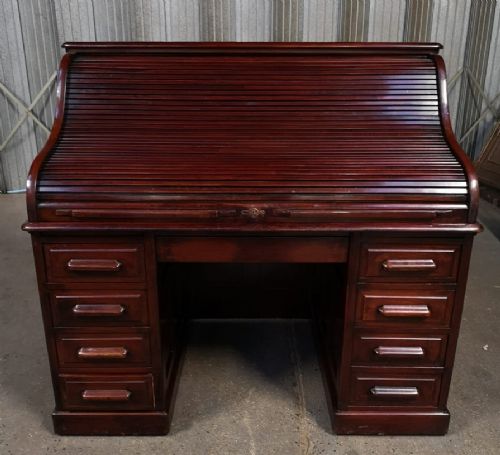
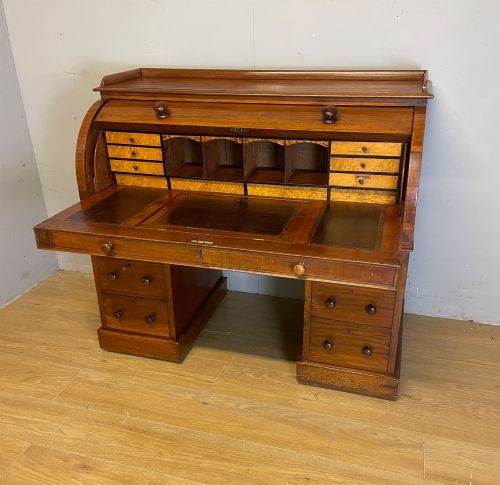
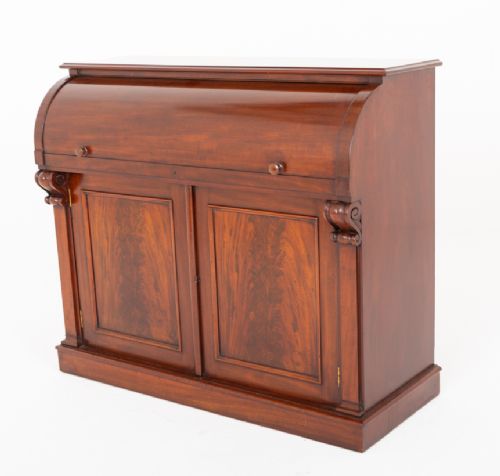
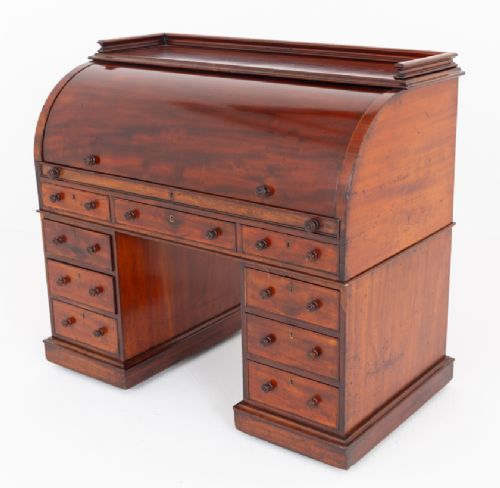


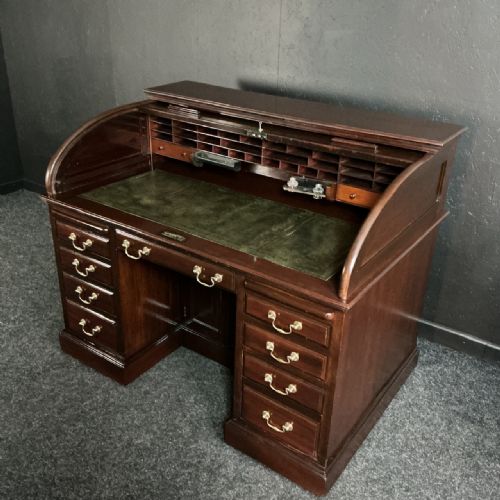


Mahogany Cylinder Pedestal
Mahogany cylinder pedestal pieces combine deep cabinetwork with smooth curved lids, offering secure writing surfaces and stately storage for studies and bedrooms.
Mahogany Cylinder Pedestal
A mahogany cylinder pedestal brings together substantial timber pedestals and a curved rolling shutter that conceals fitted writing compartments or interior shelves. When searching for a mahogany cylinder pedestal, buyers encounter large twin pedestal office desks alongside compact cylindrical bedside cupboards and lamp stands.
The desks dominate the selection, appearing chiefly in Victorian and Edwardian iterations where multiple small drawers sit beneath the rolling cylindrical lid. Alongside these writing pieces, smaller vertical cabinets and bedside stands utilise the same curved wooden mechanism on a single column or cupboard base.
Materials and construction
Makers built these pieces primarily from solid mahogany and flame mahogany veneer, selecting figured timber for the curved shutters and drawer fronts. Secondary woods provided structural stability inside the pedestals, while brass handles, locks, and hinges completed the cabinetry.
The signature cylindrical action relies on tambour strips or a solid curved panel sliding smoothly within precisely grooved tracks. Leather inserts frequently top the pull-out writing surfaces, and selected cabinets add inset marble slabs to their upper surfaces.
Some nineteenth-century makers doubled the cylinder cabinet's utility by topping it with a marble slab, creating a sturdy perch for heavy oil lamps.
Distinctions in craftsmanship
Quality rests heavily on the selection of the mahogany veneer and the smoothness of the cylinder mechanism. Superior examples feature matched flame figuring that flows seamlessly across the curved shutter and surrounding framework.
Internal joinery separates standard production from finer cabinetwork, particularly in the dovetailing of small drawers and the complexity of the fitted stationery compartments. The presence of dense marble tops and original brass hardware further distinguishes higher-tier pieces.
The Mahogany Cylinder Pedestal Glossary
- Cylinder
- A curved rolling shutter of wood that encloses the writing surface or upper cabinet interior. It slides along grooved tracks to reveal fitted drawers and pigeonholes.
- Flame mahogany
- A veneer cut from the fork of the mahogany tree where branches join the trunk. It displays a dramatic, flickering flame-like grain pattern highly prized by cabinetmakers.
- Tambour
- A flexible shutter formed of narrow vertical strips of wood glued to a fabric backing. This construction allows the surface to curve smoothly around a radius.
- Pedestal
- A structural support column or set of small drawers placed beneath a desk top. Twin pedestal designs use two stacks of drawers to support the main writing surface.
Mahogany Cylinder Pedestal: Frequently Asked Questions
What is the difference between a cylinder desk and a tambour desk?
A true cylinder desk typically uses a solid curved wooden panel that rotates on pivots or within tracks. A tambour desk employs many narrow vertical strips attached to fabric to achieve the same rolling curve.
Both forms serve the same purpose of concealing the writing surface, but the solid cylinder represents a more demanding piece of joinery.
Are these pieces suitable for daily modern office use?
These pieces function well in contemporary workspaces, offering concealed storage and pull-out writing ledges for laptops and paperwork. The deep pedestals provide substantial room for modern filing.
Care must be taken with the antique leather writing surfaces, which benefit from protective blotters during heavy daily use.
How do I date a mahogany cylinder piece?
Dating relies on stylistic markers from Georgian, Regency, Victorian, and Edwardian periods, alongside construction details like drawer dovetails and secondary woods. Earlier George III and Regency examples display lighter proportions and refined inlay work.
Victorian and Edwardian versions tend toward heavier proportions, larger dimensions, and extensive use of flame mahogany veneers.